Chobe River Birding – Pratincoles, Storks and other delights

If you ever find yourself in Kasane wondering how to spend the morning, you can’t go far wrong by doing a boat trip on the Chobe River – a small boat is fine if you are alone or up to 3 or 4 people and various tour companies rent out such boats with drivers.

Last November (2016), I found myself in that position and chose to approach one of the local tour companies, based on my previous good experience with Richard as guide and driver – they were able to accommodate me early on the Friday of my visit, having assured me that Richard was available to take myself and colleague Deon out for the morning.

This time around however, the trip did not start well – we waited for almost half an hour for someone to appear at reception and were then told Richard was “not there” and David would take us out. On enquiring about his birding skills I was told “I’m a beginner”, which did not fill me with enthusiasm.

Nevertheless, we set off in the aluminium boat, comfortable and with camera at the ready as we headed in the direction of Seboba Rapids, where I hoped to find Rock Pratincole in particular, being a potential lifer for me. According to information I had gleaned from books and the internet, Rock Pratincoles are Intra-African migrants which typically frequent the rocks at the rapids from September to January, providing the conditions suit them and the river is not in flood.

There are just a handful of possible sites to see this bird in Southern Africa, all of them along the Zambesi and Chobe Rivers, so this would be my first and possibly last chance to “tick” this desirable bird.

Heading downstream towards the rapids, the first part of our trip was about as good as it gets with river-based birding, with constant sightings of birds as we glided along the smooth surface in perfect cool conditions.

Wire-tailed Swallows (Draadstertswael) and Rock Martins (Kransswael) swooped by as David steered the boat across to the opposite bank, where some large raptors were partially hidden in the long grass. I was puzzled about what they could be as they were not immediately recognisable at all, so I took numerous photos in order to help me confirm an ID later. An adult Long-crested Eagle (Langkuifarend) was nearby, perched in a tall tree, only serving to lead my thoughts in the wrong direction as it turned out.
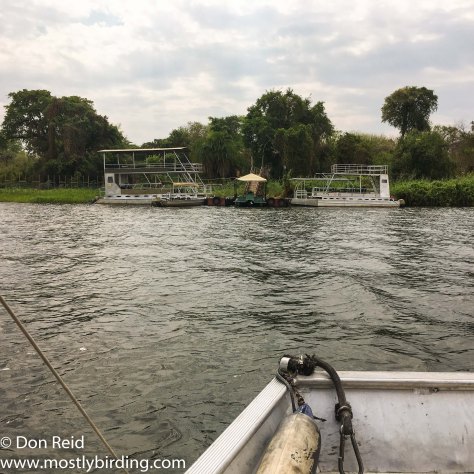
Chobe River trip
Heading out

Later, using the time on the hour and a half flight back to Jo’burg and at home, I eventually solved the puzzle – Juvenile African Fish-Eagle (Visarend) ! Sometimes a tricky ID can really have you going in the wrong direction.

African Fish-Eagle (Juvenile) Chobe River trip
African Fish-Eagle (Juvenile)

Soon after, we approached the Seboba rapids and almost immediately found what I had been hoping for –  Rock Pratincoles (Withalssprinkaanvoël) , relaxing on the rocks on islets in the middle of the river. A lifer at this stage of my birding career is really special, particularly in such a perfect location, so I may even have let out a subdued whoop! We spent some time with them and getting good photos proved to be quite simple, as they seemed totally undisturbed by our presence, even when the boat bumped up against the islet a couple of metres from where they perched.

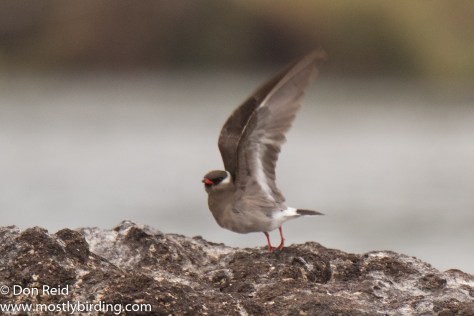
Rock Pratincole, Chobe River trip
Rock Pratincole living up to its name
Rock Pratincole, Chobe River trip
Rock Pratincole

Having proved yet again that a “scarce” bird that you have wanted to see for many years is suddenly common when you are in the right place, we continued our trip, checking the nearby bushy shoreline and the other islets, adding Black Crake (Swartriethaan), Pied Kingfisher (Bontvisvanger) and a juvenile Malachite Kingfisher (Kuifkopvisvanger) to the morning’s list. Yellow-billed Kites (Geelbekwou) were doing there usual low-level cruising along the shoreline, turning frequently to show their distinctive deeply forked tails and close enough to make out their yellow bills.

Malachite Kingfisher (Juvenile), Chobe River trip
Malachite Kingfisher (Juvenile)

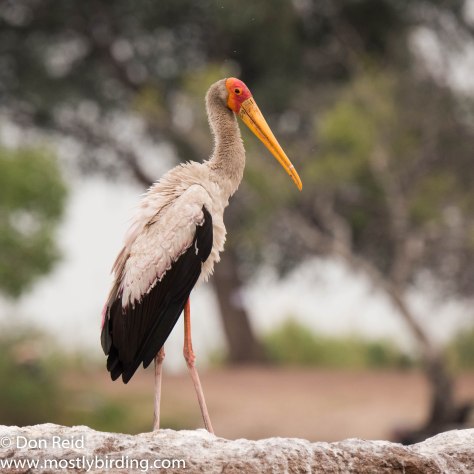
Further along a Yellow-billed Stork (Geelbekooievaar) “crèche” was filled with what I guessed were mostly the “Class of 2016”, with just a single adult keeping watch nearby. The juveniles only obtain adult plumage after some 3 years, so these could have ranged in age from 1 to 3 years. The population in South Africa on its own, according to reference books, is only around 300 (although I find that hard to believe) so this group possibly represented a significant proportion of the overall population, even in southern Africa.

Yellow-billed Stork creche, Chobe River trip
Yellow-billed Stork creche, Chobe River
Yellow-billed Stork creche, Chobe River trip
Yellow-billed Stork creche, Chobe River
Yellow-billed Stork, Chobe River trip
Yellow-billed Stork – adult in charge

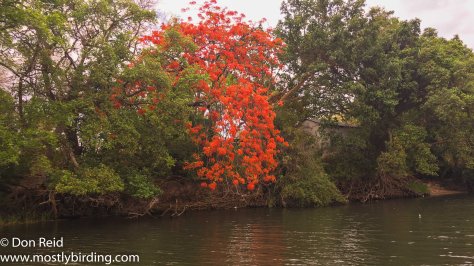
Turning upstream we hugged the river banks along the stretch which is the home of some well-known lodges – Mowana, Chobe Marina and Chobe Safari, all with lush vegetation and large trees, many of which overhang the greasy brown waters of the river. Another African Fish-Eagle, this time an adult, flew majestically overhead.

African Fish-Eagle, Chobe River trip
African Fish-Eagle

It’s not that easy to see the birds when they are ensconced in the depths of the riverside bush, but we did spot Black-crowned Night-Heron (Gewone Nagreier) , several Malachite Kingfishers and a community of nests with African Golden Weavers (Goudwewer) present. The strident, piercing call of Red-faced Cisticola (Rooiwangtintinkie) added to the birding pleasure.

African Golden Weaver nests, Chobe River trip
African Golden Weaver nests
African Golden Weaver (Male), Chobe River trip
African Golden Weaver (Male), Chobe River

From there the river widened out as we passed our favourite sundowner spot, before stopping briefly at the small cabin on a jetty where our guide signed us into the Chobe Game Reserve, while we watched an African Openbill (Oopbekooievaar) at close quarters nearby
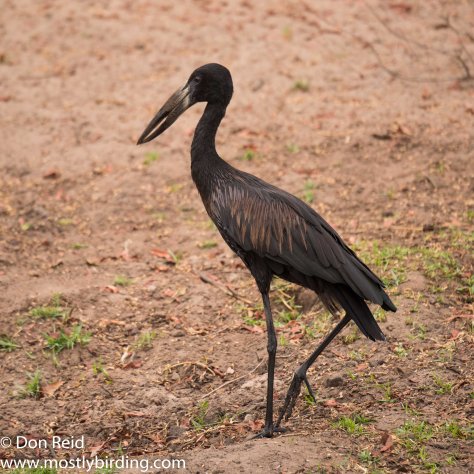
African Openbill, Chobe River trip
African Openbill
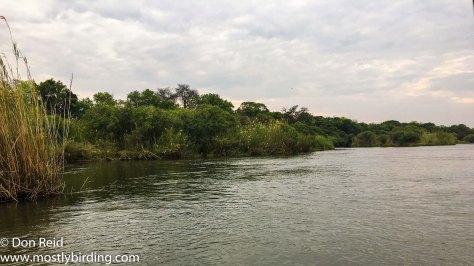
Chobe River trip
Chobe River
Chobe River trip
Chobe River

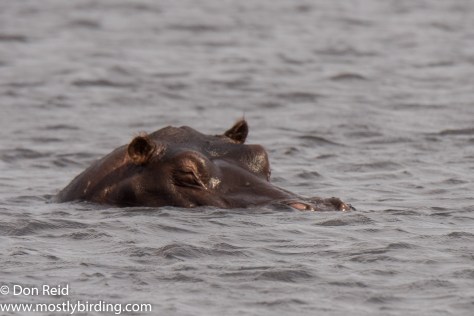
Typical Chobe River habitat followed – flat islands covered in grass and marshy areas, inhabited by Cape Buffalo and Lechwe and in the water along the edge by Hippos and Crocodiles, all giving us the look as we puttered slowly by.
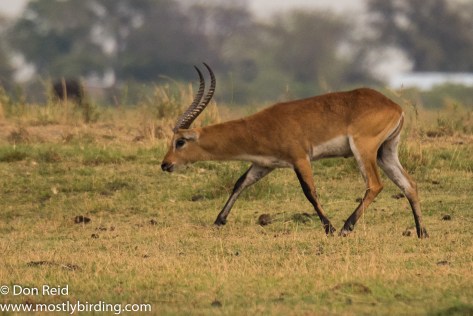
Lechwe, Chobe River trip
Lechwe, Chobe River
Crocodile, Chobe River trip
Crocodile
Crocodile, Chobe River trip
Crocodile
Hippo, Chobe River trip
Hippo, Chobe River

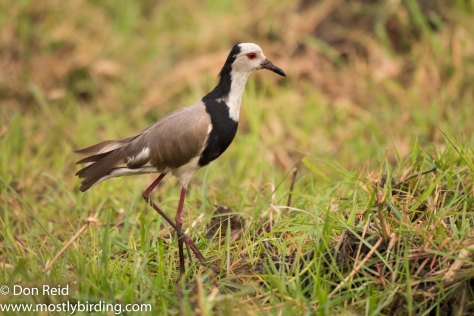
As usual the Egrets and Herons were plentiful, the larger Great Egret (Grootwitreier) and Goliath Heron (Reusereier) standing out above the rest. Long-toed Lapwings (Witvlerkkiewiet) were so numerous they were probably the most populous bird at that point.

Goliath Heron, Chobe River trip
Goliath Heron
Long-toed Lapwing, Chobe River trip
Long-toed Lapwing

We encountered African Skimmers (Waterploeër) a few times and marveled at their brightly coloured bill with the elongated lower mandible, which allows it to skim the water’s surface in flight and latch onto any small organism that may cross its path.
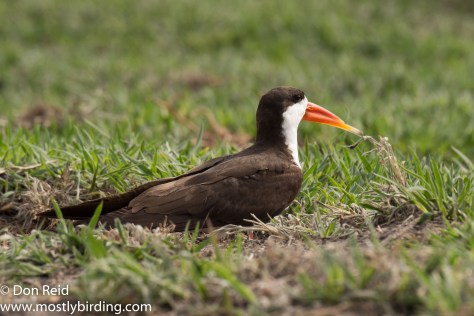
African Skimmer, Chobe River trip
African Skimmer
African Skimmer, Chobe River trip
African Skimmer, Chobe River

Collared Pratincoles (Rooivlerksprinkaanvoël) flew by, looking very Tern-like, then settled on the grassy flats of the island to join the resident Skimmers. Both of these species seem to have a relaxed attitude towards life as a bird, spending a lot of time resting on the ground with occasional sorties to find their next meal.
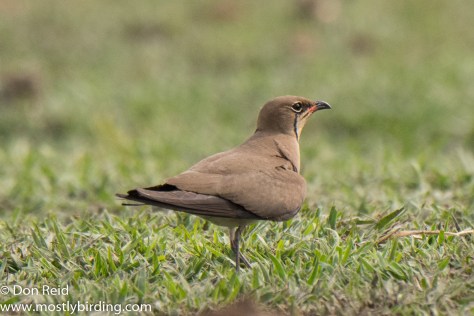
Collared Pratincole, Chobe River trip
Collared Pratincole, Chobe River

By this time a fresh wind was blowing upriver, creating ever-increasing wavelets. Suddenly our boatman seemed to have an inspiration as he revved the engine and headed upstream (with the wind) at speed, without telling us what he had in mind.

No problem, we thought, as we assumed he had a special spot with other bird species to show us, but no, it seems he just took us on a “joyride” – which turned out to be just the opposite when he suddenly turned the boat around and raced back. Small wavelets had by now turned into mini swells, enough to cause a bone-jarring, teeth-clenching, kidney-battering ride all the way back.  Climbing out at the jetty, I felt quite shaken and stirred – James Bond would not have approved.

Nevertheless it was a successful morning , which left us with many more memories to savour of this supreme stretch of unspoilt African river.


Atlasing Tales 3 – Herbertsdale and beyond

Wondering what Atlasing is?

Simply put, it is the regular mapping of bird species in a specific area  called a “pentad”. Each pentad has a unique number based on its geographical position according to a 5 minute x 5 minute grid of co-ordinates of latitude and longitude, which translates into a square of our planet roughly 8 x 8 kms in extent.

As a registered observer / Citizen scientist under the SABAP2 program (SA Bird Atlas Project 2), all of the birding I do nowadays includes recording the species for submission to the project database at the ADU (Animal Demography Unit) based in Cape Town.

Atlasing has brought a new dimension and meaning to my birding as it has to the many other birders. The introduction a couple of years ago of the “Birdlasser” App has greatly simplified the recording and submission of the data collected.

This series of “Atlasing Tales” posts sets out to record some of the memorable experiences and special moments that I have enjoyed while atlasing.

Beyond Herbertsdale

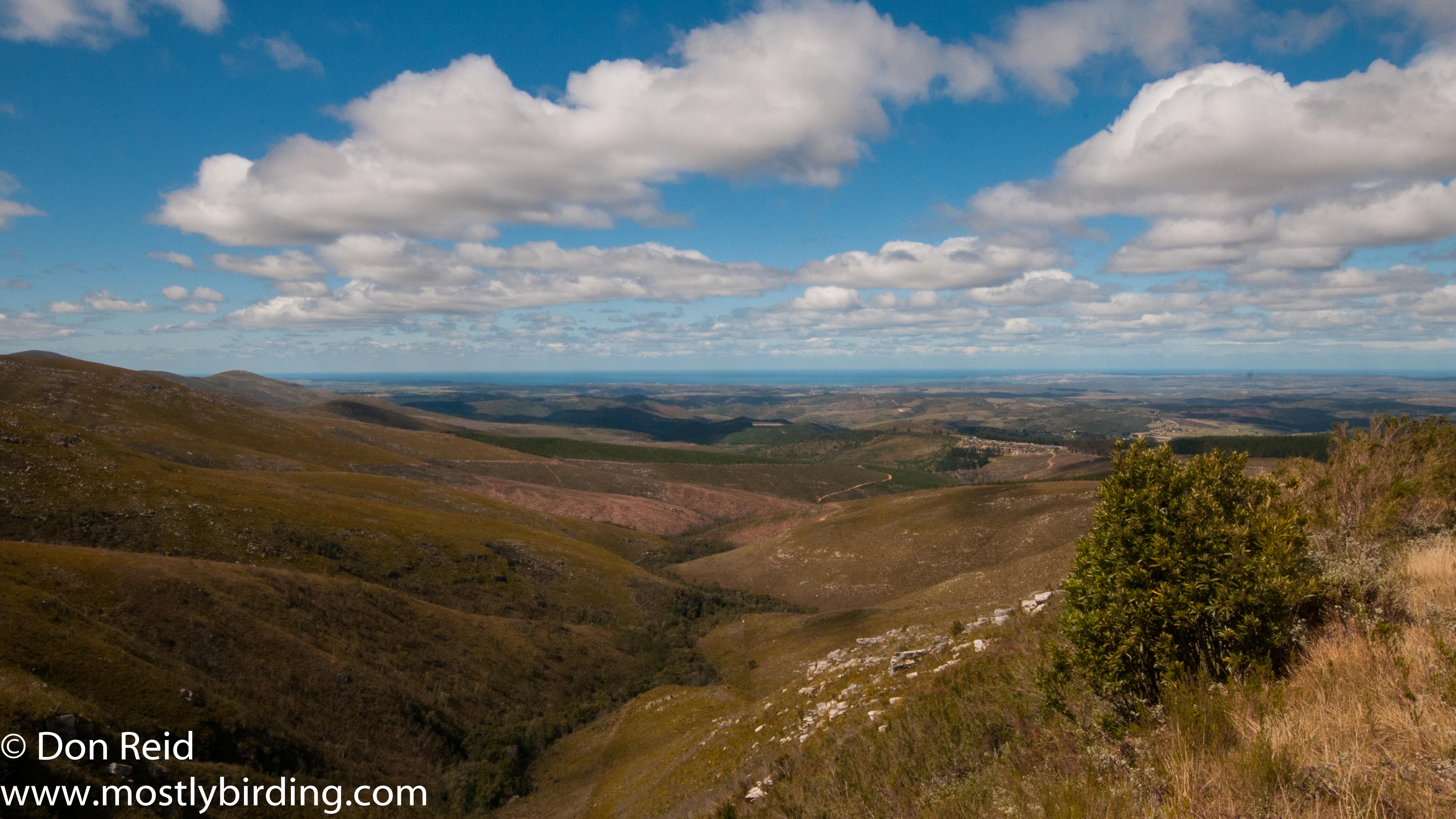
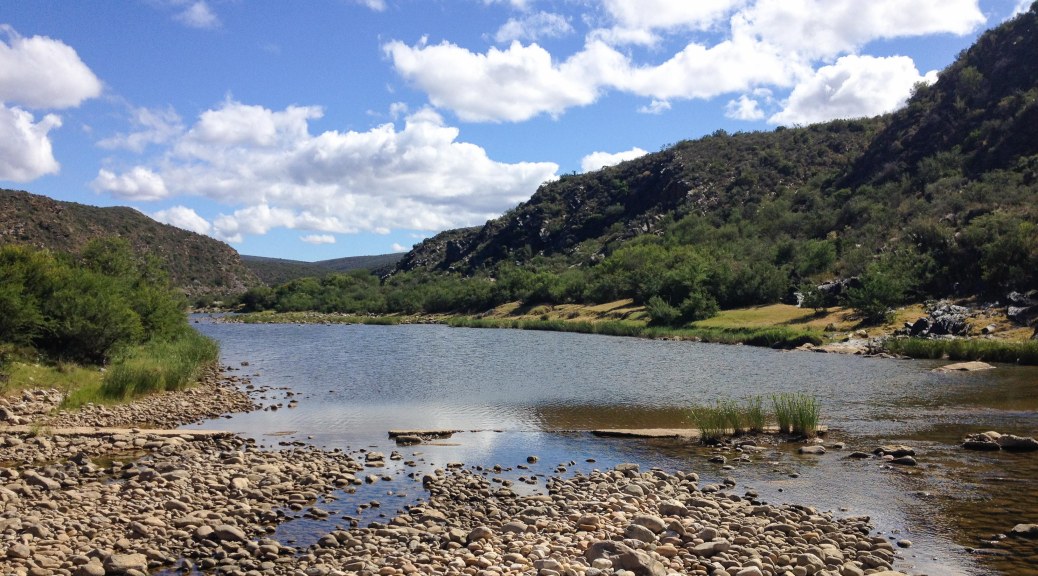
Herbertsdale is a small, cosy town in the Southern Cape, conveniently close to Mossel Bay, our home town for part of the year. North of Herbertsdale lies the Langeberg (“Long Mountain”) range and the R327 tar road to changes to gravel soon after passing through the town, before winding its way through the mountains.

Along the R327 north of Herbertsdale

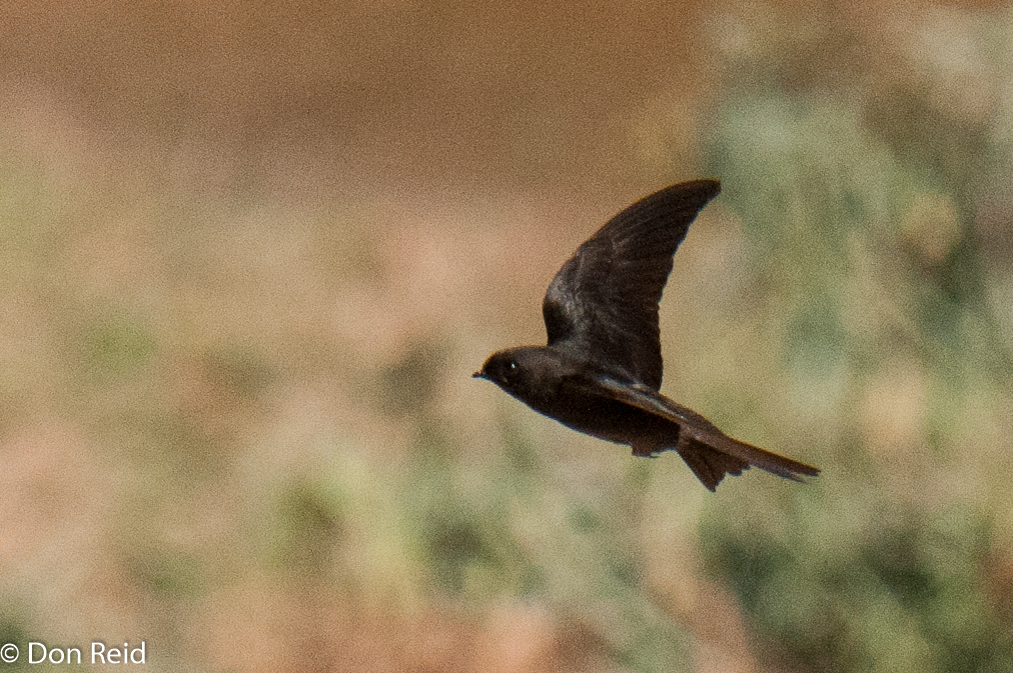
I had set out to atlas two of the more remote pentads in the area, both of them lying beyond the Langeberg. On the way there I warmed up with some ad hoc atlasing, and was happy to hear a Victorin’s Warbler (Rooiborsruigtesanger) calling in its distinctive way, followed by a Red-necked Spurfowl (Rooikeelfisant) in the short grass near the road and a Black Saw-wing  (Swartsaagvlerkswael) swooping gracefully by – three fairly uncommon species and more than enough to have me smiling as I stopped to enjoy the quiet of the mountains and a cup of roadside coffee.

Black Saw-wing (Swartsaagvlerkswael)

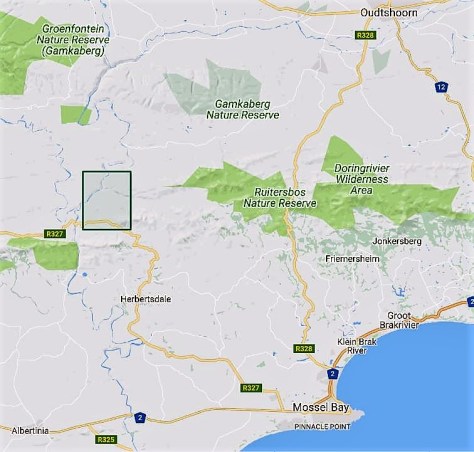
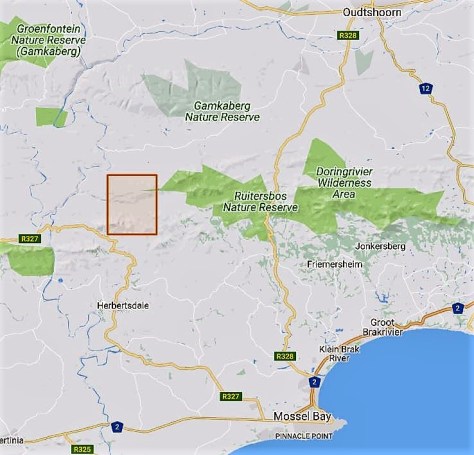
By 7 am I entered the first target pentad  3350_2140 which is shown as the shaded square on the map below and which initially runs through the last section of the pass along a river, then emerges into flatter farmland and Karoo countryside before reaching the Gouritz River, where I took a short walk along the riverside.

Herbertsdale map 2

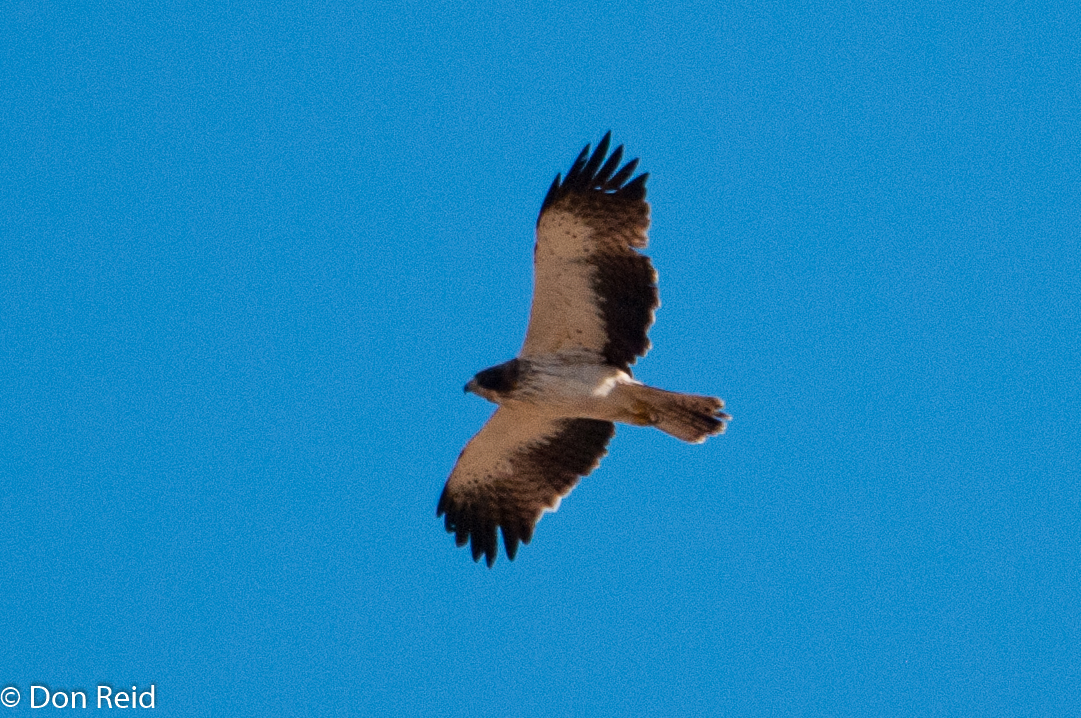
Returning to my vehicle, I took it very slow which helped to build up a decent list, including  Common House Martin (Huisswael), Plain-backed Pipit (Donkerkoester) in an open short-grassed field, Rock Kestrel (Kransvalk) perched quietly in a tree,   a very welcome Dusky Sunbird (Namakwasuikerbekkie) and a soaring Booted Eagle (Dwergarend). During the two hours (minimum duration for a “Full Protocol” card) I recorded 40 species, of which 20 were new records for the pentad, mainly because it had only been atlased twice before, nevertheless a great reward for my efforts.

Booted Eagle, (Dwergarend)

An Old Wagon Route discovered

Then the real adventure started as I turned off at a road I had partially explored a few years ago, marked with a small, obscure sign with an old wagon picture on it.

My next target was pentad 3350_2145, shown as the shaded square on the map below, which had never been atlased before, known to Atlasers as a “virgin pentad” and much sought after by those with a bit of the pioneering spirit (which many South Africans seem to have in their genes).

Herbertsdale map 1

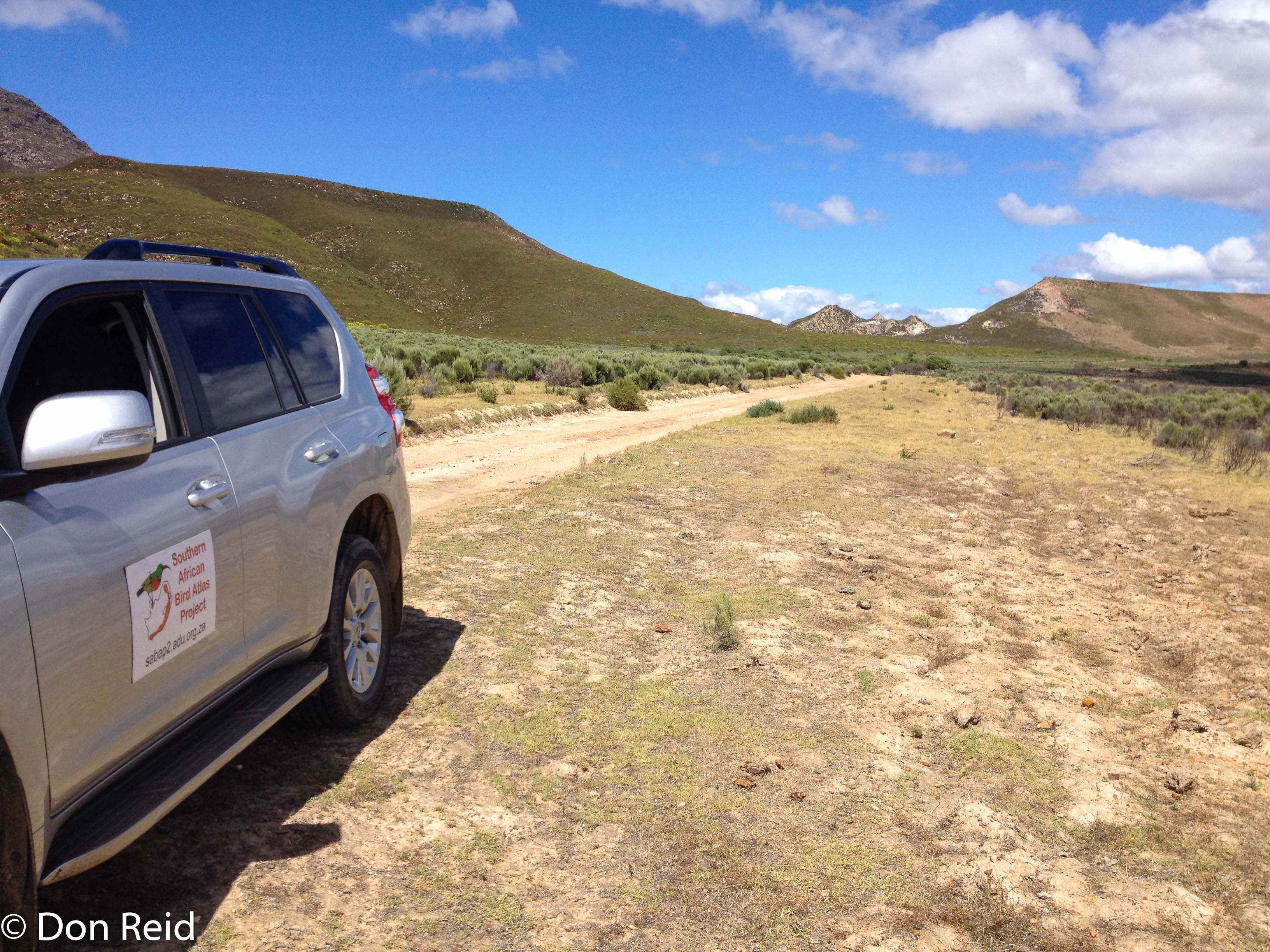
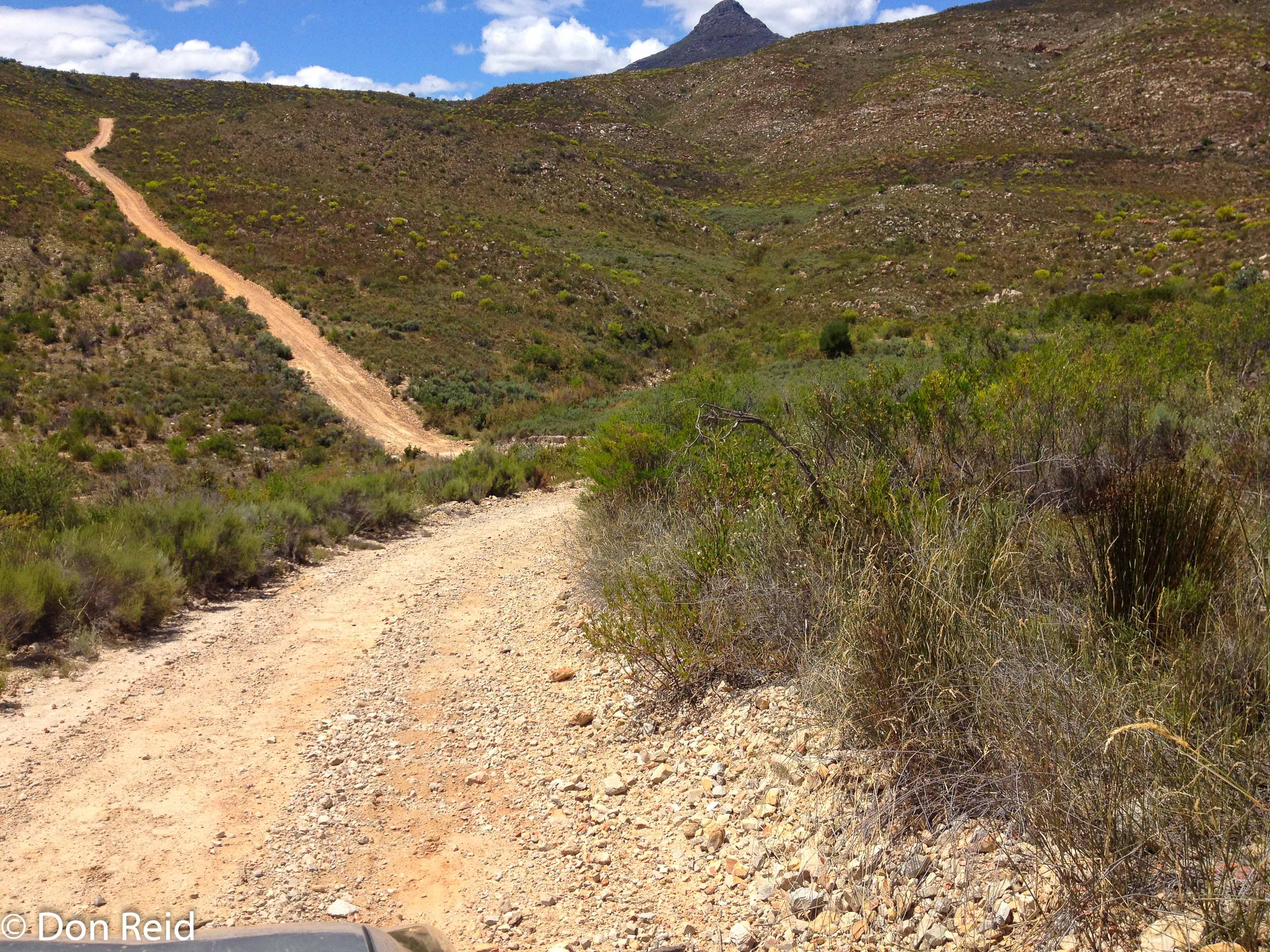
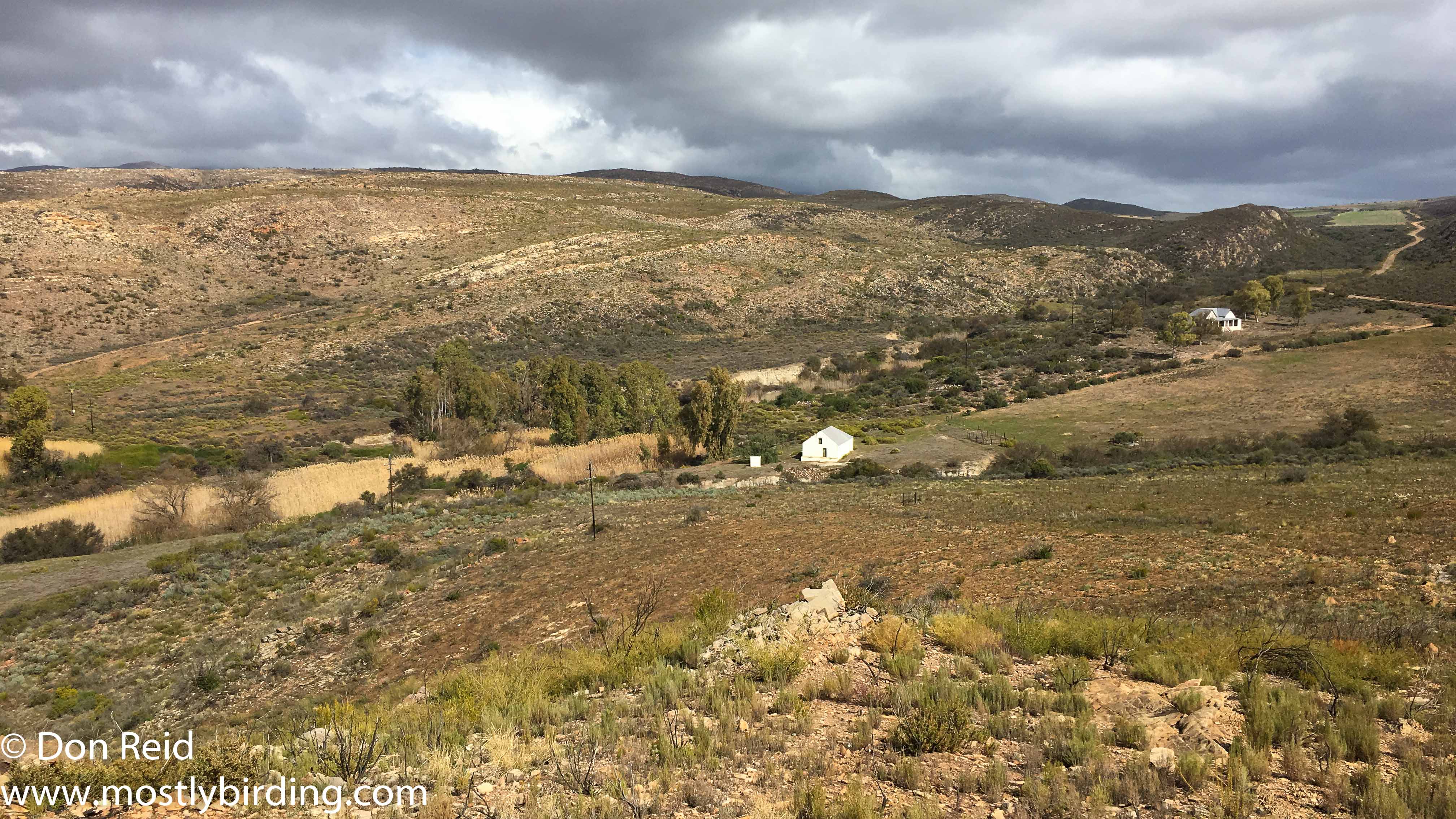
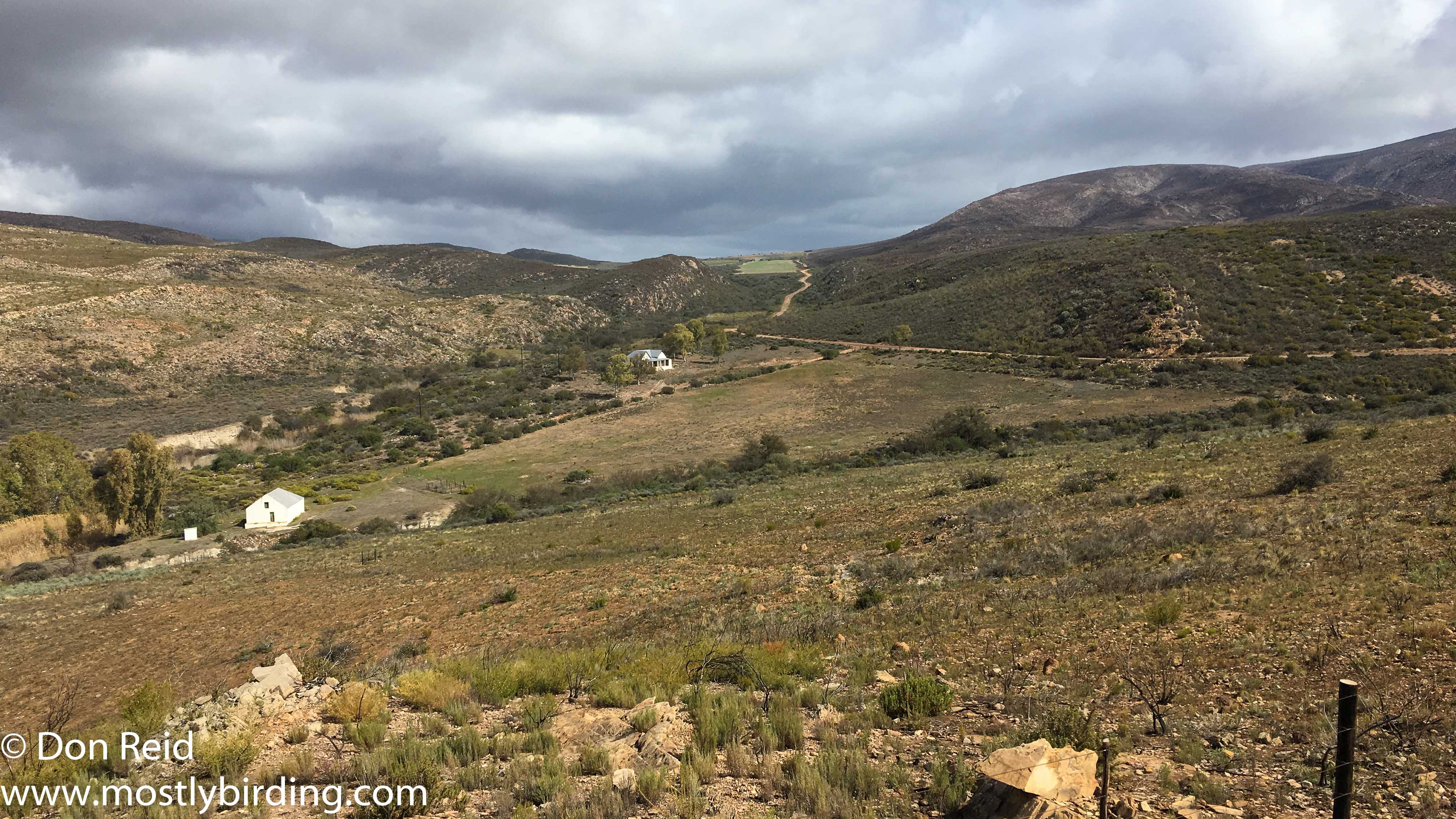
The road passed a lone farmhouse, then headed into the hills, becoming more barren as it wound its way over the rolling mountains, with some steep gradients and tricky corners requiring utmost concentration while moving.

Old Wagon route north of Herbertsdale
Old Wagon route
Old Wagon route

Birds were beyond scarce – all I could do was to stop frequently and check for distant calls or a movement giving away the presence of a bird. I was relieved when a variety of aerial birds appeared and I could at least get my list going with Greater Striped Swallow (Grootstreepswael), Barn Swallow (Europese swael), Rock Martin (Kransswael) and White-rumped Swift (Witkruiswindswael).

The aerial birds such as Swallows, Martins and Swifts seem to enjoy hunting aerial insects together. Whenever I see a group of these graceful fliers I stop and scan as many of them as I can while they are still within a visible distance. More often than not the species first spotted leads to seeing two or three others, as  happened in this instance.

Greater Striped Swallow rootstreepswael)
Greater Striped Swallow (Grootstreepswael)

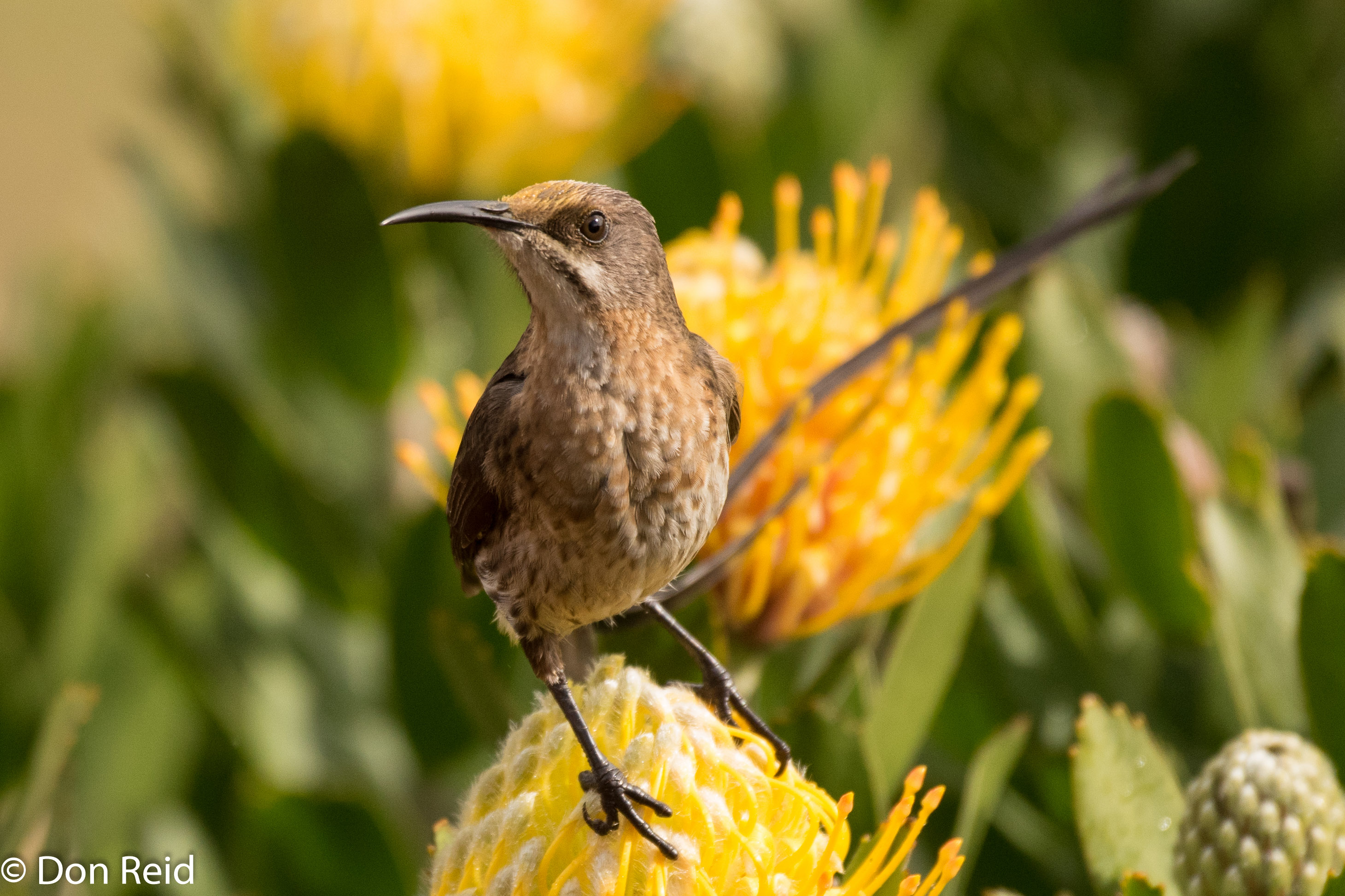
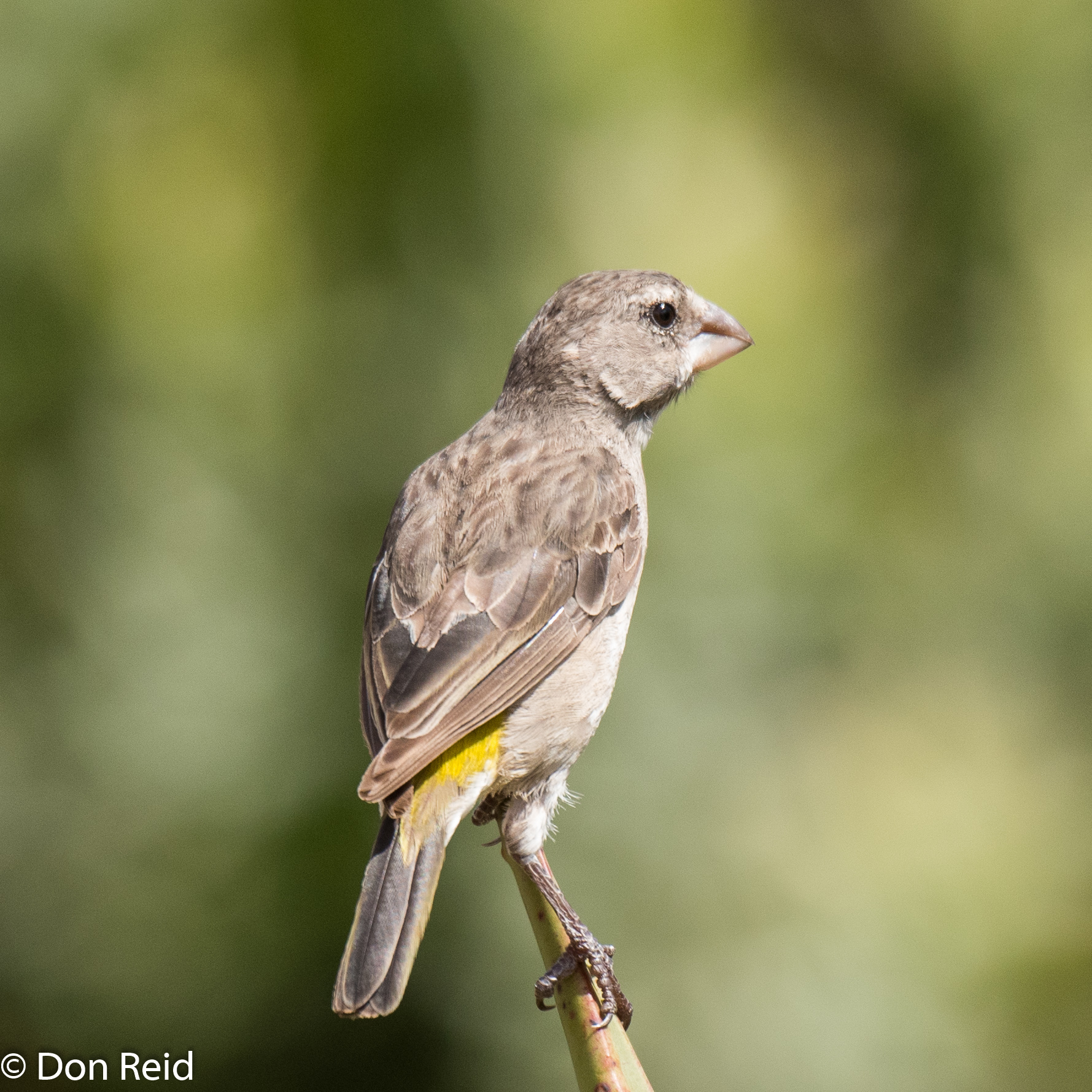
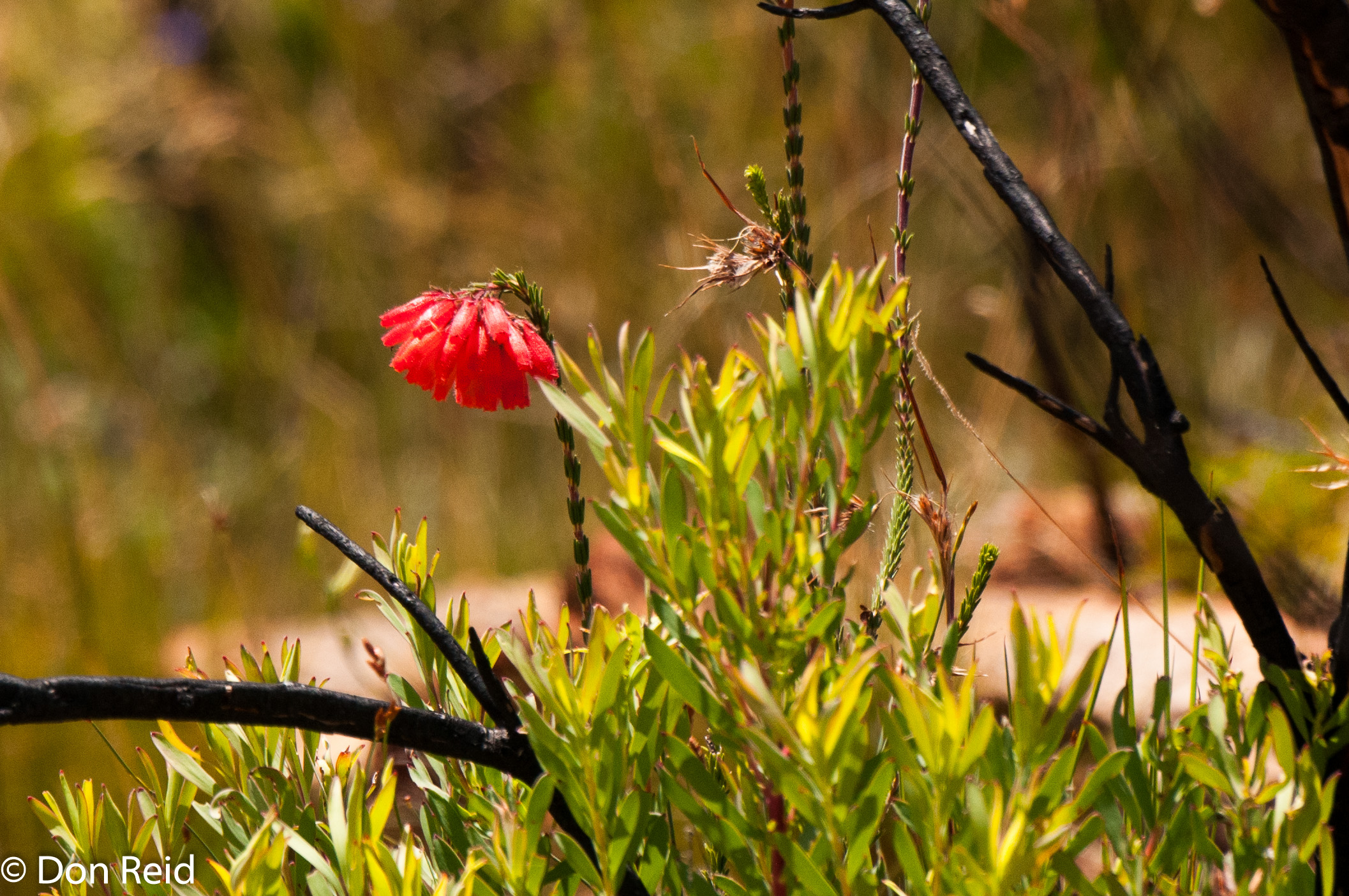
Patches of  Fynbos and Protea bush were the next most productive habitat, as I was able to spot some of the species common to the habitat, such as Cape Sugarbird (Kaapse suikervoël) swishing busily from one bush to the next, White-throated Canary (Witkeelkanarie) , Karoo Prinia (Karoolangstertjie) trying to match the  frantic activity of the Sugarbirds, Grey-backed Cisticola (Grysrugtinktinkie) calling in its distinctive fashion and Southern Double-collared Sunbird (Kleinrooibandsuikerbekkie) adding a splash of colour with its bright red breast band and iridescent green back .

Cape Sugarbird (Kaapse Suikervoel)
White-throated Canary (Witkeelkanarie)

, Herbertsdale north

When I stopped for a refreshment break near a mountain stream, an elderly gent, tasked with looking after a patch of Prickly Pears nearby and the only person I saw in the two hours, approached hesitantly, probably wondering what this obvious stranger to the area was up to – I shared my hard-boiled eggs and provita biscuits with him and we had a good chat about life in this remote area.

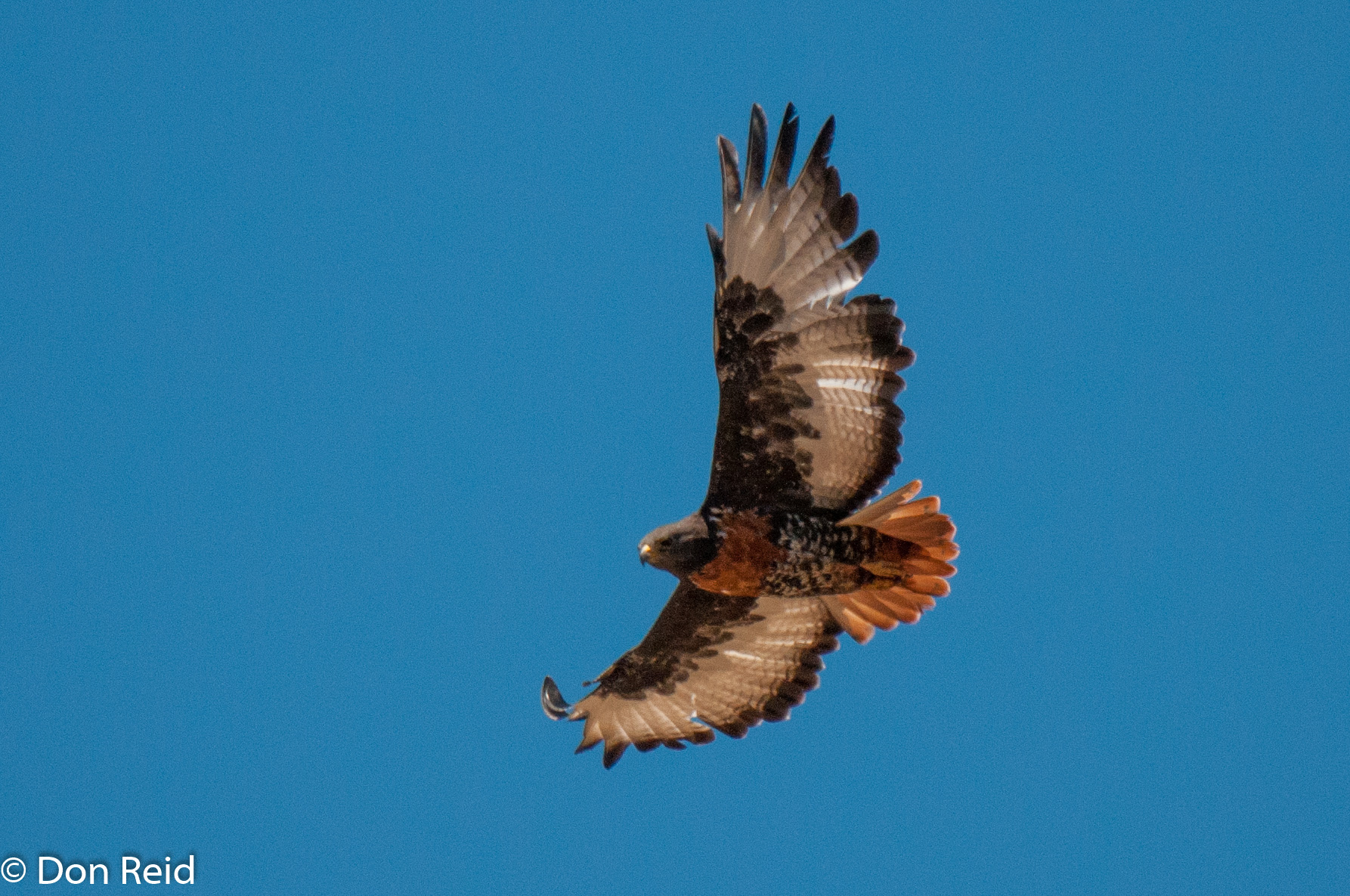
Lark-like Buntings (Vaalstreepkoppie) were unusually common, often a difficult species to find, while a soaring Jackal Buzzard (Rooiborsjakkalsvoël) made my heart soar just before exiting the pentad.

Jackal Buzzard (Rooiborsjakkalsvoel)

The road continued for a few Kms until it passed through a guest farm after which the landscape showed signs of “civilization” in the form of pine plantations and I eventually emerged onto the gravel road leading to the Oudtshoorn-Mossel Bay road and the way home.

I recorded just 21 species after two hours in this pentad, one of my lowest pentad totals ever, but all were new species for the pentad.

Memorable atlasing indeed!

The Atlasing statistics

Pentad 3350_2140

3rd Full Protocol card for the pentad;   20 New species added to the pentad list;   Pentad total species now 52

New species added to the pentad list were : Cape Canary ; Blue Crane ; Namaqua Dove ; Red-eyed Dove ; Fork-tailed Drongo ; Egyptian Goose ; Cape Grassbird ; Little Grebe ; Helmeted Guineafowl ; Common House-Martin ; Hadeda Ibis ; Rock Kestrel ; Brown-hooded Kingfisher ; Crowned Lapwing ; Rock Martin ; Common Moorhen ; Plain-backed Pipit ; Cape Spurfowl ; Dusky Sunbird ; Common Waxbill

Pentad 3350_2140

1st Full Protocol card for the pentad;   21 New species added to the pentad list;   Pentad total species now 21

New species added to the pentad list were : Bokmakierie ; Larl-like Bunting ; Jackal Buzzard ; White-throated Canary ; Grey-backed Cisticola ; Cape Crow ; Red-eyed Dove ; Fork-tailed Drongo ; Rock Martin ; Red-faced Mousebird ; Neddicky ; Karoo Prinia ; Red-winged Starling ; Cape Sugarbird ; Southern Double-collared Sunbird ; Barn Swallow ; Greater-striped Swallow ; White-rumped Swift ; Common Waxbill ; Cape Weaver ; Cape White-eye

Atlasing Tales 2 – Little Karoo near Oudtshoorn

Excuses, excuses…

Firstly, regular readers of this blog (yes, both of you) may be wondering why it’s been more than 3 weeks since my last post. I do try and post at least once a fortnight and have more or less managed to keep it up, but these past few weeks have been extra-busy with both Gerda and myself celebrating a milestone birthday. We decided early in the year to take our family – kids and grandkids, numbering 15 altogether including ourselves, to Mauritius for a week, which is where we were during the first week in October. More about that in a post very soon but for the time being this post is a further episode of Atlasing Tales (cue – loud clapping and cheering!!)

Back to Mossel Bay

During our late winter visit to Mossel Bay this past August, I was keen to do some atlasing of a couple of the pentads not yet visited in 2017 by any atlasers and eventually settled on two pentads in the Little Karoo near Oudtshoorn, with the added hope of adding some Karoo species to my year list. (For a further explanation of atlasing have a look at my earlier posts on the subject eg Atlasing Tales – Herbertsdale and beyond)

The location of the first pentad is shown on the map below, the second one is directly west of it –

The Little Karoo (better known in South Africa by the Afrikaans name “Kleinkaroo”) is separated from the Great Karoo (“Grootkaroo”) by the Swartberg Mountain Range which runs east-west almost parallel to the southern coastline of South Africa, from which it is separated by another east-west range called the Outeniqua-Langeberg Mountains. The Karoo is a semi-desert natural region of SA, with low rainfall, arid air, cloudless skies and extremes of heat and cold.

Getting there

It was raining lightly when I set off early morning from Mossel Bay and the wet roads had me making my way very carefully up the twisty Robinson Pass, which peaks out at 860 m above sea level and typically has a thick layer of mist or low clouds in the upper parts, as it did today.

Cresting the pass I glanced at the car’s temperature gauge which showed a chilly 5°C, so I welcomed the warmth of the car’s heater, but knew that I would be feeling it once I started atlasing, which one can only effectively do with the car’s windows open in order to be able to hear the birds calling, often the only way of identifying the species if you don’t see them. It was hard to imagine though, that the temperature would be the same 5° C on my way back through the pass at around 1.30 pm that afternoon!

By 7 am I was through the pass and the habitat changed rapidly to that of typical Little Karoo – few trees, many small shrubs and bushes and not much else.

Oudtshoorn south
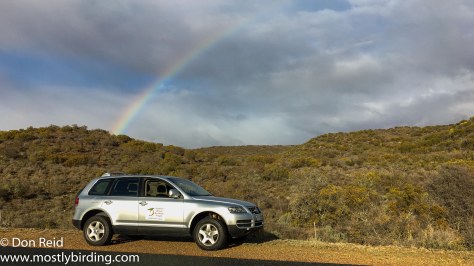
A rainbow appeared when I made my first stop

Atlasing starts

Compared to other parts of the country, birding in the Karoo is slow and measured but immensely rewarding at the same time. When birds are scarce there is a certain pleasure in looking for and finding whatever may cross your path, very different from the abundant birds that other more bird-friendly habitats may provide. It’s a bit like sipping a special wine, taking your time and appreciating each drop, knowing there’s a limited amount and plenty of time.

A Karoo Lark (Karoolewerik ; Calendulauda albescens) drew my attention at my first stop, calling from a fence post then dropping to the ground. Its call was bright and cheerful despite the rather gloomy weather, but I suppose when you live in an arid area such as the Karoo, a bit of rainy weather is worth singing about!

Karoo Lark, Oudtshoorn south

Karoo Lark, Oudtshoorn south
Karoo Lark

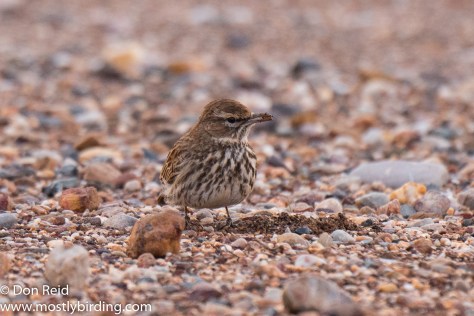
Another Lark sitting on a small bush at a distance from the road had me wondering and I studied it as best as I could at that range, not being close enough to pick up the finer details that are important when trying to identify one of the LBJ’s (Little Brown Jobs). It was streaky brown on the back, seemed to have  some light streaking on the breast – features that most of the larks possess so I was no closer to an ID. However when it turned its head the long decurved bill was a prominent feature, almost Bee-eater like in appearance which pointed towards Karoo Long-billed Lark (Karoolangbeklewerik / Certhilauda subcoronata) – some later study of Faansie Peacock’s excellent book on LBJ’s clinched the ID for me. When I submitted the card for the pentad it generated an ORF (Out-of-range form) for this species, which I still have to complete and submit in order to get the ID verified – all part of being a “Citizen Scientist”

The photo was taken previously in the Karoo National Park –

Karoo Longbilled Lark, Karoo National Park
Karoo Long-billed Lark

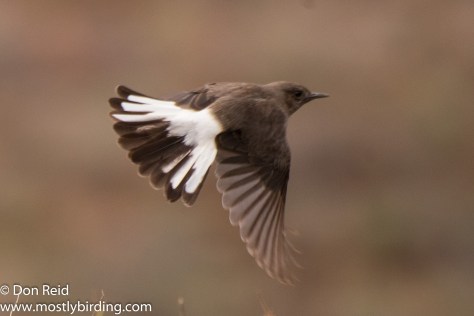
A gravel side road, signposted Kandelaarsrivier proved to be an interesting diversion and I followed it for a few kms not far from the mostly dry river course and past several farmsteads. Along the way I came across a group of Mountain Wheatears (Bergwagter / Oenanthe monticola) which were quite accommodating, allowing a close approach in my vehicle for some pleasing photos of this species which is usually at a distance.

Mountain Wheatear (female), Oudtshoorn south
Mountain Wheatear (female)
Mountain Wheatear (female), Oudtshoorn south
Surprising how much white is visible in flight

Both Speckled and White-backed Mousebirds (Gevlekte en Witkruismuisvoëls / Colius striatus and Colius colius) showed themselves at a spot further on – it’s interesting how they sometimes seem to stick close together yet don’t occupy the same tree.

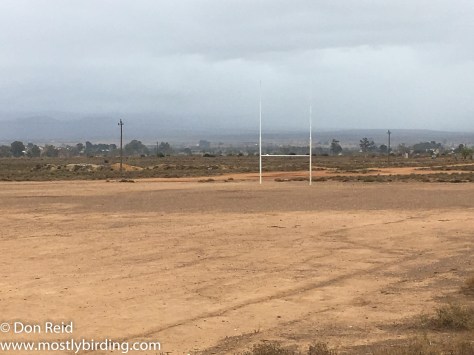
I continued along the back roads past small villages and settlements, stopping to have a closer look at a handsome stone country church and exploring a side road which looked interesting but only took me to a rugby field, which could surely only be found in the Karoo – no grass, just a hard gravel surface. I had to wonder how they played such a physical game on this surface – they obviously breed some hard players in the area or they have very good medical care.

Rugby field, Oudtshoorn south

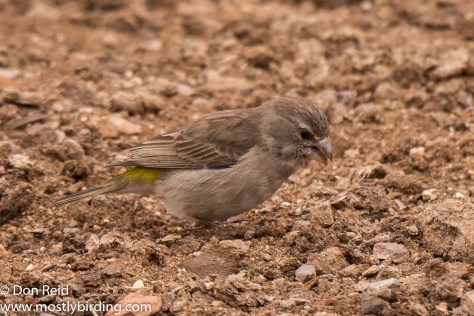
At another farmstead a group of White-throated Canaries (Witkeelkanarie / Crithagra albogularis) was busily gathering seeds from the ground, possibly spilled or perhaps from a nearby tree.

White-throated Canary, Oudtshoorn south
White-throated Canary – note the hint of yellow rump showing

White-throated Canary, Oudtshoorn south

Heading back towards the Robinson Pass I was soon into my second target pentad for the day … 3340_2200 and added Pied Starling (Witgatspreeu ; Lamprotornis bicolorCommon Starling (Europese spreeu ; Sturnus vulgaris) and Bokmakierie (Bokmakierie ; Telephorus zeylonus)fairly quickly. Another gravel road wound its way past a quarry, which also happened to be the destination of several lorries which kicked up clouds of dust each time they passed, making the conditions unpleasant for a while. Nevertheless between dust clouds I found a Karoo Chat (Karoospekvreter ; Cercomela schlegelii)and Pale Chanting Goshawk (Bleeksingvalk ; Melierax canorus)and heard the distinctive call of a Pririt Batis (Priritbosbontrokkie ; Batis pririt)

Once past the quarry I could stop and enjoy the peace of the surroundings again and soon added Cape Bunting (Rooivlerkstreepkoppie ; Emberiza capensis), Acacia Pied Barbet (Bonthoutkapper ; Tricholaema leucomelas)and Namaqua Warbler (Namakwalangstertjie ; Phragmacia substriata). Just before exiting the pentad Cape Crow (Swartkraai ; Corvus capensis)and Cape Spurfowl (Kaapse fisant ; (Pternistis capensis) were welcome additions. The landscape changed to more hilly country, providing some magnificent views….

From there it was a question of finding the shortest route back to the main road to Mossel Bay, which turned out to be a “gated” road through rolling hills, necessitating the “stop, open gate, drive forward, stop, close gate” procedure repeated four times along the way. Not at all onerous when your travelling through such rugged and handsome countryside with no other vehicles to be seen, it just adds to the “getting away from it all” feeling. I eventually got back to the tar road at the Paardebont turn-off where I turned right onto the road back home.

Gate along a wet road

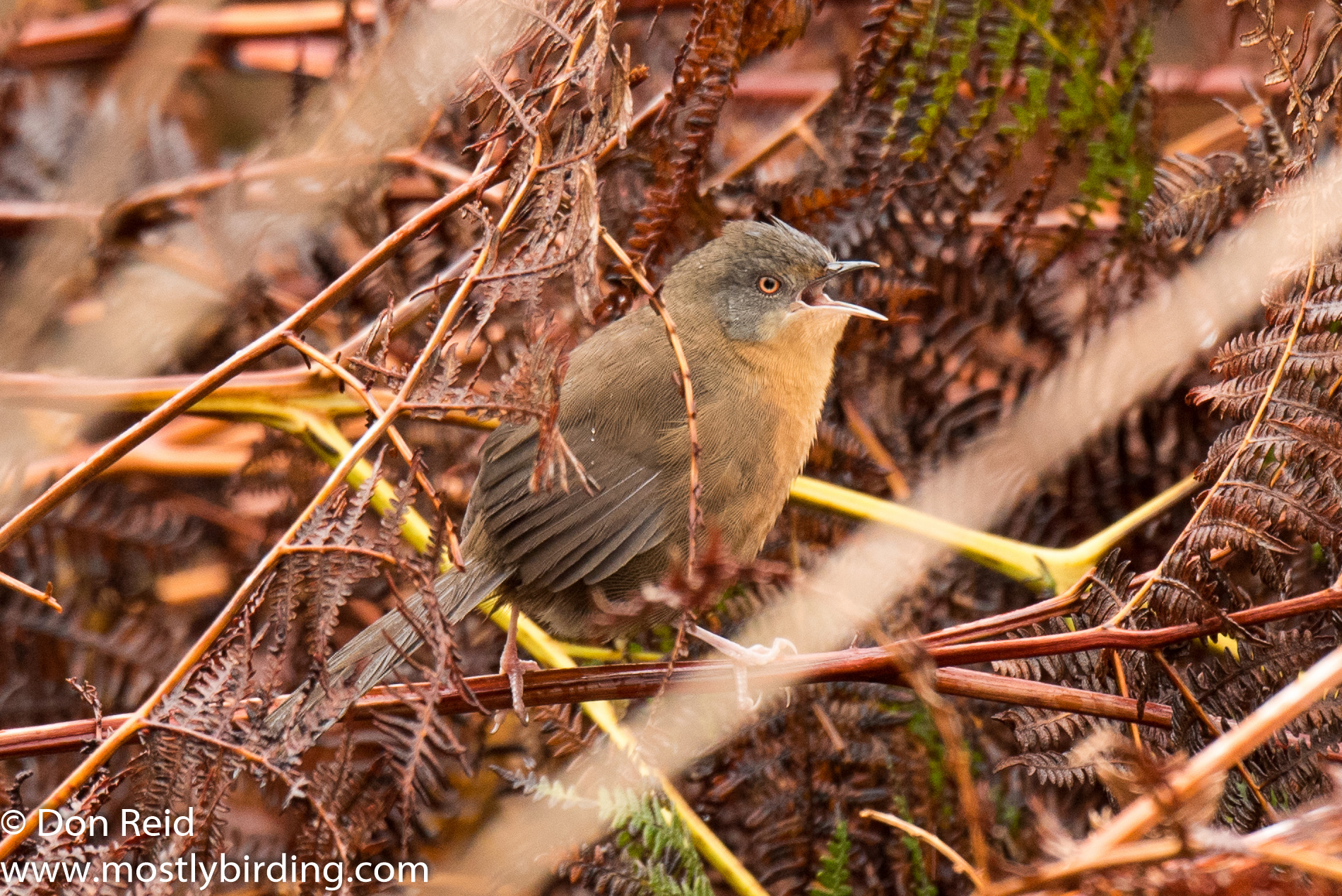
The day’s excitement wasn’t done yet however – heading down the Mossel Bay side of the Robinson Pass, I stopped at the roadside picnic spot where I had found my first Victorin’s Warbler (Rooiborsruigtesanger ; Cryptillas victorini) a few years ago – as luck would have it I almost immediately heard one in the bush just below the road and soon found it threading its way through the dense undergrowth which is their preferred habitat.

After a couple of frustrating misses with my camera, I surmised which direction it was heading and went up ahead to wait for it to appear. This strategy worked as it briefly emerged from the bush and I rattled off a few shots while it called loudly. Eureka!

Victorin’s Warbler, Robinson Pass
View of Mossel Bay from Robinson Pass (taken on a sunnier day)

Well satisfied, I headed homeward

The Atlasing statistics

Pentad 3340_2205

21st Full Protocol card for the pentad ;    Out of Range form received for Karoo Long-billed Lark ; Total species for the pentad now 141 ; my total for the 2 – 3 hours was 31 or 22% of the pentad total

Pentad 3340_2200

12th Full Protocol card for the pentad ;   Total species for the pentad now 111 ; my total for the 2 hours was 23 or 21% of the pentad total