The Sociable Weaver, chosen by Birdlife South Africa as their “Bird of the Year” for 2016, is unique in many respects and more than worthy of its selection.
It is also a bird that has fascinated me ever since I first saw their massive nest structures on Camelthorn trees in the Free State, long before my interest in birding began. This was in the early 1970’s when I moved to Bloemfontein, Free State and developed two loves – for my wife and for the wide open spaces of the Free State, represented by the family farm near Hoopstad.
Although the farm we used to visit every couple of weeks is no longer in the family, the same massive Sociable Weaver nest sits securely in the same Camelthorn tree in the family cemetery, watching over the generations of the family who have found their final resting place in its dappled shade.
Why Unique?
Apart from being endemic to Southern Africa, the Sociable Weaver’s nest is the largest built by any bird in the world, large enough to house more than a hundred pairs of birds, often of several generations (why am I thinking of the Dallas Ewings right now?). They construct these enormous nests of stiff grasses, forming chambers at different distances from the outside face, which provide protection from the temperature extremes of Southern Africa’s arid zones.
Described as being like “giant haystacks”, the nests are constructed in trees or on artificial structures such as telephone and electricity poles, windmills and the like and have become an icon of the arid areas of Southern Africa.
Sociable Weaver nest near HoopstadCloser view of nest showing construction from stiff grass and some of the entrance holes
Species Names
Scientific : Philetairus socius – from the Greek philos = love and hetairos = companion
Afrikaans: Versamelvoël
Indigenous : Thantlagane(NS), Kgwêrêrê (Tw)
German : Siedelweber
French : Républicain social
Portuguese : Tecelão-sociável
Dutch : Republikeinwever
Sociable Weaver, Hoopstad
Distribution
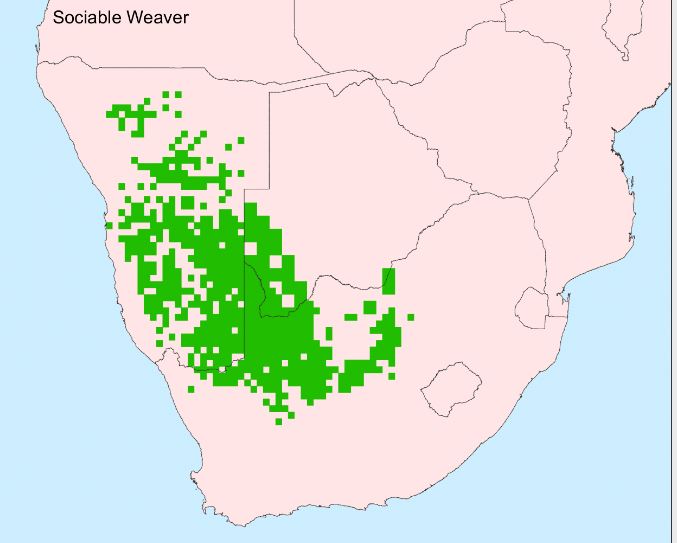
Distribution is across north-western South Africa, south-west Botswana and northwards across Namibia and is strongly associated with the arid savannahs of the southern Kalahari region.
The SABAP2 distribution map looks like this :
SABAP 2 Distribution map
Identification
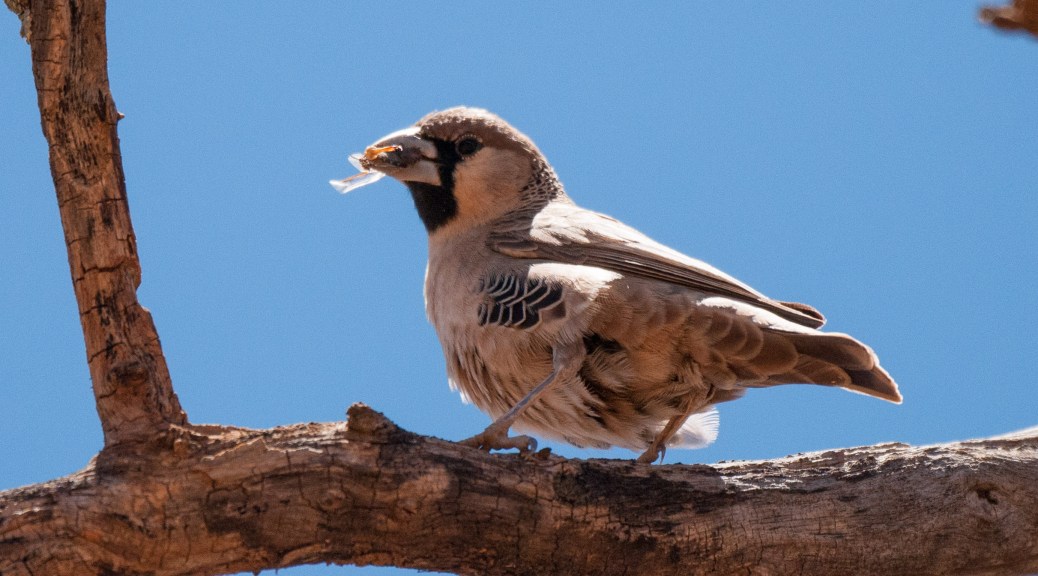
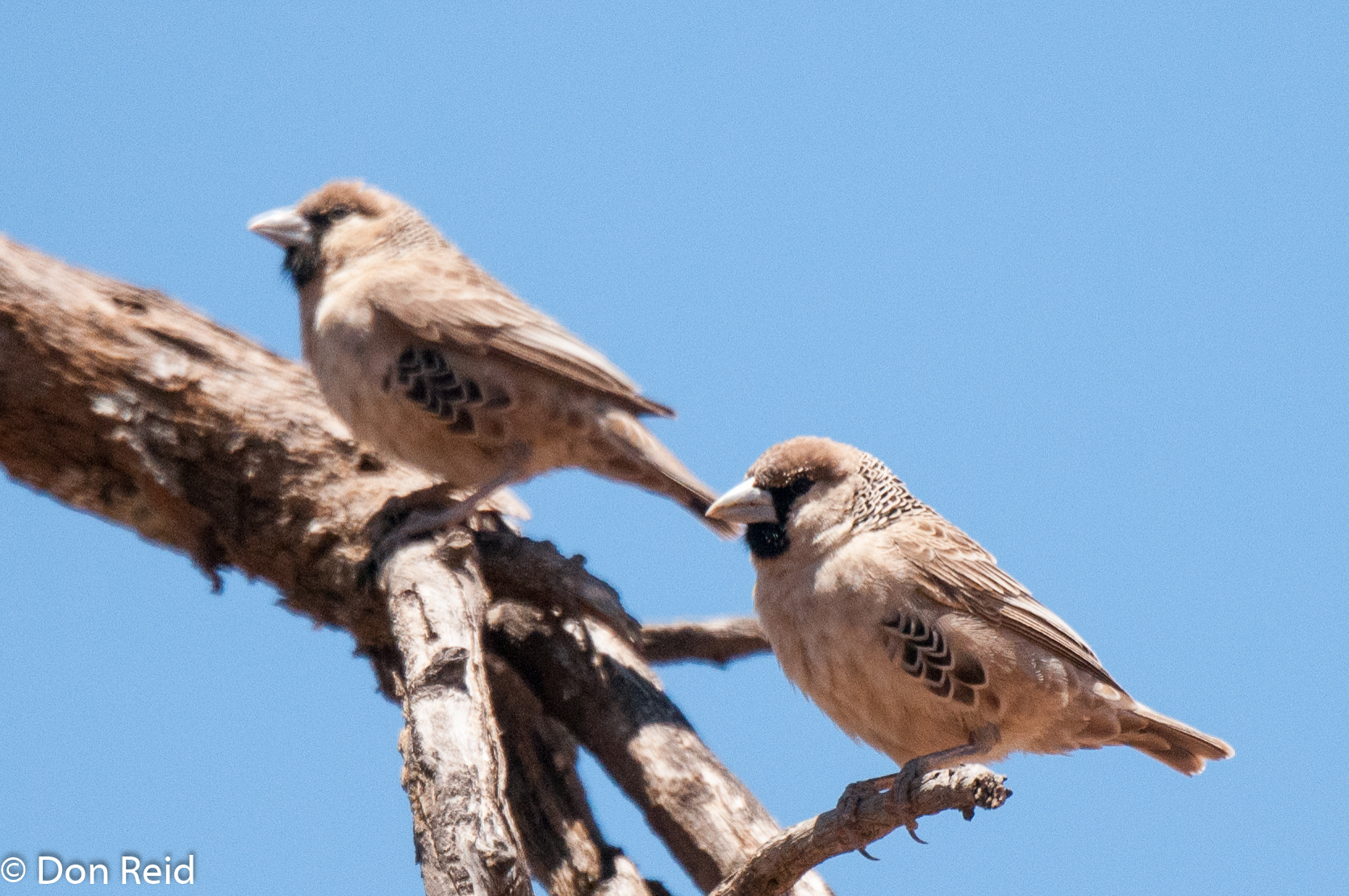
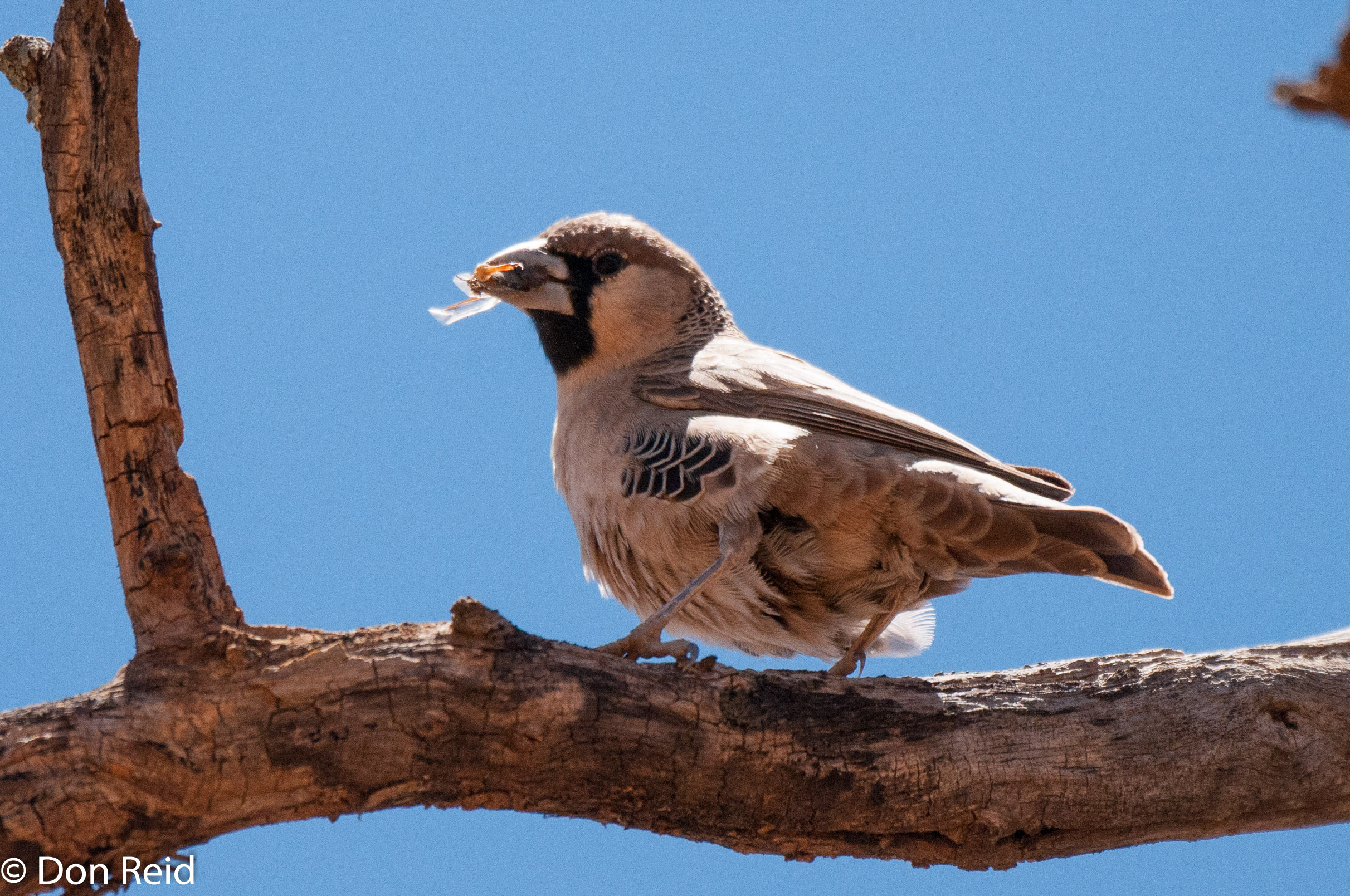
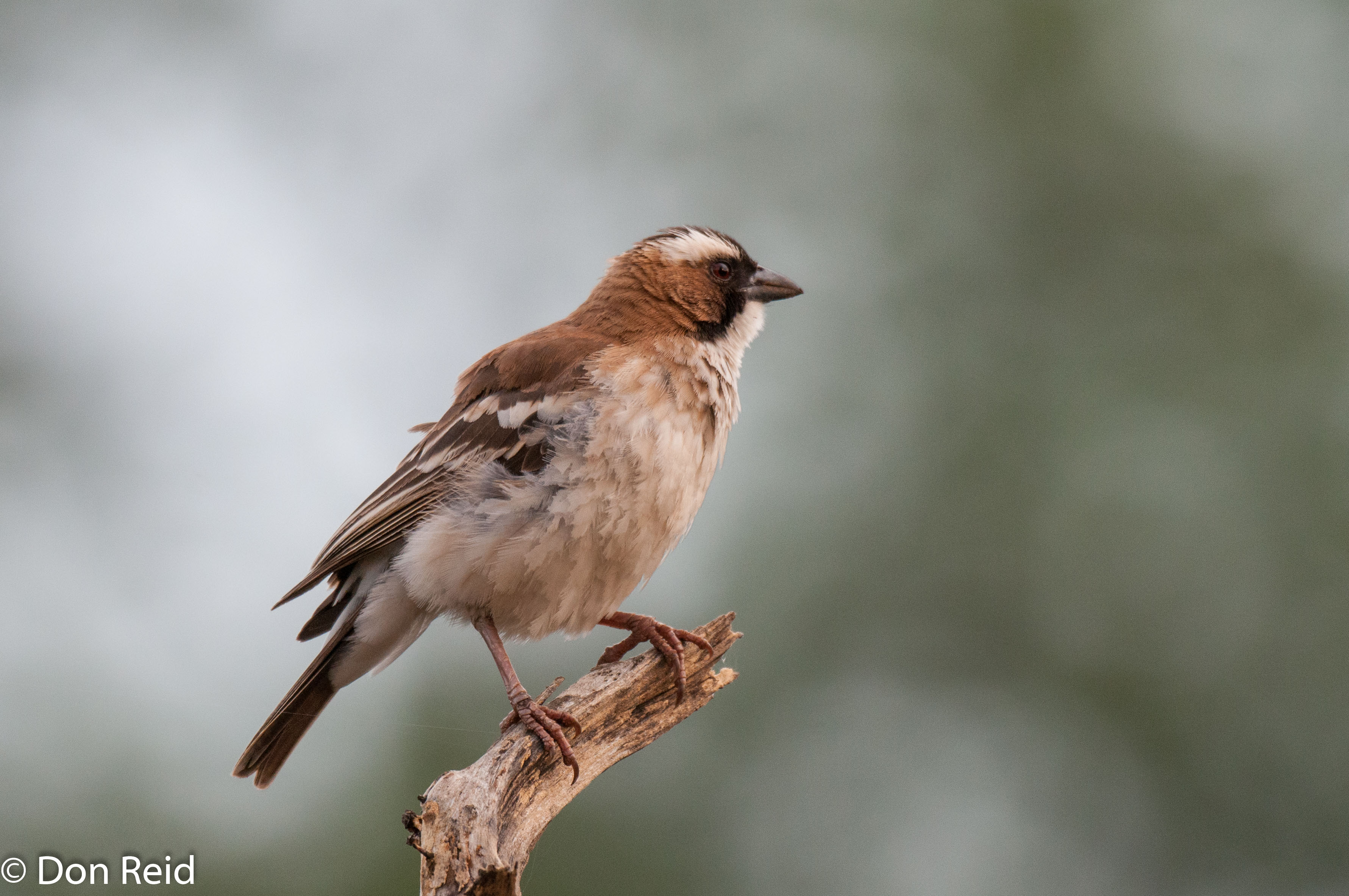
The nest is unmistakable, so once you have found the nest the birds will not be far away. Although classed as Weavers they are more Sparrow-like in appearance, small (14cm) and fairly drab-coloured to match the dry browns of the habitat they prefer. Their outstanding features are the black chin contrasting with a light-coloured front and face, black barred flanks and scalloped back
Images
Other Stuff
Several other species “borrow” nest chambers for their own breeding – such as mud-nesting wasps, nesting Pygmy Falcons, Red-headed Finches and Rosy-faced Lovebirds. Others use them as roosts including Ashy Tits, Familiar Chats, Acacia Pied Barbets and Pearl-spotted Owlets. So the great nest becomes a “bird hotel” for many, even snakes like visiting for a nestling or egg take-away.
There is certainly nothing else quite like it in the bird world.
Additional sources :
Robert’s Multimedia Birds of Southern Africa
Latin for Birdwatchers (Roger Lederer and Carol Burr)
Ever wondered what it would be like to have your own private Nature Reserve – one you can explore at your leisure, with a major African river on its doorstep?
That seems to be part of the deal when you visit the Seboba Nature Park in Kasane, northern Botswana. Introduced to it by a colleague, I have been fortunate to visit this idyllic spot a few times this year and each time I have been the only visitor. Clearly it is not always as quiet, particularly when school and other groups visit – it was probably a question of being lucky in choosing the times we did.
Seboba Nature Park is a small nature reserve located on the outskirts of Kasane, bordered on the one side by a stretch of the Chobe River and on the other by the tarred road into Kasane, and was developed by the Botswana Government to support tourism in the area – by all accounts it has proved to be successful up to a point, but I would say it needs the support of tourism companies to persuade more tourists to visit.
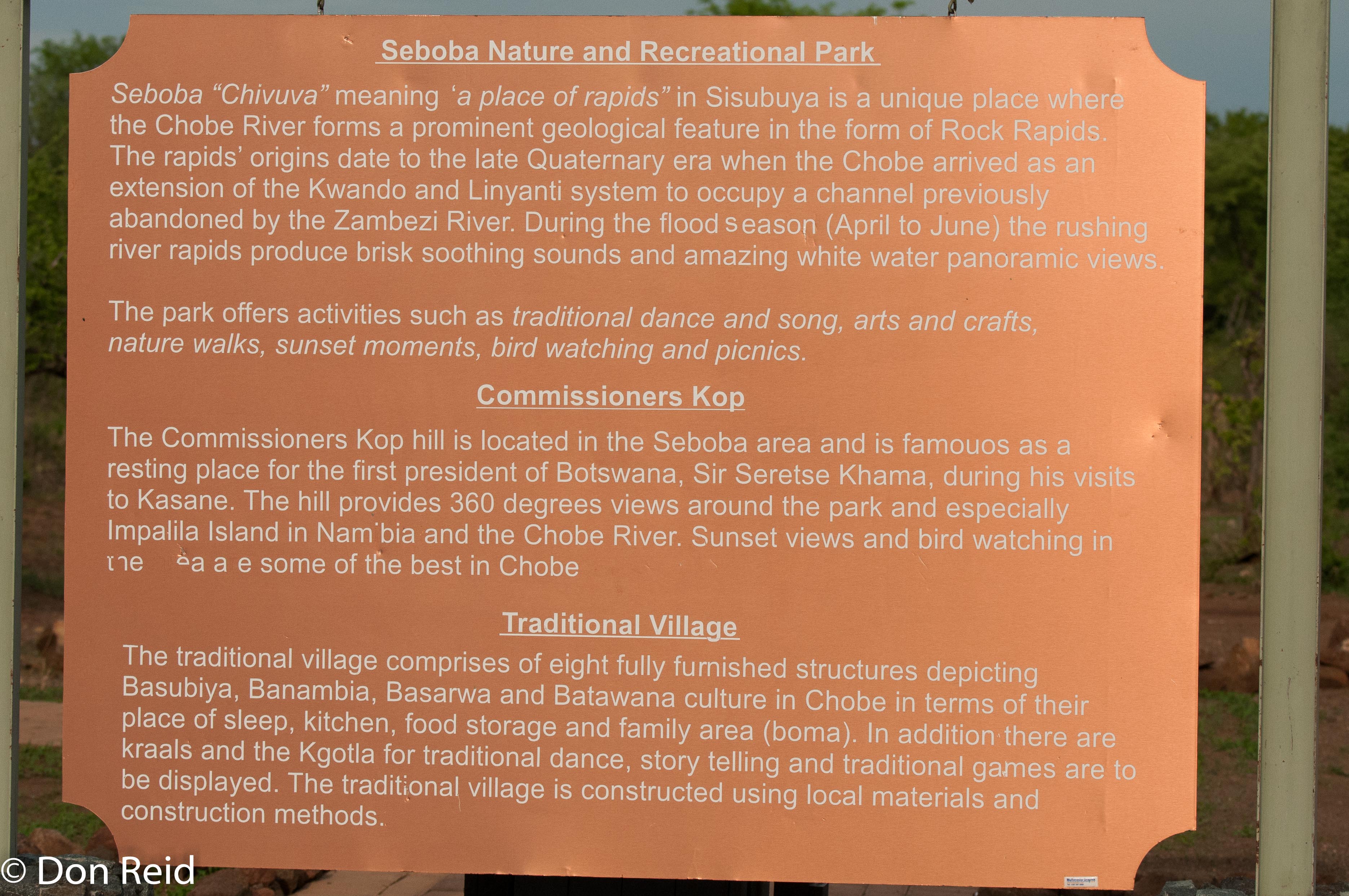
The notice board and map near the entrance spells out its origin and some of the attractions, which include cultural villages, information centre, curio shop, dance arena and walking trails :
Map of Seboba Nature Park, Kasane
There are paths from the parking area that meander down to the river’s edge and to the top of a low hill, called Commissioner’s Kop, which has a deck with tables and chairs and magnificent views up and down the river.
Deck on Commissioner’s KopView from deck on Commissioner’s Kop
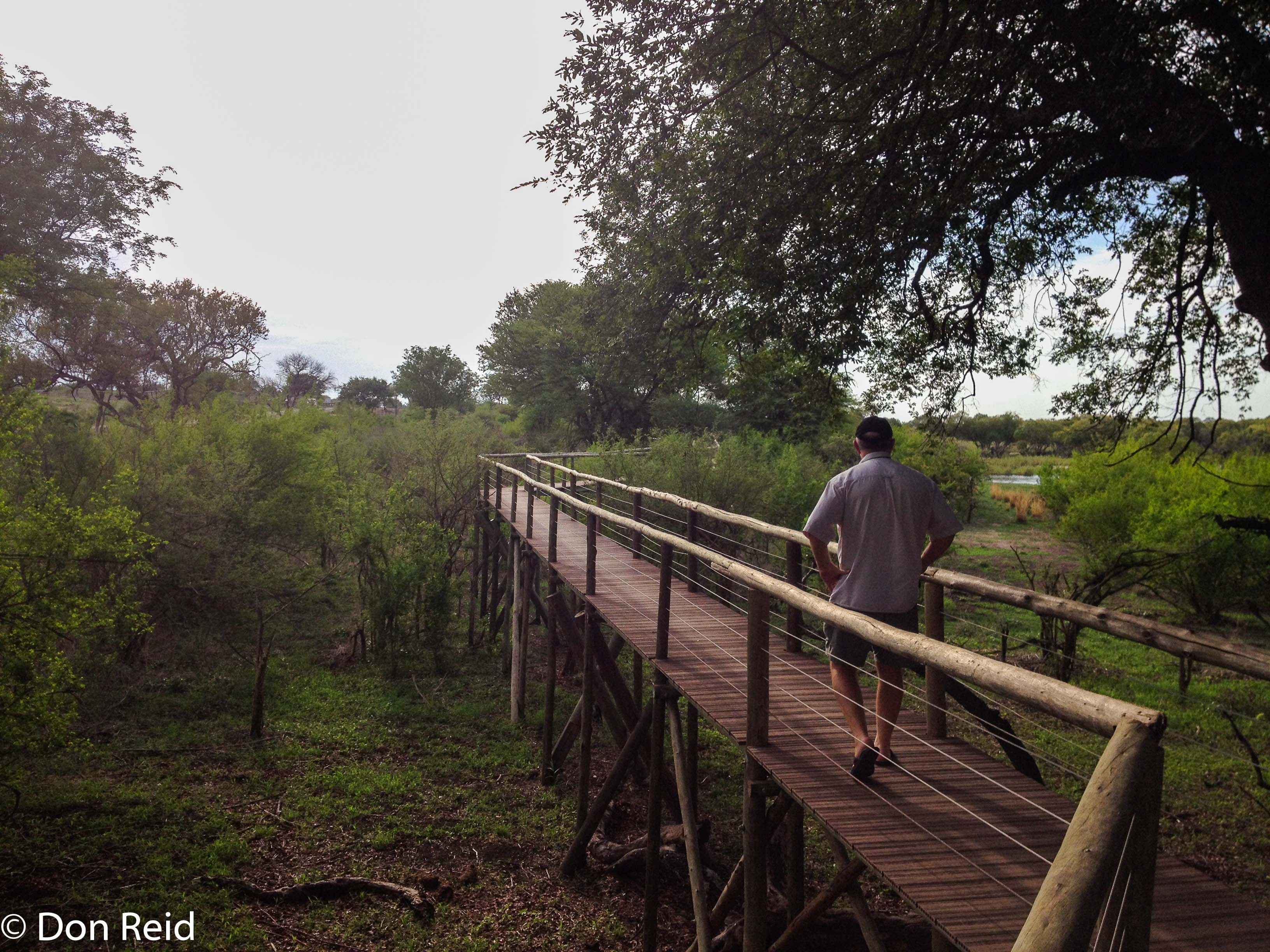
A raised boardwalk leads off the reception area and meanders through the riverine forest and bush, creating opportunities to see some of the variety of bird life and a few animals.
The boardwalk
The boardwalk ends at the picnic site, but paths take you further through the dense bush should you want to be a little adventurous – it’s best to have a ranger accompanying you from here as the chances of “bumping into” wild life increase.
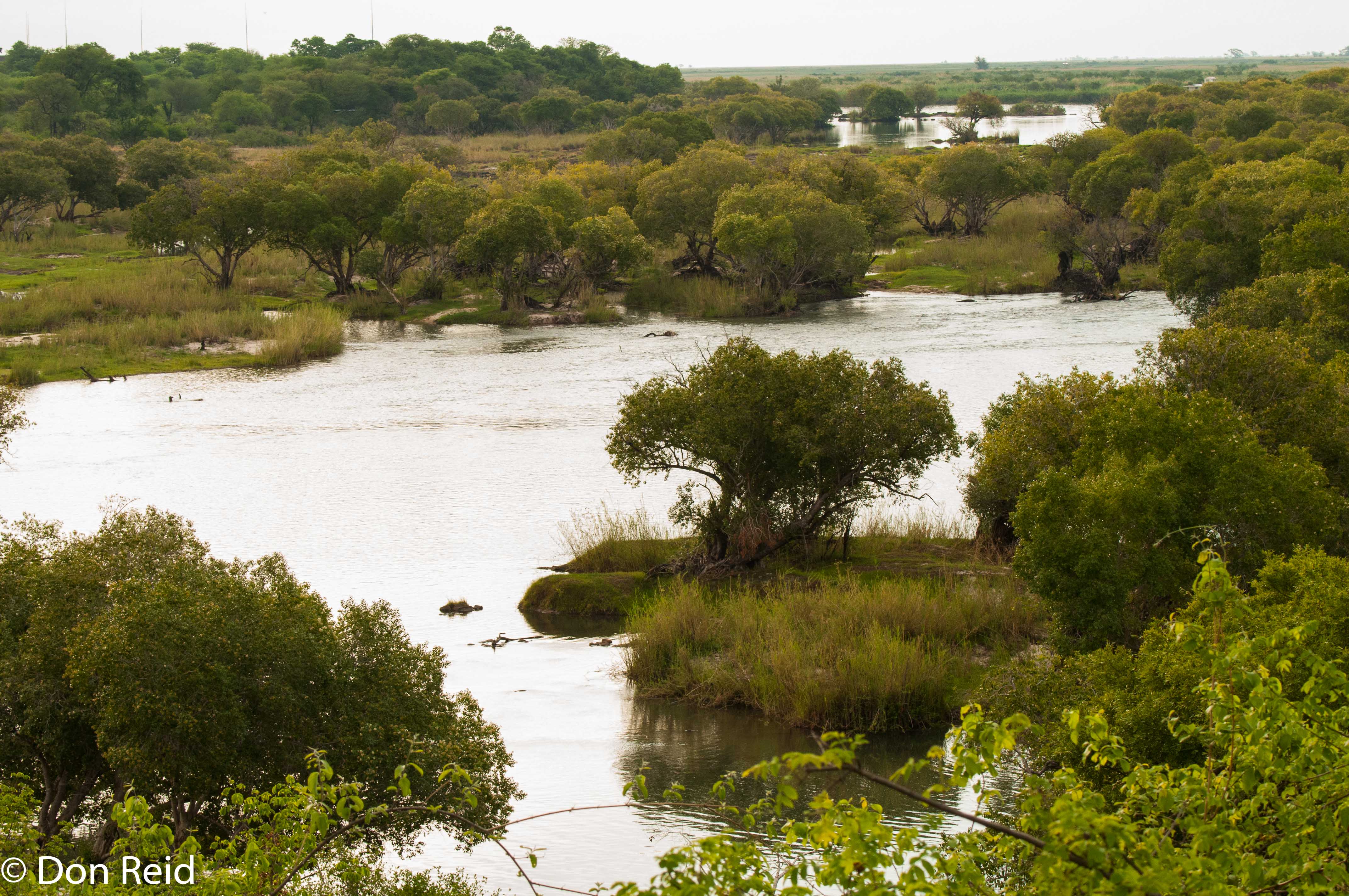
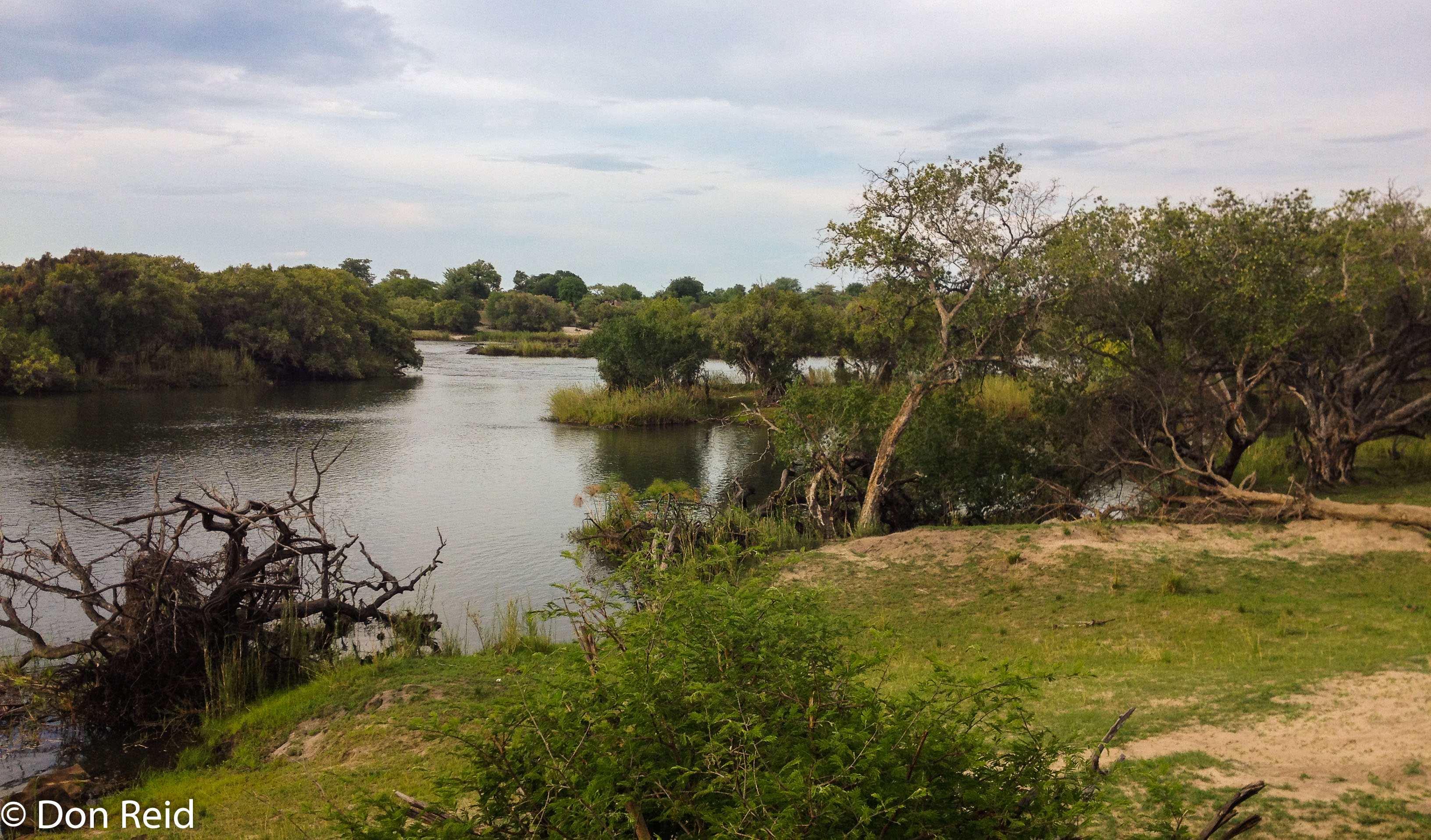
A small deck at the end of the boardwalk allows you to view the part of Chobe River known as the Seboba Rapids – a section of river with faster flowing water and small islands, some bedecked with trees and favoured by hundreds of birds for roosting and nesting.
Chobe RiverChobe River
Seboba is not a game park as such, but a wildlife corridor to the river has been maintained by leaving openings in the fence between the adjoining road and the park, which is regularly used by elephant and other wild life to gain access to the river, as they have for millennia in all likelihood.
One of my visits turned into a bit of an adventure and reminded me that the area is very much “Wild Africa”…….
After parking near reception, I slung my binoculars around my neck and my camera over my shoulder (two items which have become part of my outfit when birding) and headed down the track to the river. I could not help noticing the fresh-looking elephant tracks in the sand and equally fresh-looking elephant dung, which I had to step around in places, bush signs which had my senses on high alert.
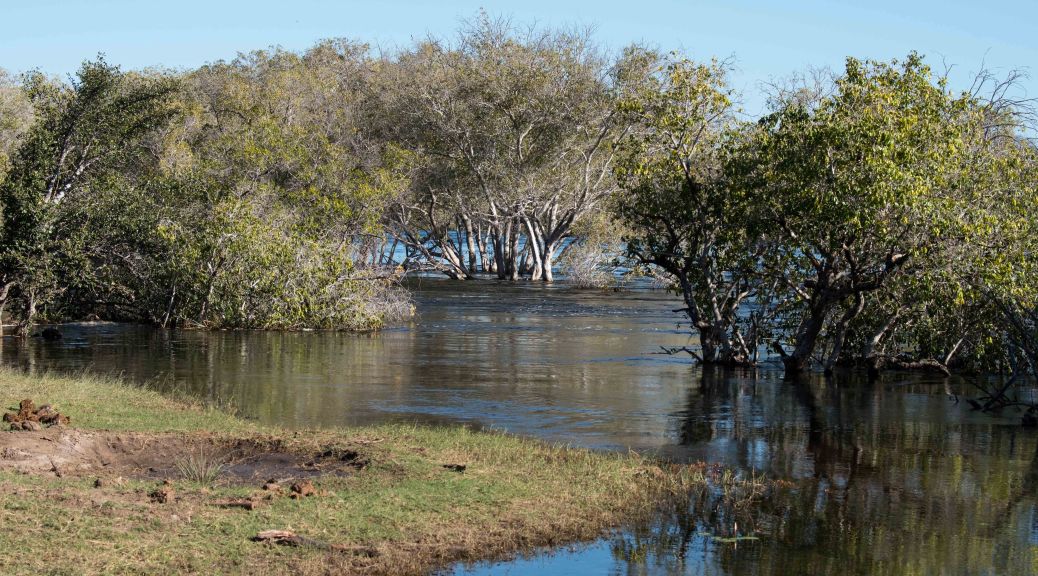
The river was not far, so I carried on to the river bank and started birding, while looking around carefully all the while. Just then, one of the rangers came down the track to tell me there were elephants in the bushes to my right and suggested, with a hint of urgency, that I move away . I could see the elephants through a gap in the trees and decided the ranger had a point, so I followed his further suggestion that we head along the river, the ranger in front and me behind. We stuck to the river’s edge, which was flowing high, wide and strong from the rains in Angola some weeks prior.
We were now walking away from the elephants, so I was feeling a tad more relaxed and enjoying the solitude of the river and the adjoining thick bush – until I started thinking about crocodiles, having seen the warning notices. Besides that, we were now literally on the edge of the Chobe River, even treading in the water where the steep bank caused my shoes to slip here and there.
At least they warn you
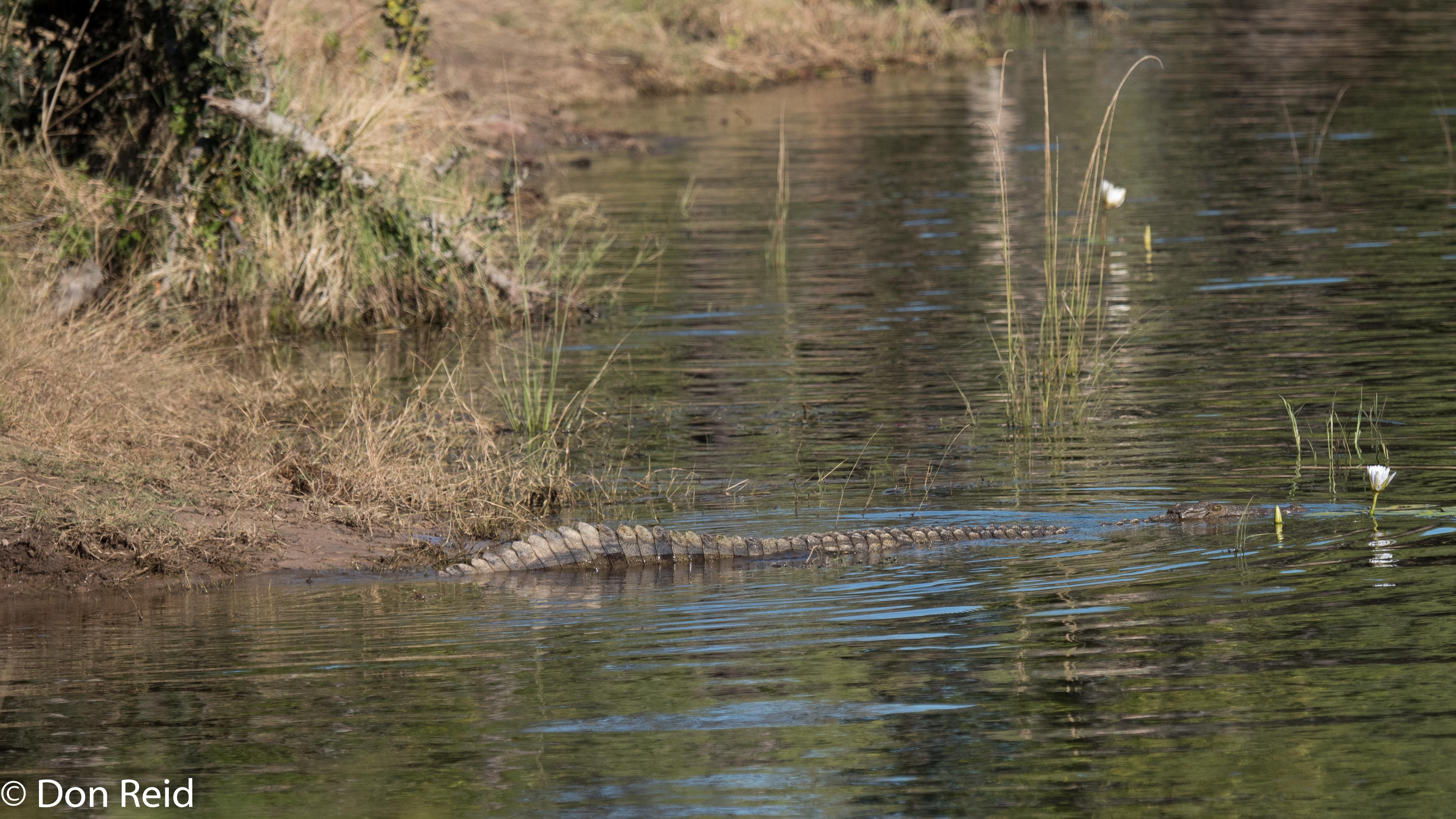
I casually asked the ranger whether crocodiles were present and he nodded to say yes – not a minute later a loud splash ahead of us announced the first croc as he was scared off by our approach. Further ahead we spotted a croc about 50m away, lying in the shallows next to the bank – we approached slowly and cautiously and as we got closer the croc slid silently into the river, swam behind a partly submerged tree and eyed us as we passed.
A croc is spotted not far aheadHe has not seen us yetThe croc slides into the river as we get closer
All in all, an eventful and exciting walk that I had not planned for at all – Africa can make you feel very small and vulnerable at times!
The Birding
My primary purpose in visiting Seboba was, of course, to do some birding and the park did not disappoint. My first sighting on my first visit was Collared Palm-Thrush on the reception building’s roof – a most desirable species for Southern African birders. This set the tone for what could be expected and as I explored further the list grew, including a pleasing number of “specials” –
Along the boardwalk –
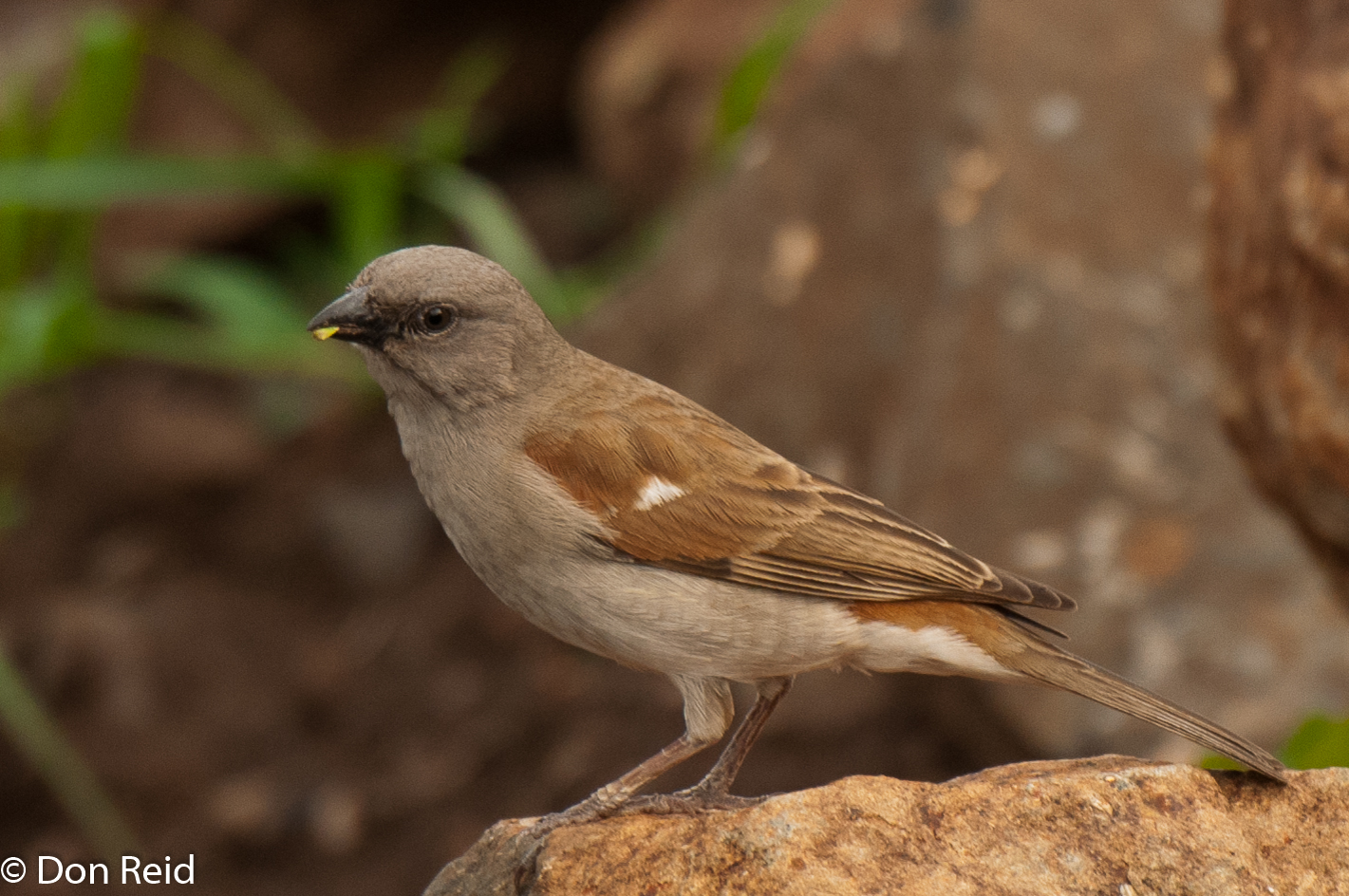
Grey-headed Sparrow, not scarce by any means but interesting because Kasane is one of the few places in Southern African region where both Southern and Northern species occur. This one turned out to be the Southern species
Noisy Arrow-marked Babblers
Trumpeter Hornbills with their eerie “crying-baby” calls echoing through the woodland
Bradfield’s Hornbill
Broad-billed Roller
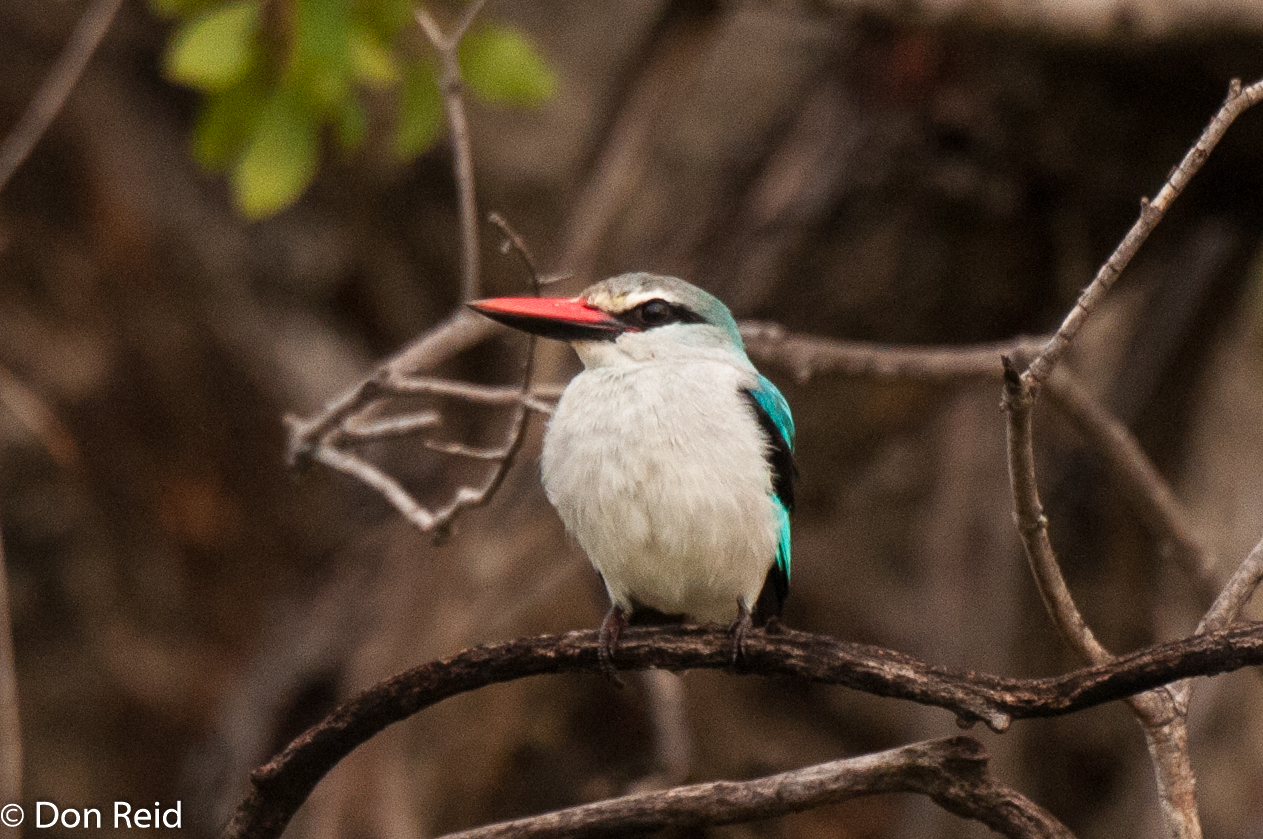
Woodland Kingfisher, its position given away by its trilling call
Southern Grey-headed Sparrow, Seboba Nature Park KasaneWoodland Kingfisher, Seboba Nature Park – Kasane
Commisioner’s Kop viewing point –
African Golden Oriole in its bright yellow plumage
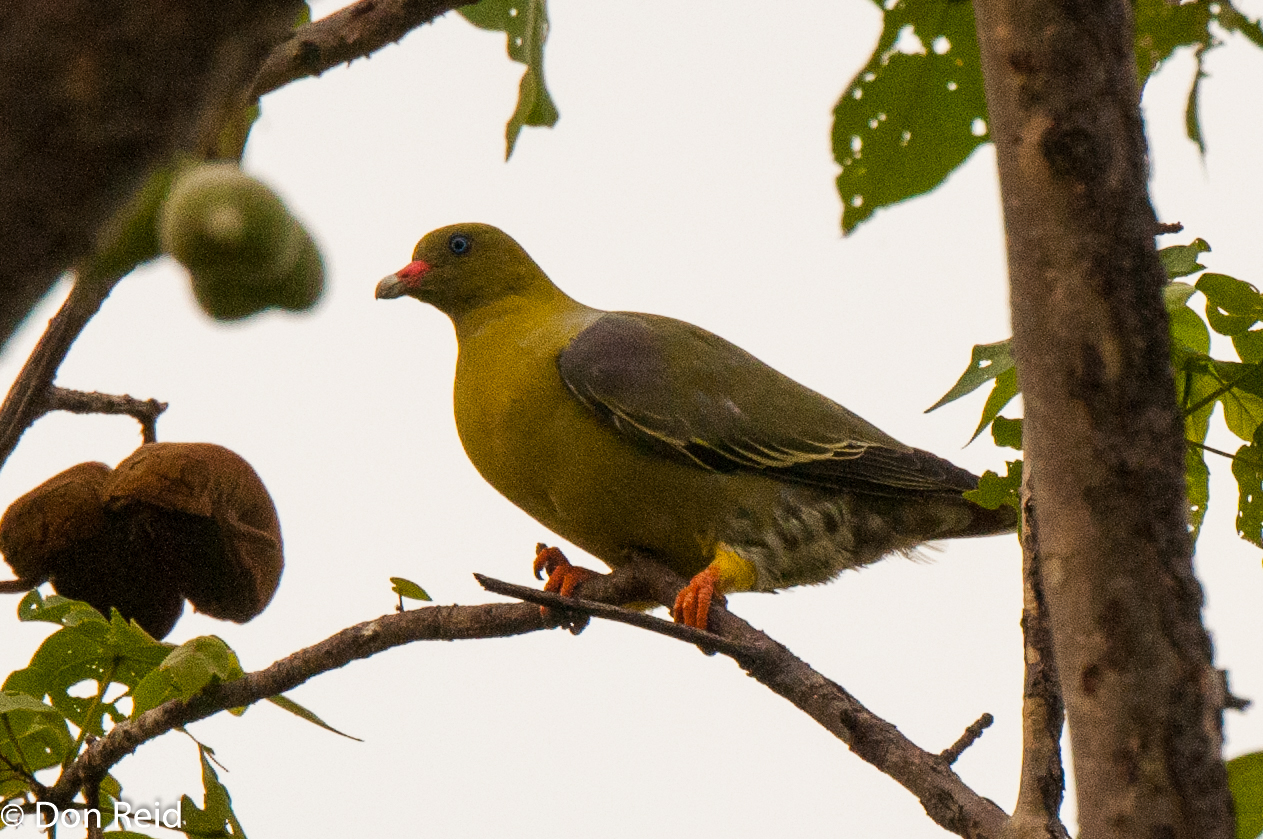
African Green Pigeon – good at hiding behind foliage
Emerald-spotted Wood-Dove
African Golden Oriole, Seboba Nature Park KasaneAfrican Green Pigeon, Seboba Nature Park Kasane
Down by the riverside –
African Jacana
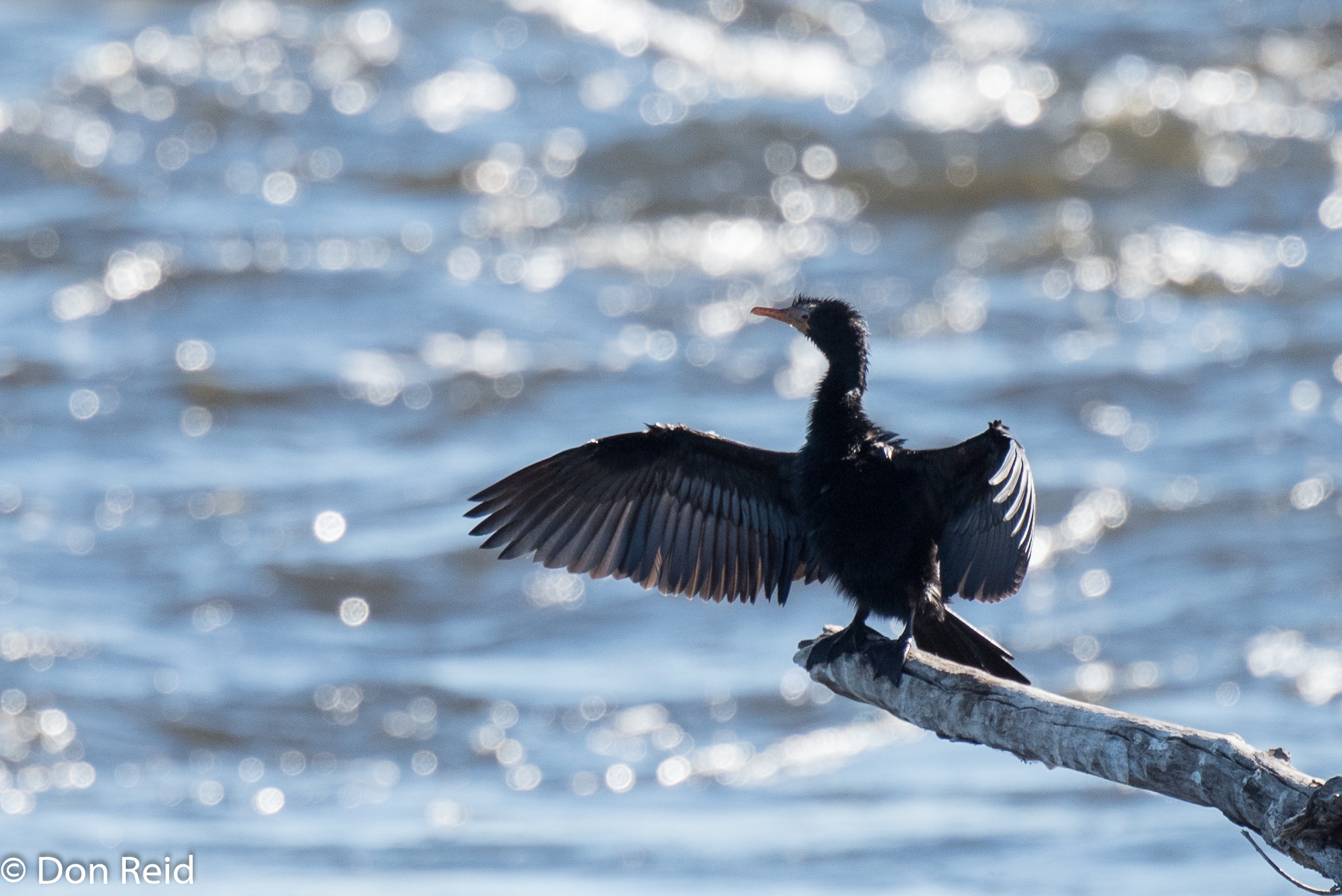
African Darter
Yellow-billed Stork
Pygmy Goose
African Openbill in the shallows, probing for molluscs
Reed and White-breasted Cormorants in numbers
Water Thick-knee, flying away low over the river when disturbed
White-crowned Lapwing, also prone to flying off but often landing a short distance further
Water Thick-knee, Seboba Nature Park KasaneWhite-crowned Lapwing, Seboba Nature Park – KasaneReed Cormorant, Seboba Nature Park Kasane
Hillside and open areas –
White-browed Sparrow-Weaver
Blue Waxbill
Little Bee-eater
White-browed Sparrow-Weaver, Seboba Nature Park – KasaneBlue Waxbill, Seboba Nature Park Kasane
This small park is well worth a visit even if for just an hour or two – the variety of habitats in a concentrated area can be covered in a short time, although the longer you can stay the better … oh and don’t wander around too much unless there’s a ranger nearby (which they tend to be)
Special thanks to Derek Thomas for showing me this spot, and others, in Kasane.
Previous posts on our Danube River Cruise were about the places visited during the eight-day cruise, this one is about the river cruising experience itself and some of the special the sights along the way……….
The Route
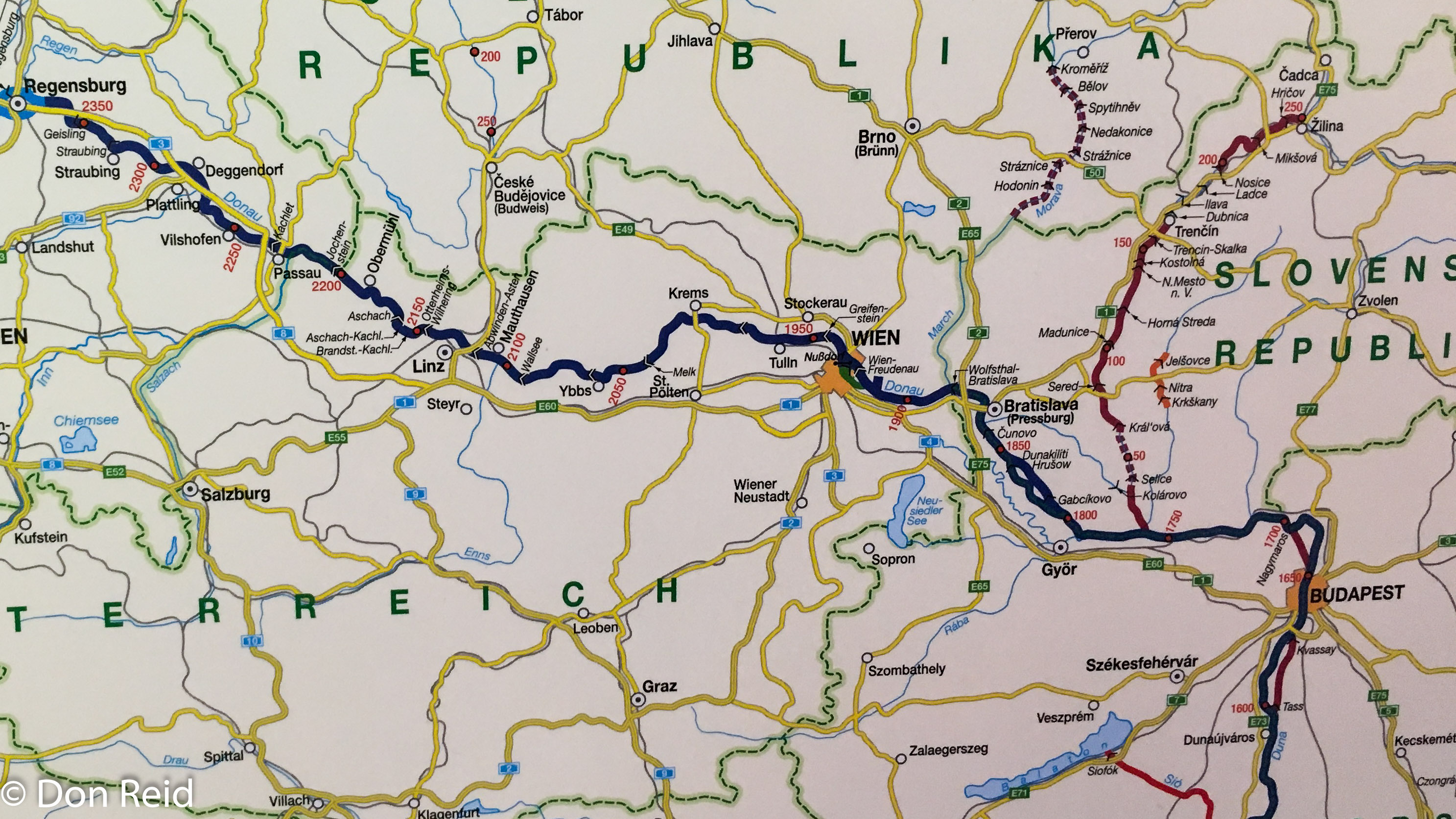
Cruise route map – Passau to Budapest and back through Germany, Austria, Slovakia and Hungary
The Boat
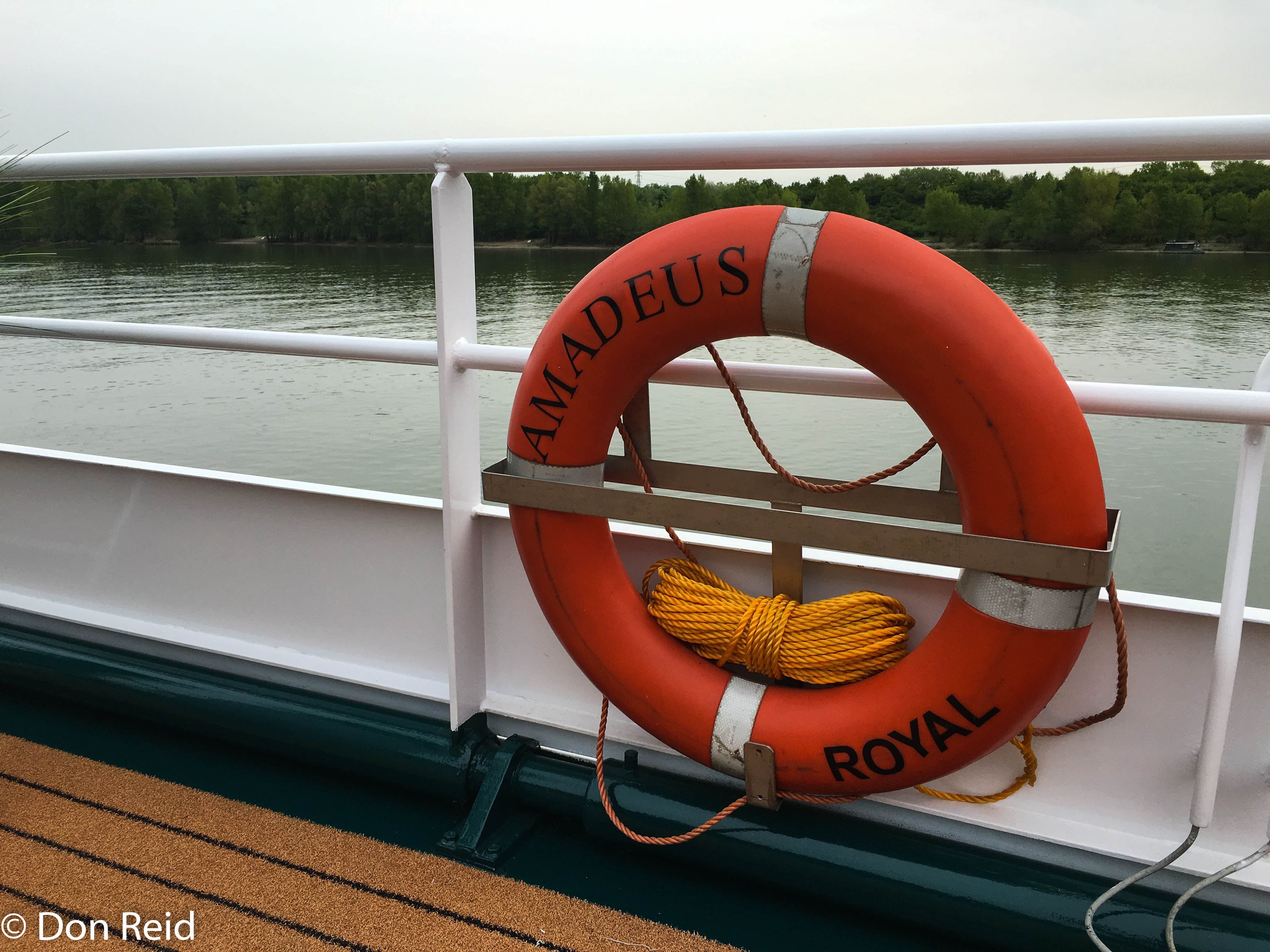
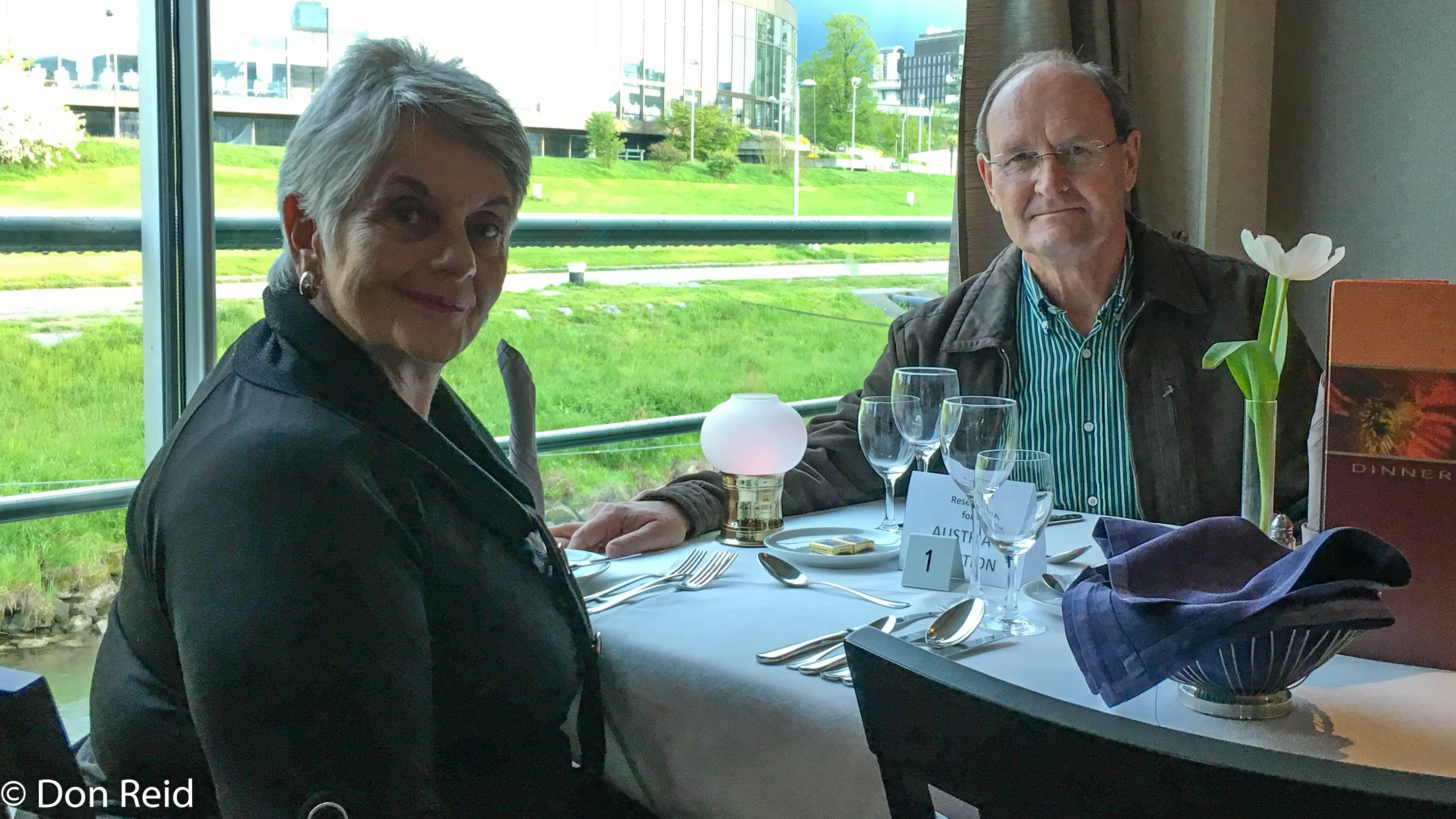
The Amadeus Royal was our home for the cruise duration and provided all the comforts we expected
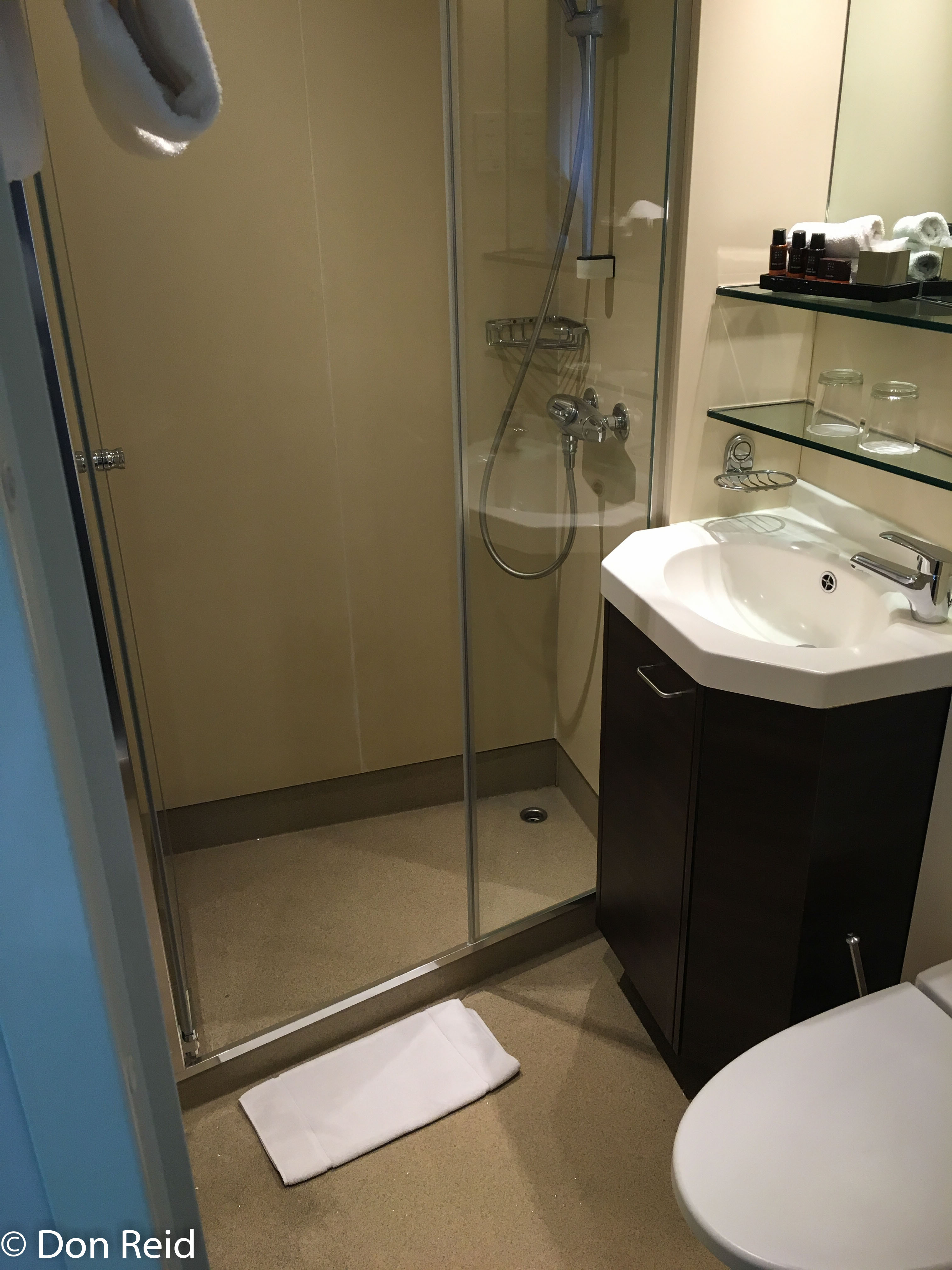
Our embarkment point at PassauTea and Apfelstrudel in Passau just before boarding (What’s on Gerda’s mind?)Amadeus Royal – the compact bathroomAmadeus Royal – unpacking in our cabinOff we goLeaving Passau
Riverside Scenery
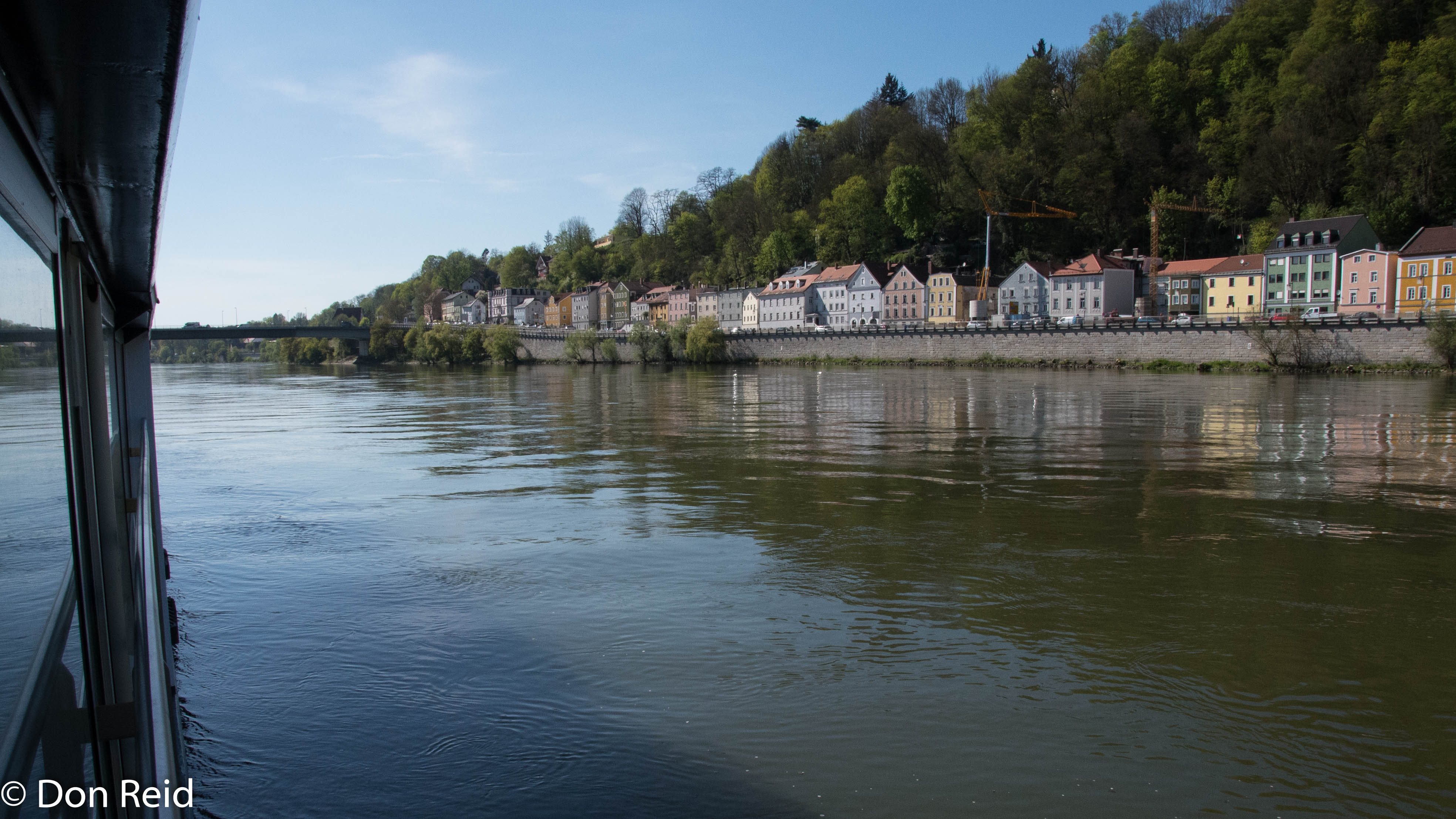
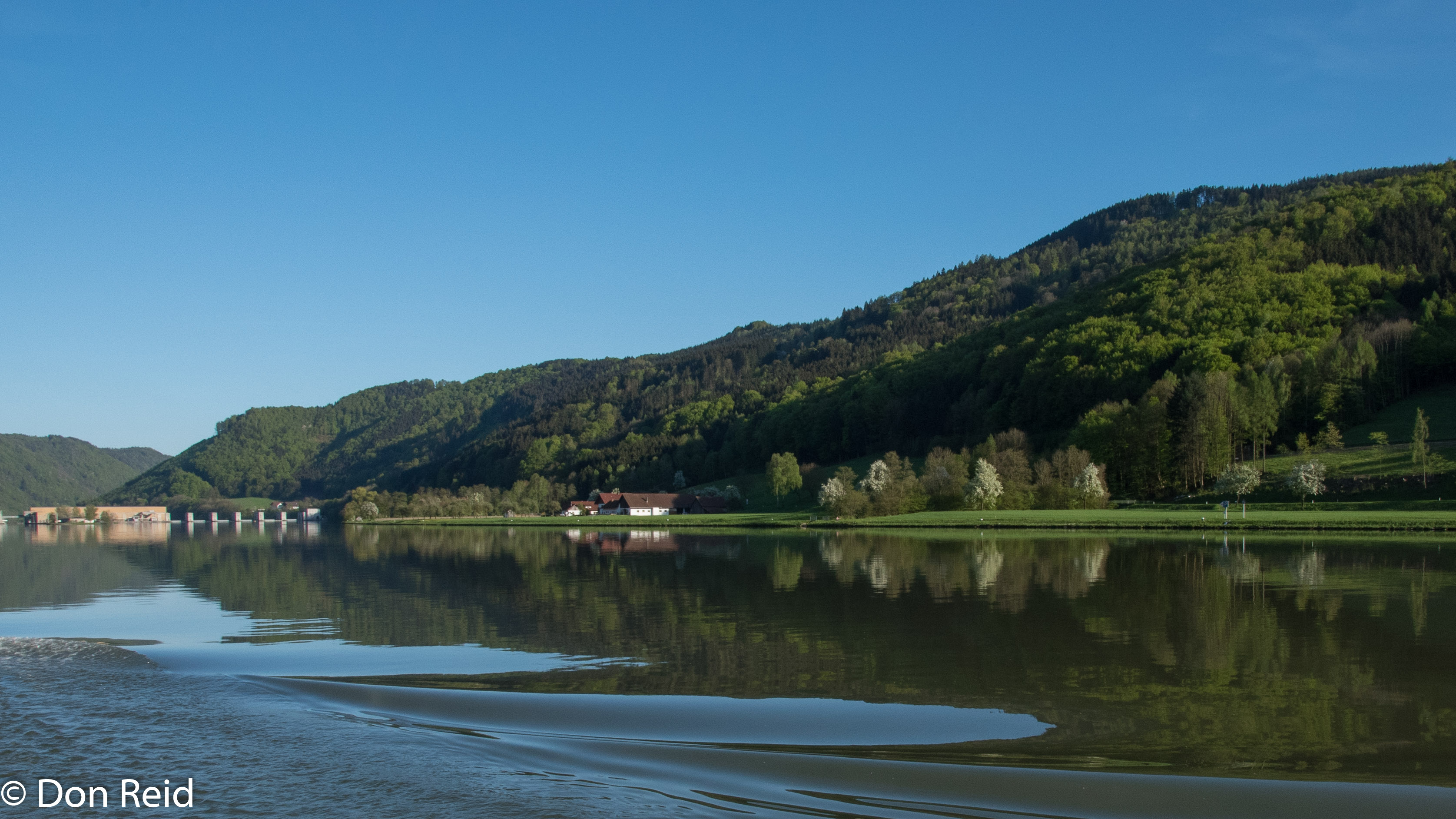
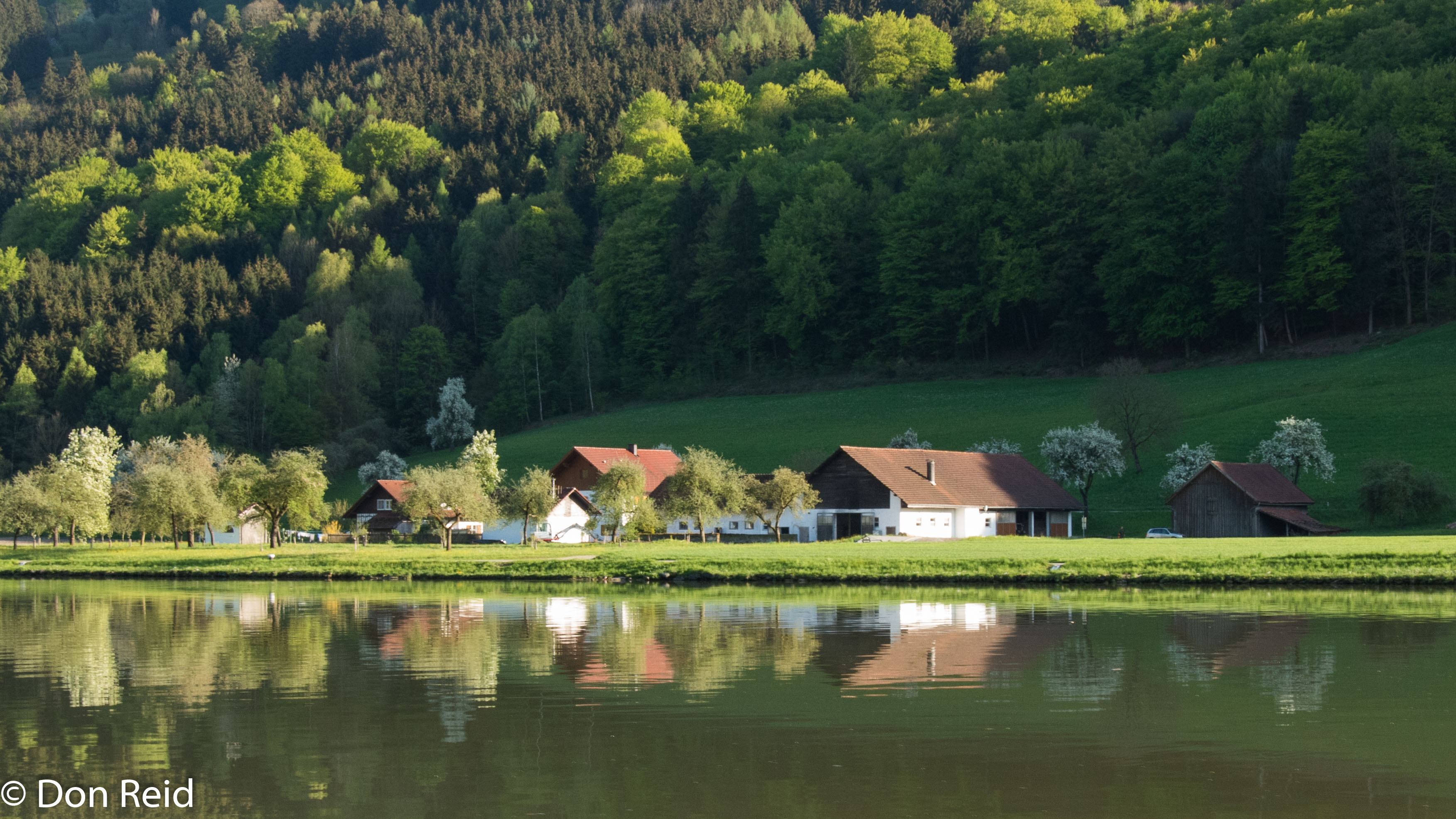
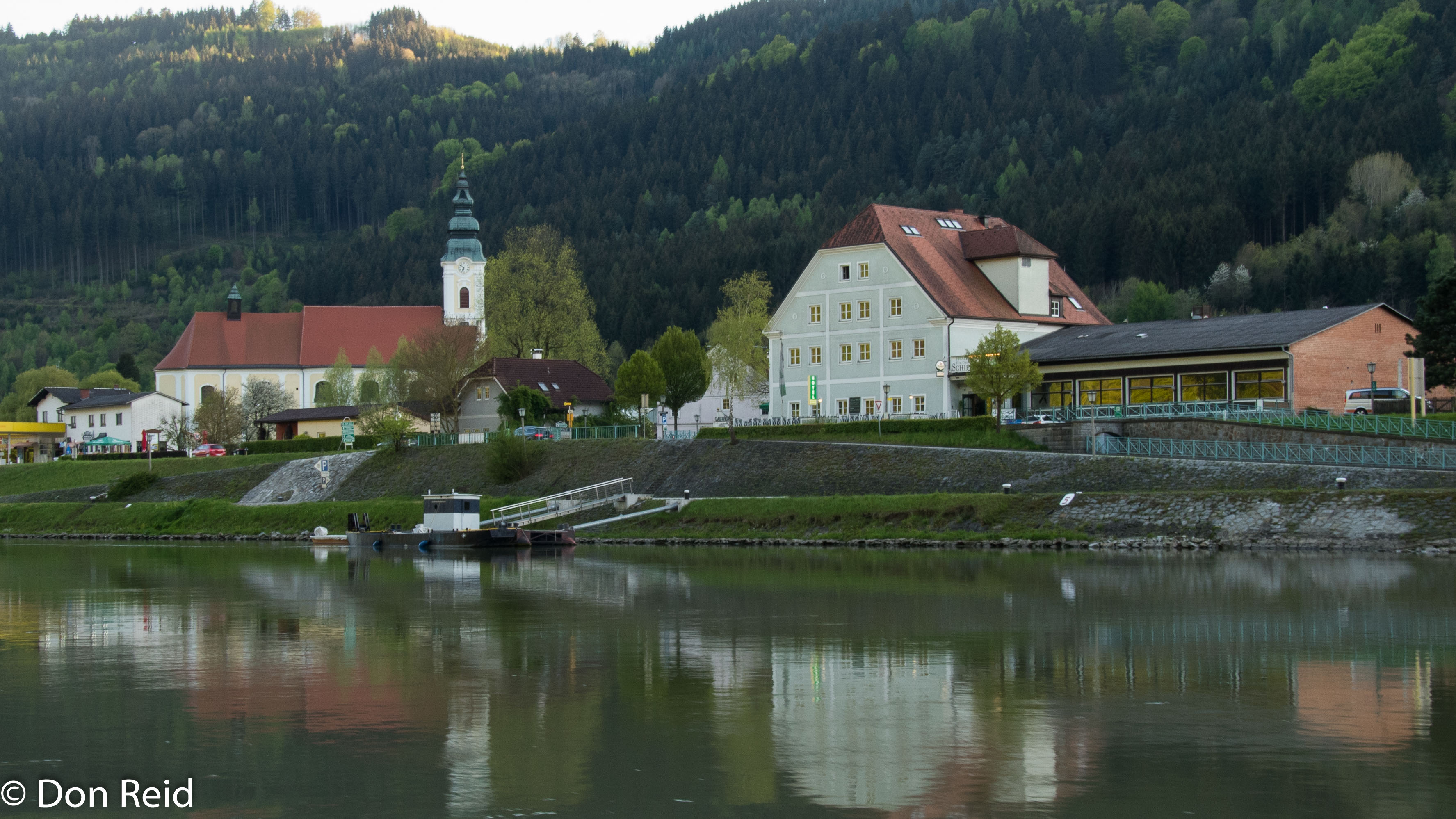
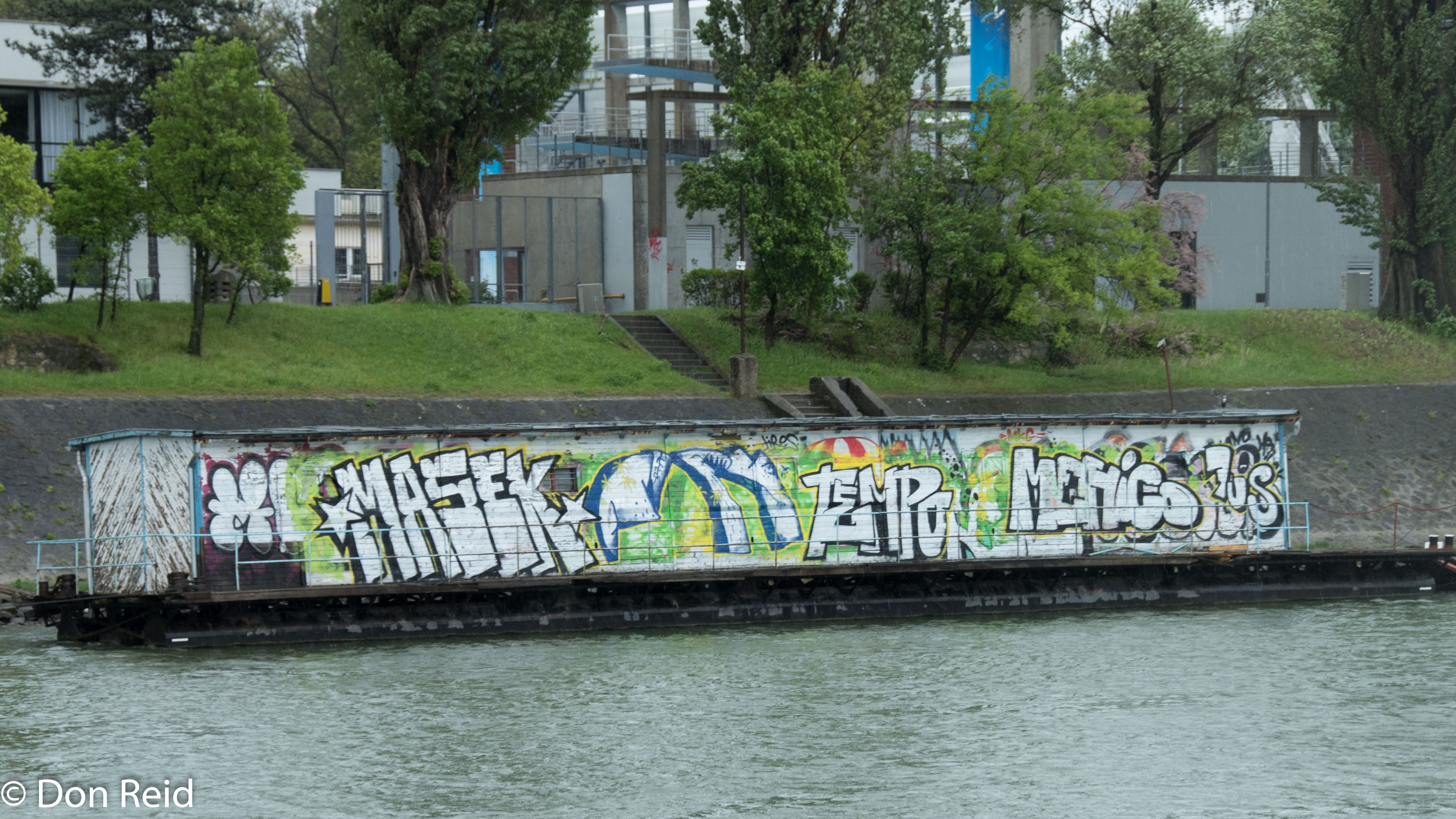
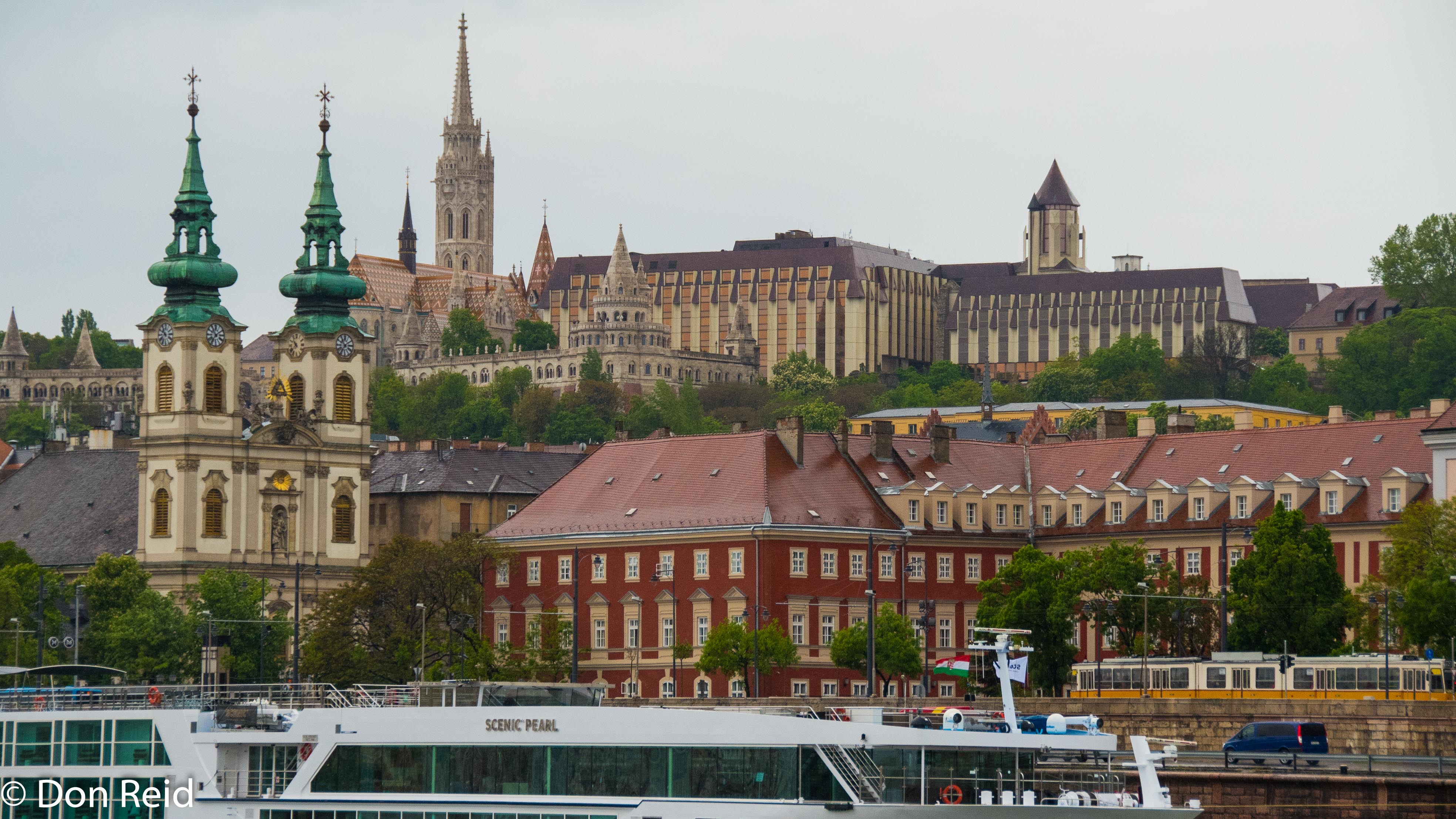
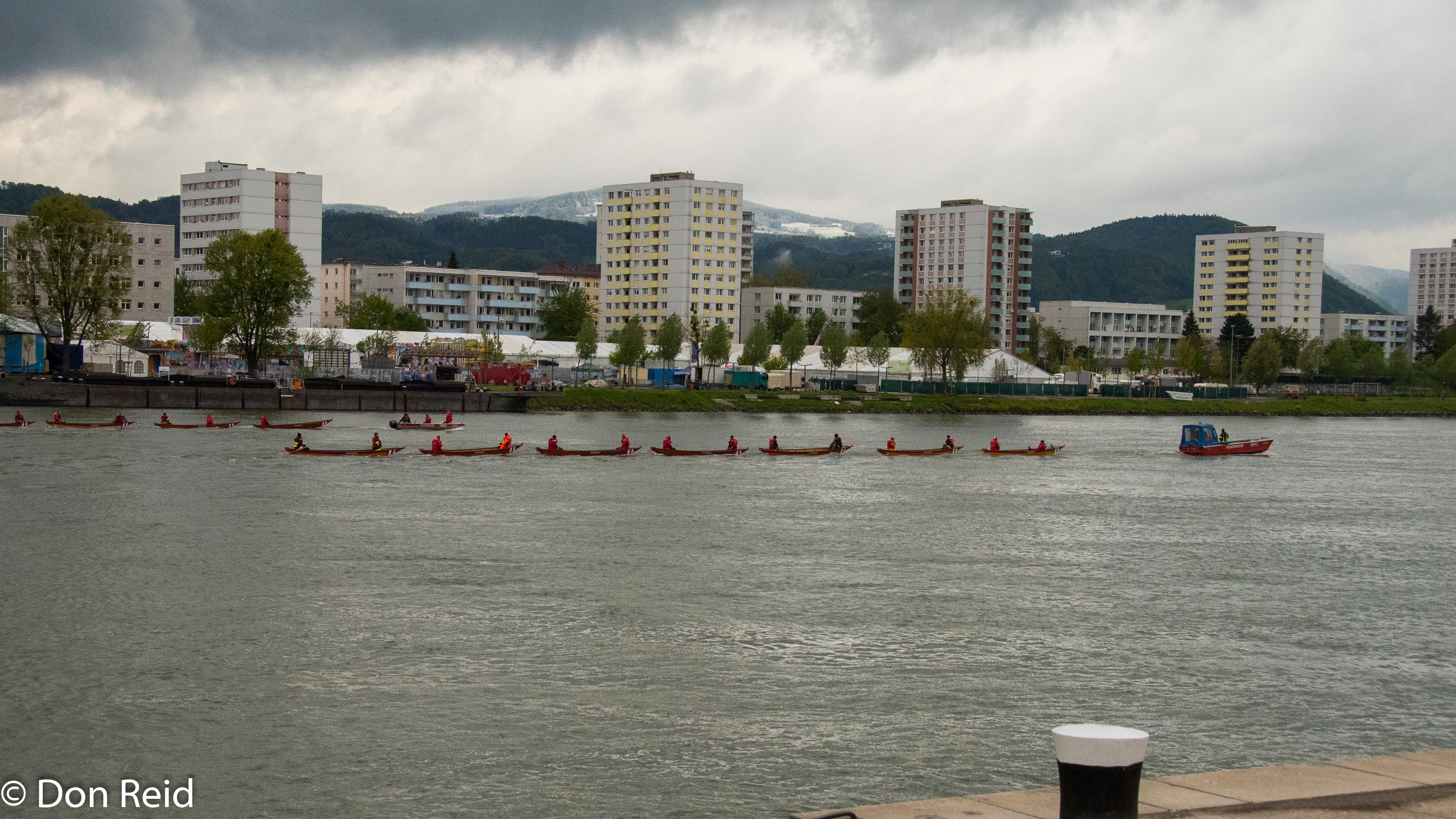
Riverside scenesRiverside scenesRiverside scenesSchloss Schonbuhel, Melk District AustriaPassing ViennaPassing ViennaRiver scenesApproaching BudapestMoored at BudapestLinzLeaving Linz
The Locks
Here you will have to bear with me – I am interested in all things mechanical, even boring things such as locks on the river. During the 1160 km cruise, we passed through 22 locks, often at night, changing altitude by some 360 metres. The average lock entailed a lift or drop of about 8 metres – now that doesn’t sound much, but consider that the cruise boat is 110m long x 11,4m wide with a tonnage of 1,556t, that means a lot of water has to be pumped in a short space of time to accomplish it efficiently.
In the lockDon’t stick your head out too far in the lock
Donau-Auen National Park
During one afternoon we cruised through the Donau-Auen National Park, a section of the Danube which has been declared part of a UNESCO Biosphere park. Along this stretch, downstream of Vienna, the natural floodplains form a green corridor with a large area of lowland forests, meadows, wetlands and other riparian habitat.
We relaxed in our cabin with curtains fully open, taking in the greenery of the forests lining the river bank, with sightings every now and then of birds and occasionally other wildlife.
The surprise of the trip was undoubtedly the Red Fox (Vulpes vulpes) which I spotted trotting along a ridge of rocks on the bank of the river, with an enormous fish in its jaws. It is not often one gets to see “real” wildlife in Europe so this was very special. Fortunately I had my camera and telephoto lens ready for passing birds and managed to rattle off a few shots of the fox carrying the fish, before the boat had passed it by.
Red Fox with fish catch
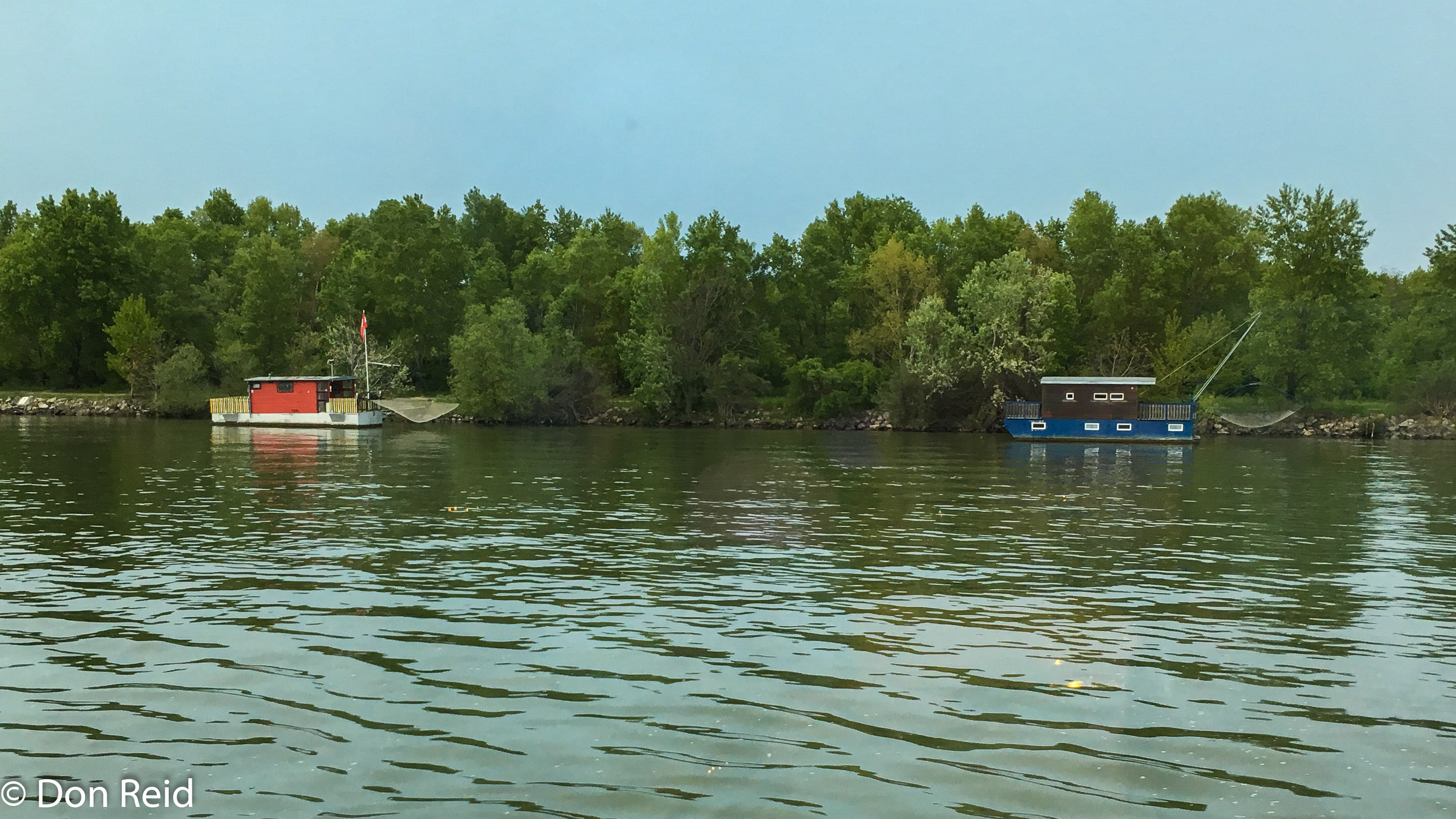
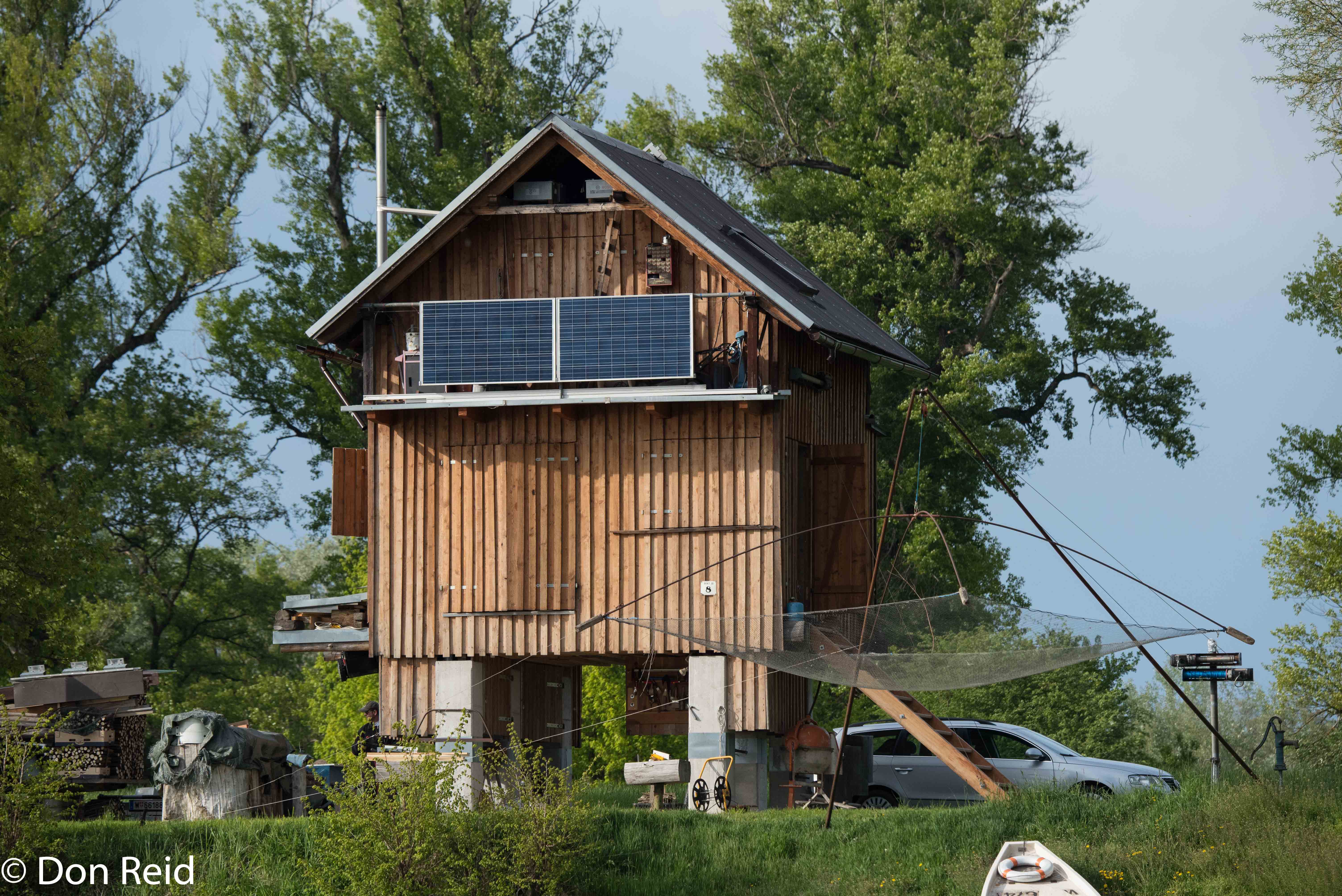
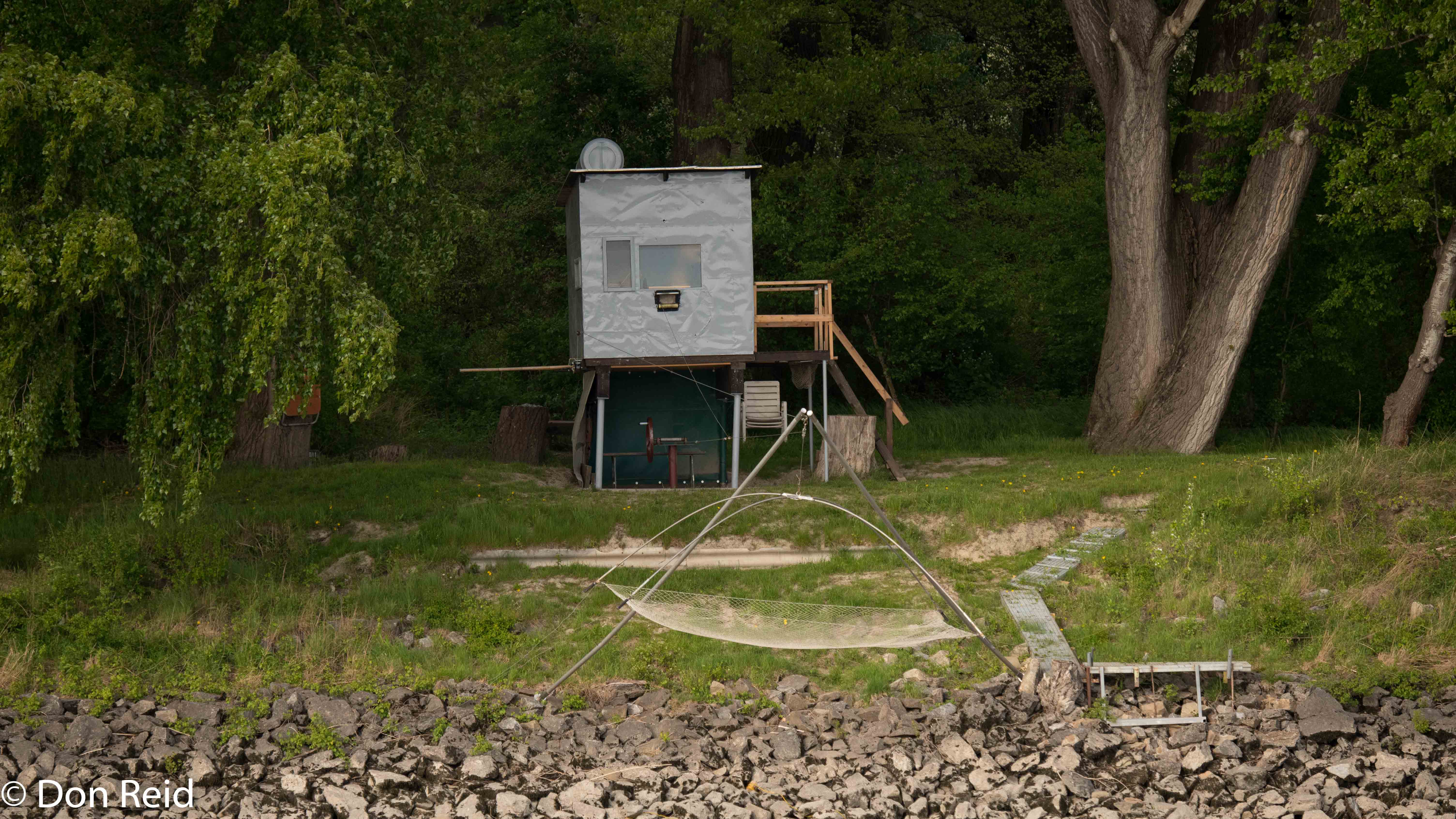
Another feature of this stretch was the small “fishermen’s cabins” dotted at intervals along the river bank, most with a net in a large frame ready to drop into the river. Word on board was that these cabins cannot be bought or sold, but have to be passed on to the next generation in their original state and no extensions are allowed. So they remain small and simple – often just space for a couple of beds and basic facilities for the fishermen to spend the night camping there.
Riverside dwellings with fishing rightsRiverside dwellings with fishing rightsRiverside dwellings with fishing rightsRiverside dwellings with fishing rights
Bridges
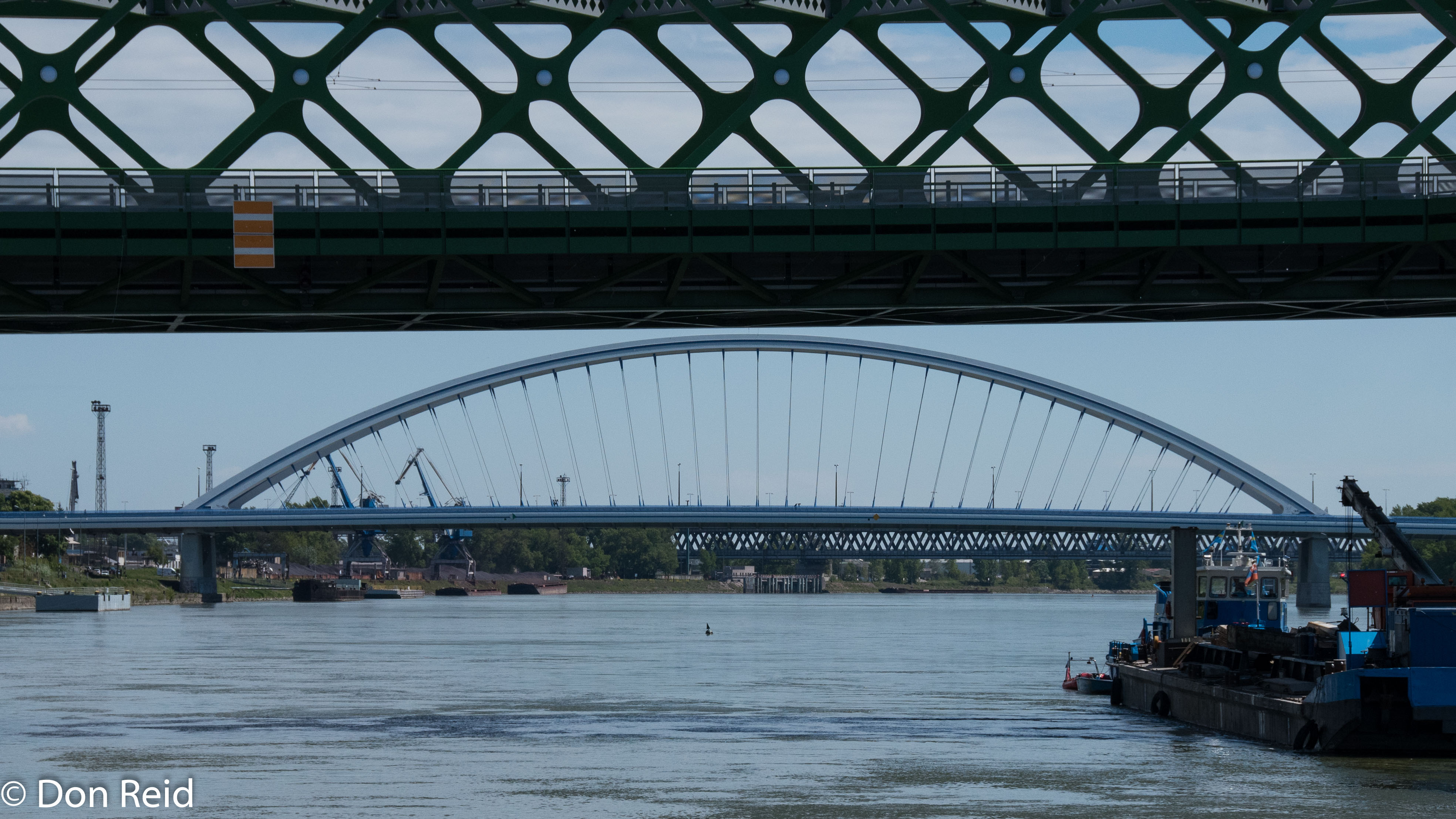
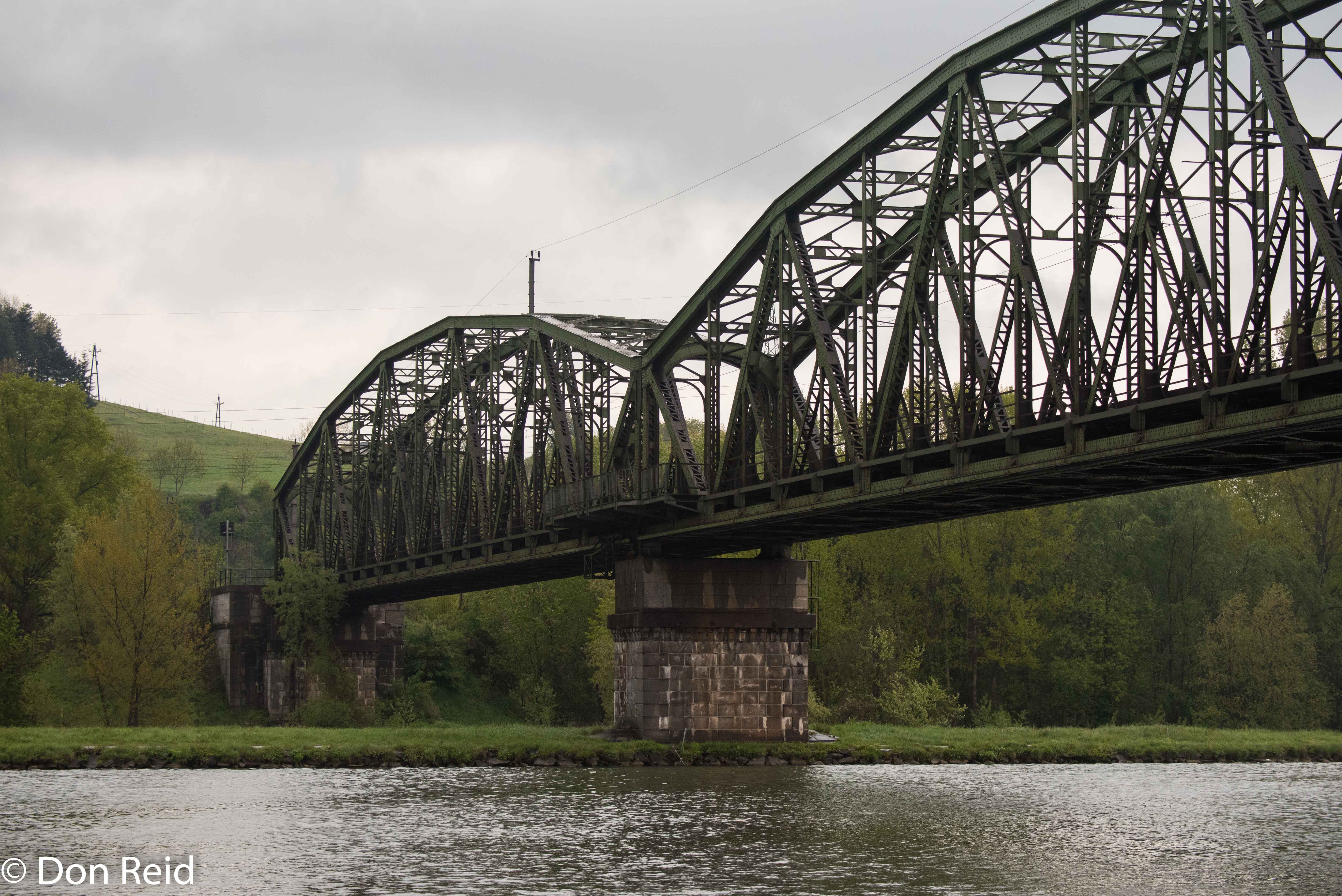
There were numerous bridges over the river, some functional, others handsome, old and new
New Bridge over the DanubeBridges at BratislavaChain Bridge Budapest
Other Stuff
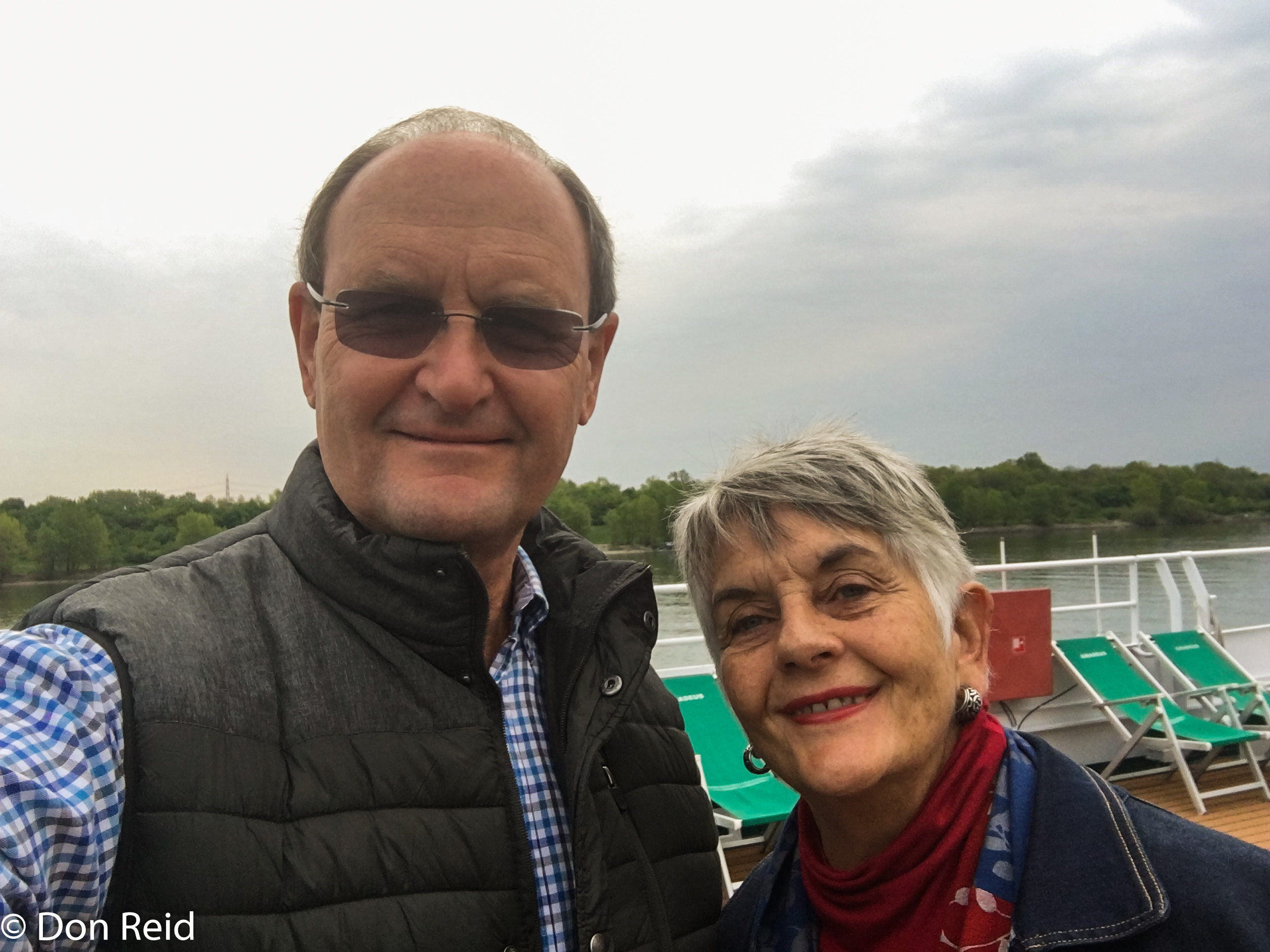
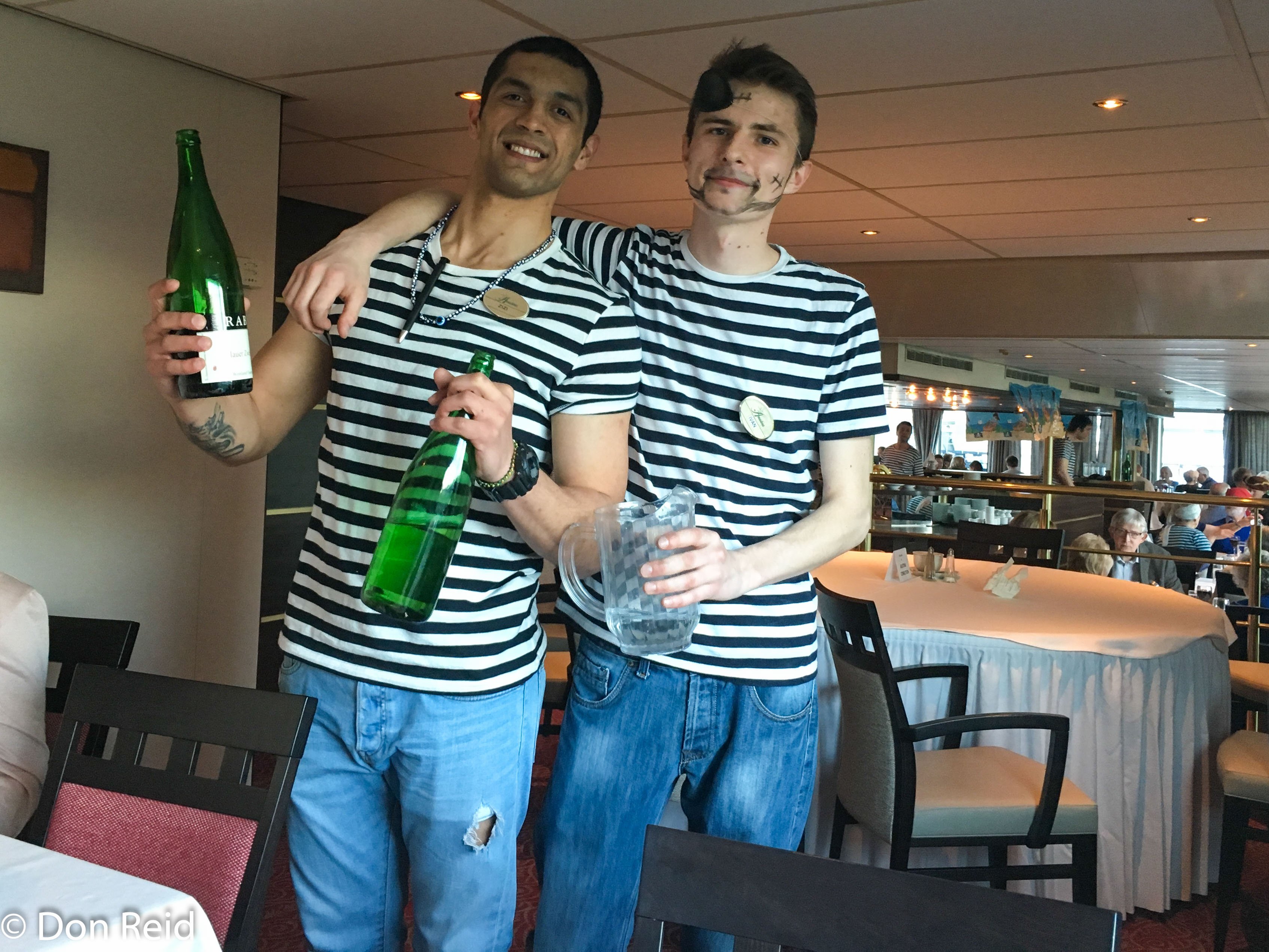
Amadeus RoyalOn boardTowel creationOn boardWaiters Zizi and Ivan – Pirates dinnerGayle, Denise, Fleur with Gerda





























 Mostly Birding