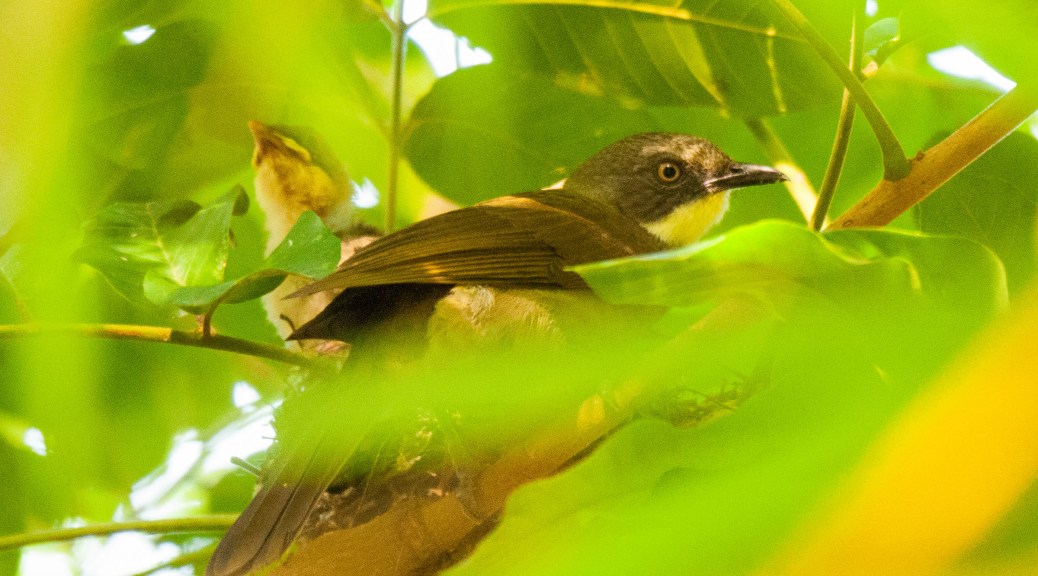
Leafloves?
As I mentioned in my previous post about twitching (https://mostlybirding.com/2016/02/23/a-twitch-or-two/), I hardly consider myself to fall into the category of keen twitchers, those hardy, sometimes mildly bonkers birders who let nothing stand in the way of seeing rare birds that turn up in Southern Africa.
Such was the case when a pair of Yellow-throated Leafloves (interesting name!) turned up and started nesting at a riverside lodge near Katima Mulilo in Namibia, some 200 kms south of their normal distribution in Zambia and northwards. Suddenly the Southern African region had a brand new bird added to the regional list!
The reports started coming through in mid February 2016 of this unexpected pair of birds in the gardens of the Caprivi Houseboat Safari Lodge near Katima Mulilo and there was soon a gold-rush like invasion of keen twitchers heading to this remote part of Southern Africa via plane and car from various places in South Africa and Namibia.
The Twitch
I watched with interest the messages coming through from Trevor Hardaker and the SA Rare Bird Facebook page, knowing that I would be going to Kasane in northern Botswana for a project I am involved in, during the 1st week in March. I also had a look at the map and realized that Katima Mulilo fell nicely within my “twitch limit” of around 2 hours drive, being about 120 kms from Kasane with a border crossing from Botswana to Namibia to negotiate along the way. So, if the Leafloves hung around until then, I planned to “pop over” the border for a quick visit and hopefully a new tick on my life list for Southern Africa.
Tuesday 1st March
Come Tuesday, I caught the daily flight from Joburg to Kasane – a day early for my site visit so that I could spend a night in Katima Mulilo (KM) and be back in time for the project commitments the following day. I had arranged for a bakkie (pickup) to be available and shortly after landing I set off for KM via Ngoma border post. The border formalities went smoothly, perhaps because I was the only customer in an hour or two.
From Kasane to Ngoma the public road (tarred) bisects the northernmost section of Chobe Game Reserve and the landscape is pristine woodland all the way.

Once into the Caprivi in Namibia, the scenery changes to more open, patchy woodland interspersed with small settlements and small-scale agriculture.
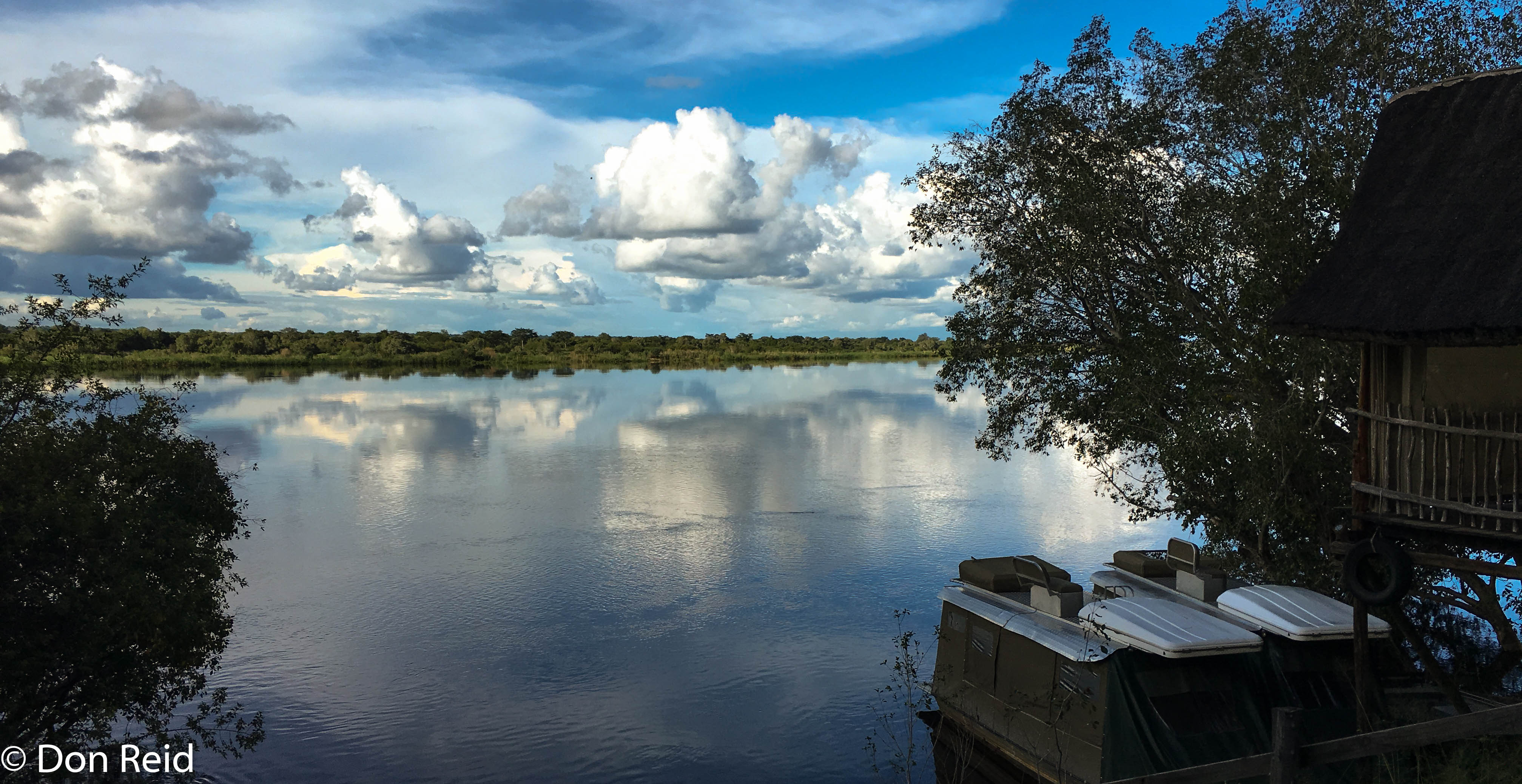
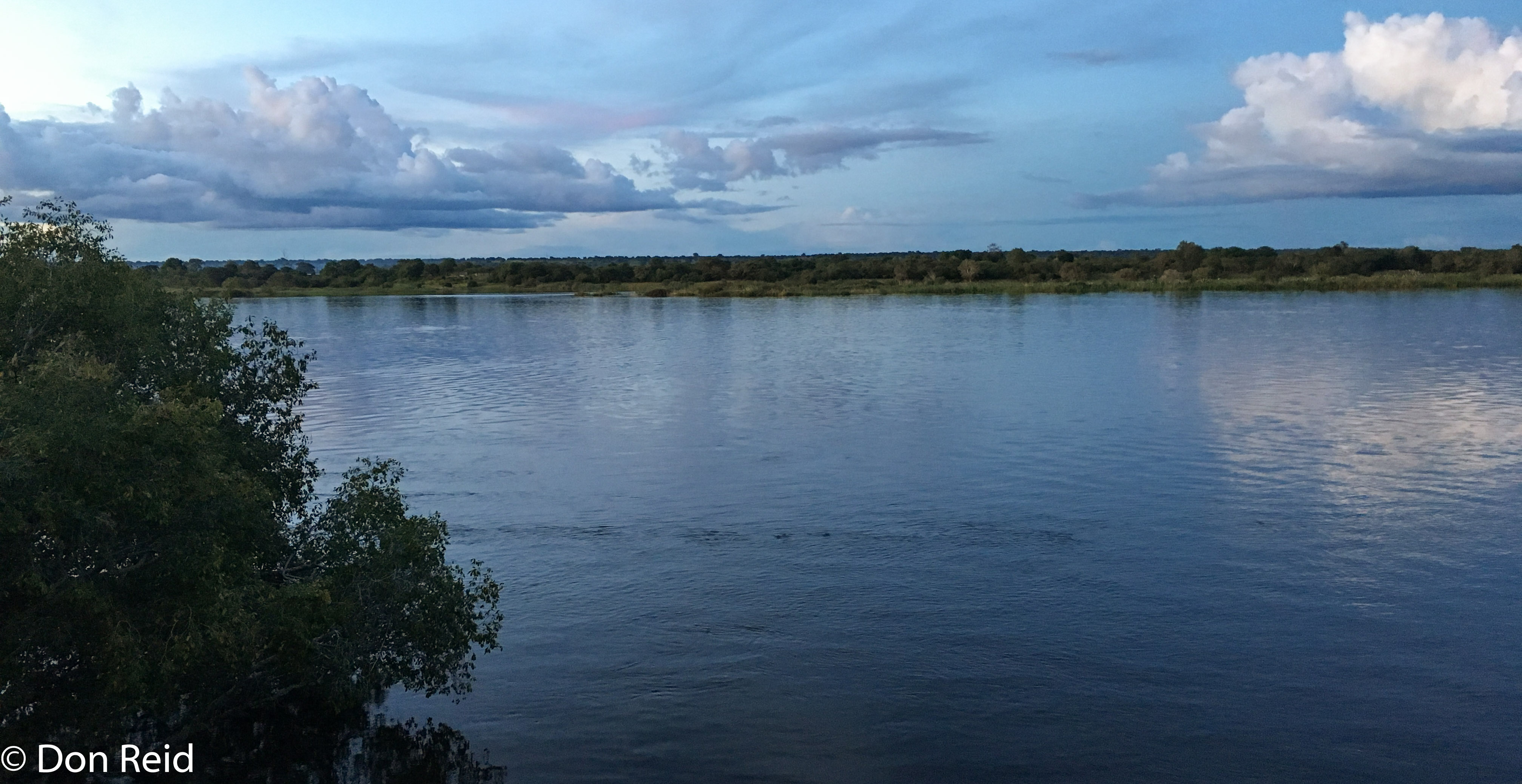
I arrived at the lodge by 4.30 pm and settled into the rustic accommodation on the river in unit No 5, which is right alongside the tree where the Leafloves were nesting.


I immediately saw one of the young chicks peering over the edge of the nest and within minutes the parents were in the vicinity and at the nest, bringing morsels and calling in a Babbler-like manner although less harsh.

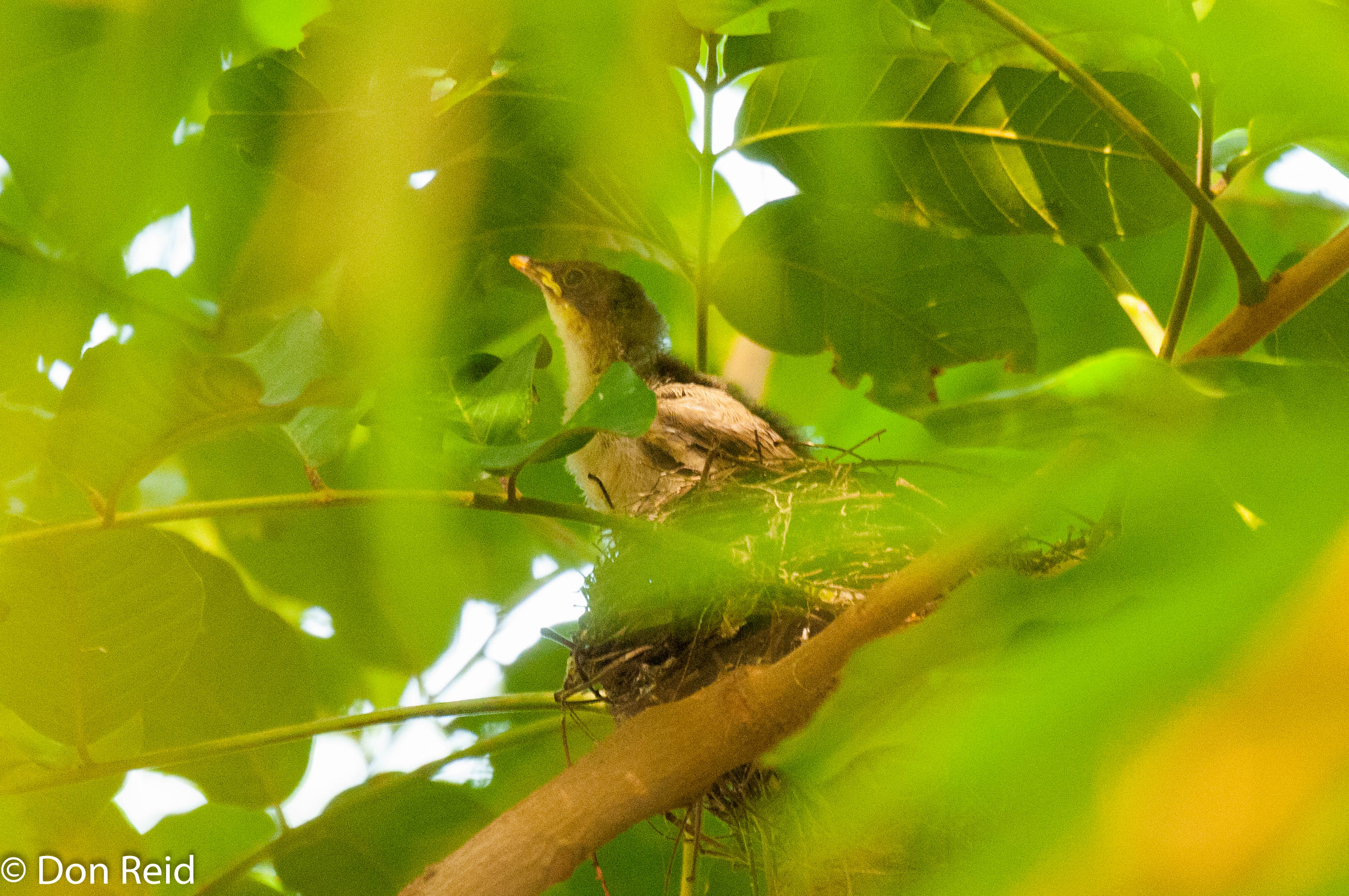
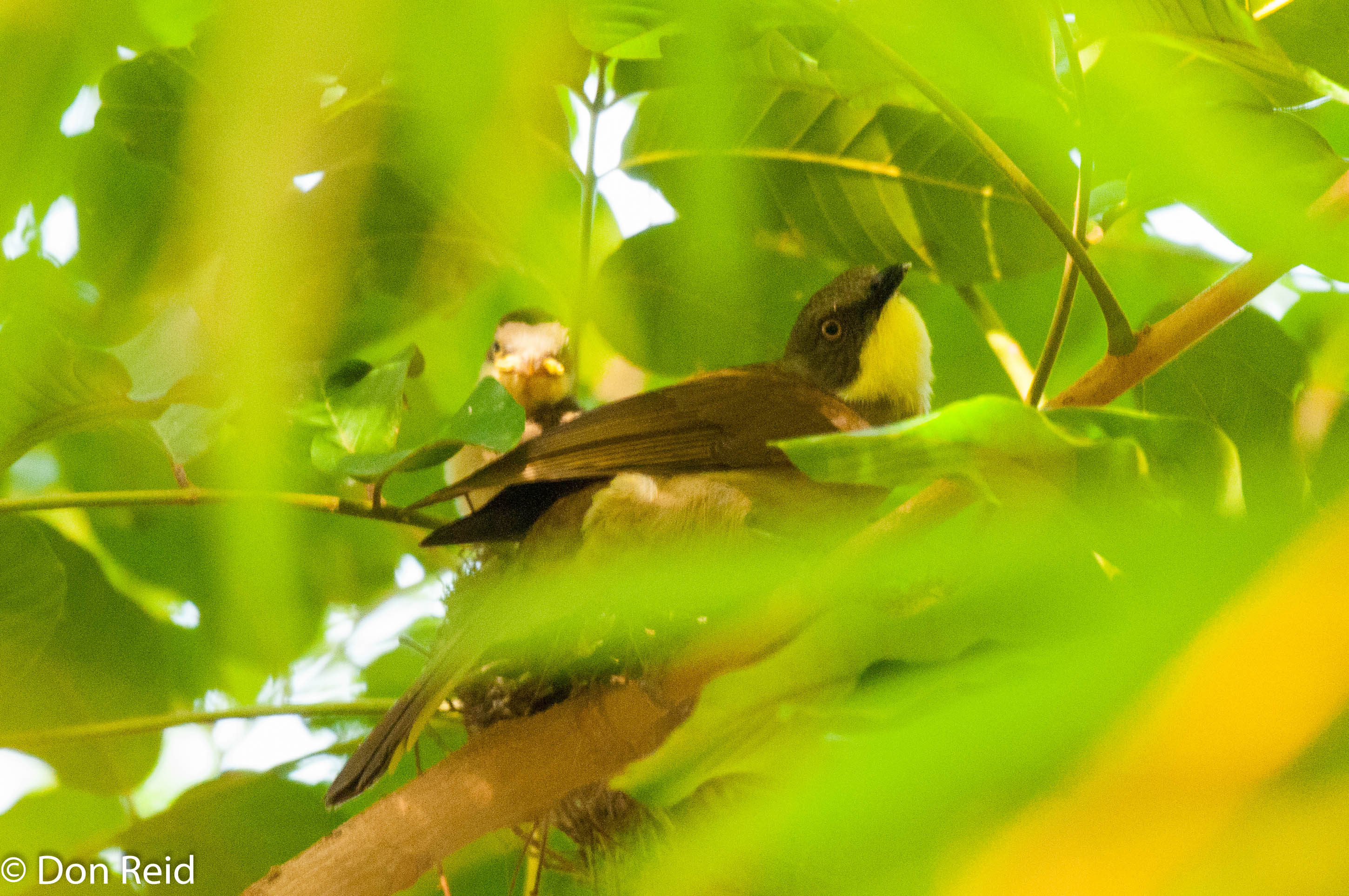
The rest of the afternoon was spent re-visiting the nest site in the hope of getting better views / photos and exploring the small property with its jungle-like gardens and river views.
It proved to be really challenging trying to get the Leafloves in my camera’s viewfinder for long enough to get a decent photo, as they seemed intent on hiding in the shadiest part of the foliage at every opportunity and when they did show themselves briefly, it was in an opening high up in the trees with bright light behind them.

Other birders had arrived earlier and a few more arrived after me – we enjoyed a good evening meal together and then made our way to mosquito-netted beds in the rustic cabins, happy to be able to add the Leaflove to our life lists.
Wednesday 2nd March
In the morning the others were already gathered at the coffee and rusks and I tagged along with the small group as they set off for a birding walk along the dirt road outside the lodge, which turned out to be quite busy with early morning commuters on their way to places unknown.
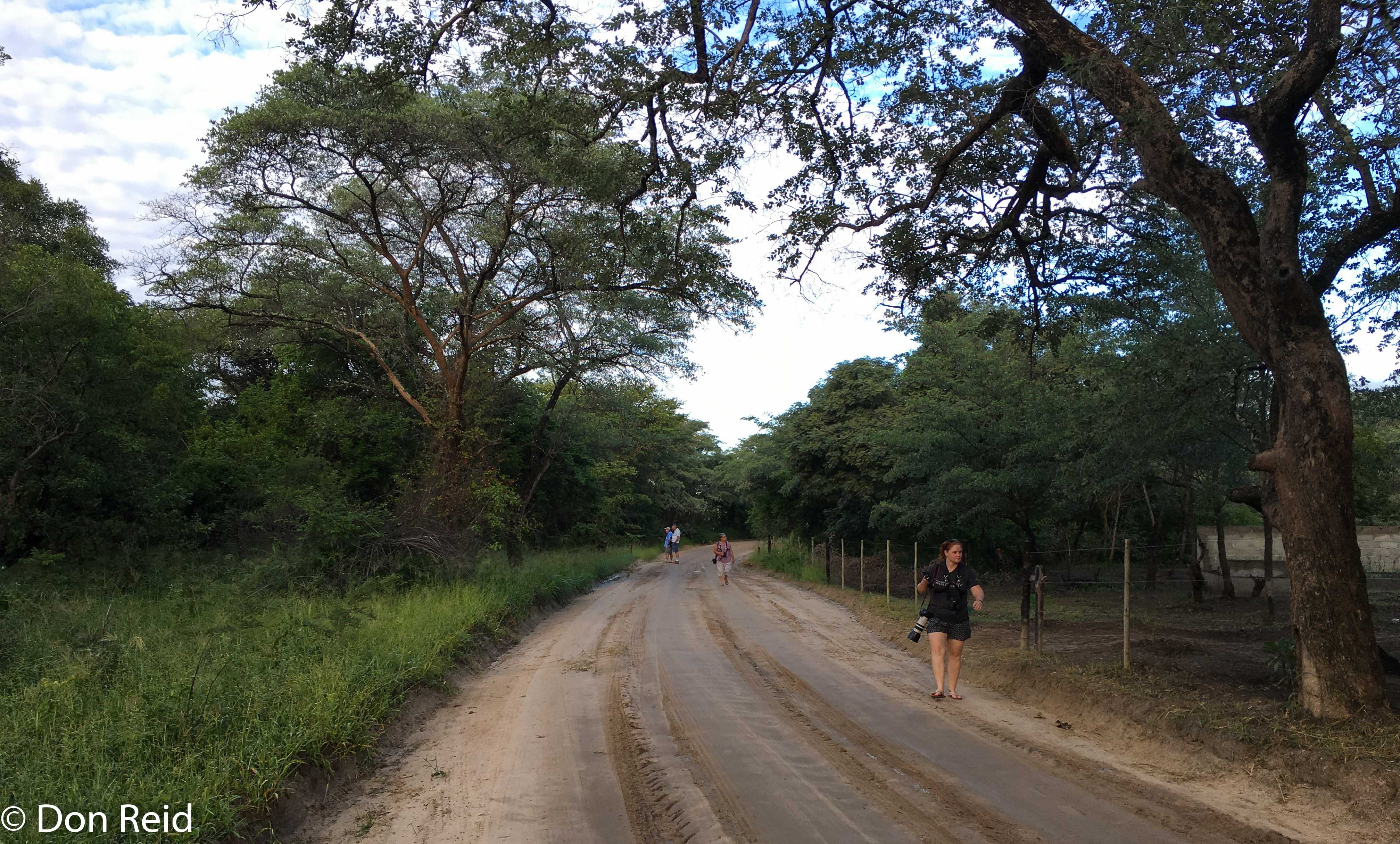
White-bowed Robin-Chat and Tropical Boubou were competing for loudest call as we walked and there was no shortage of other interesting species, such as :
- Paradise and Grey-tit Flycatchers
- Village Indigobird on the very top of a tree
- Namaqua Dove perched on overhead wires
- Brubru working its way through the foliage of a large tree
- Little Sparrowhawk perched on an open branch
- Copper Sunbird female peering from its nest in the roadside bush
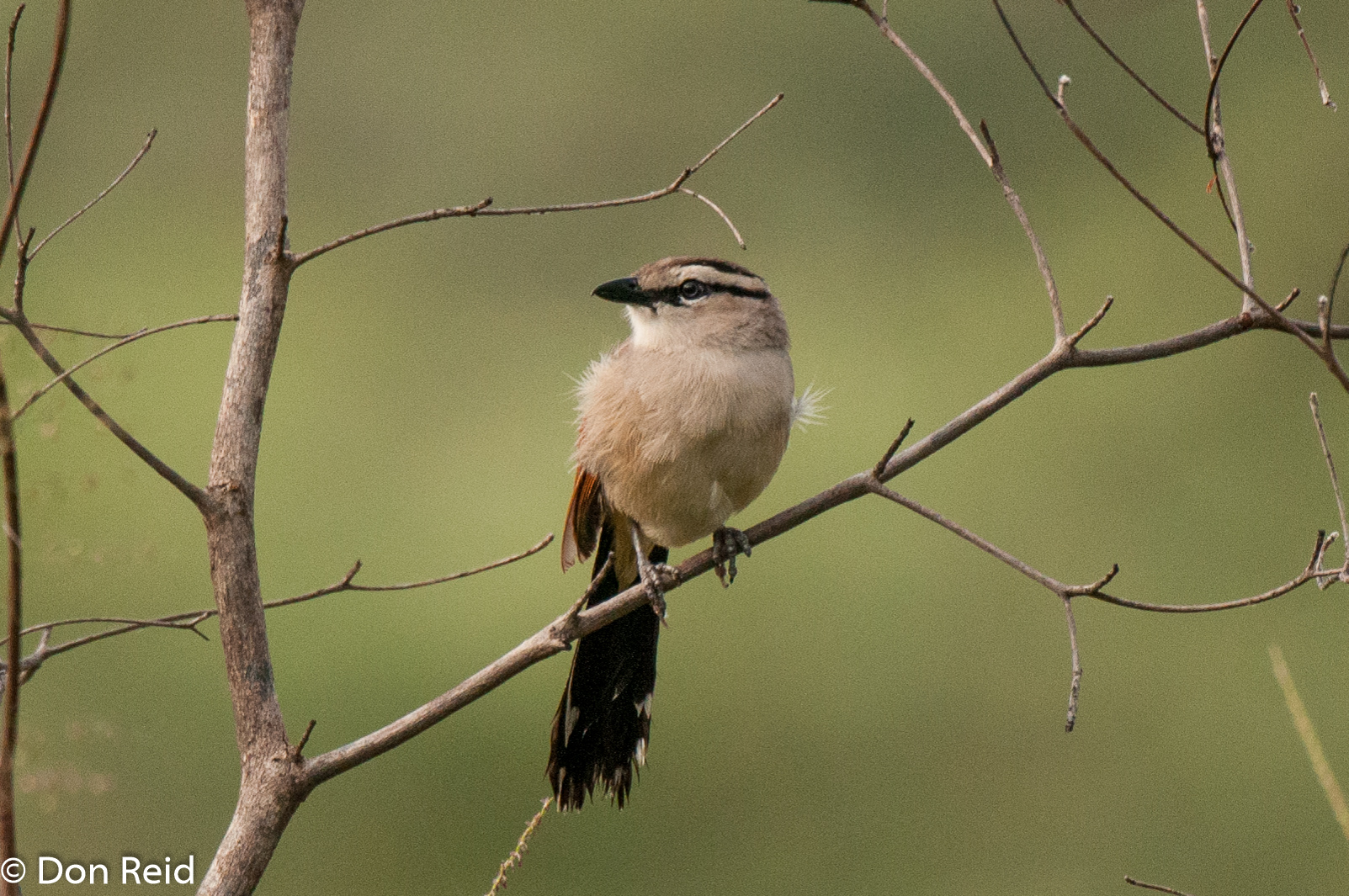
- Brown-crowned Tchagra posing beautifully on a nearby branch
- Greater Blue-eared Starlings
- African Golden Oriole – bright yellow against the green foliage

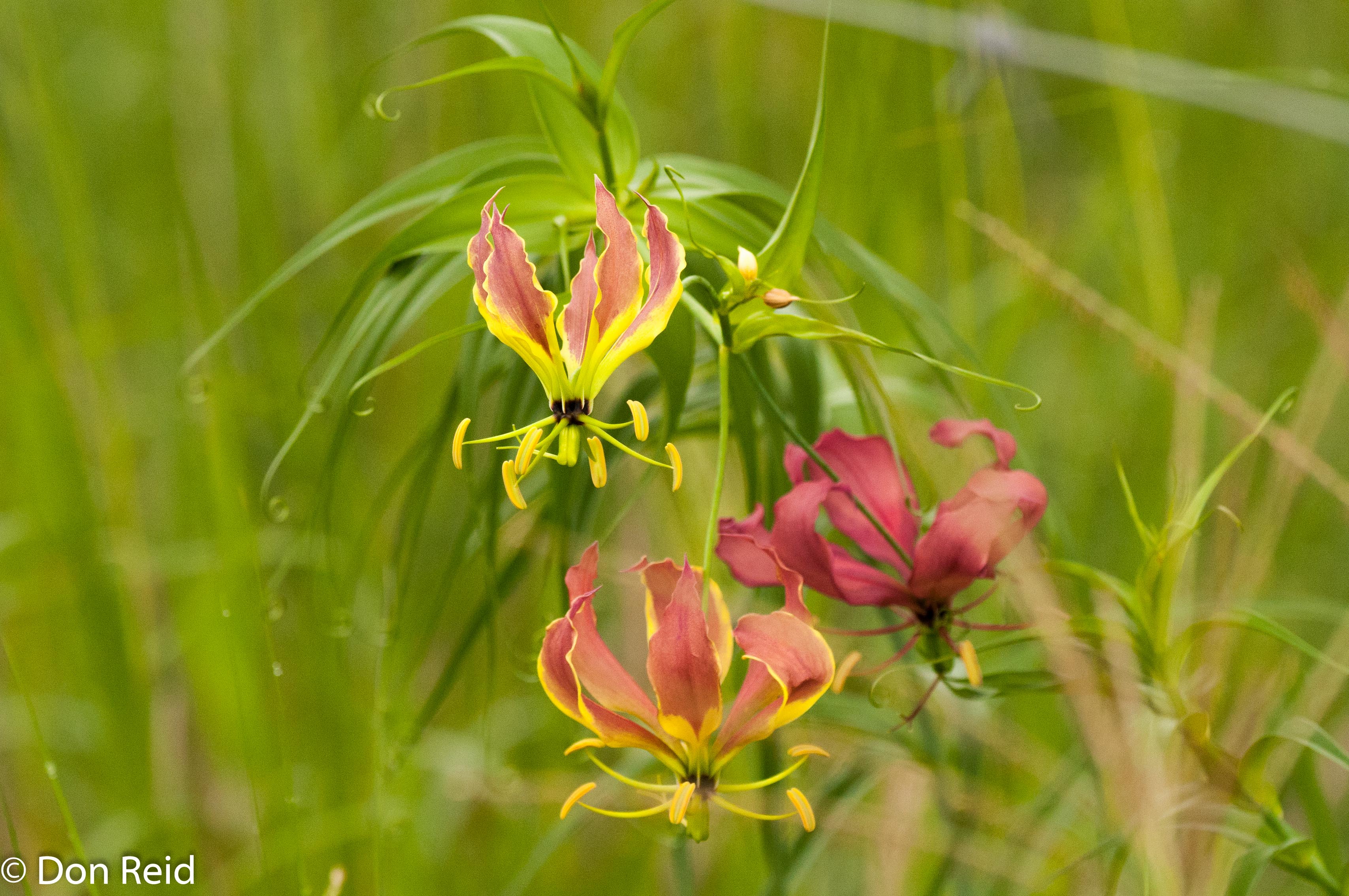
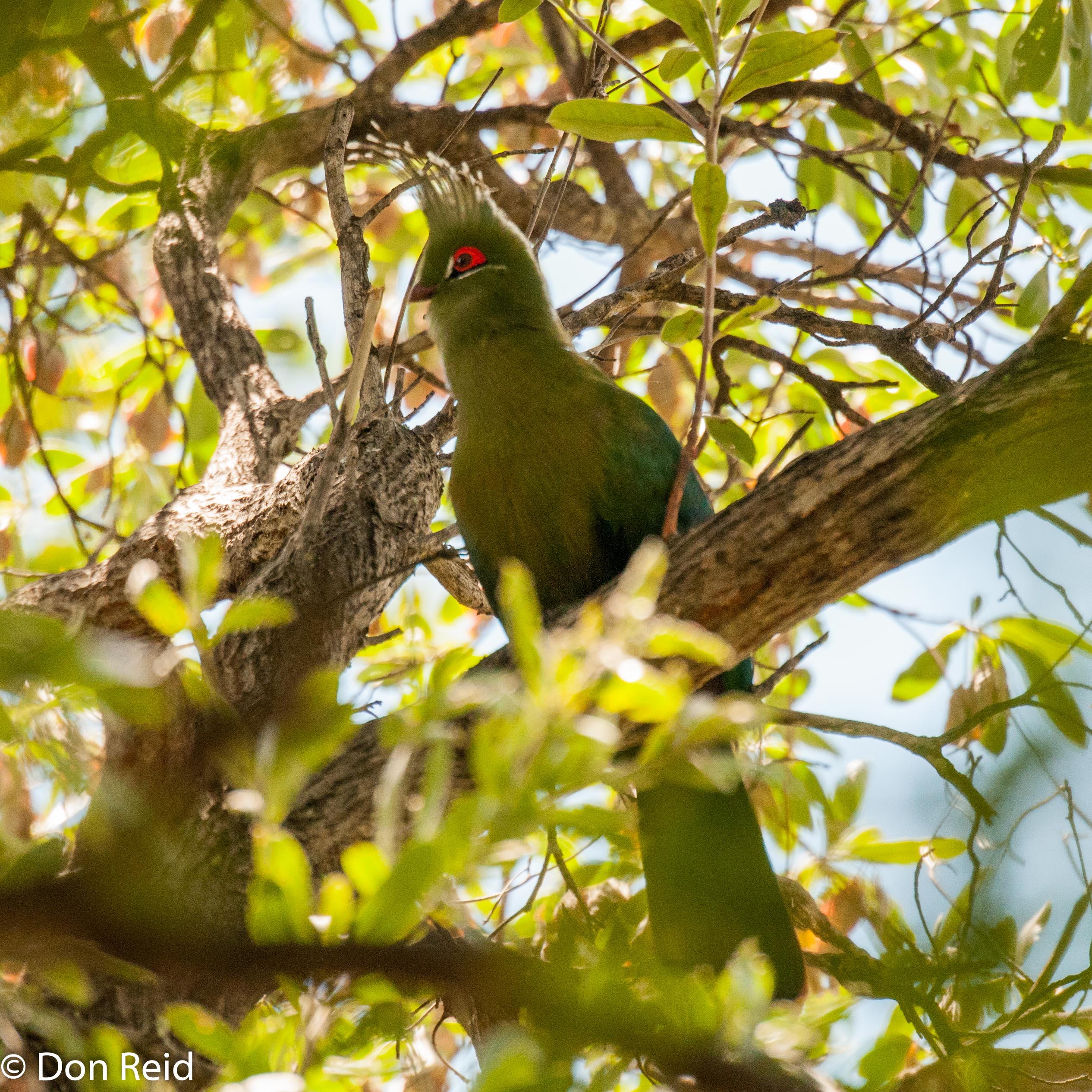
After the walk it was breakfast time followed by some further garden birding. A Schalow’s Turaco was calling and I followed the sound to find this lifer – a pair were moving about in the dense foliage of a tall tree, making it challenging to get a decent view or a photo. Fortunately I heard them again as I was leaving and found one on an open branch, almost inviting me to photograph this handsome species.

The trip back to Kasane was uneventful, other than coming across a trio of elephants along the road traversing Chobe.

Another successful twitch and memories of a brief but busy trip that will stay with me for a long while.


 Mostly Birding