A Week in Kruger – Satara to Nwanetsi

The Route

The next drive during our stay in Satara was also one of my Kruger favourites – the drive eastwards from Satara to Nwanetsi picnic spot which lies close to the border with Mozambique.

We had planned to do a circuit, first taking the S100 gravel road eastwards, which branches off the H1-4 tarred road just south of Satara camp. This becomes the S41 to Nwanetsi and we would return via the H6 tarred road back to Satara.

At Nwanetsi there is a dam which can be viewed from a roofed viewpoint on the ridge overlooking it. The Sweni hide, overlooking a small dam, and the low water bridge can be accessed on the return trip by taking the branch left at the S37 and travelling for a few kms

Habitat

The S100 meanders through open tree savanna with mostly Marula, Knob-thorn acacia, Leadwood, Sickle-bush and Russet bushwillow trees. The H6 tarred road is more direct but passes through similar habitat

An extract from the Kruger Park map book shows the route :
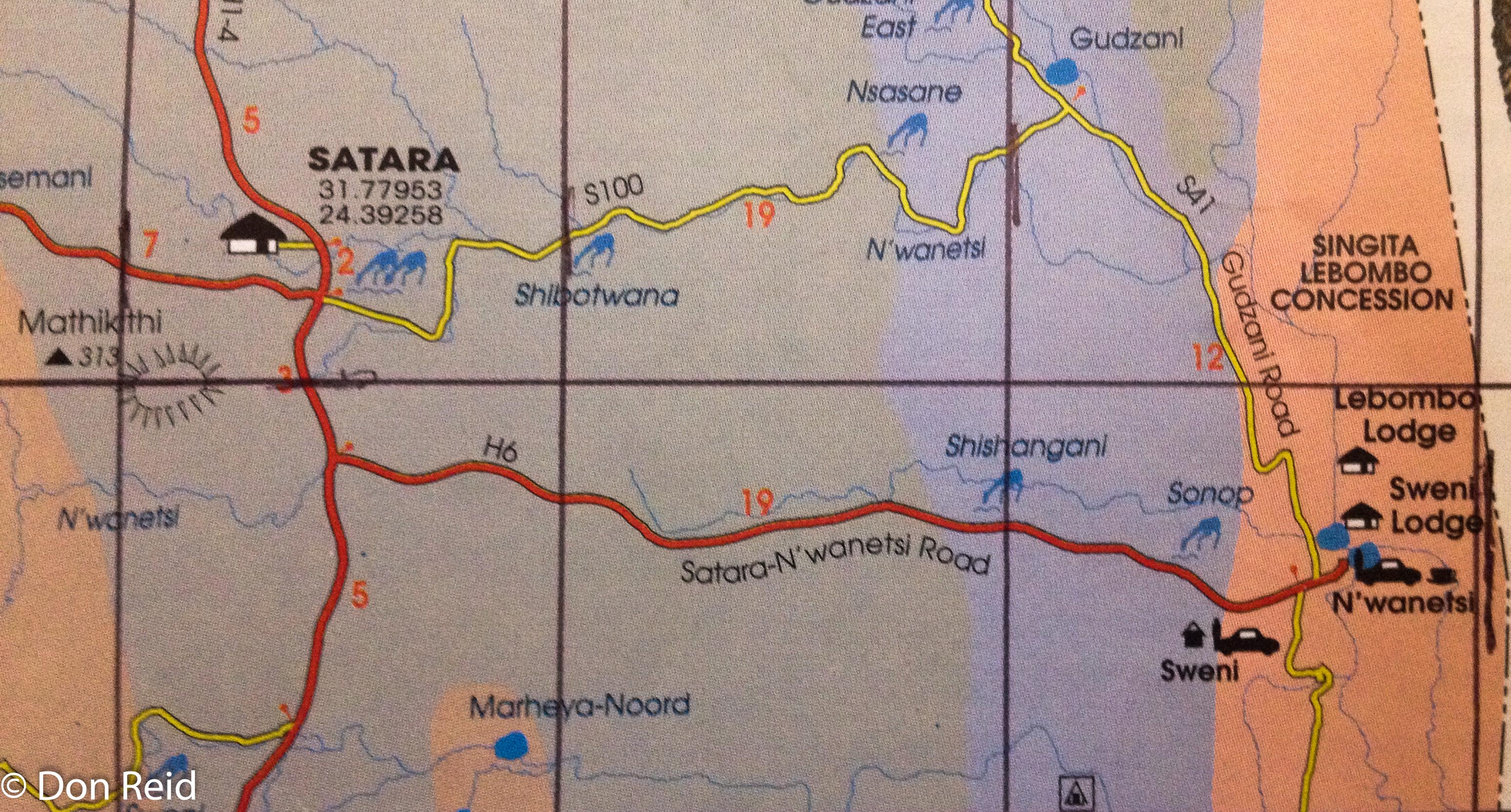
Best to go out on the yellow S 100 road and return on the H5 red road
Best to go out on the yellow S 100 road and return on the red H6 road

The Drive

An early start saw us driving the S100 – always good for plains game and today was no exception as we came across a selection of game in quick succession.

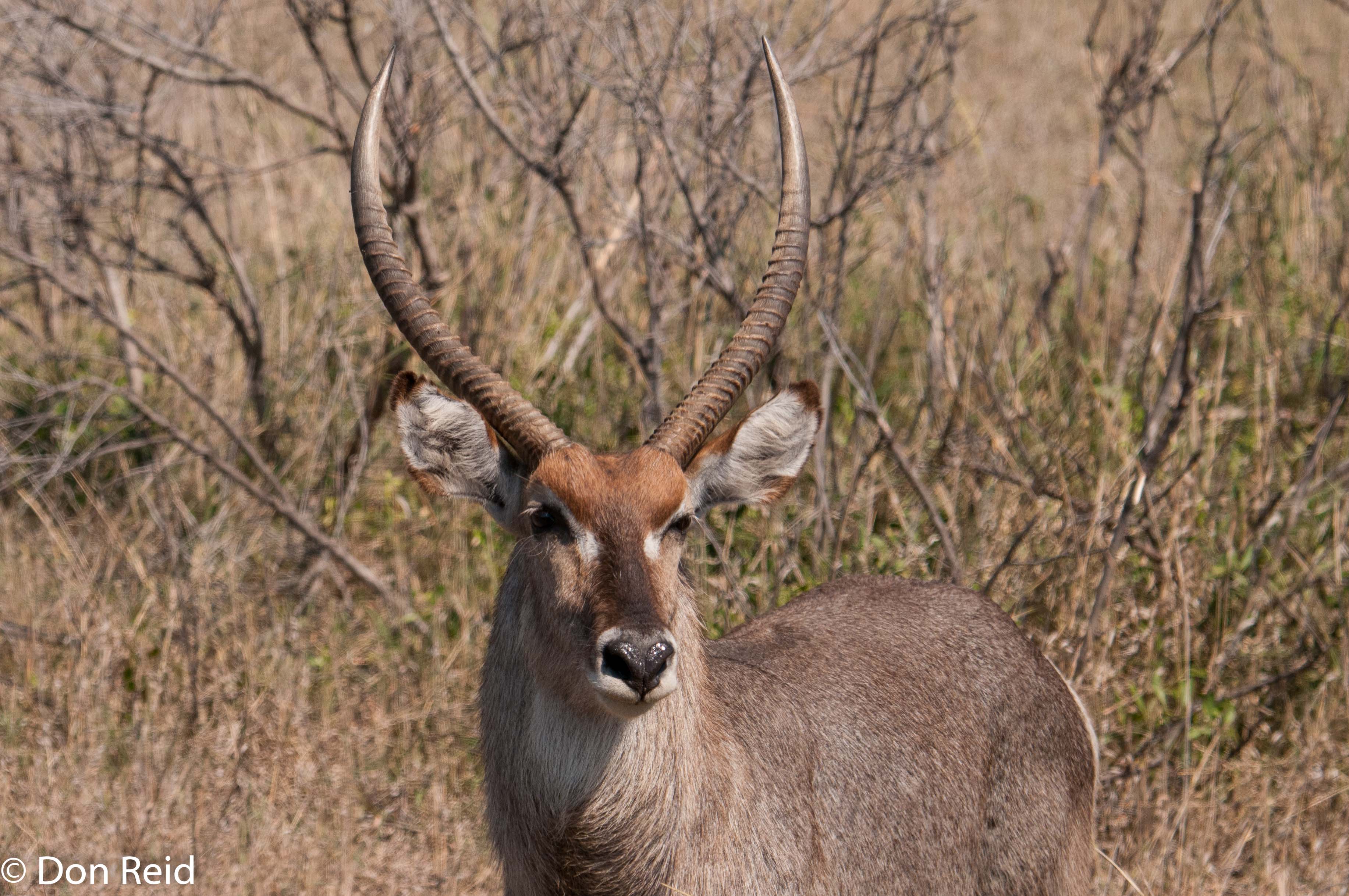
Waterbuck, Satara - Nwanetsi S100
Waterbuck, Satara – Nwanetsi S100
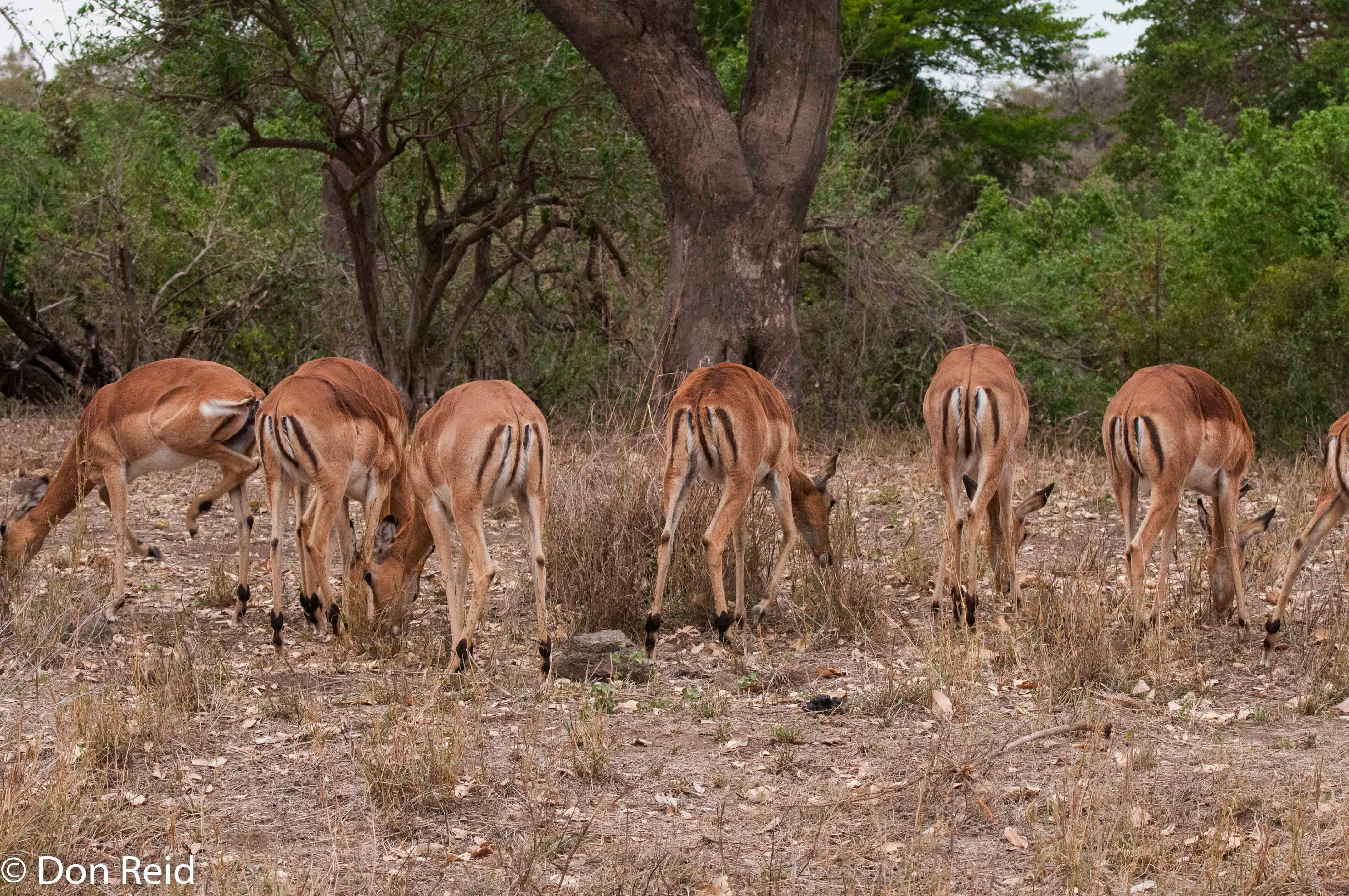
Impala, Satara - Nwanetsi S100
Impala, Satara – Nwanetsi S100
Black-backed Jackal, Satara - Nwanetsi S100
Black-backed Jackal, Satara – Nwanetsi S100
Blue Wildebeest, Satara - Nwanetsi S100
Blue Wildebeest, Satara – Nwanetsi S100

Signs of battles for dominance amongst the game were present – both Impala and Waterbuck were clashing horns. Nothing serious – more like a playful enactment of an ancient ritual as they butted each other lightly and tried to twist the opponent’s horns so that they would “bow” in submission.

Impala males
Impala males
Waterbuck males
Waterbuck males

As we watched this we noticed a few cars gathered up ahead and immediately knew it was a “cat” sighting as no other event attracts so many cars in a short space of time. It turned out to be two Cheetahs some 150m from the road, lying and then standing, the one clearly pregnant judging by the heavy-looking belly.
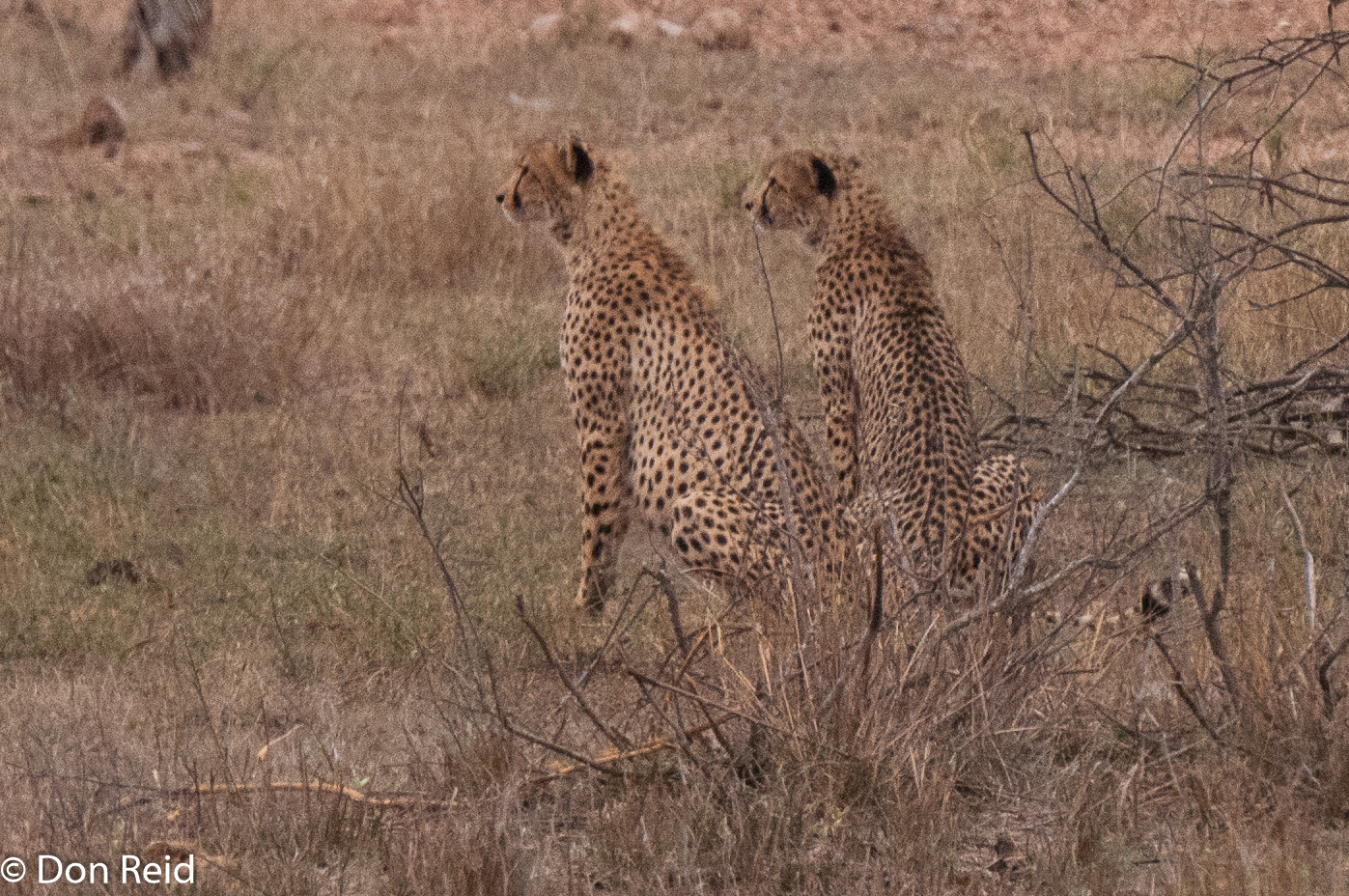
Cheetah, Satara - Nwanetsi S100
Cheetah, Satara – Nwanetsi S100

Cheetahs are probably the most sought after sighting so we were really pleased to have been in the right spot for them.

Further along more excitement awaited, this time tinged with some tension as we rounded a bend and came across a fallen tree partly blocking the road, with the remaining opening  ominously guarded by a large tusker. To add to the tension another large bull elephant was eyeing us from the bush to one side.
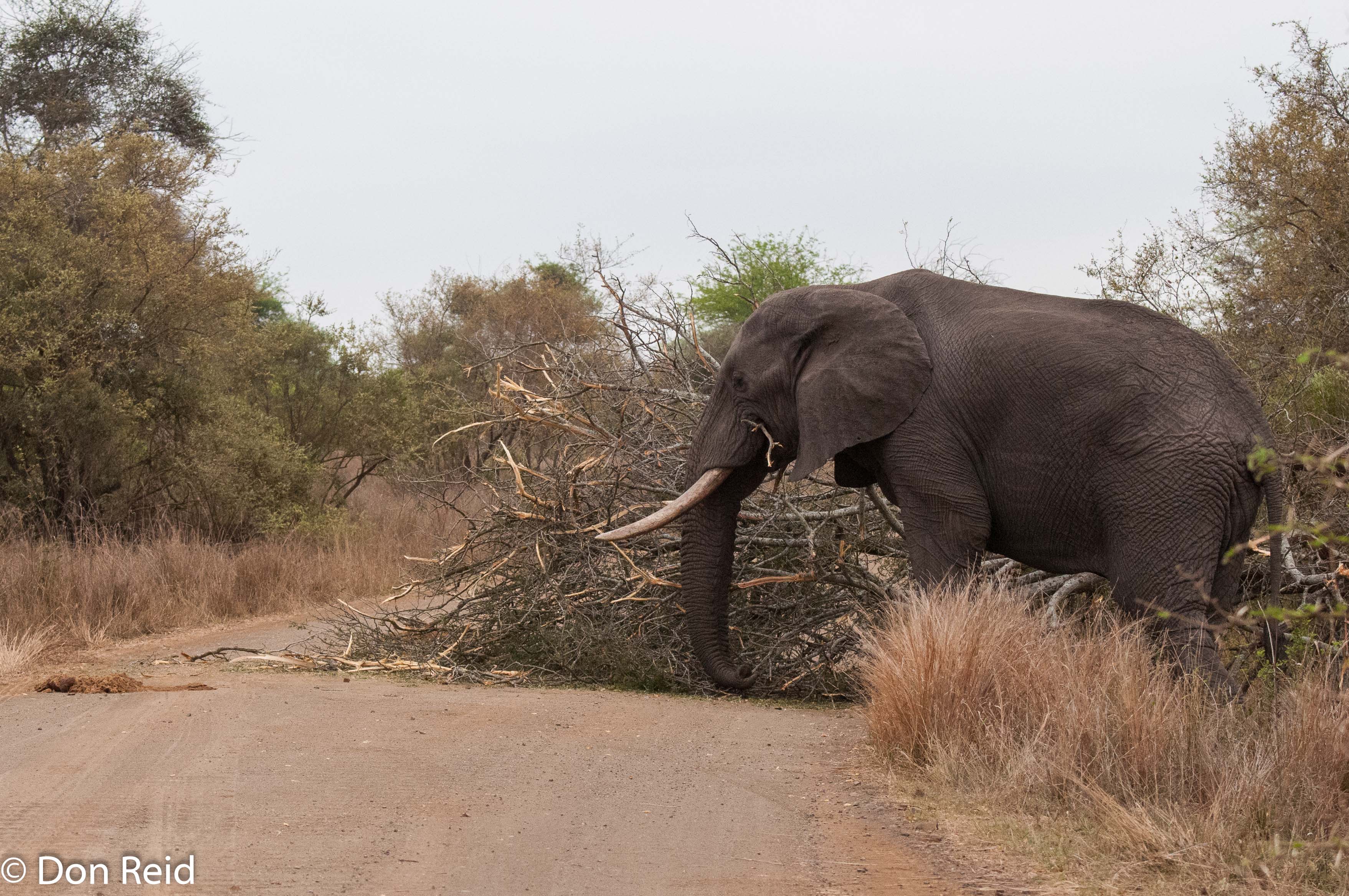
Elephant road block, Satara - Nwanetsi S100
Elephant road block, Satara – Nwanetsi S100

With no way through we waited …….  and waited, but the two elephant guards showed no inkling to move along as they fed on the fallen tree. Eventually one motorist behind us braved the bush and looked for a way past without disturbing the ellies. They emerged on the other side and waved, so we followed suit and found a well-trodden game path running through the bush which they had used – we were soon speeding along to Nwanetsi for a much-needed toilet break!

All the while I was continuing to atlas the bird species we came across – so easy with the Birdlasser App which uses gps to automatically pinpoint the position of each sighting and allocate it to the correct pentad (5 x 5 minute block of co-ordinates which is about 8 x 8 km in size)

Bateleur
Bateleur
Crested Francolin
Crested Francolin
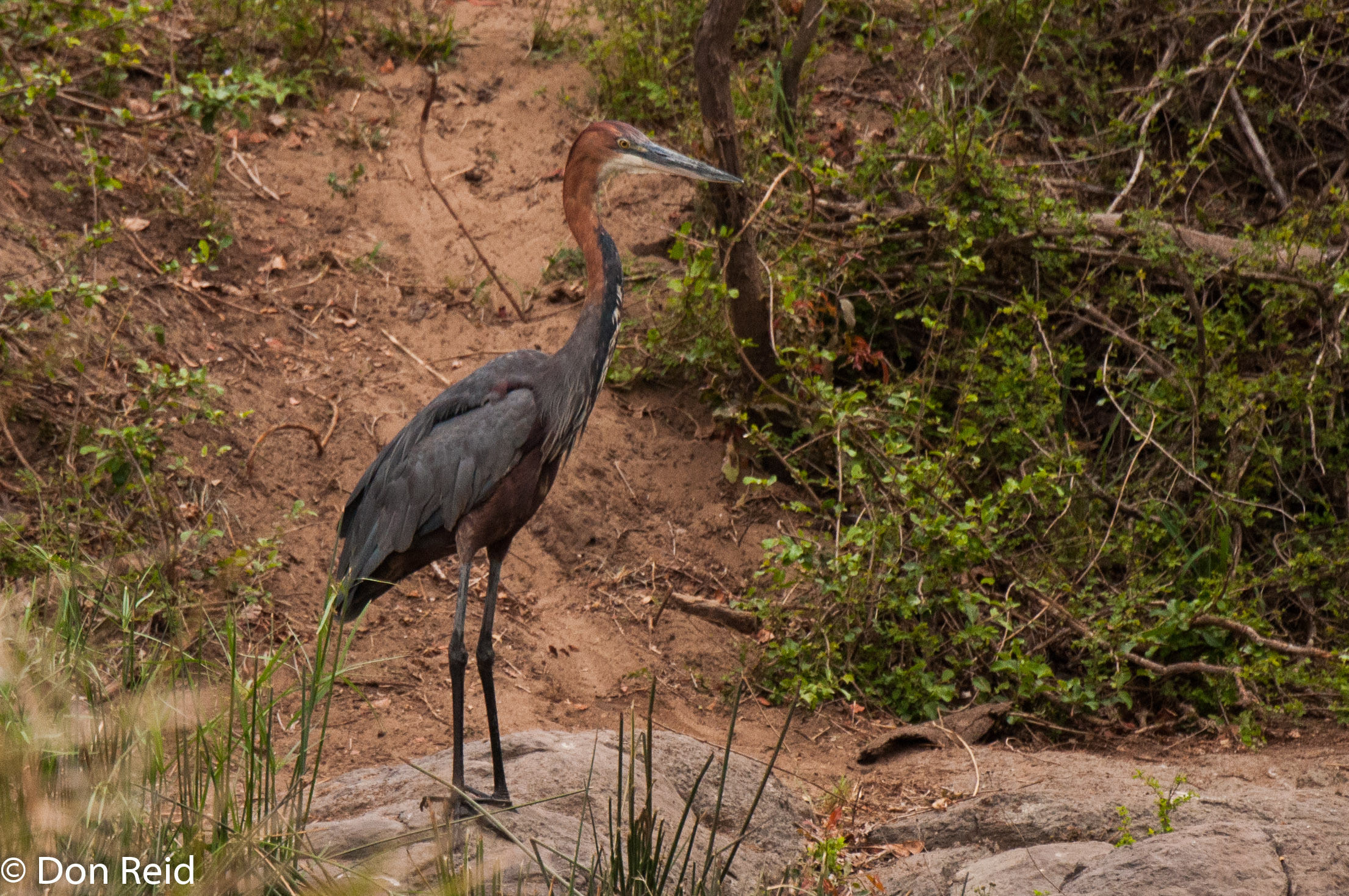
Goliath Heron
Goliath Heron

Nwanetsi

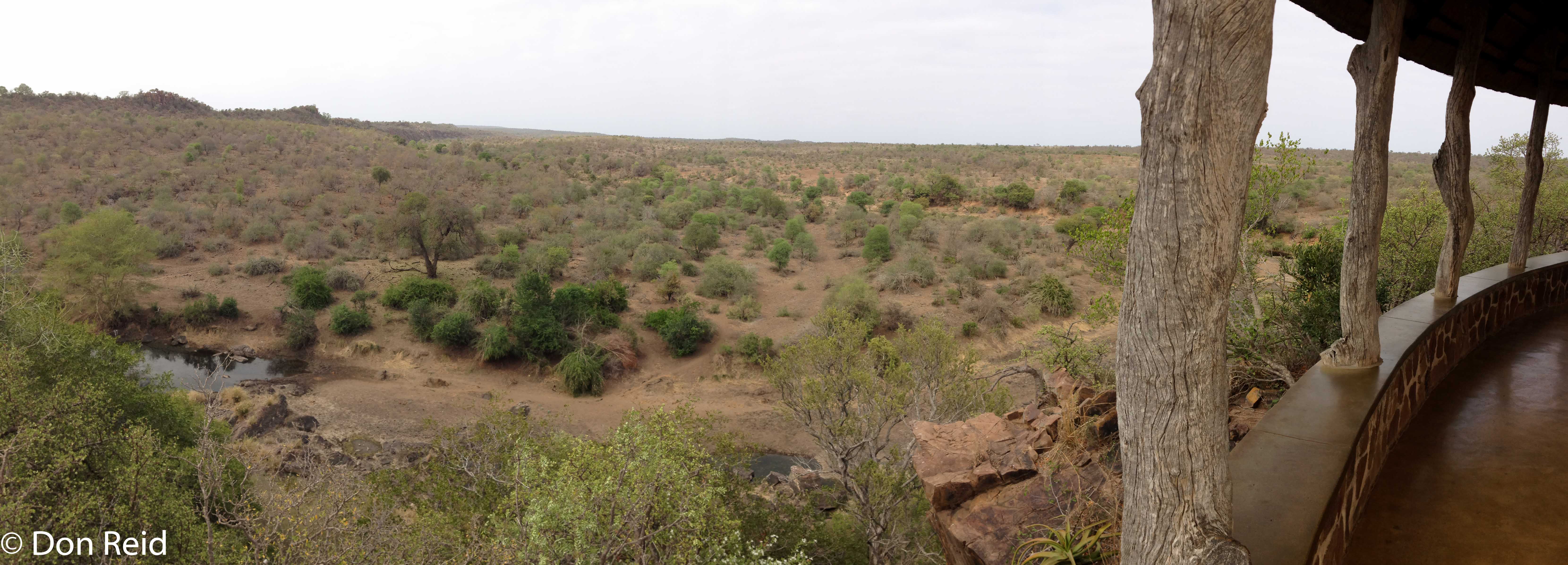
Time for a brunch and some birding around the picnic spot. I walked up the small hill to the viewpoint over the dam below and the bush stretching into the distance and found a number of species

  • Pied Kingfisher
  • Pied Wagtail amongst the rocks on the river
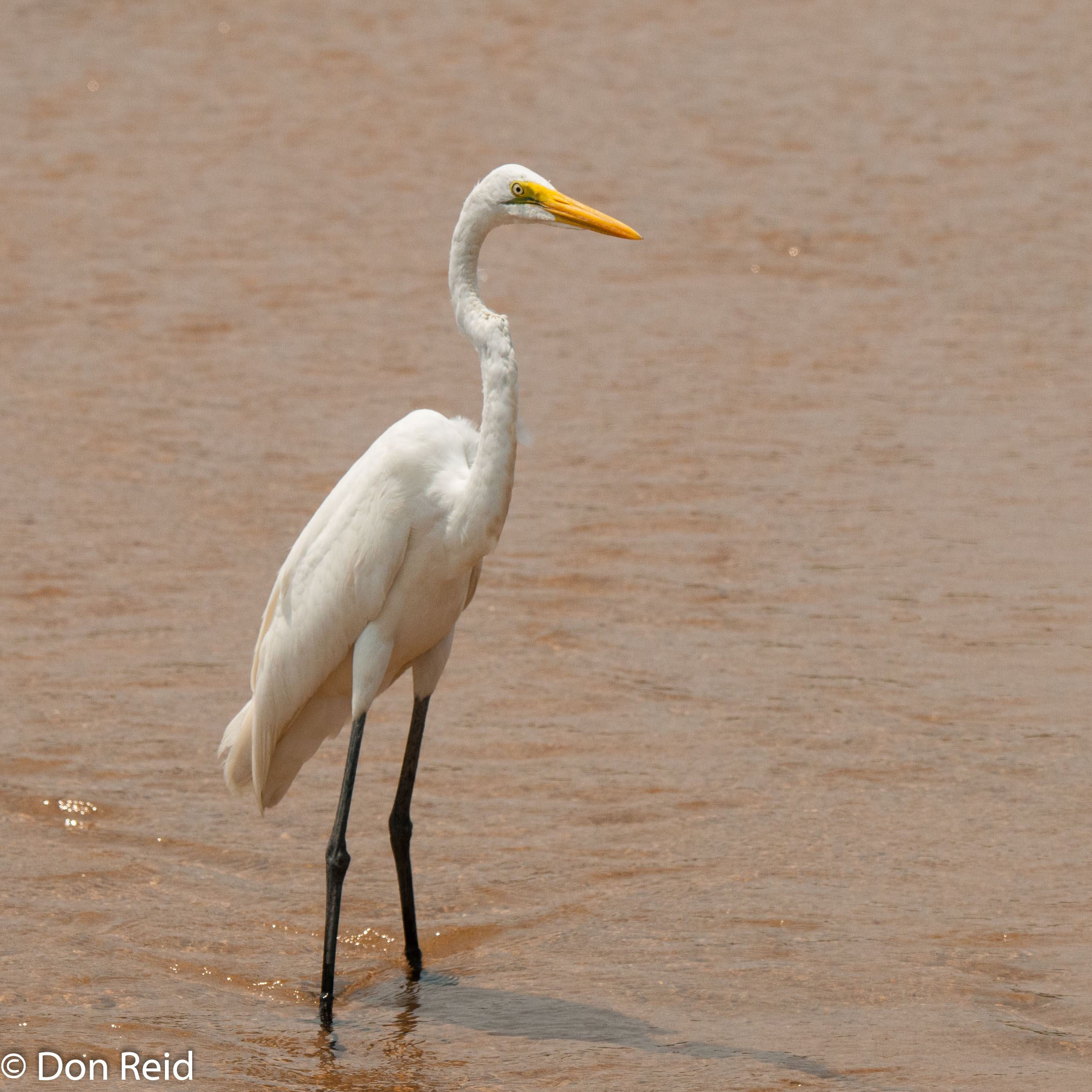
  • Great Egret flying between the ponds looking for the best fishing spot
  • Spectacled Weavers moving about busily and calling their sharp call
  • Green=backed Cameroptera calling from the bush
Nwanetsi Viewpoint
Nwanetsi Viewpoint
Nwanetsi Viewpoint
Nwanetsi Viewpoint
Lizard, Nwanetsi Viewpoint

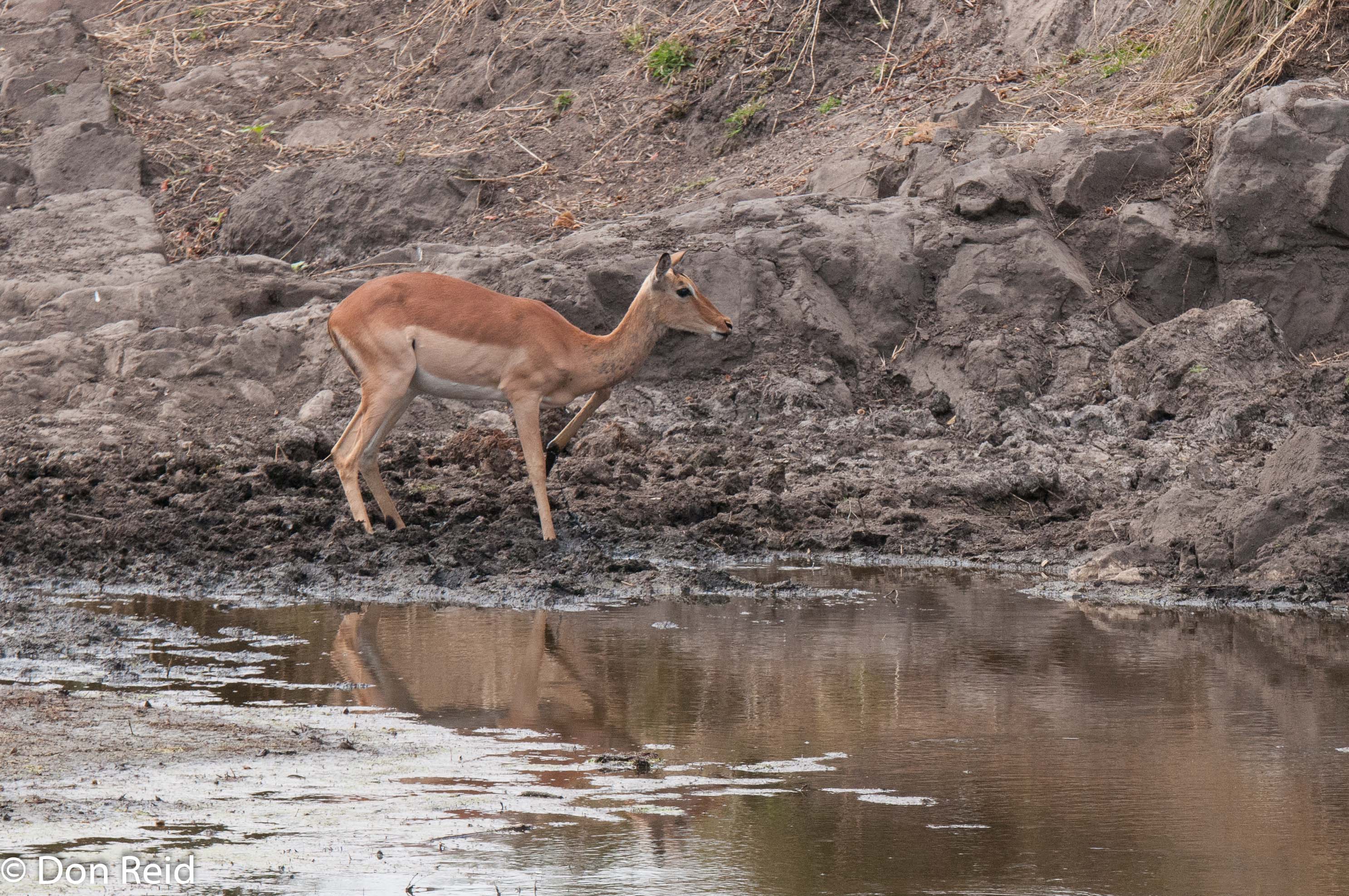
After brunch we left the picnic spot and headed firstly to the low water bridge on the S37 but found it dry and returned to the Sweni bird hide along the same road for a better view  of the dam. There we found some Impala, warily approaching the water where a large crocodile was resident.
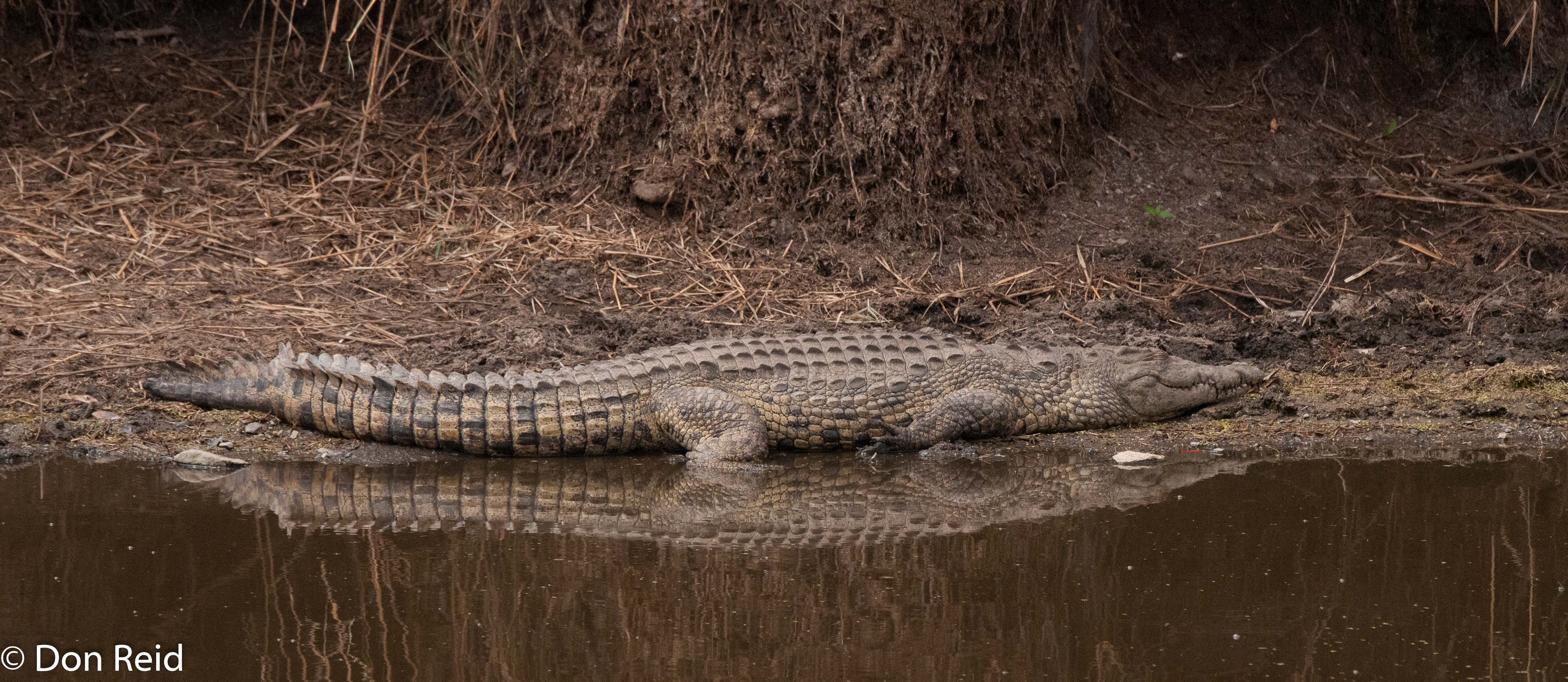
Crocodile, Sweni Hide
Wary Impala, Sweni Hide

The resident bird population were going about their business while we watched from the comfortable hide

  • White-faced Ducks
White-faced Duck, Sweni Hide
  • Black Crake
  • Water Thick-Knee
  • Red-capped Robin-Chat (unusual in this habitat)
Red-capped Robin-Chat, Sweni Hide
  • Waders such as Wood Sandpiper and Three-banded Plover
  •  The ubiquitous Egyptian Goose
Egyptian Goose, Sweni Hide

The rest of the journey back to Satara was on tar and with less game visible so we did not dawdle too much, nevertheless we enjoyed seeing Zebra close up with a juvenile whose stripes were still fluffy and brown – looking cute enough to want to pat him.

Burchell's Zebra, Satara - Nwanetsi S100

On the birding side we did spot a Brown Snake-Eagle and Red-crested Korhaan not far from the road

The rest of the day was a relaxing mix of our typical Kruger activities – some resting, enjoying the quiet of the camp, a swim late afternoon and closing out the day with a braai with the family.

Sources :

Sanparks Guide to Kruger National Park
A Week in Kruger – Satara to Olifants

The Route

Kicking off our stay in Satara we decided our first drive would follow the H1-4 main tarred road which heads north, branching off onto the Olifants camp road after crossing the river

After the previous day’s long drive from Pretoria, we enjoyed a good night’s rest, only surfacing after 7.30 am for coffee and rusks on the stoep before packing the brunch goodies and setting off for Olifants camp after 9.30 am.

Habitat

The drive initially takes you through open savanna grassland, changing to more rocky landscape closer to Olifants, where the habitat is known as Olifants rugged veld and is the transition between the woodlands of the south and the mopaneveld of the north.

Most common trees are Knob-thorn Acacia, Umbrella Acacia, Marula, Ebony Jackalberry and Red Bushwillow. The open savanna is favoured by the grazers such as antelope, zebra and their predators, with plenty of Vultures gathered at carcasses

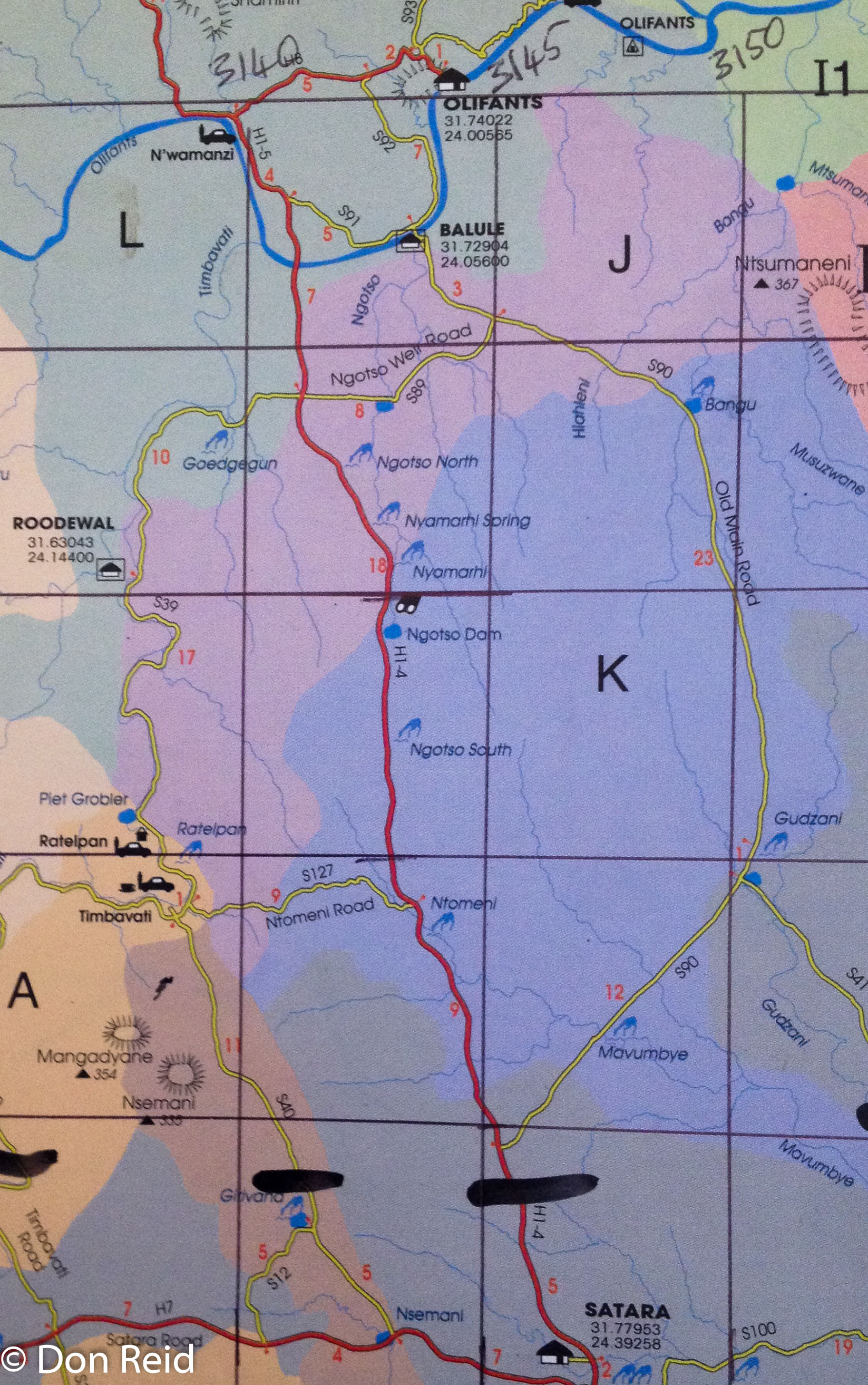
An extract from the Kruger Park map book shows the route :

Map of route from Satara to Olifants (the grid is my hand-drawn guideline for atlasing)

The Drive

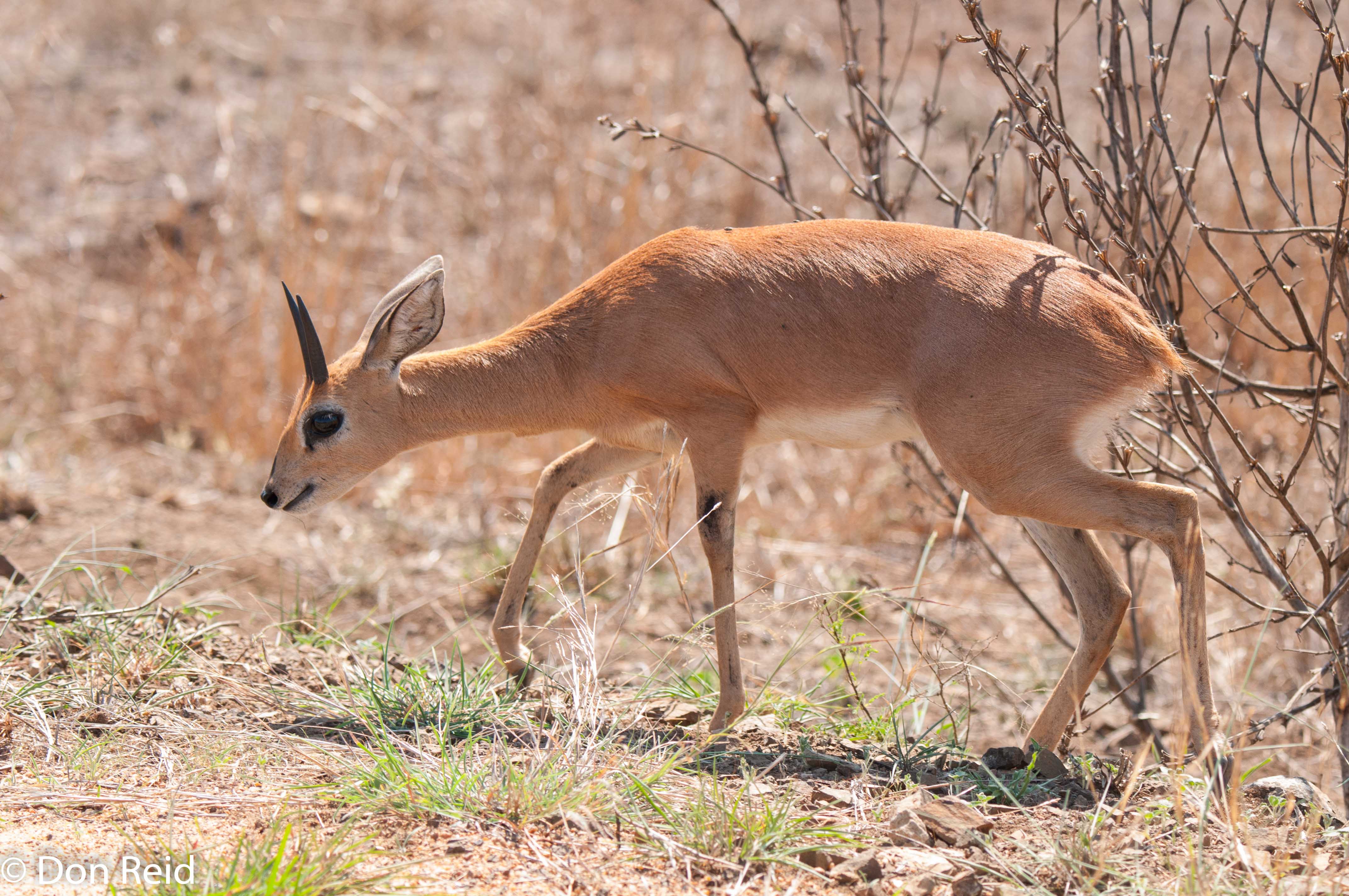
The savanna grassland was particularly dry and barren after the winter, but the few waterholes and dams which still had some water kept things interesting , with plenty of Elephant, Giraffe, Waterbuck, Kudu and Impala plus a few Steenbok here and there, looking so small and defenceless in this environment.

Waterbuck
Waterbuck
Waterbuck
Waterbuck
Kudu
Kudu
Impala early morning
Steenbok
Steenbok

On the birding side we started with a juvenile Black-chested Snake-Eagle and added regularly to the list, particularly when we stopped at Ngotso Water Hole some 20 kms north of Satara where we found Sabota Lark, Blue Waxbills, Ostrich, Lesser Striped Swallow, amongst others. This is the main water hole in the area, man-made and fed by the vlei area surrounding it.

Black-chested Snake-Eagle (juvenile)
Blue Waxbill
Blue Waxbill

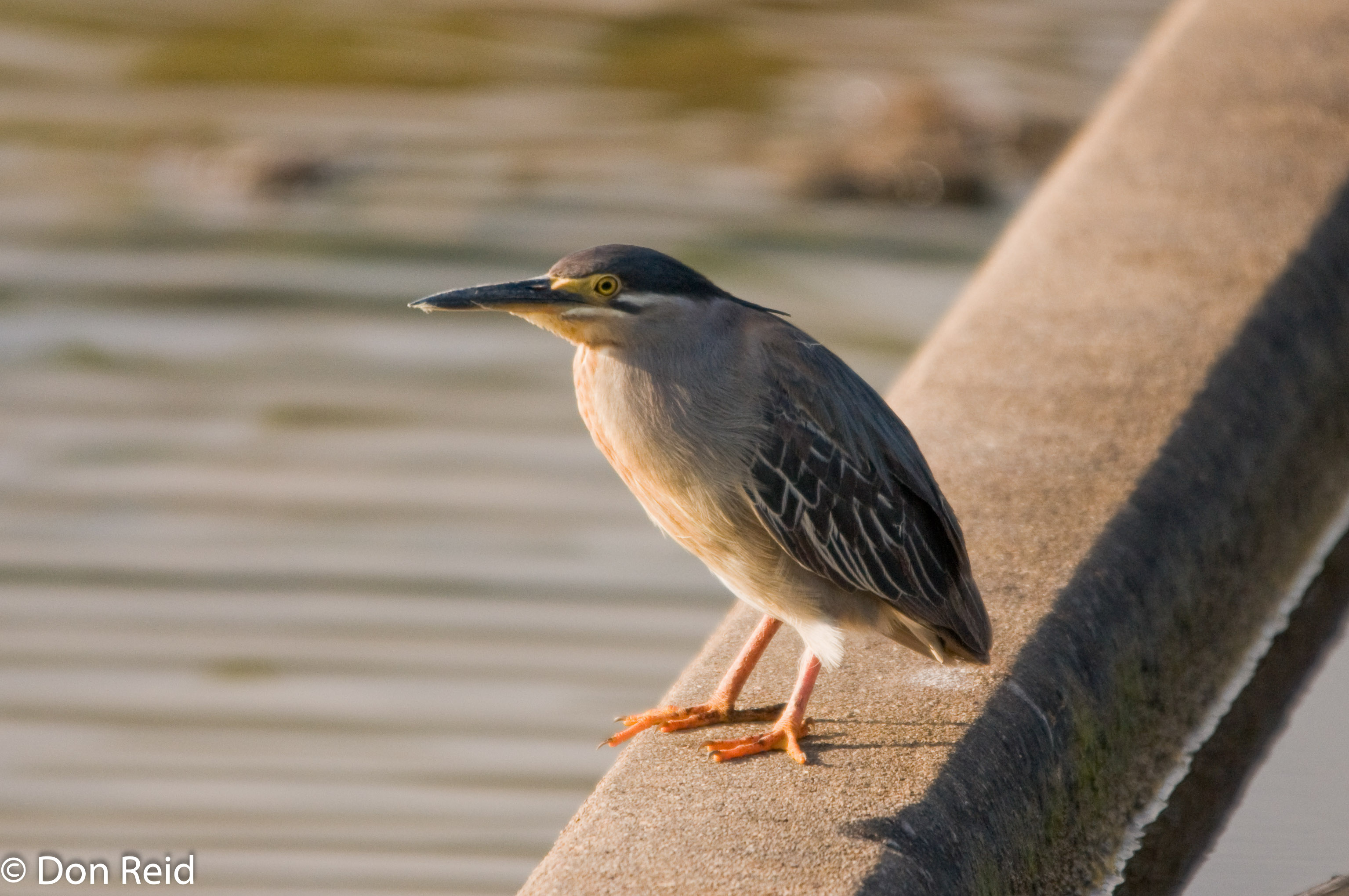
At the Olifants Bridge you can get out of the vehicle in the designated zone to enjoy the scenes on both sides and the bird life(Little Swifts by the 100’s, African Spoonbill, Yellow-billed Kite, Green-backed Heron).

Scene from Olifants river bridge
Little Swift
Little Swift
Green-backed Heron
Green-backed Heron

Further along, the road stays close to the river for a few km’s before turning off to Olifants camp. A lone elephant was making his way slowly across the mostly dry river bed to where a few Impalas were drinking at a pool – such a classic scene I just had to stop and let it soak into my memory. It’s these simple scenes that are what Kruger is all about and why we keep coming back after 40 + years of visiting our national treasure.

Olifants Camp

At Olifants camp we went straight to the picnic area where Andre and Geraldine were already parked and Megan and Maia were in the swimming pool. By now it was 35 deg C and the heat felt tangible, but as Geraldine reminded us, this is exactly what you expect in Kruger in summer – best embrace it and don’t try to be too active.

Andre conjured up a “brunch sandwich” on the skottelbraai (like an old ploughshare used for frying on a gas cylinder) with scrambled egg, fried lean bacon, fried onions and avo – delicious! Not that we were ravenous by then or anything. All part of the Kruger traditions/must-do’s!

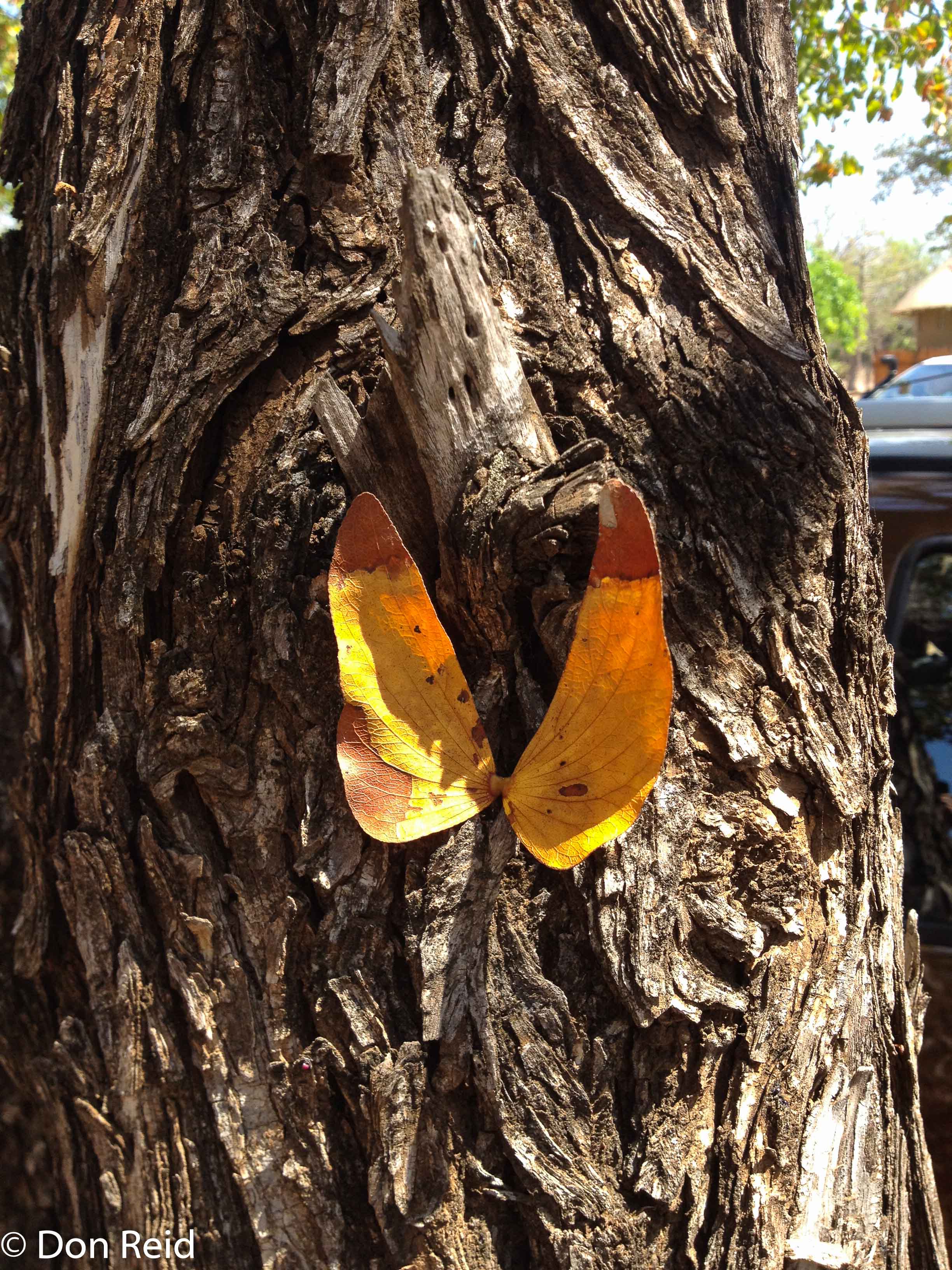
While he was busy I couldn’t help noticing that the fallen Mopane tree leaves looked uncannily like a butterfly, so I positioned one on the tree trunk ……

Mopane leaf "Butterfly", Olifants camp
Mopane leaf “Butterfly”, Olifants camp

After brunch it was  time for the next must-do – as we walked slowly down to the restaurant area and viewpoint (Gerda and I cheated and drove – the extreme heat you know) below the restaurant to enjoy the timeless landscape below and stretching to the horizon in a 180 degree sweep. In all the years we have been visiting Kruger the view has not altered one bit – other than the effects of the different seasons – a testament to the foresight of the founders of the Park and those charged with looking after it.

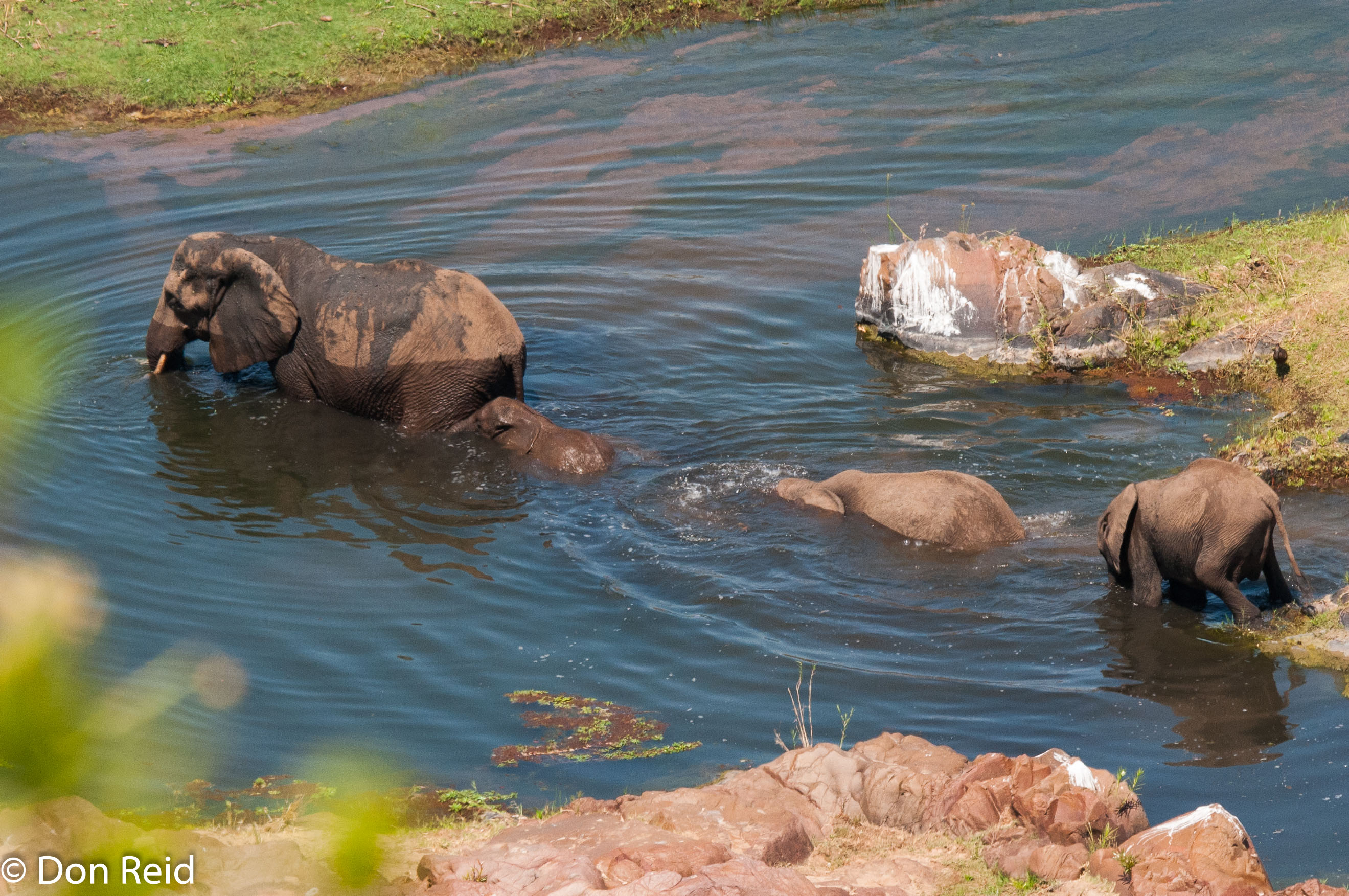
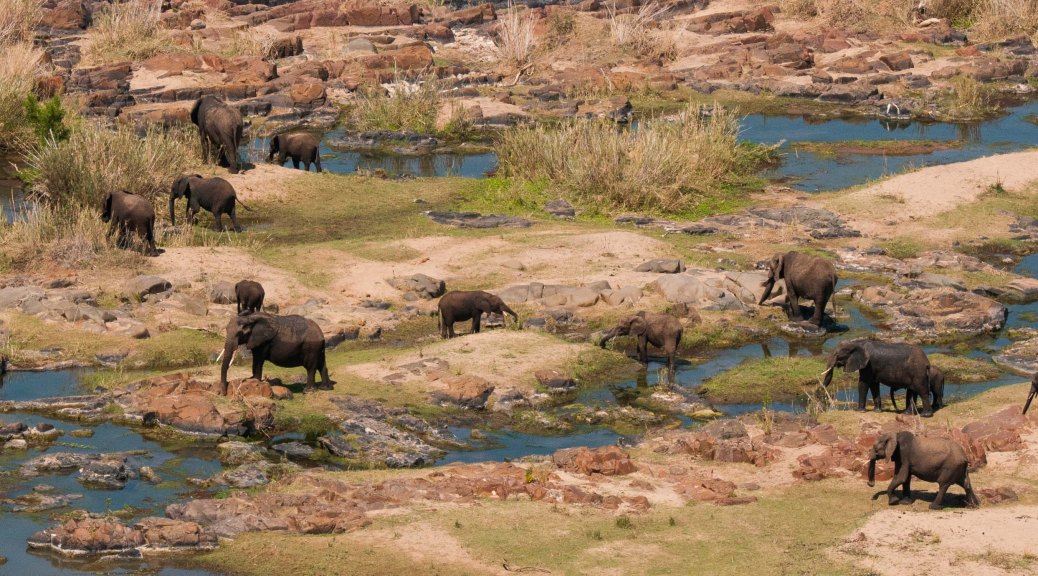
In the river far below, some 30 to 40 Elephants of various ages were enjoying the pools of water as they moved slowly across the wide Olifants River, which flowed in several streams interspersed with rocky islands and stretches of sand and reeds.

Olifants camp viewpoint

Olifants camp viewpoint Olifants camp viewpoint Olifants camp viewpoint Olifants camp viewpoint Olifants camp viewpoint

Numbers of birds were visible – lots of Egyptian Geese but also plenty of white egrets (Great, Yellow-billed and Cattle were all represented), Marabou Storks, Hamerkop, Grey Heron, African Openbill and Saddle-billed Stork.

Great Egret
Great Egret

Tearing myself away from what has become one of my favourite spots in all of Kruger, I went off to find the rest of the family, who were busy with that other traditional pursuit – shopping. And who can blame the girls (old and young), with some pocket-money and nowhere else to spend it but in the tempting Kruger Park shops.

The road back to Satara was quiet, with birds rather than animals being the only reason for stopping – Red-billed Oxpeckers using Kudu as a feeding station, Kori Bustard some way from the road and a Yellow-throated Longclaw perched near the road.

Yellow-throated Longclaw

The rest of the day was dedicated to camp activities – swimming in the large pool, and a late afternoon braai

Sources :

Krugerpark.co.za

Sanparks Guide to Kruger National Park