I recently realized I have been doing this blogging thing for two years already – how time flies when you’re having fun! It seemed like the right time to have a look at where this is going and how sustainable it is.
One suggestion is that some of what I have written needs a more permanent “home” and not be buried amongst past posts – those who blog will know the principal of blogging is that they are shown in reverse chronological order ie latest one is at the top and you scroll down to see the earlier ones (or you use the archives if you know when a particular one was published).
This is fine but something like a trip report to a special place needs to be more easily accessible. So a separate page on the site for “Birding Trips” may be the way to go, plus pages for things like Butterflies, Mammals and some of the other interesting stuff out there.
I have already started revamping the blog into a Website format and have changed the theme (ie appearance) plus added some tentative new “Pages” to the headings at the top. One of them is “Birding by Habitat” which I have had in mind for some time – could be useful for beginners to know what birds they can expect to encounter in a particular habitat.
The site address has been shortened to “mostlybirding.com” eliminating the “wordpress” that was there before so it is very easy to get to the site by simply googling “mostly birding”
Hit the “Like” or the Comment Box if you like where I am going!
The Riverfront section of Chobe National Park – one of the finest Game Reserve experiences in Southern Africa, if not the whole of Africa.
Map of the Riverfront section of Chobe
I count myself fortunate to still have a part-time consultancy job as a QS, and doubly fortunate to be involved in a sizeable building project at Kasane in the far north of Botswana, on the doorstep of Chobe National Park. The project requires monthly site visits and during the few days we – that’s the professional team – spend there, we have managed to squeeze in a quick trip through the Riverfront section of the Park – all part of team building, you understand.
Prior to these recent visits, I was last in Chobe (pronounced Cho-bee) in 2000 and had good memories of this unique Park, although the intervening years had rendered my memories a bit fuzzy. So I was more than eager to renew my acquaintance with this part of Botswana and the first trip through the Riverfront section in May 2015 brought those memories from 15 years ago flooding back.
Chobe Background (courtesy of Wikipedia)
Chobe National Park, in northern Botswana, has one of the largest concentrations of game in Africa. By size, it is the third largest park in the country, after the Central Kalahari Game Reserve and the Gemsbok National Park, and is the most biologically diverse. It is also Botswana’s first national park.
One of four main areas in Chobe,The Serondela area (or Chobe riverfront), situated in the extreme Northeast of the park, has as its main geographical features lush floodplains and dense woodland of mahogany, teak and other hardwoods now largely reduced by heavy elephant pressure. The Chobe River, which flows along the Northeast border of the park, is a major watering spot, especially in the dry season (May through October) for large breeding herds of elephants, as well as families of giraffe, sable and cape buffalo. The flood plains are the only place in Botswana where the puku antelope can be seen. Birding is also excellent here.
Flying in
The flight from Jo’burg is about an hour and a half and takes you over the Mkgadikgadi pans, an amazing sight from the air.
Makgadikgadi Pans from the air
Approaching Kasane, there is usually a good view of the Chobe River and it’s quite possible to spot Elephant even before you have landed.
Chobe River from the air
So How much Game is there?
Chobe tends to exceed all your expectations – yes there are patches with not much going on, not visible anyway, but there are parts that take your breath away, like the lush floodplains filled with game almost as far as the eye can see – dominated by Elephant and Buffalo. Elephants occur here in such numbers that there are real concerns about the survival of the woodland, but Botswana has a strict anti-culling policy and so Elephant herds grow and spread unabated. Perhaps nature will intervene as it often does.
Mostly Elephant and Buffalo on the floodplain
Apart from the frequent Elephant sightings, there are some other very special animals to be seen – (some of the snippets of information are from the excellent maps/brochures on Botswana by Veronica Roodt which I originally obtained for my 2000 visit)
Sable Antelope, one of the most beautiful antelope in Africa with their perfectly curved horns, which are used to defend themselves. Glossy black colouring means it is a bull, while cows and juveniles are brown
Sable Antelope
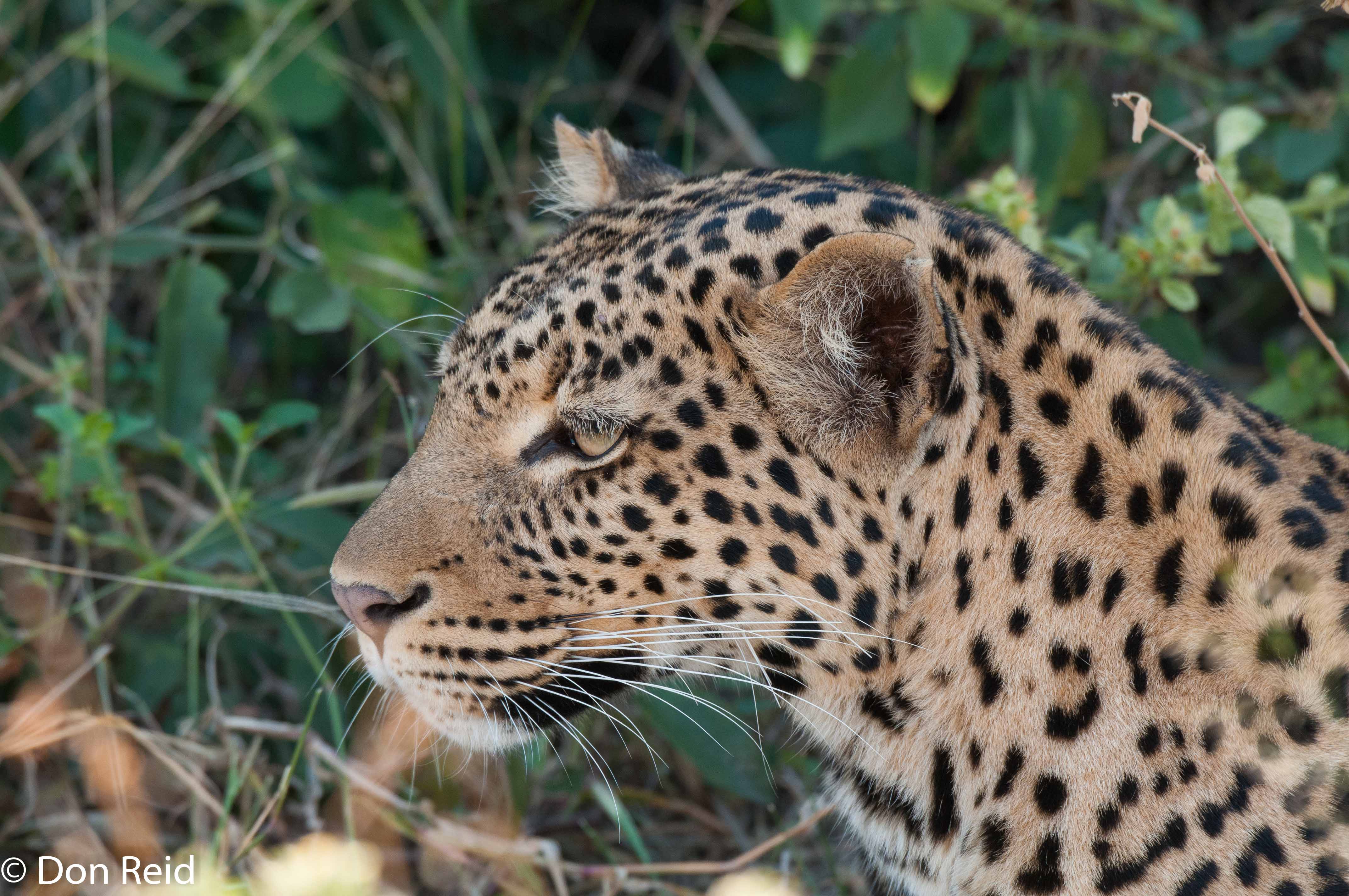
Leopard – we have been very fortunate in finding a young Leopard on two of our three visits so far, quite possibly the same individual which, on our last visit, had dragged its Impala meal into a tree. This is to prevent Hyena and other predators reaching it.
Leopard
Kudu – males have those impressive twisted horns, females are hornless so the ears are more prominent
Kudu
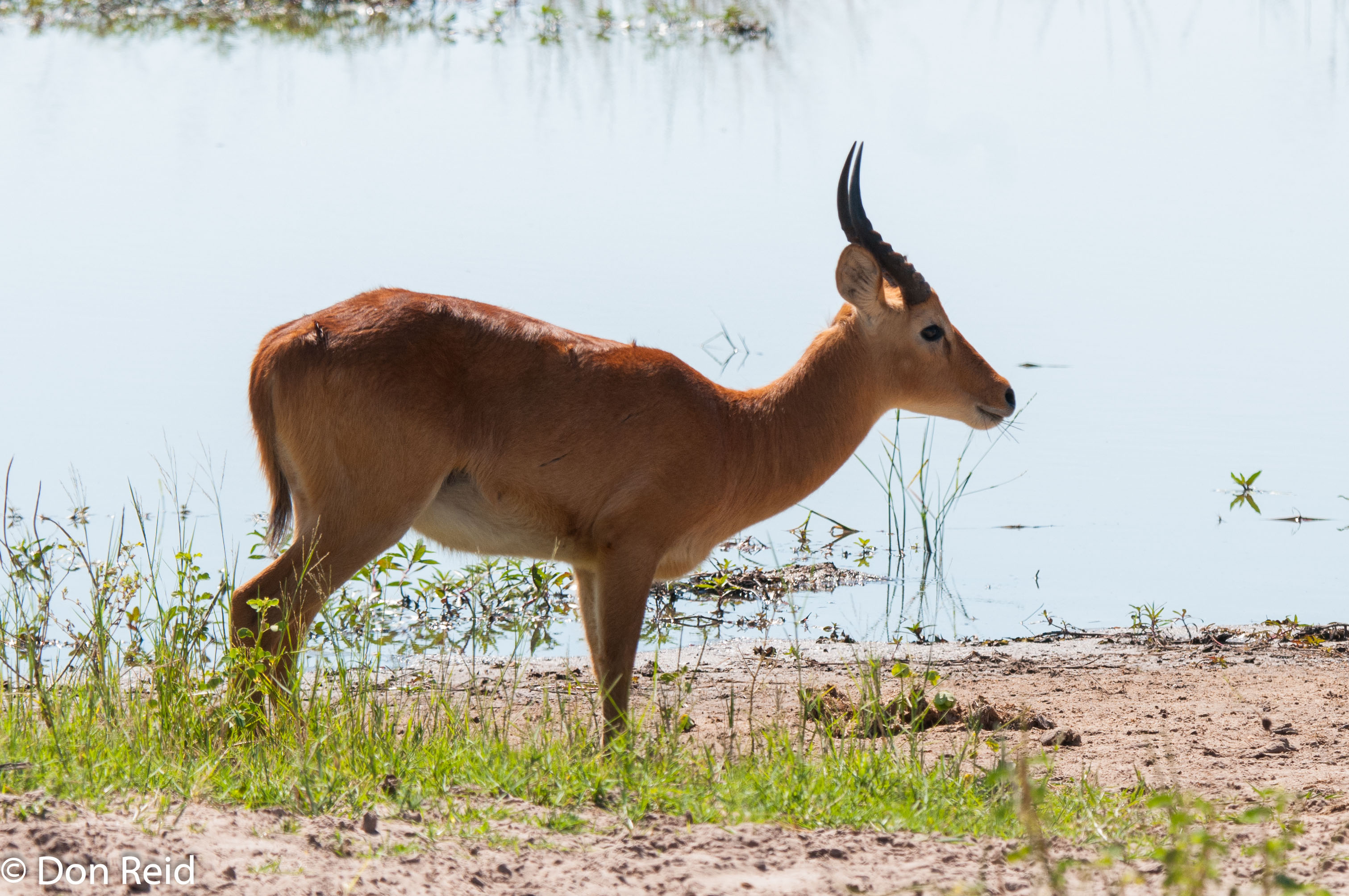
Puku – Chobe is the only place in Southern Africa where this uncommon species occurs, in small herds. Mostly found near water
Puku – unique to Chobe
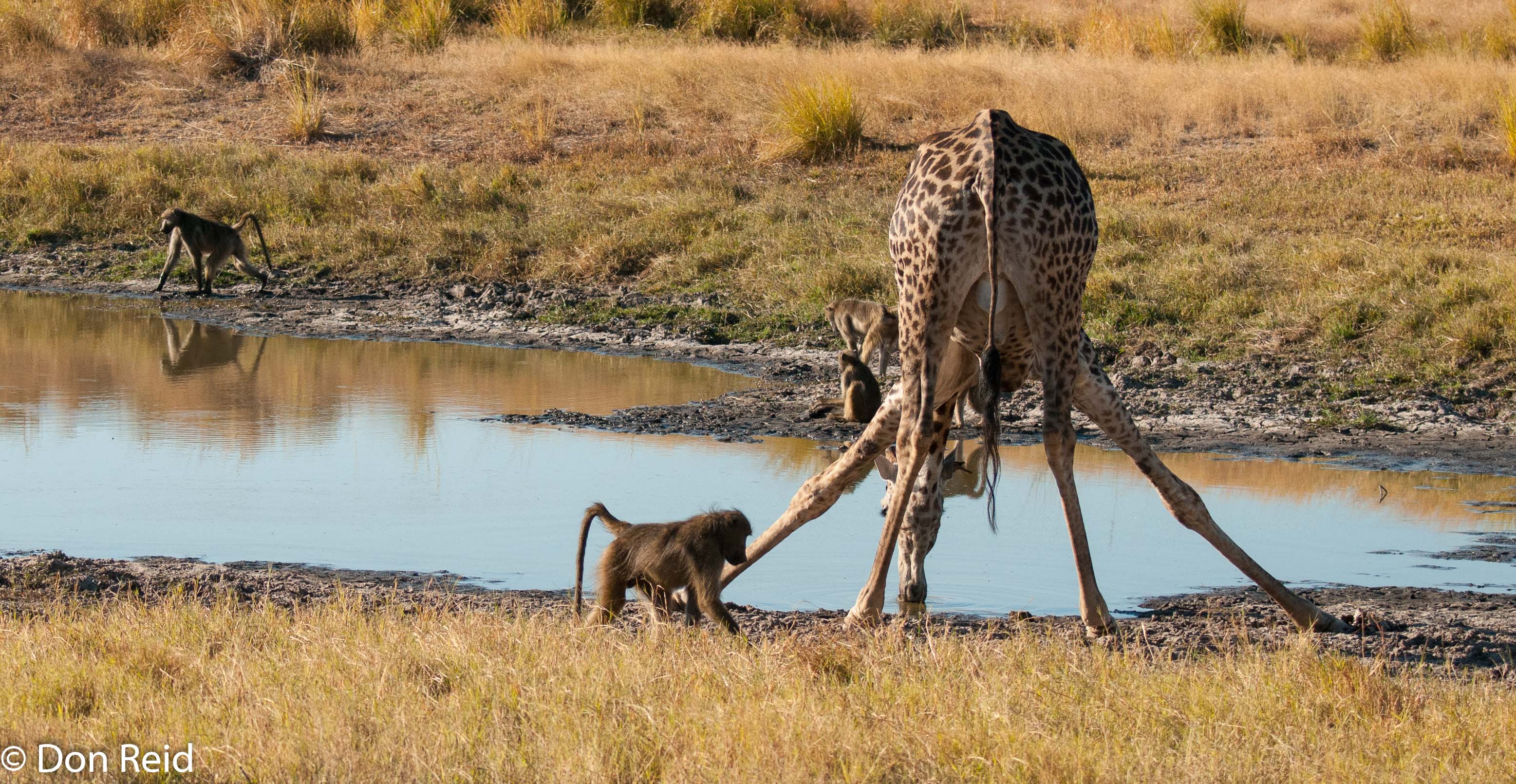
Giraffe – tallest animal in the world at 5,5m. Valves in the jugular vein help to control blood pressure when they bend down to drink water. The oxpeckers love them, gathering in numbers on their long elegant necks
Giraffe at waterholeRed-billed and Yellow-billed Oxpeckers taking a ride
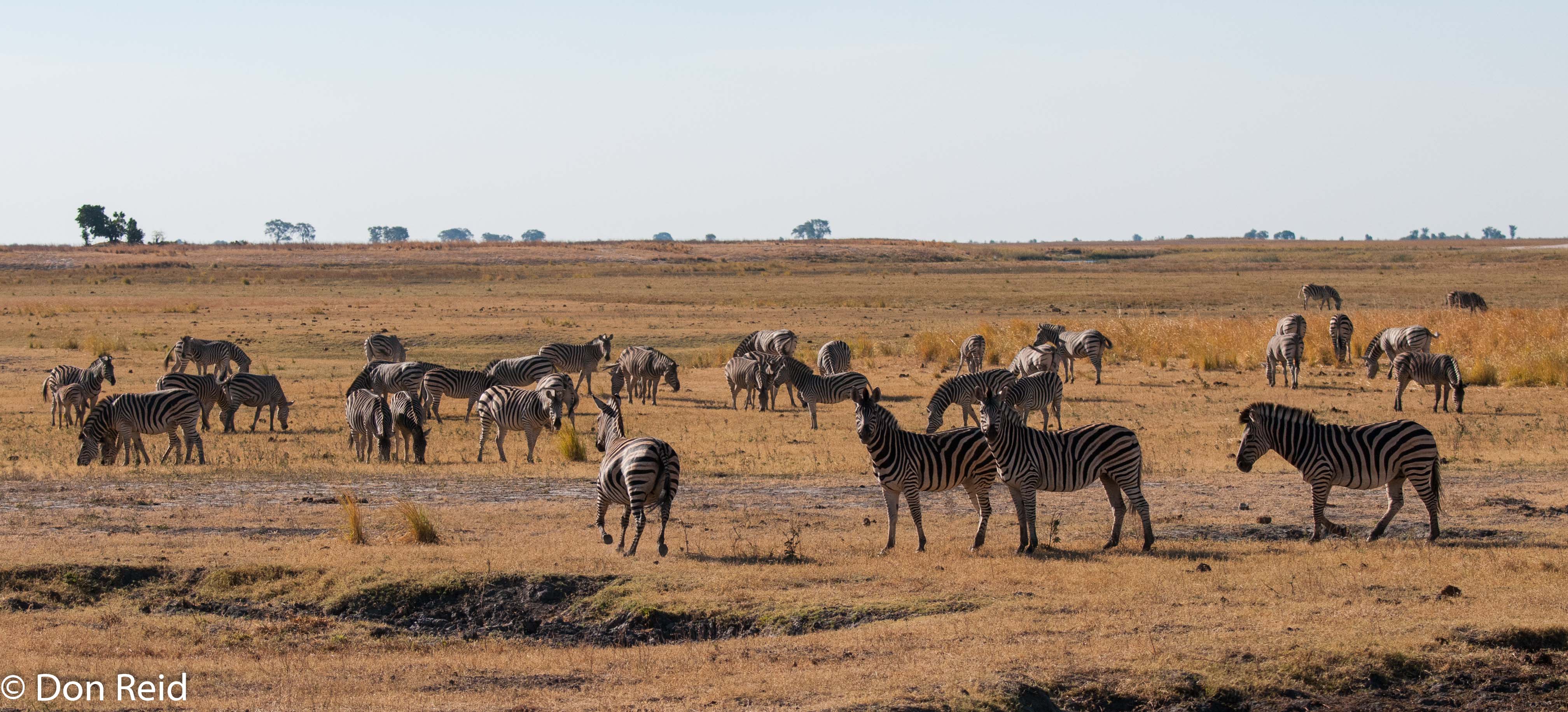
Zebra – no African Game Reserve would be complete without them – our kids loved to call them pyjama-donkeys when they were small, now the grandkids do it
Zebra on the plains
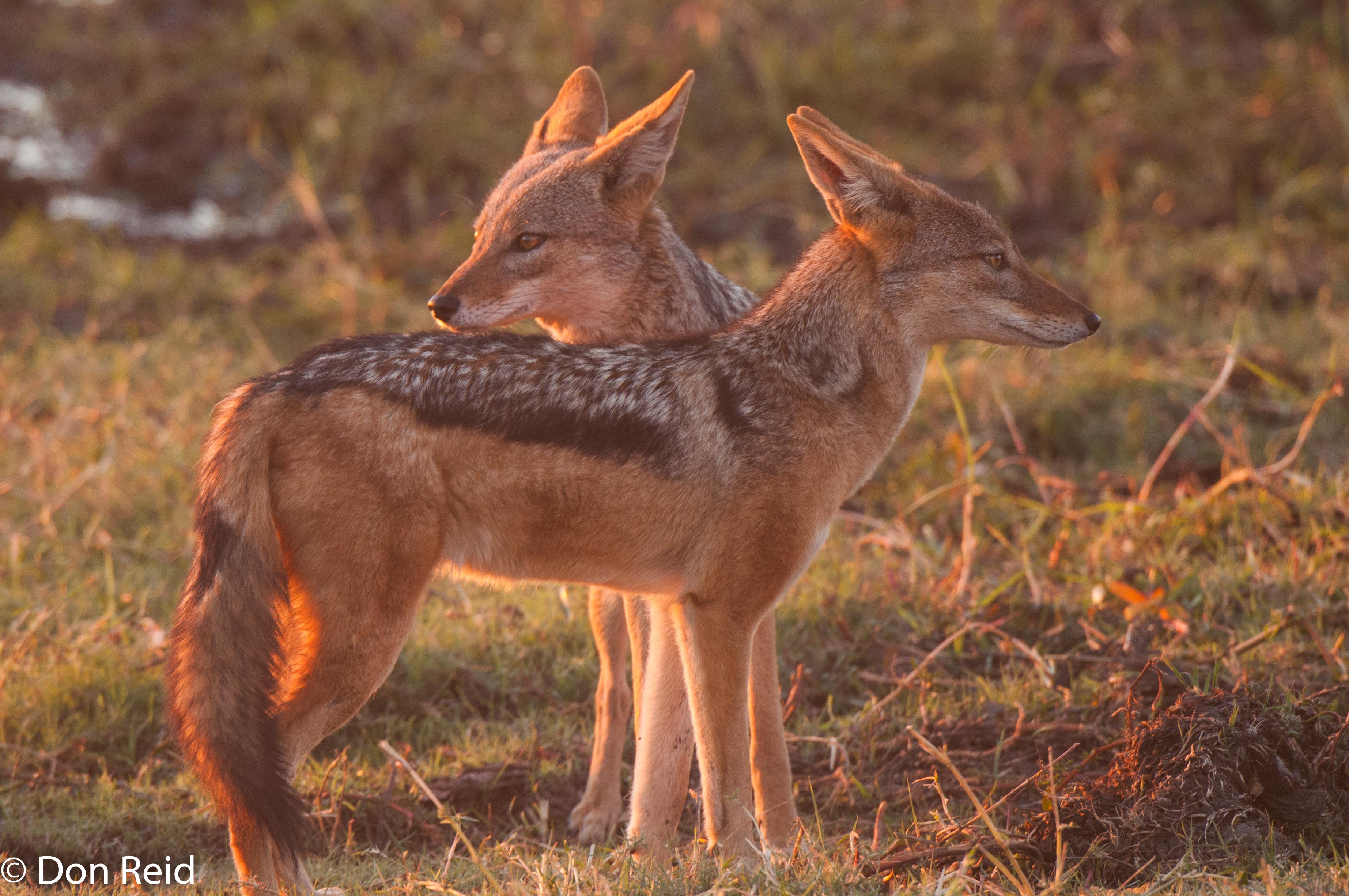
Black-backed Jackal – Pairs form long-term bonds, as these two seem to have done
Black-backed Jackal
Wild Dog – if you are very lucky you may encounter one as we did, crossing the tar road in front of us, then dashing off as we slowed down. They usually move around and hunt in packs.
Wild Dog dashing across the road
And the Birding?
For anyone starting birding, this must rate as one of the best places to visit – there are many larger species that are easy to see and even photograph if that is your thing. Identifying them is also fairly straightforward if you have one of the birding Apps or one of the many birding books available.
The short trips through Chobe that I have done so far have been exciting but too short and rushed to do any in-depth birding and I look forward to getting to grips with some of the more difficult to see species during future visits. Nevertheless there have been some very good sightings and photo opportunities of some of the “obvious” species – here’s a selection :
Ground Hornbill – no other reserve I have visited can boast as many of this iconic species
Ground Hornbill
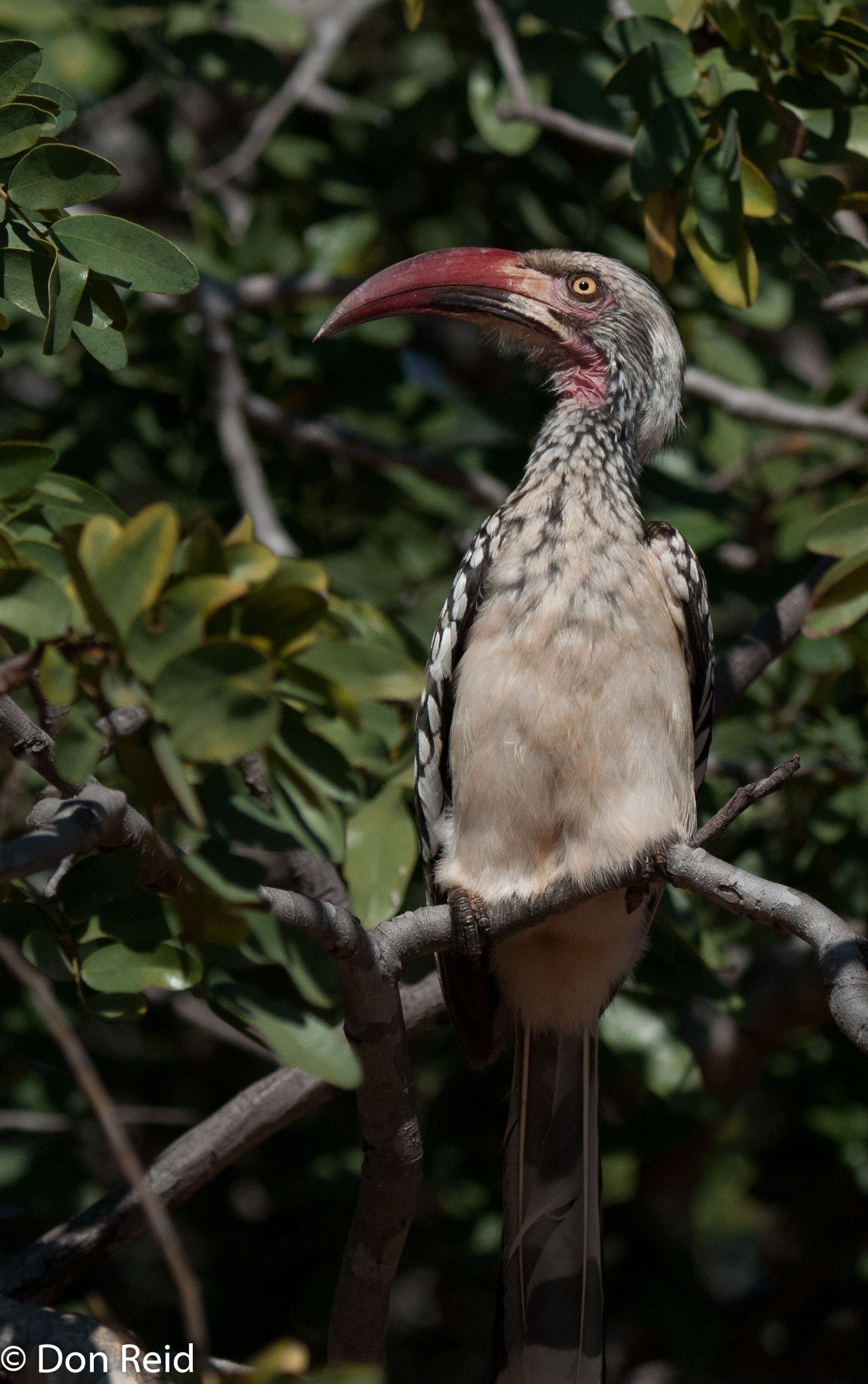
Red-billed Hornbill – there is a good chance you will encounter five Hornbill species during a visit – the one above plus the four smaller species being Red-billed as this one below, Yellow-billed, African Grey and Bradfield’s.
Red-billed Hornbill
Yellow-billed Stork – occur regularly among the myriad birds that frequent the pools of the Chobe floodplain
Yellow-billed Stork
Yellow-throated Petronia – an uncommon and not at all obvious species, this one happened to be perched near the Leopard with its half-eaten Impala
Yellow-throated Petronia
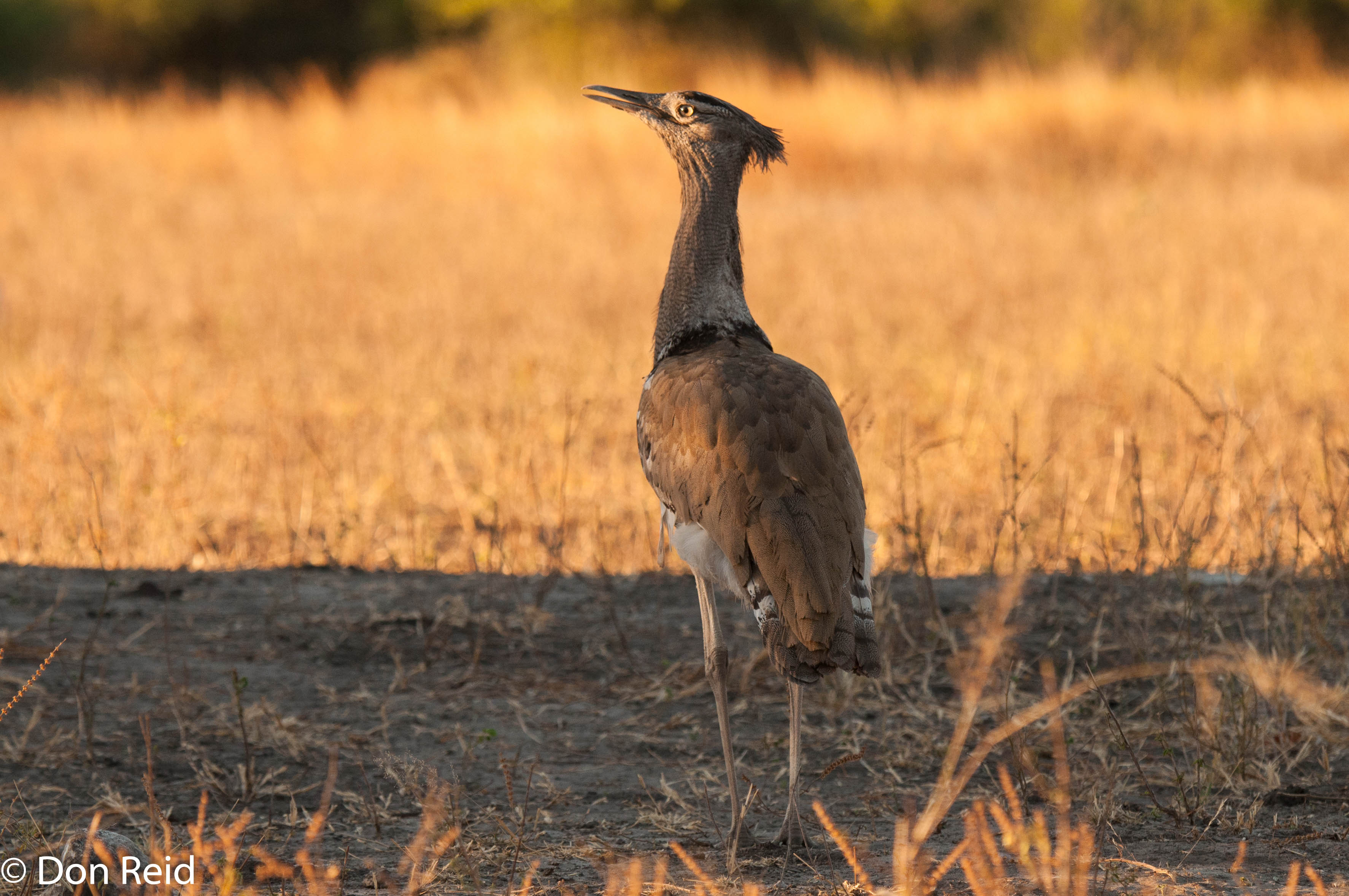
Kori Bustard – another species with a more than good chance of being spotted in the open areas with grass
Kori Bustard, said to be the heaviest flying bird in the world (5,5kg)
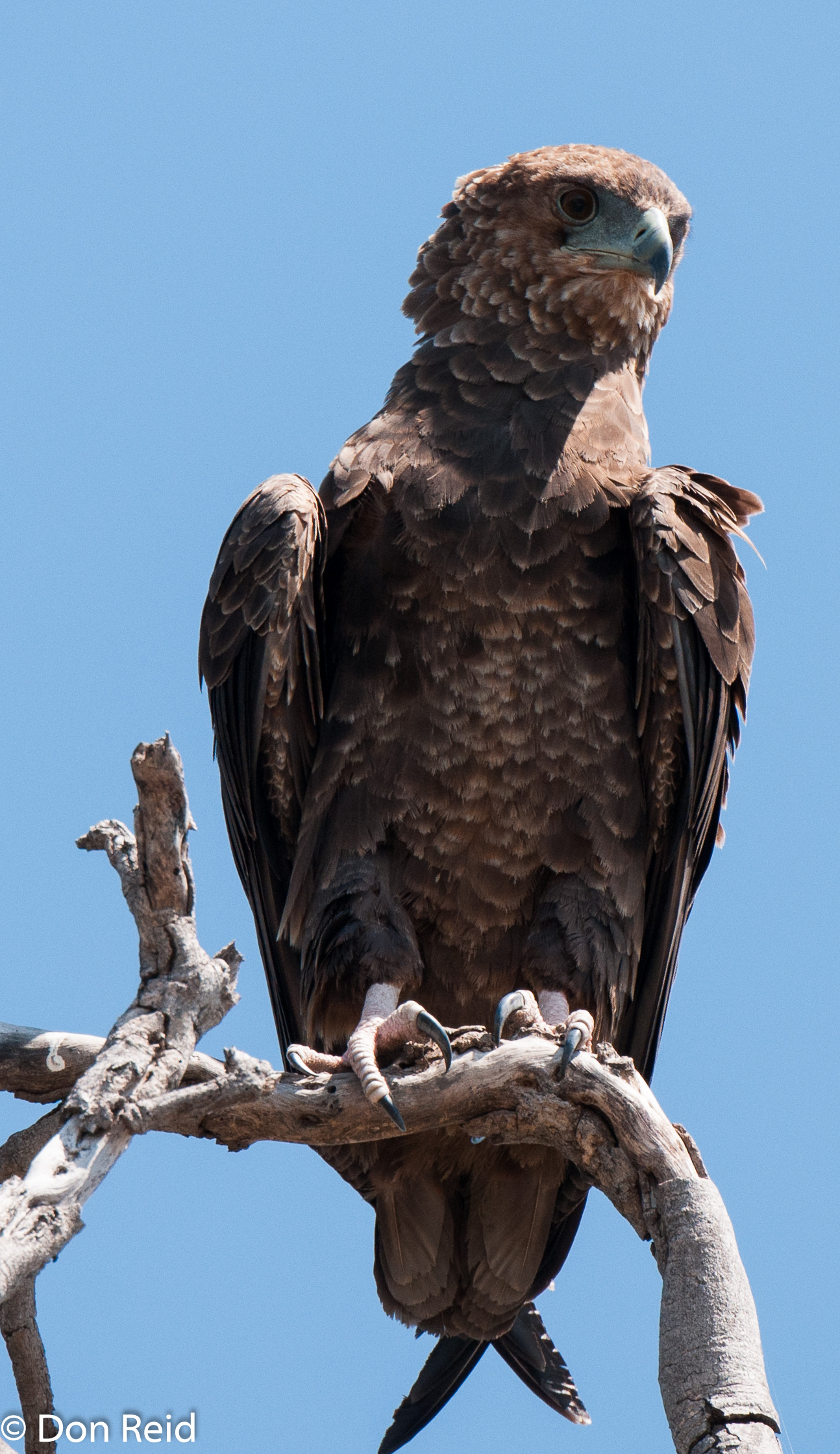
Bateleur – often seen soaring high in the air, this juvenile was perched in a dry tree near the track. One unique feature is their short tail which allows it to walk backwards – useful when trying to catch a snake!
Bateleur (Juvenile)
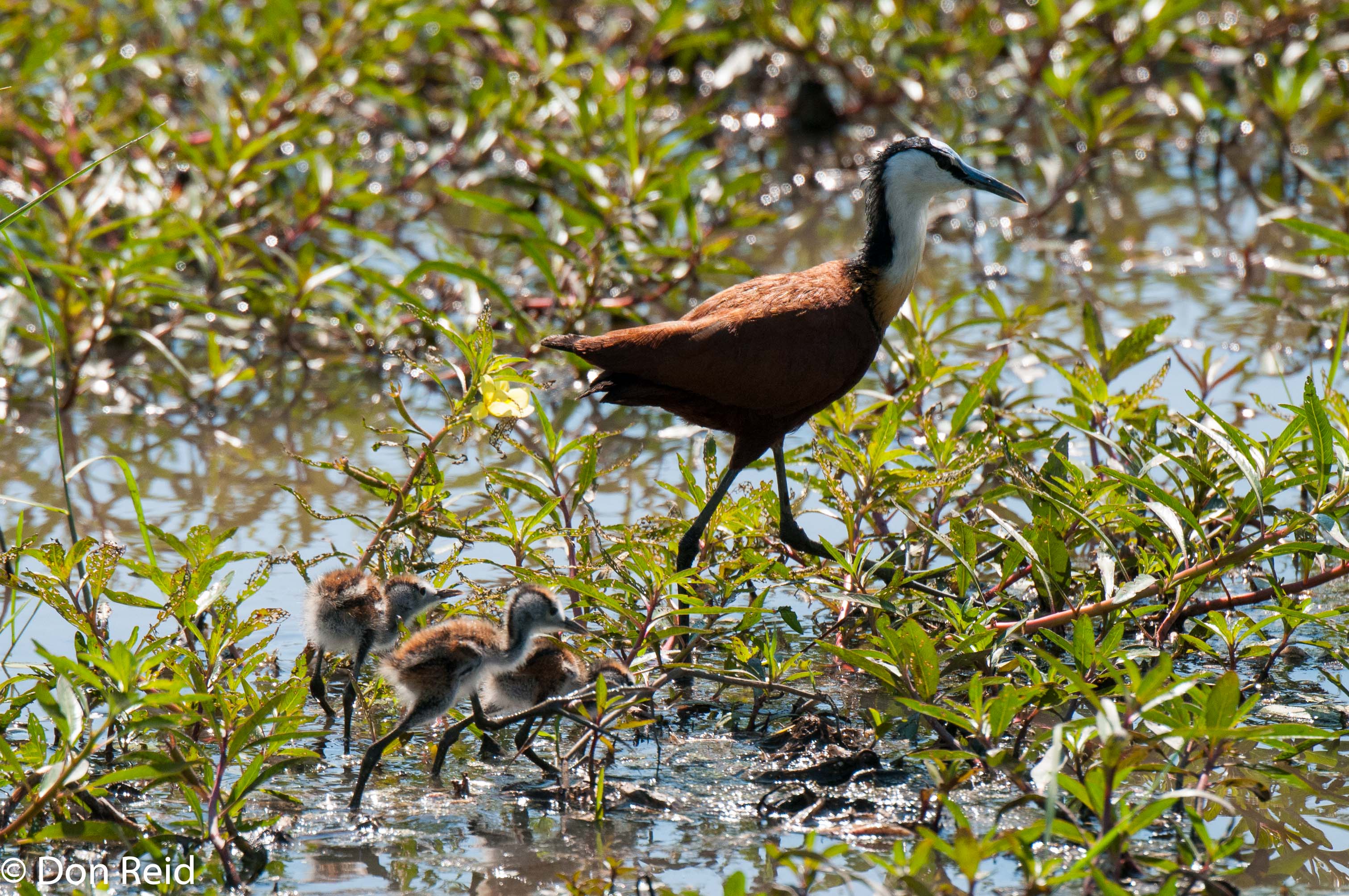
African Jacana – this one had a few youngsters in tow, cute little fluffy chicks with outsize legs
African Jacana with little ones
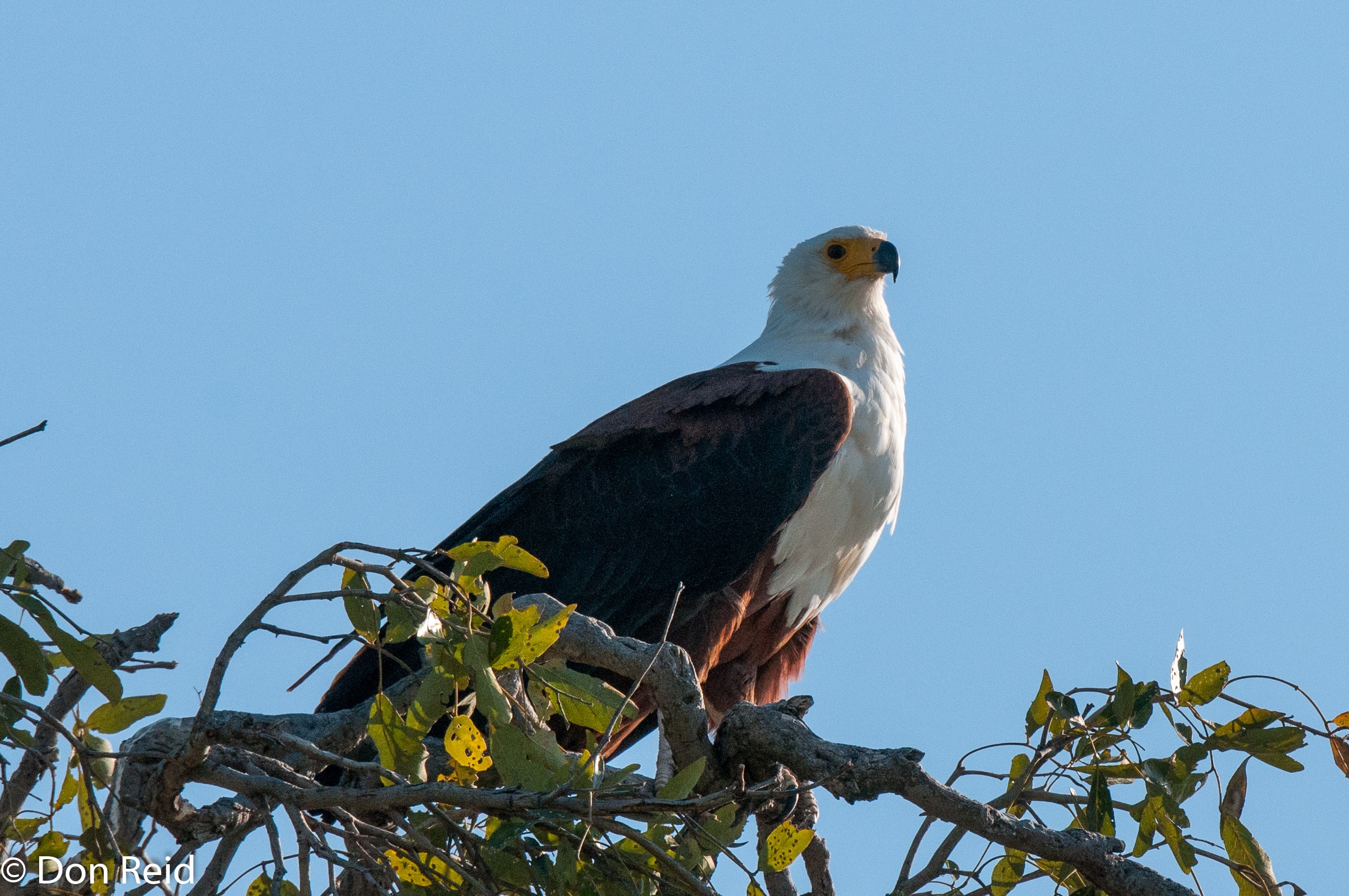
African Fish-Eagle – no great river in Africa is worthy of the name unless it is frequented by these magnificent birds of prey and Chobe has its fair share of them
African Fish-Eagle
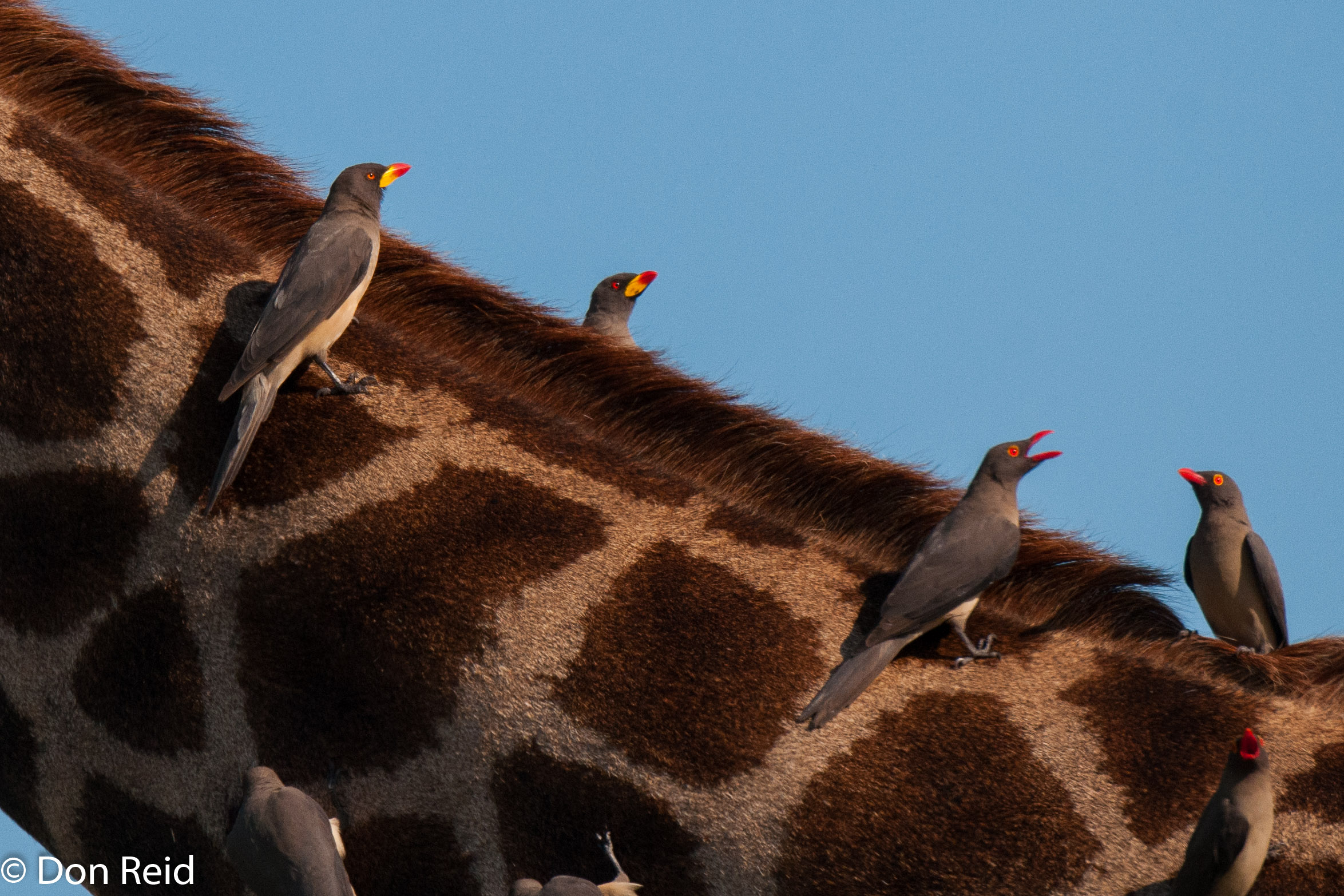
Oxpeckers – the giraffes seem to attract the most oxpeckers but they are just as likely to be found on buffalo, kudu, impala
Red-billed and Yellow-billed Oxpeckers
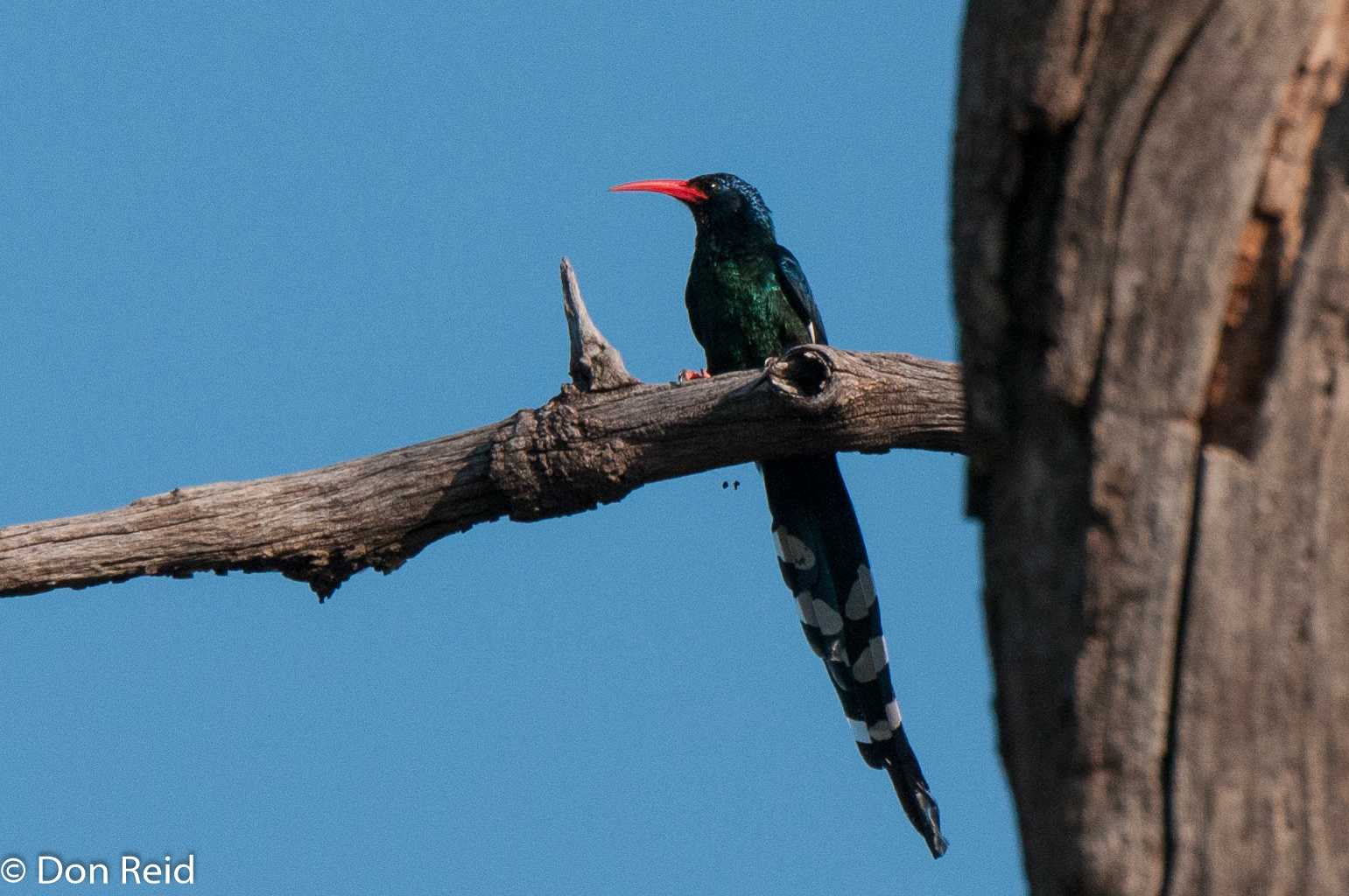
Green Woodhoopoe – often heard before they are seen, this species is less common
Green Woodhoopoe
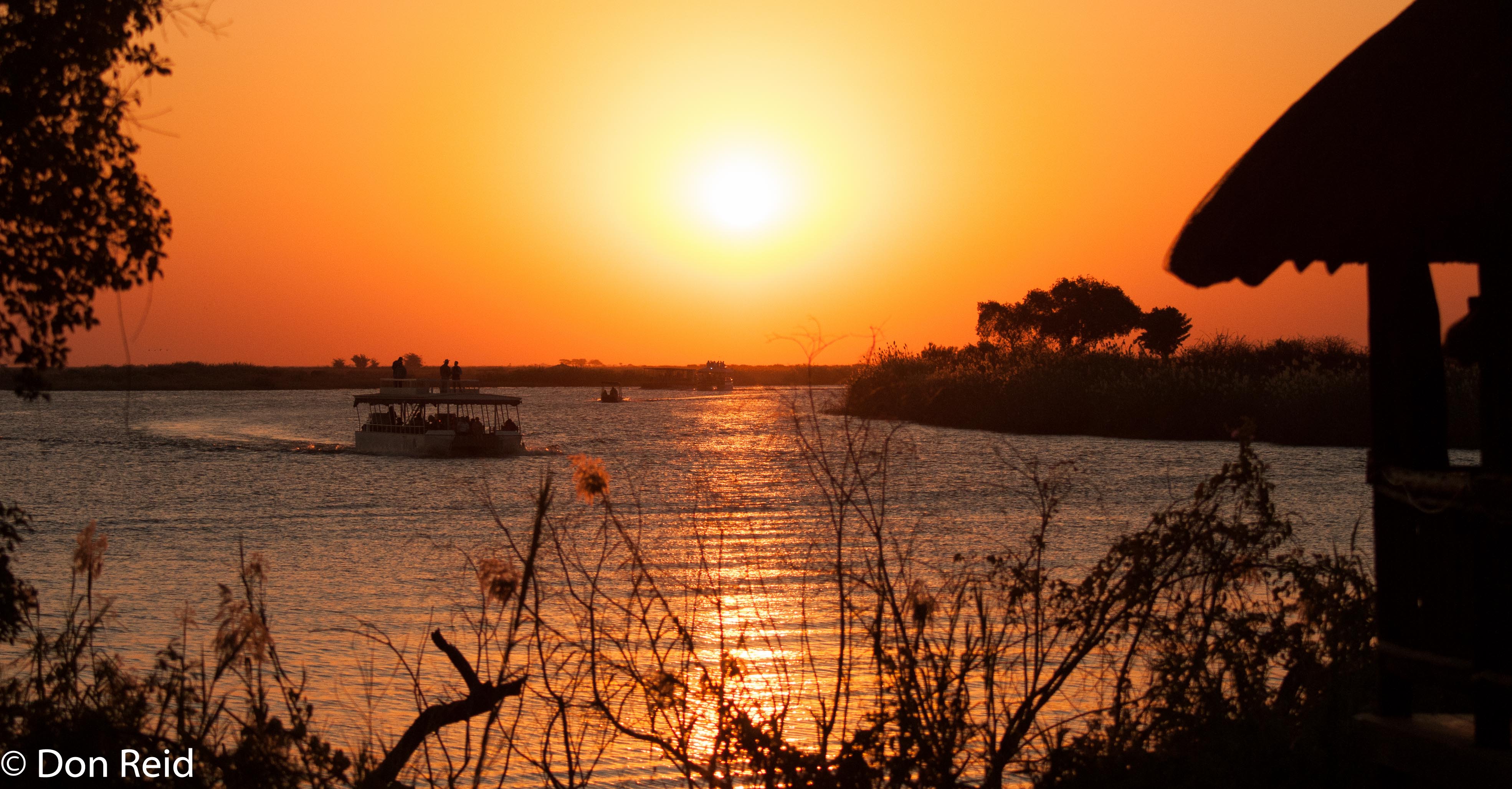
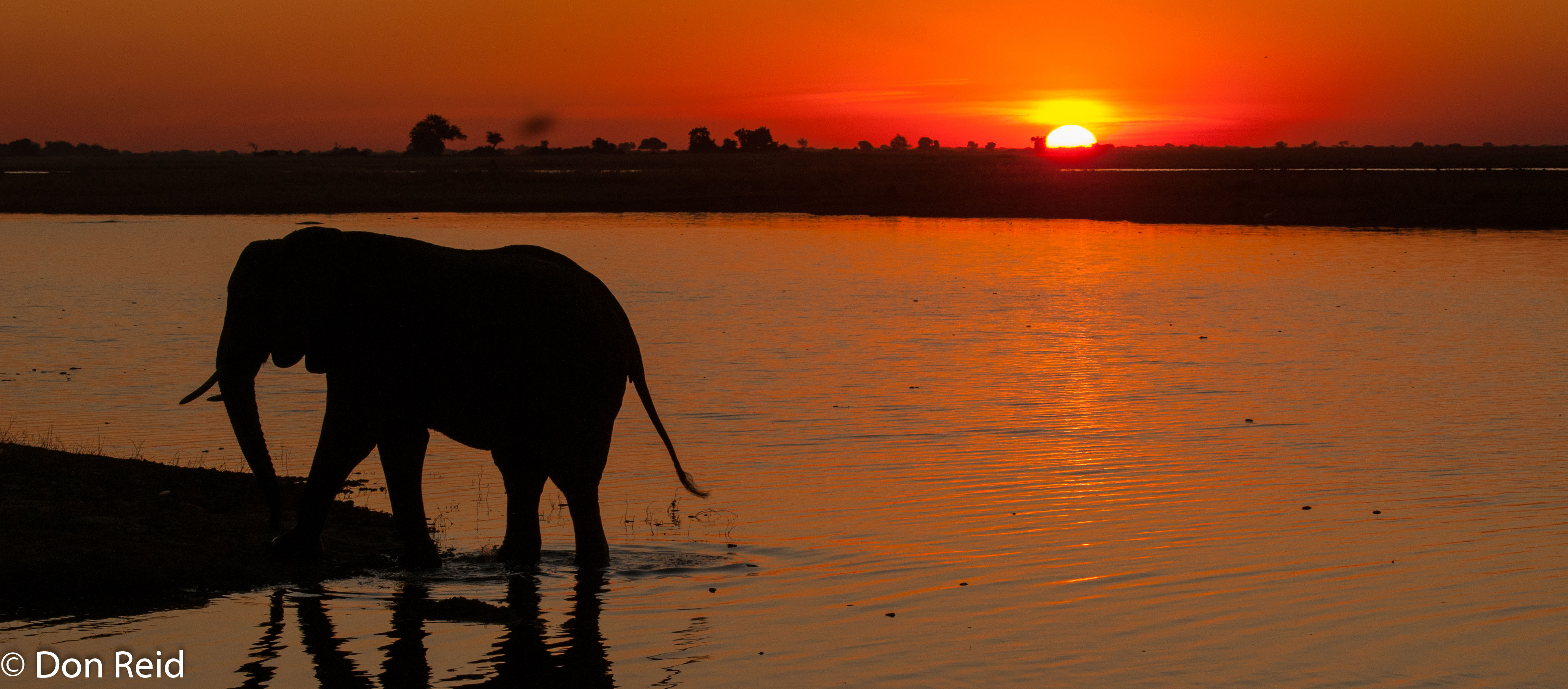
The Close of Day – Sunsets for Africa
I don’t think I have seen sunsets anywhere in the world that can compete with those over the Chobe river – tell me if you agree!
Who can resist a Cape country stay and good food, with some great birding thrown in?
When we spend time at our home in Mossel Bay, as we did during July this year, we often try to break away to an area that we have not visited or explored before. This time around we chose Robertson in the Western Cape, just 2 and a half hours from Mossel Bay, and after scanning through all the options on Booking.Com we settled on Orange Grove Farm for our two night stay. Gerda and I also like to try out special restaurants now and again and were pleased to get a booking at the Reuben’s Restaurant in Robertson, owned by the renowned chef of the same name and with a reputation for fine dining.
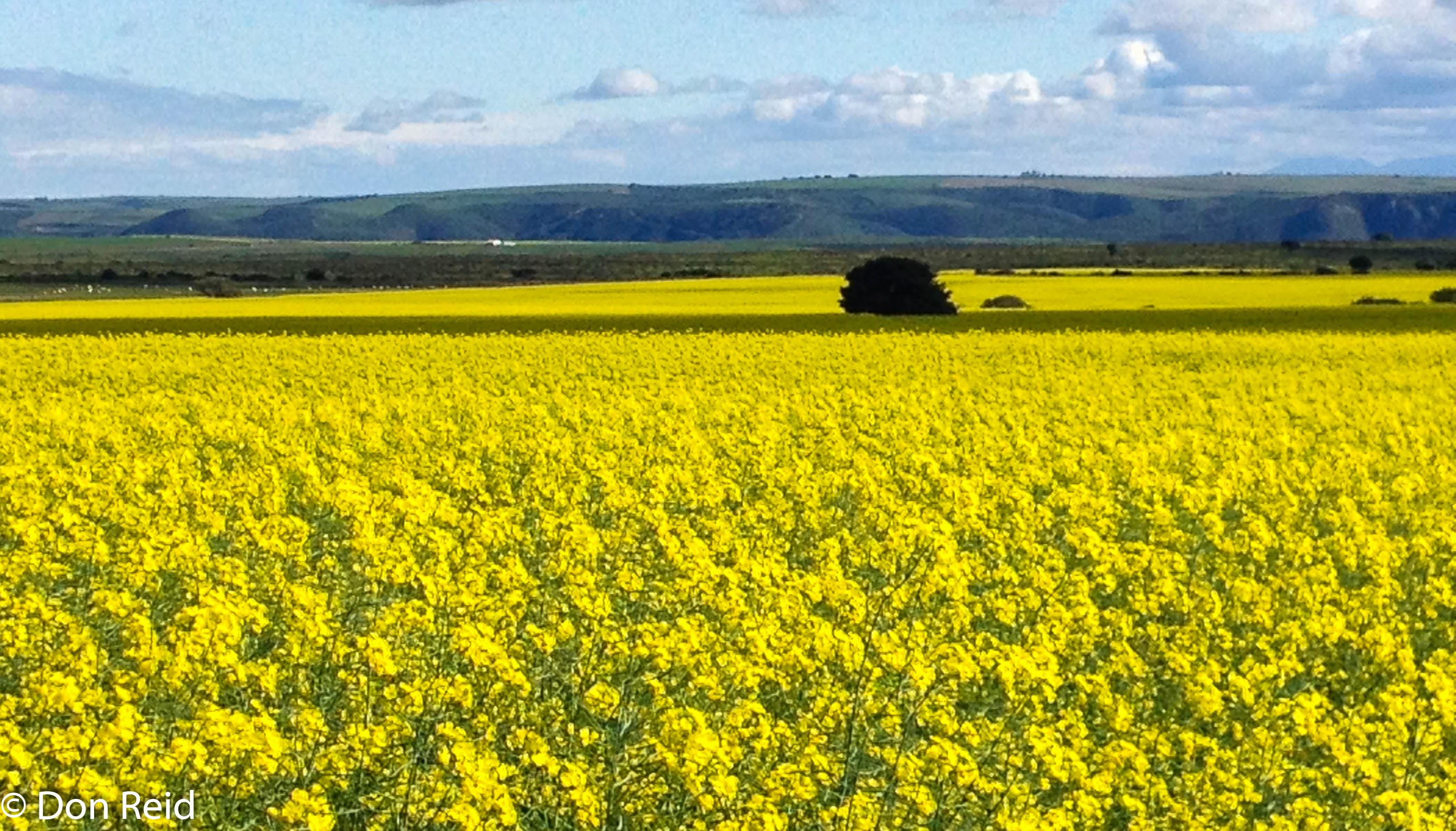
The last Monday in July saw us heading west along the N2 National road to Swellendam and from there branching off to Ashton and Robertson, a road quite familiar to us by now, but always a delight and particularly so at this time of year, with the contrasting greens and yellows of the scattered wheat and canola fields providing a spectacular patchwork.
Canola fields
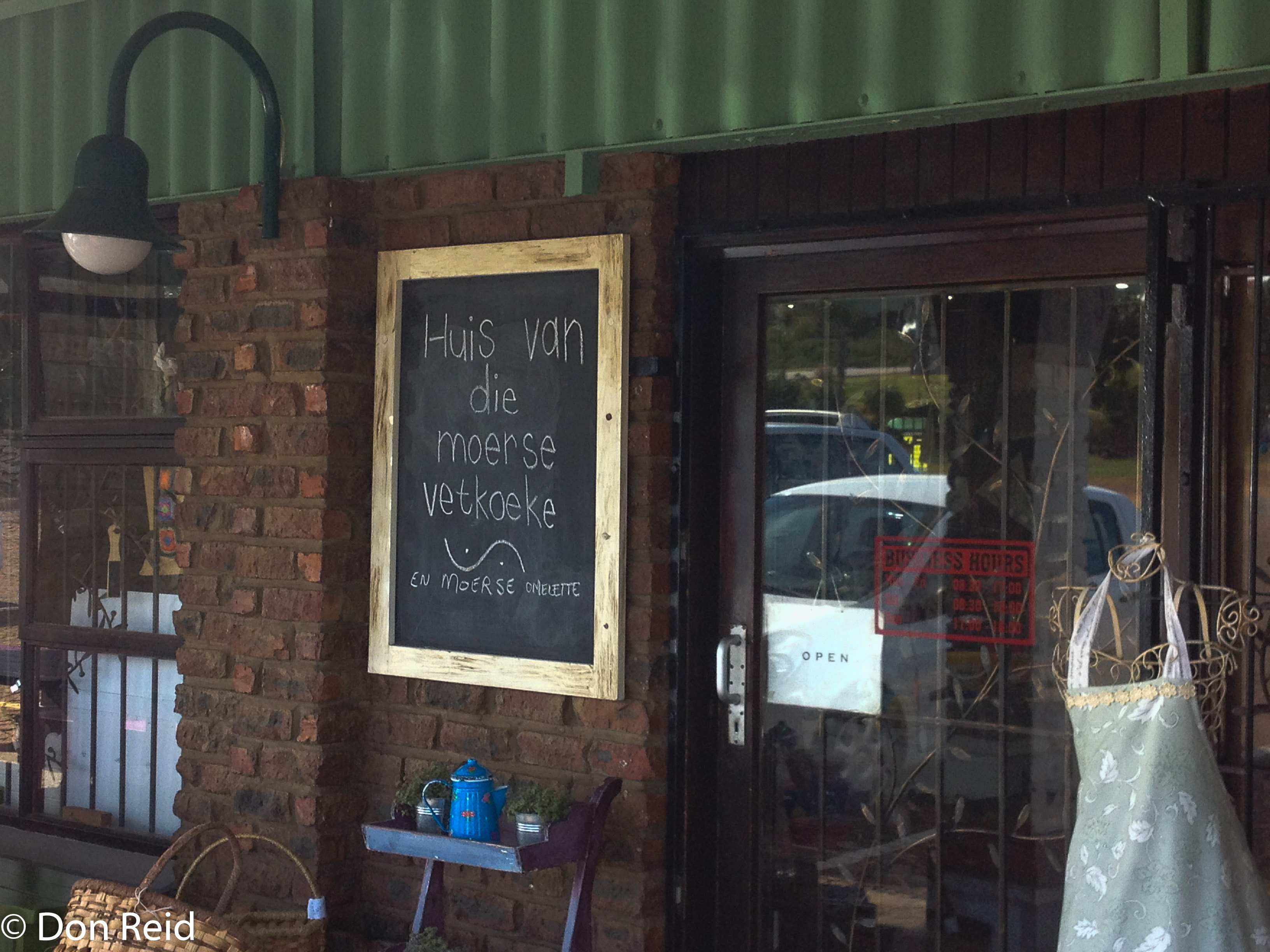
First stop for lunch was at Riversdale where the restaurant had a welcoming fire going (did I mention there was a severe cold spell over most of SA?) and simple but hearty food – we chose toasted sarmies and coffee to keep us going. The friendly owner also helped us choose some frozen home-made meals for the evening meal at Orange Grove, which is a self-catering resort, and later we were only too happy that we had chosen this option as we popped the Bobotie and rice in the microwave for an instant delicious supper.
Riversdale cafe
Not much later we stopped at Orange Grove’s reception, but not before having a coffee in the restaurant at Rooiberg Winery Restaurant, right at the turn-off to Orange Grove. We were very tempted to try their pineapple Danish – you can make up your own mind whether we succumbed to the temptation or not, suffice to say we really enjoyed that last short stop.
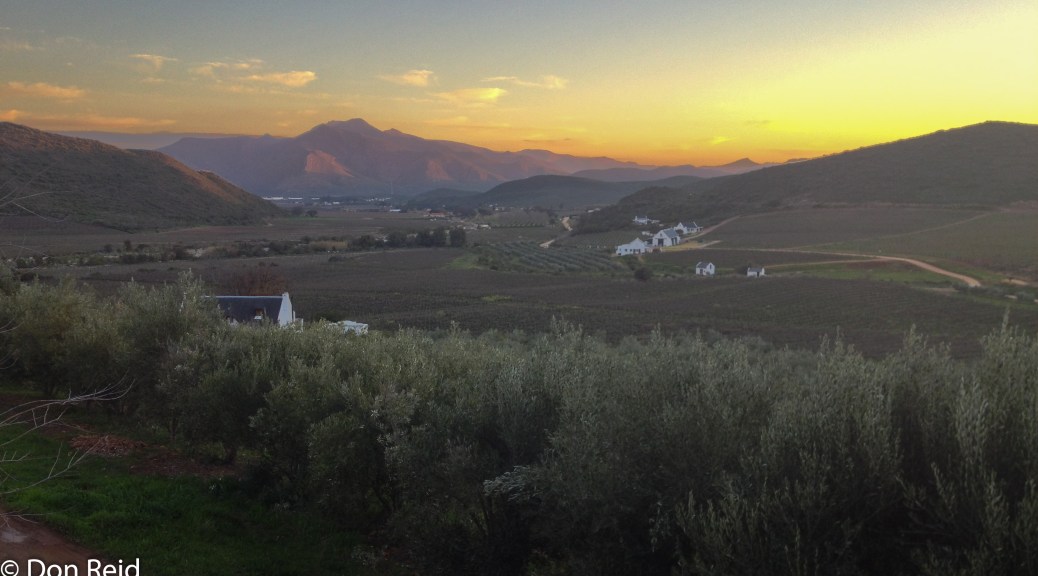
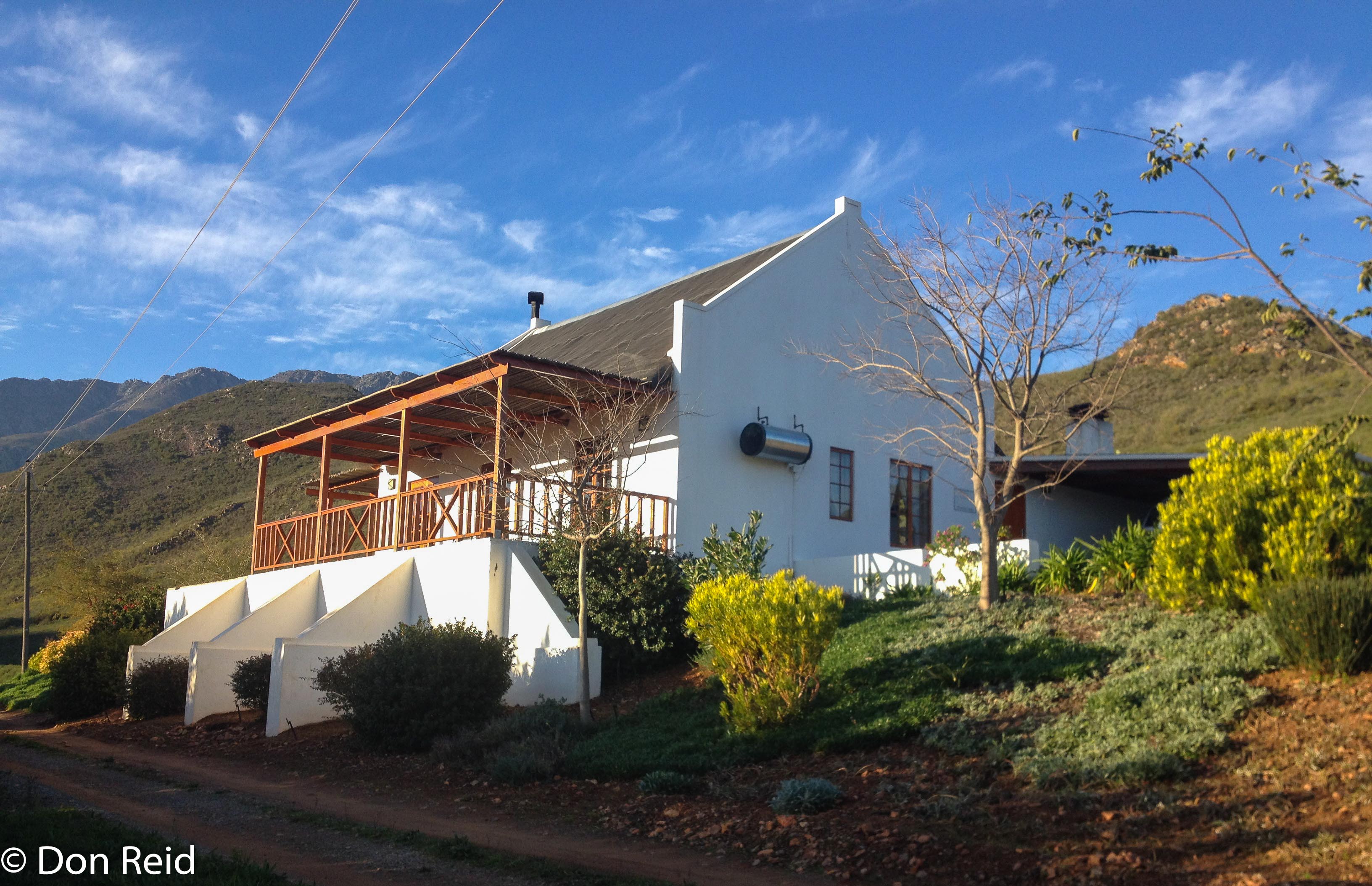
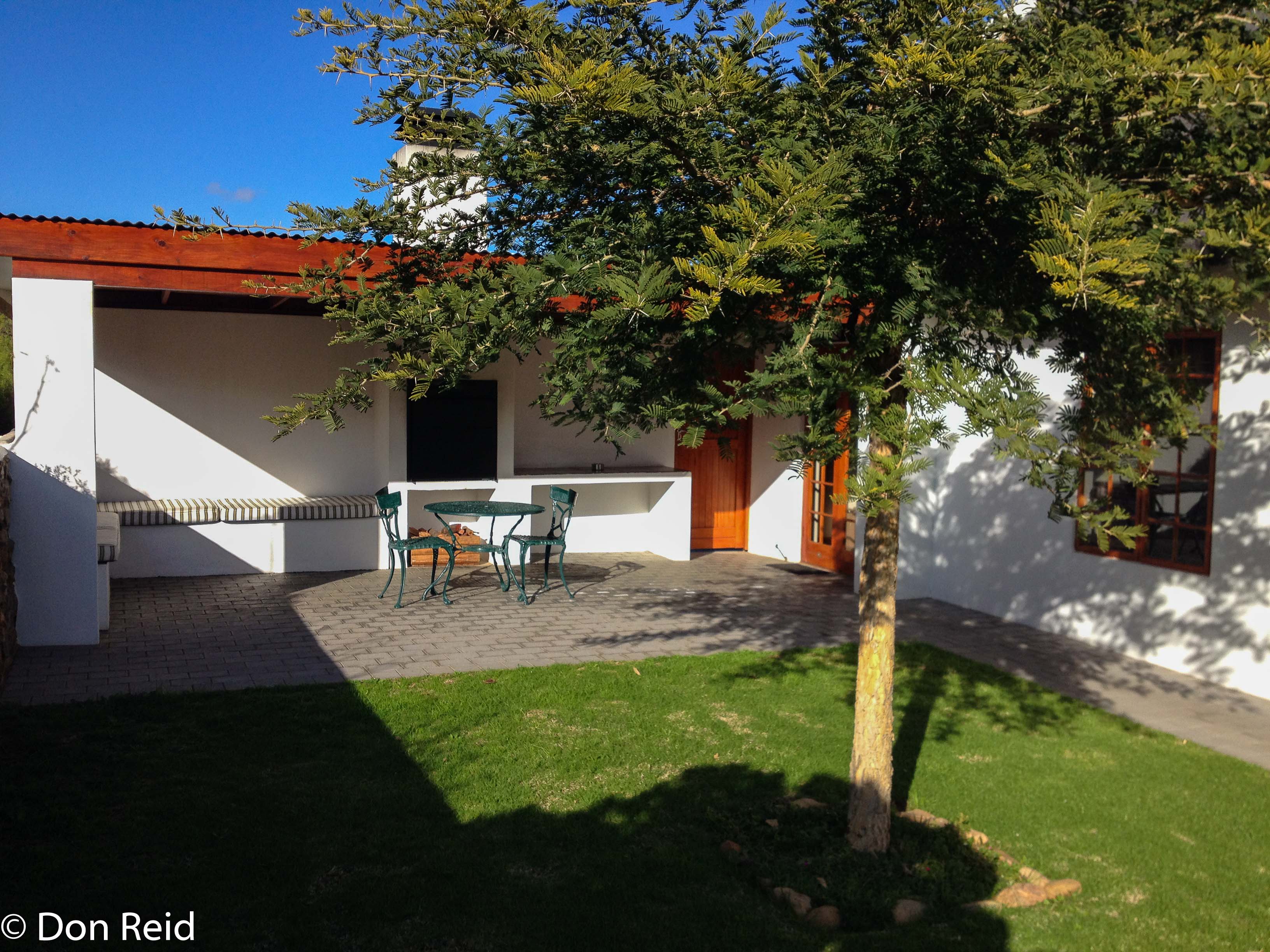
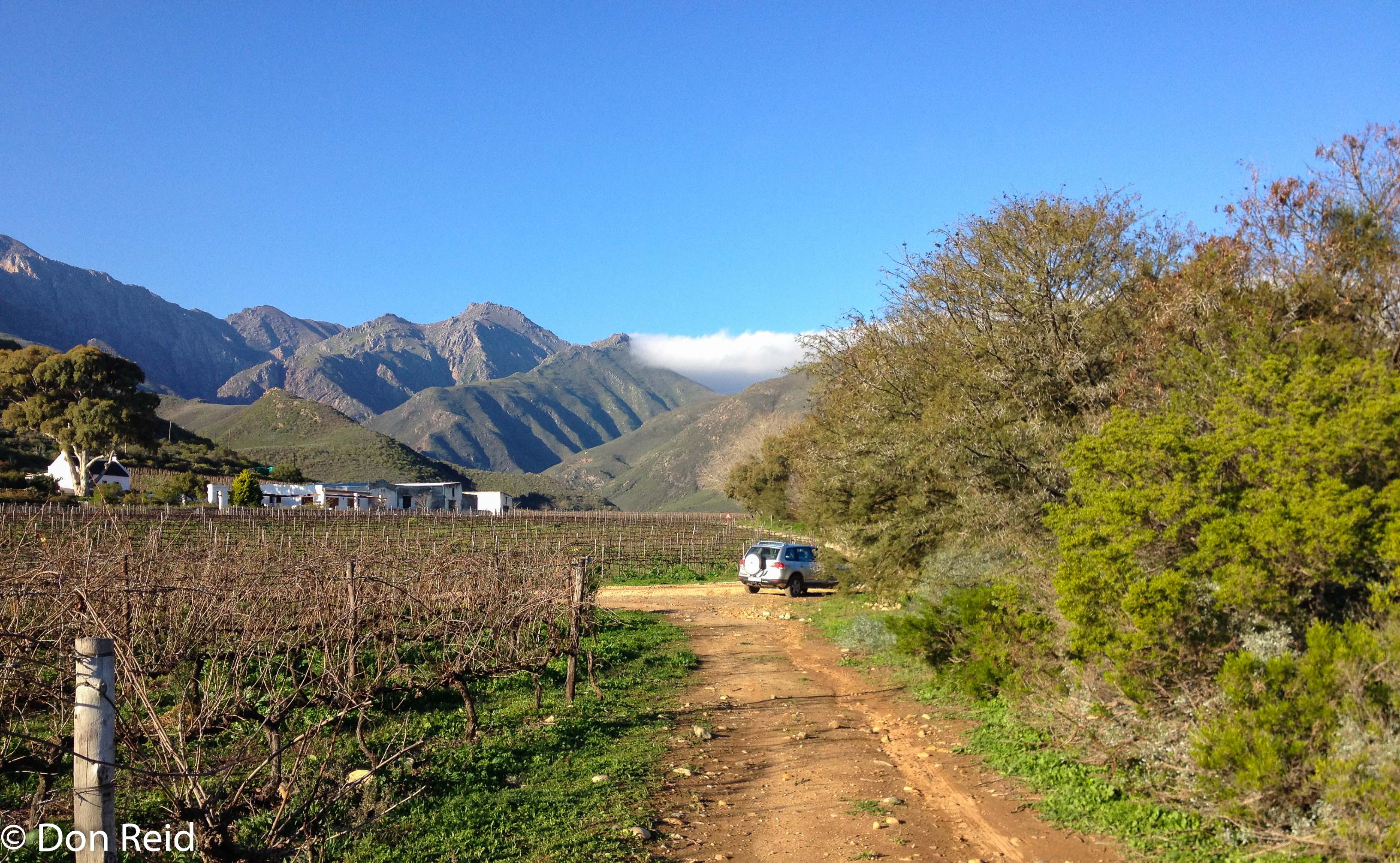
By 5pm we were in our chalet set against the slopes of the fynbos-covered mountain, looking over the vineyards and olive groves with the valley in the background.
The cottage
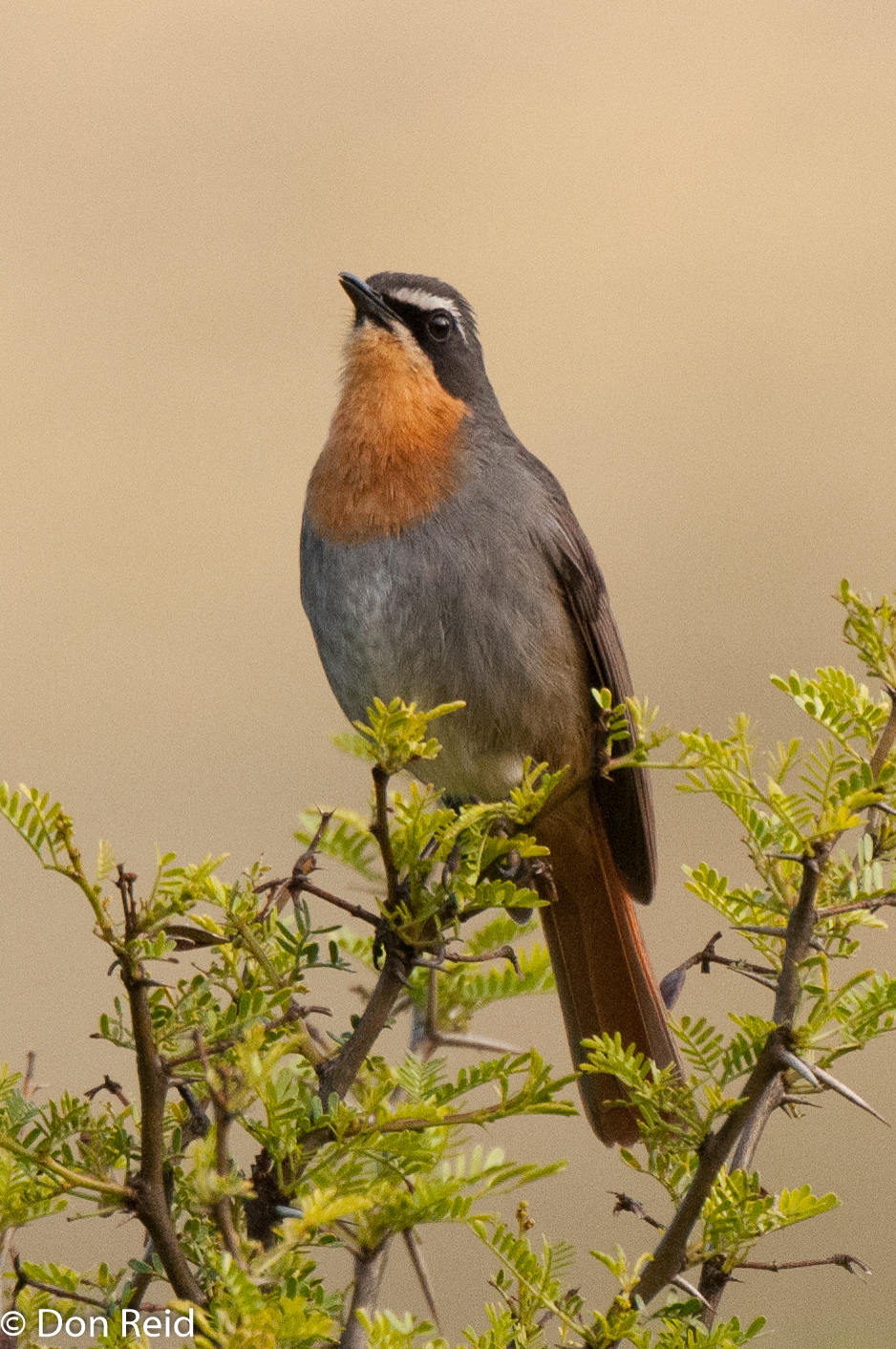
The chill of evening was setting in fast so I got the wood fire going and the gas heater running, then braved the chill air to start a new atlas card with the many visiting birds attracted to the indigenous garden and surrounding fynbos – cheerful Cape Robin-Chats and Bokmakieries with their well-known calls, White-Eyes twittering and Karoo Prinias in good form, moving about restlessly.
Cape Robin-Chat
It was not long before the sun started disappearing behind the surrounding mountains, prompting the resident Cape and House Sparrows to settle in for the night as the cold really set in.
Next morning we slept late, with our breakfast basket arriving at 8.30am, beautifully packed with the goodies we had ordered off the list – all for self preparation. “Real” coffee from the French press went down well with a warm muffin and a skewer of fresh fruit with yoghurt – it’s moments like this that you feel really privileged and spoilt.
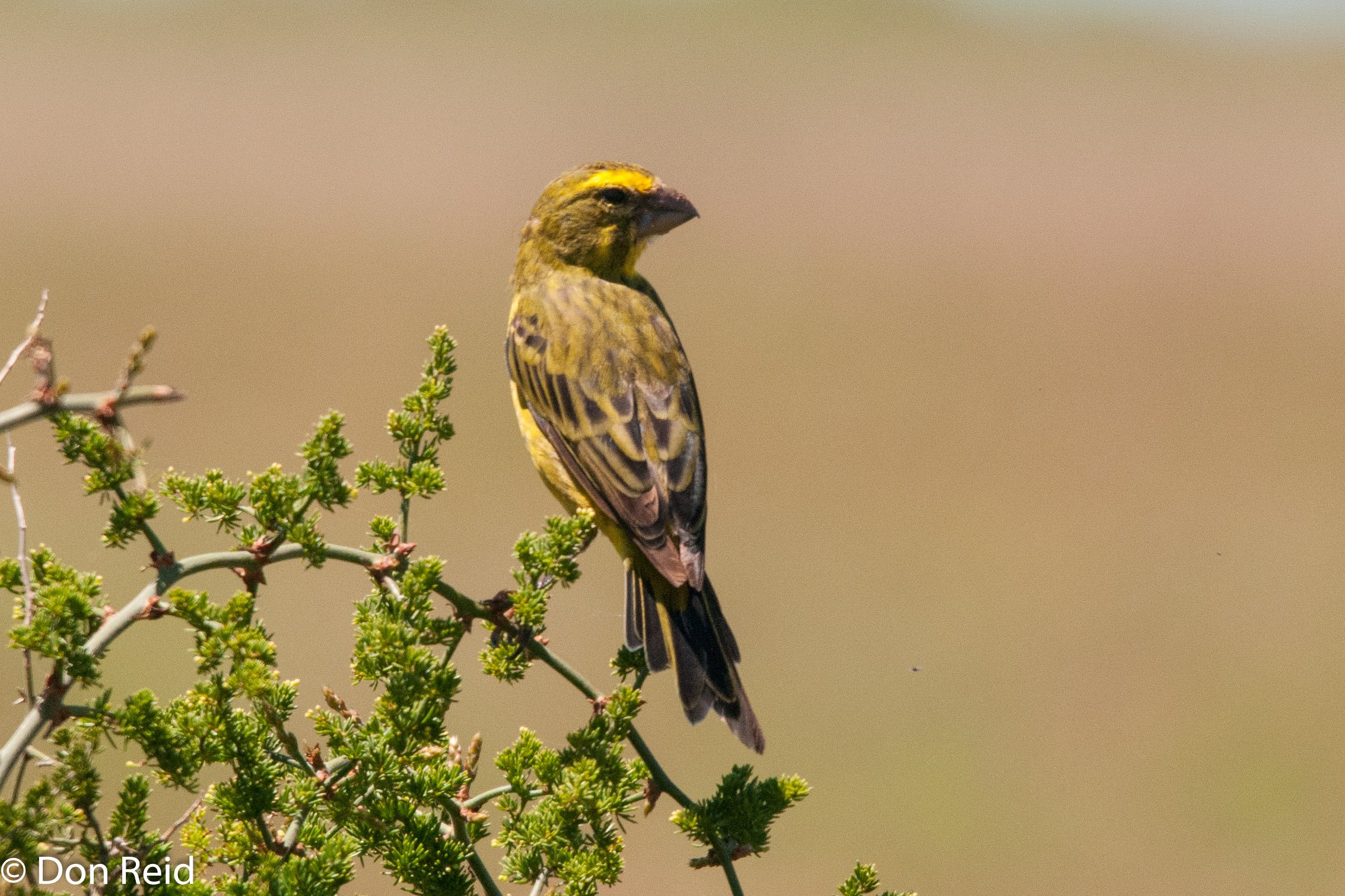
Once showered, I found a sunny spot on the patio and kept a lookout for passing birds, which did not disappoint. Fiscal Flycatcher is really at home here and it is also the most recorded bird in the pentad (reminder : a pentad is an 8km x 8 km block based on co-ordinates). Not far behind are the Sunbirds (Malachite and Southern Double-collared) in their colourful finery, and a selection of Canaries (Brimstone, Cape and Yellow), perky as always.
Fiscal FlycatcherIndigenous gardenSunny corner in the morningBrimstone Canary
Later in the morning Johan and Rosa (Gerda’s sister) arrived and we took the short drive to the Rooiberg Winery restaurant for lunch and a chance to catch up on family news both sides and enjoy some of the simple but tasty fare on offer. Knowing we had a dinner date in the evening, Gerda and I went for the safe option of fish and chips, which turned up beautifully grilled, while Johan and Rosa chose the chicken curry, equally delicious judging by their satisfied murmurs.
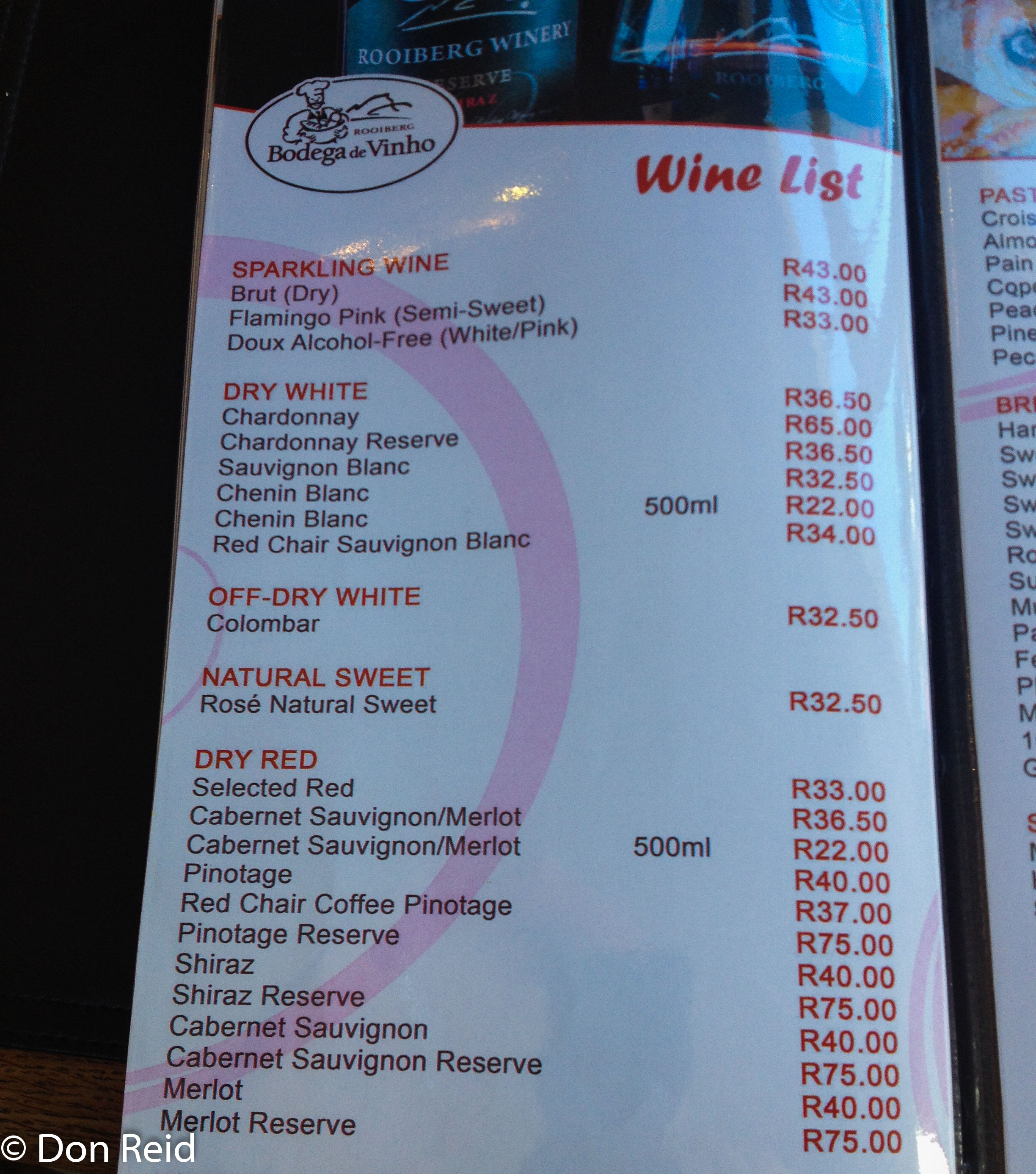
The big chair at Rooiberg Winery restaurantCheck those prices!
The wine was from Rooiberg’s selection and I was pleasantly surprised that the cellar (next door) prices applied in the restaurant – where else in the world can you be served an acceptable wine for less than R40 (that’s about 2 Pounds!)
After a lengthy and relaxed lunch, we settled the reasonable bill, said our farewells and returned to Orange Grove Farm, where I set out to do some justice to the atlas list. I soon had all three species of Mousebird (Speckled, Red-faced and White-backed) chalked up and a group of 5 Domestic Geese on the nearby dam while the other dam further along the road had Black Duck and Coots.
Orange Grove Guest farmWhite-backed Mousebird
A walk along the road next to the riverine bush was quite productive with Pied Barbet in the trees and a variety of birds on and around a mound of organic fertiliser (that’s the nice term for it) – Doves, Sparrows, Weavers, Bishops and a few Cape Spurfowl all vying for a spot.
Swee Waxbill turned up in the trees and settled for a while for a late afternoon grooming session, but were not easy to photograph, while a Southern Tchagra popped out of the lower stratum of the bushes long enough to snatch a photo.
Swee WaxbillSouthern Tchagra
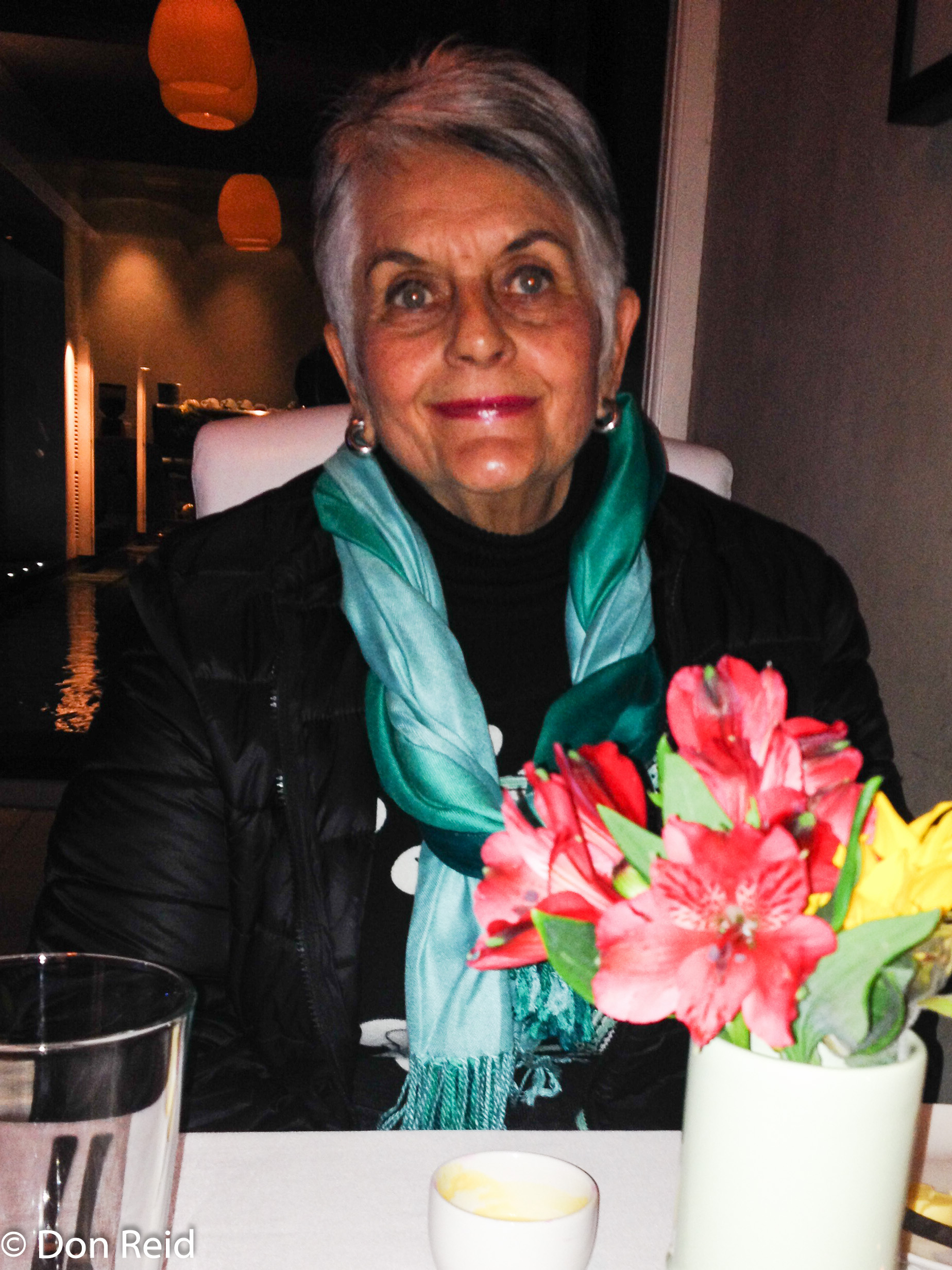
We had booked in advance for Reubens Restaurant that evening, but when it came to going out in the cold and driving the 20 Kms to Robertson we almost cancelled – thank goodness we persevered as it was a memorable meal in very pleasant surroundings, with some really stunning dishes accompanied by an excellent Merlot – the photos don’t do the dishes justice but use your imagination and sense the subtle flavours and perfect cooking!
Dinner at Reubens in RobertsonGerda enjoying ReubensSpringbok loin (the animal’s not the rugby player’s)Orange souffleCrème Brulee
Next morning we again lay in till late then set off on the return trip to Mossel Bay, again stopping at our new favourite roadside restaurant for coffee and a breakfast pastry (the infamous “load shedding” meant we could not boil water for coffee that morning). The road back was not busy and we took it easy, just enjoying the passing scenery, which at this time of year includes a vibrant display of flowering aloes, some natural, others planted.
Planted Aloes along the Ashton-Swellendam road
Riversdale was our last stop at just the right time for tea (no, we resisted the cakes this time). Passing Mossgas (PetroSA) the rain had formed temporary wetlands in the fields and the Gulls and others were making the most of it.
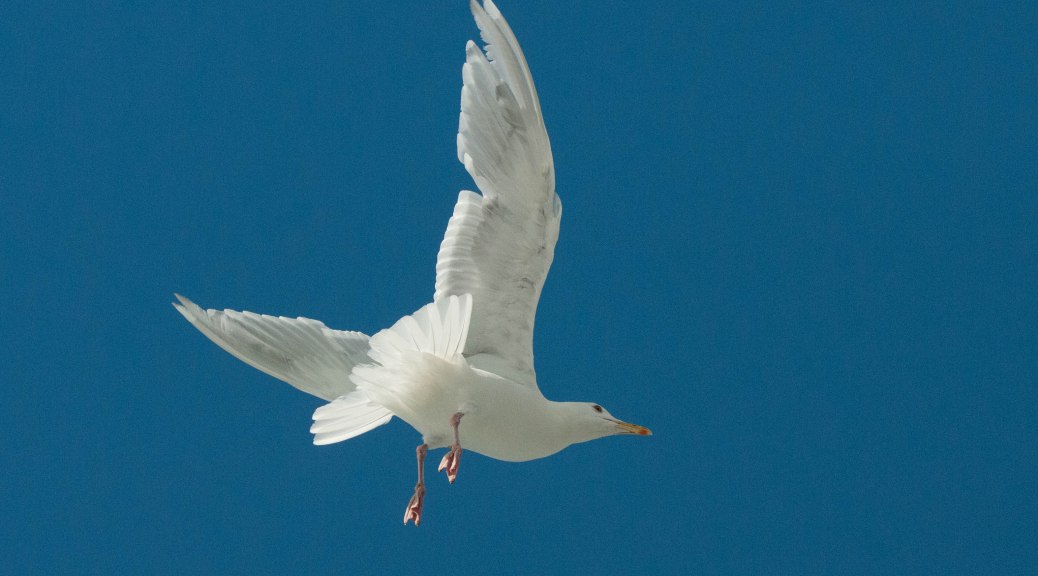
Gulls in temporary vlei near PetroSA (Mossgas) (after soaking rains)
Shortly after, we were back “home” in Mossel Bay (well it is our second home) with some pleasant memories of a charming part of South Africa.















 Mostly Birding