A Taste of Cuba – Havana : locked in the 1960’s

“I couldn’t tear myself away from the hotel window which overlooked a vibrant scene in the streets below”

Why Cuba?!

It was all our Son-in-law’s fault! No, really.

Andre got invited to a conference in Havana and decided to take Geraldine and the girls along and make a full-blown holiday of it, prompted I think by the fact that they had been to Granada in the West Indies before and Cuba was a Virgin Atlantic package and a 9 hour flight away from their then home in the UK. When Gerda and I heard about it and were invited to join them for the trip, it was quite an exciting thought but at the same time a cause for some apprehension – people from South Africa (ordinary ones outside the government, that is) just didn’t go to Cuba. But we are always up for some mild adventure and so the last week of March 2011 saw us flying to the UK for a short stay with Andre and Geraldine in Stafford in the English Midlands before heading to Gatwick for our flight to Havana.

I have been particularly eager to write about this trip, which was full of surprises and memories and very different from what we had in our minds – that’s the beauty of travel, opening up your mind to what’s out there and getting rid of all the preconceptions that tend to muddle your thoughts.

Apologies for a long post but there’s plenty to tell and show about this interesting city….

The Plan

Our itinerary included 3 days in Havana, followed by 11 days at a beach resort in Varadero, located on a narrow finger-like peninsula which juts out of the north-western extremity of the island of Cuba. It would have been foolish to go to Cuba and not include some birding, and had found a local bird guide to set up a day trip from the beach resort to some reachable birding areas, but I had no real idea what he would cover and where we would go, knowing that Cuba is a large island – some 1000 kms long – and we would not be able to travel very far in one day. All our flights, accommodation and transfers were part of the Virgin Holidays package from the UK, which was very affordable – in fact we could not have beaten it travelling from SA to any other island resort such as Mauritius, even taking into account the additional cost of flying to the UK first.

This first post in this series covers just the Havana part of the trip, later posts will cover the rest of the trip.

First Impressions of Havana

The flight on Virgin Atlantic was OK as these long-haul flights go – being a daytime flight helped as we didn’t have to face trying to sleep in those hellish seats. Arriving in Havana, there were no hassles getting through passport control etc and finding our bus to take us to our hotel – all part of the Virgin Holidays package, which made our lives easier.

Havana Airport
Havana Airport

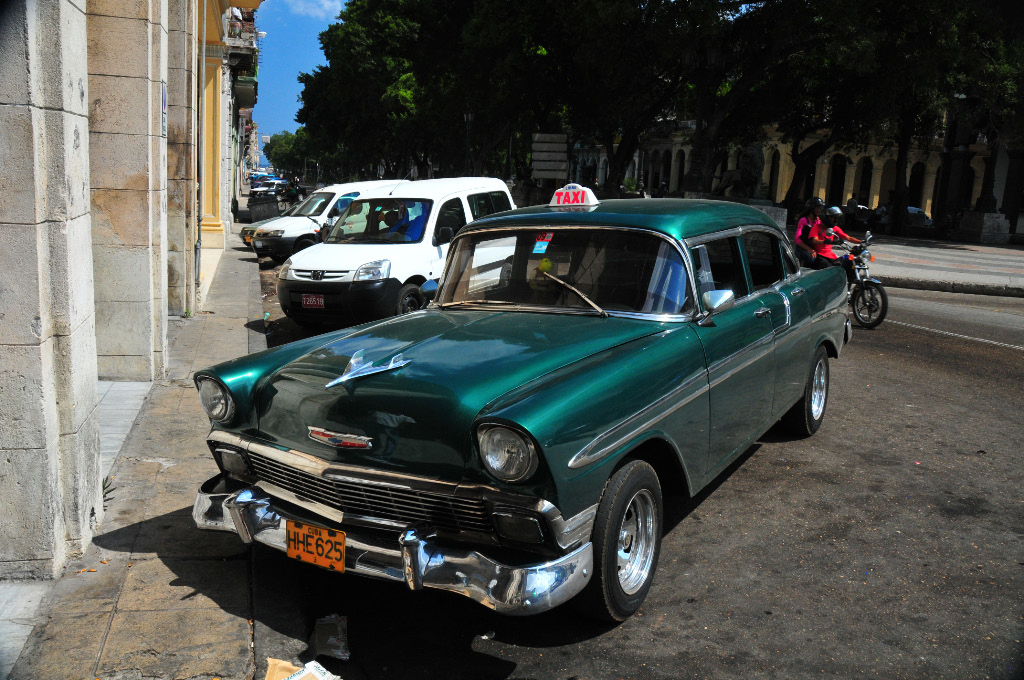
First impression on the way into Havana was that the roads were not very busy and the buildings were either plain and utilitarian or old, ornate and crumbling. The cars on the road included a sprinkling of the American classics from the 1950’s that Cuba is famed for along with other more modern cars.

100_4904_edited-1 "Classic" American cars

Our hotel, Hotel Telegrafo, in the older part of the city, looked quite modern and attractive but the surrounding buildings were less so.

Hotel Telegrafo
Hotel Telegrafo

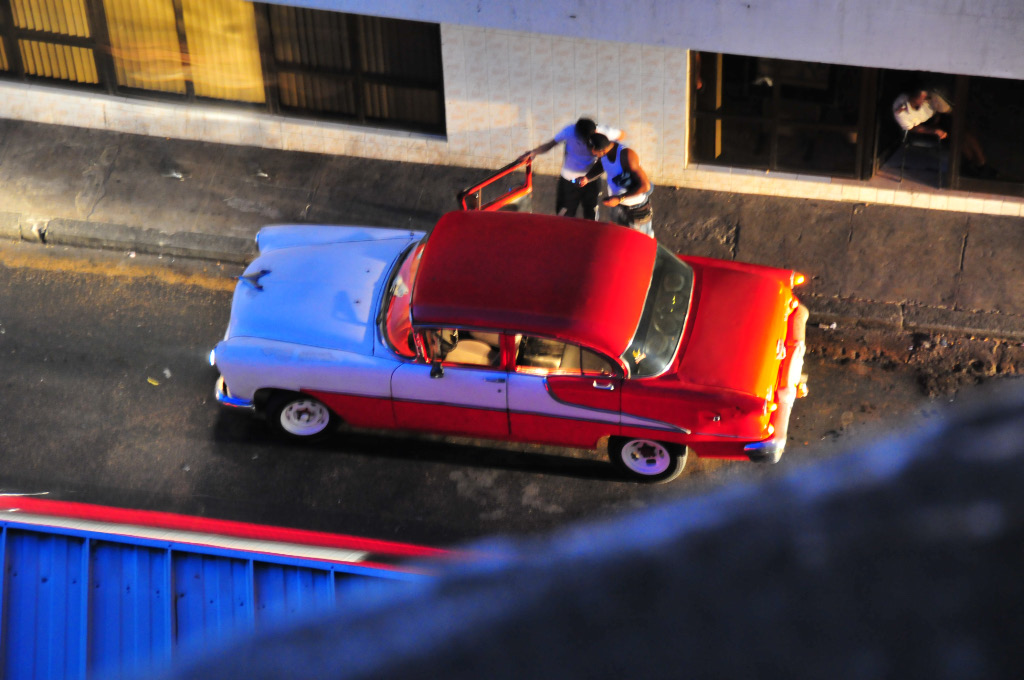
Once we got to our upper floor room I couldn’t tear myself away from the hotel window which overlooked a vibrant scene in the streets below, with colourful ‘classics’ passing by, interesting looking people hanging about in doorways and the crumbling roofscape turning deep orange as the sun set.
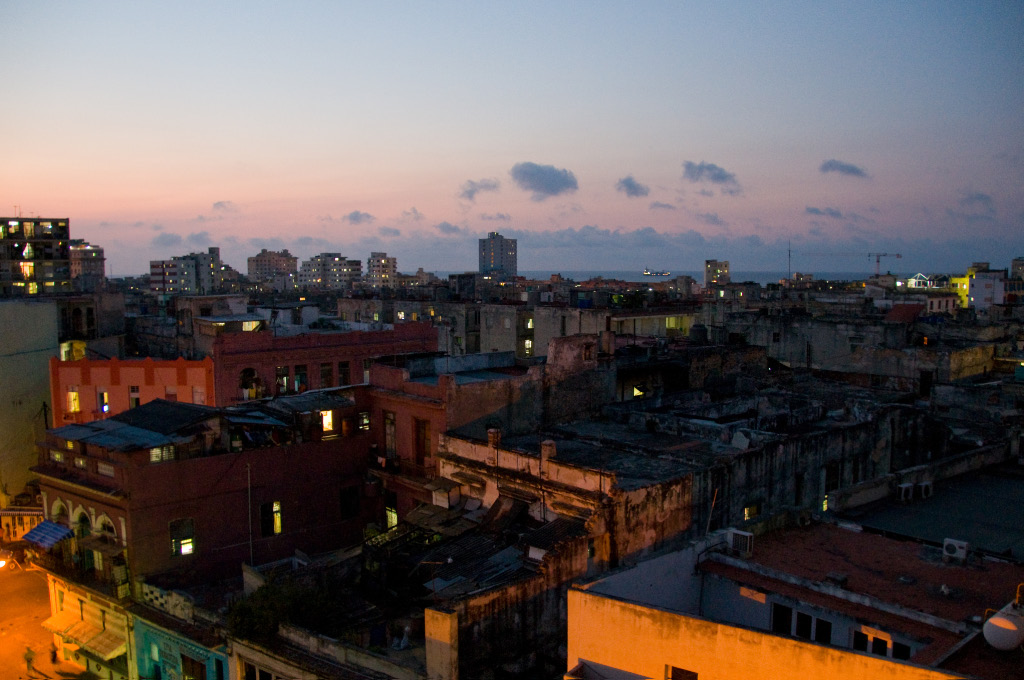
The roofscape in the evening
From the hotel room
From the hotel room
"Classic" American cars below the hotel
“Classic” American cars below the hotel
From the hotel room
From the hotel room
View from the hotel room

The Classic Cars

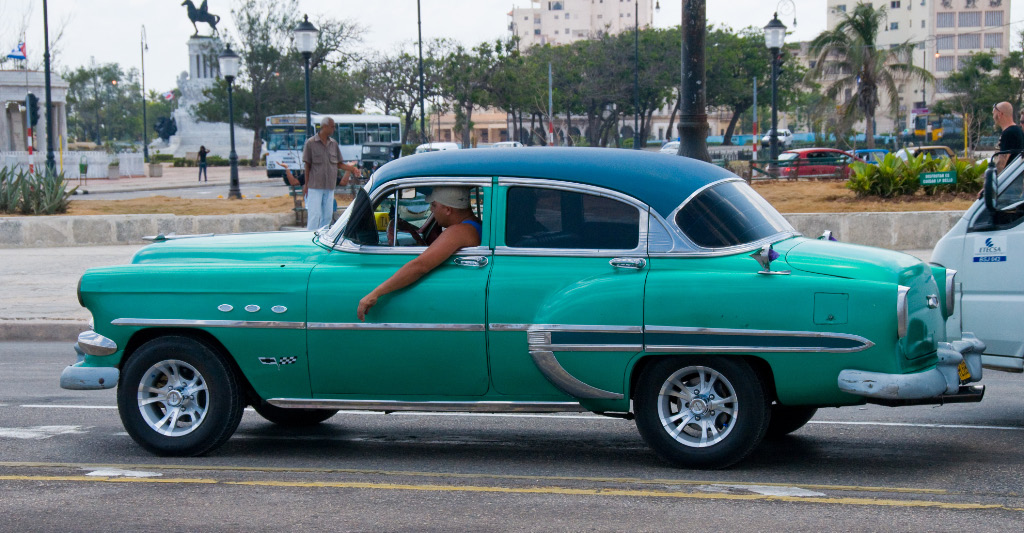
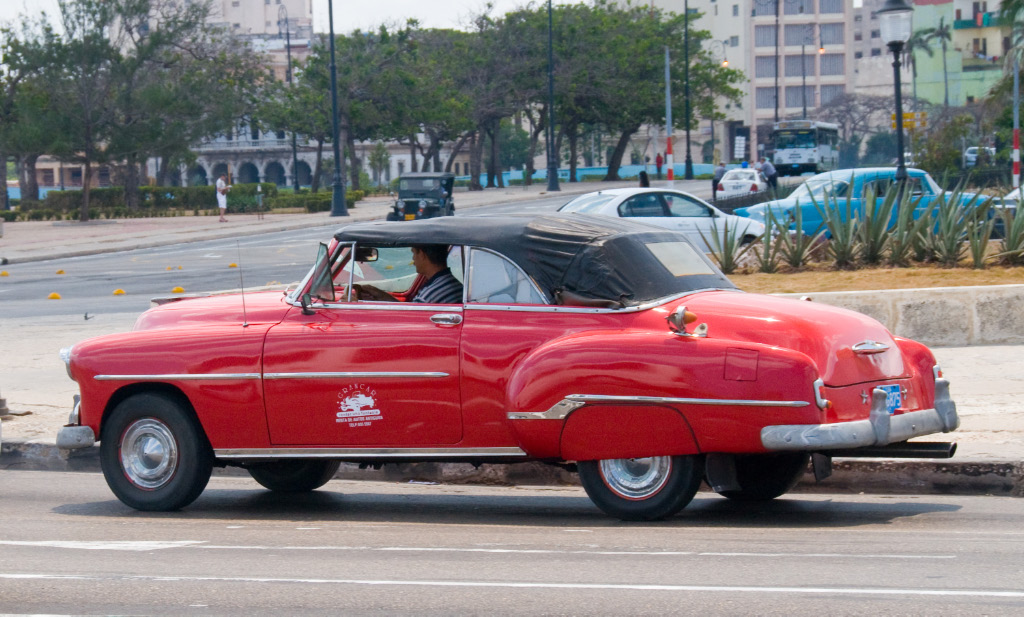
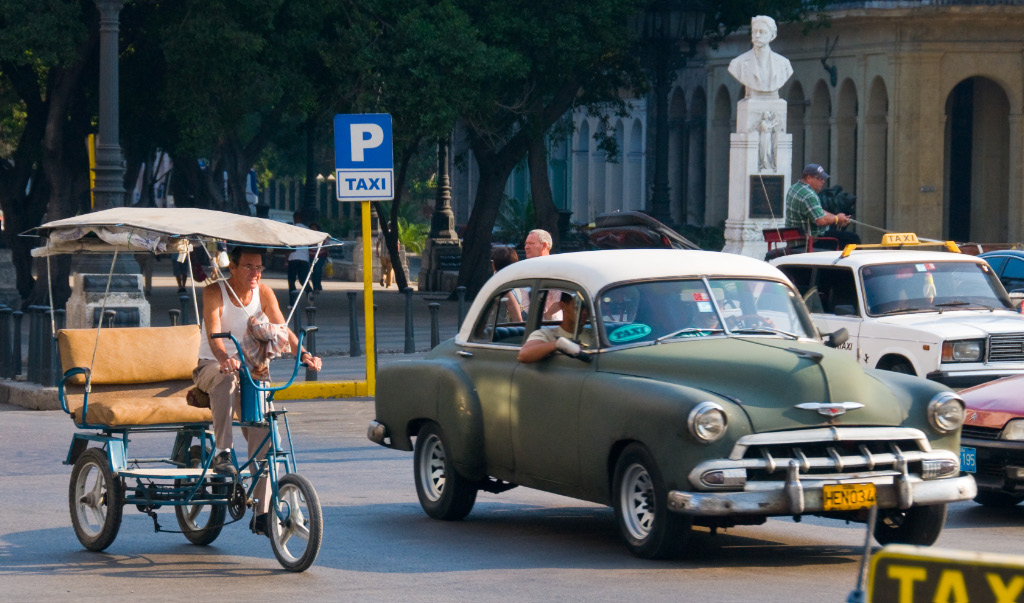
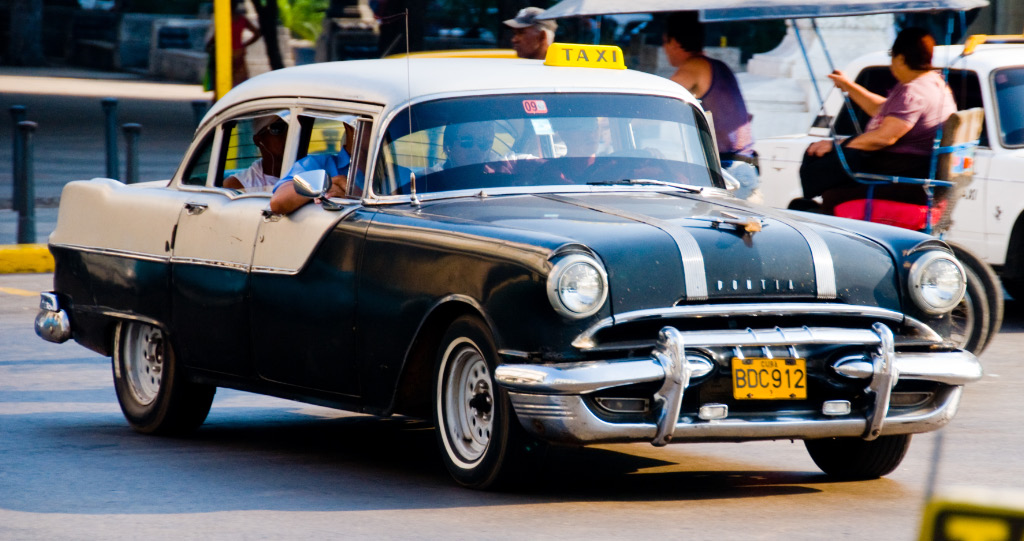
It’s proof of human ingenuity that so many of the 1950’s American cars have survived for so long – when you look closely you notice that most have had major transplant surgery with new chassis’, wheels and engines, while the owners have managed to retain the old bodies and chrome trims. Even the hooters have been modified to make a pleasant squeak rather than loud honking. Car ownership is complex in Cuba but the bottom line is ordinary Cubans are not allowed to buy new cars so these old classics are handed down in the family and most if not all serve as taxis for the people. Some are battered, others are well-kept – all are colourful reminders of a simpler era and I could not stop taking photos of these beauties. Here’s a selection of those wonderful Fords, Chevrolets, Buicks, Oldsmobiles, Pontiacs and others –

"Classic" American cars "Classic" American cars "Classic" American cars "Classic" American cars

Then there are the interesting number plates….. colours denote ownership status with yellow being ‘private’ (but licensed by the all-pervasive ‘Government’), blue is Government owned, orange, brown and black denote levels of government ownership.

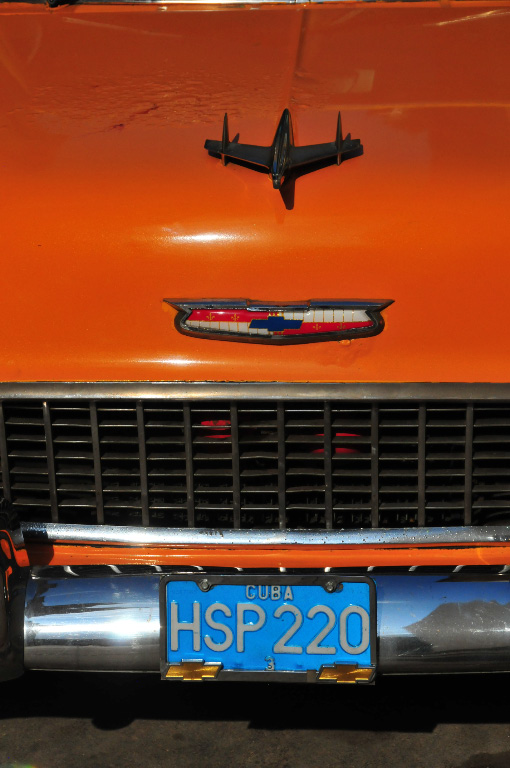
"Classic" American cars "Classic" American cars

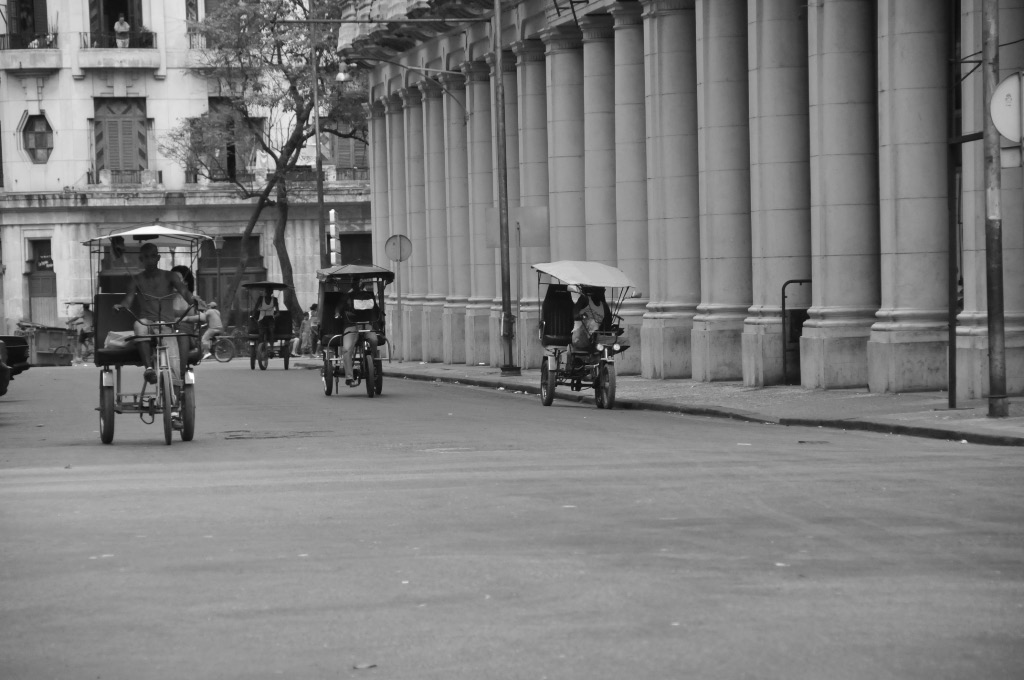
With so few cars on the road, traffic is not an issue and only the centre city is relatively busy, but nothing like other major cities. It makes for a relaxed atmosphere in the city which, along with the complete lack of commercialism, creates a feeling of being transported back to the 1950’s or 60’s.
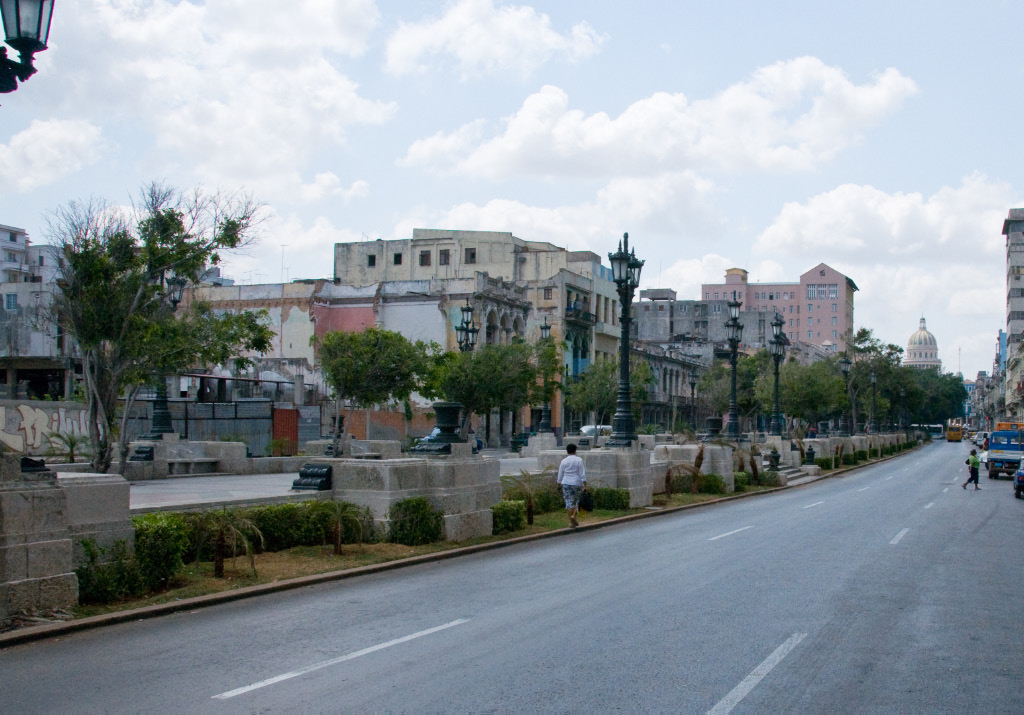
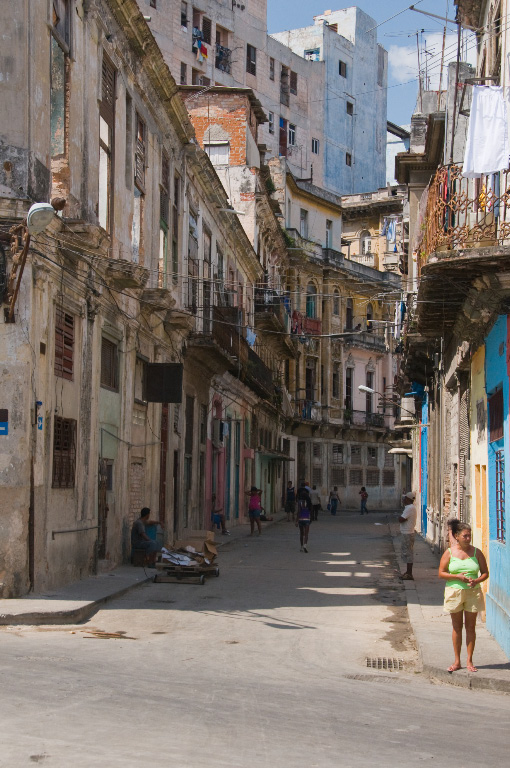
A main boulevard in Havana
Typical side street
Typical side street
Not so busy street
Not so busy street near our hotel – could be the 1950,s

The Buildings

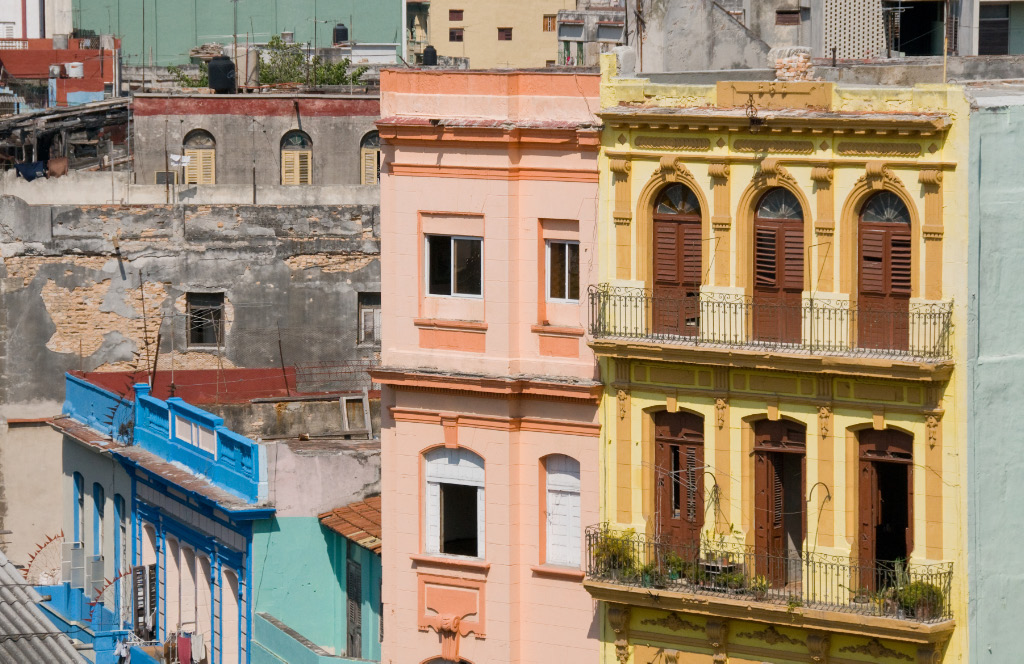
The hard years that Cuba has endured are evident in the state of the buildings in Havana, where the contrast is most stark between those that have been restored or maintained and those left to slowly deteriorate for 60 years or so. Many that we saw have fallen into such ruin that only the skeleton of the façade remains, the roof and inner structures having succumbed to total neglect.
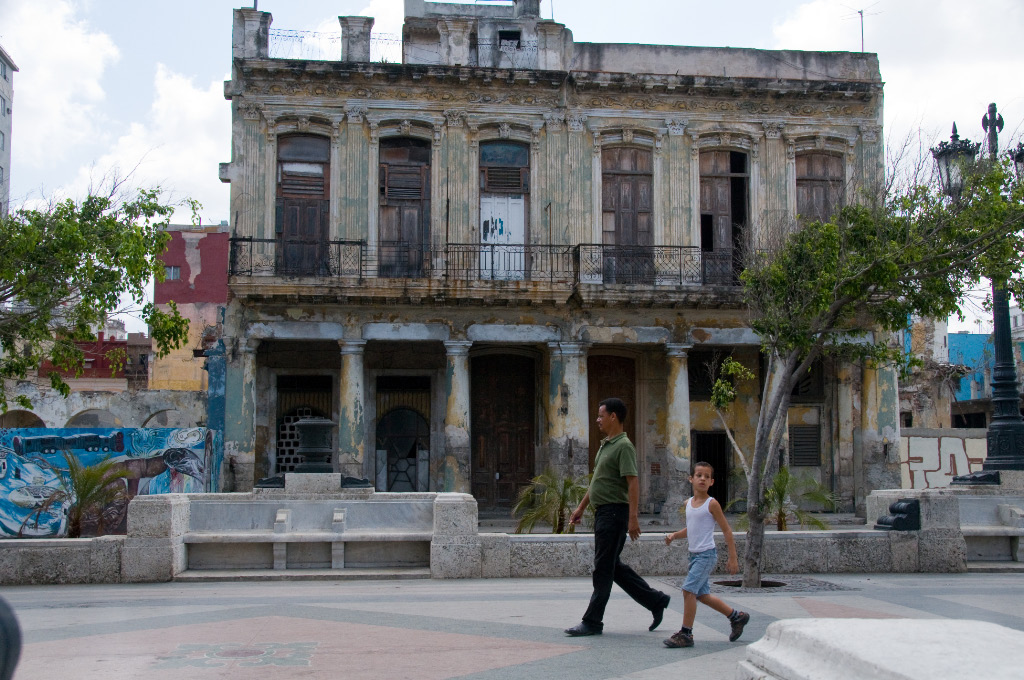
An older building
An older building

On our walking tour of the city it was clear that restoration has been limited to the main squares, which have been beautifully restored, but walk a block away and the buildings are in a sorry state.

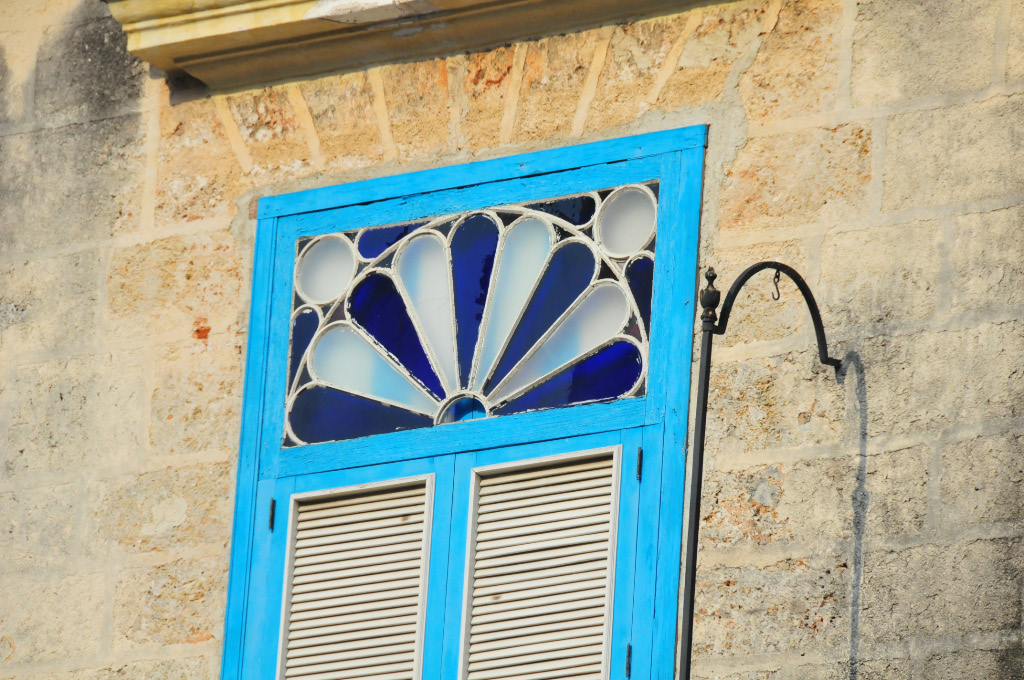
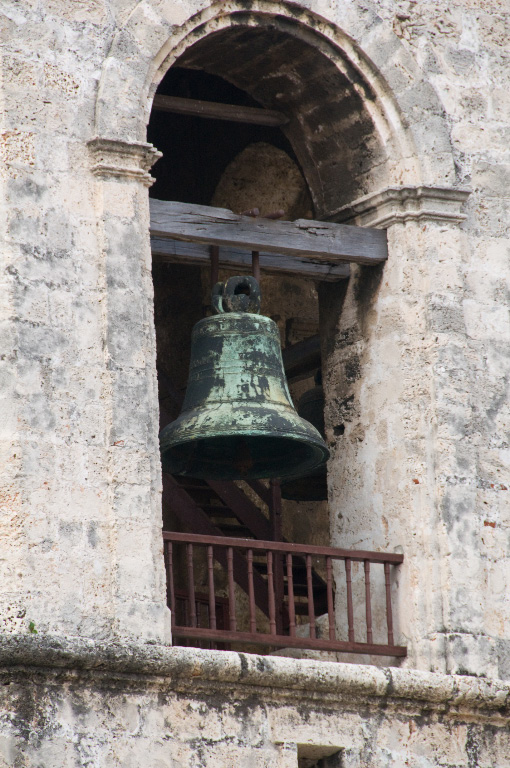
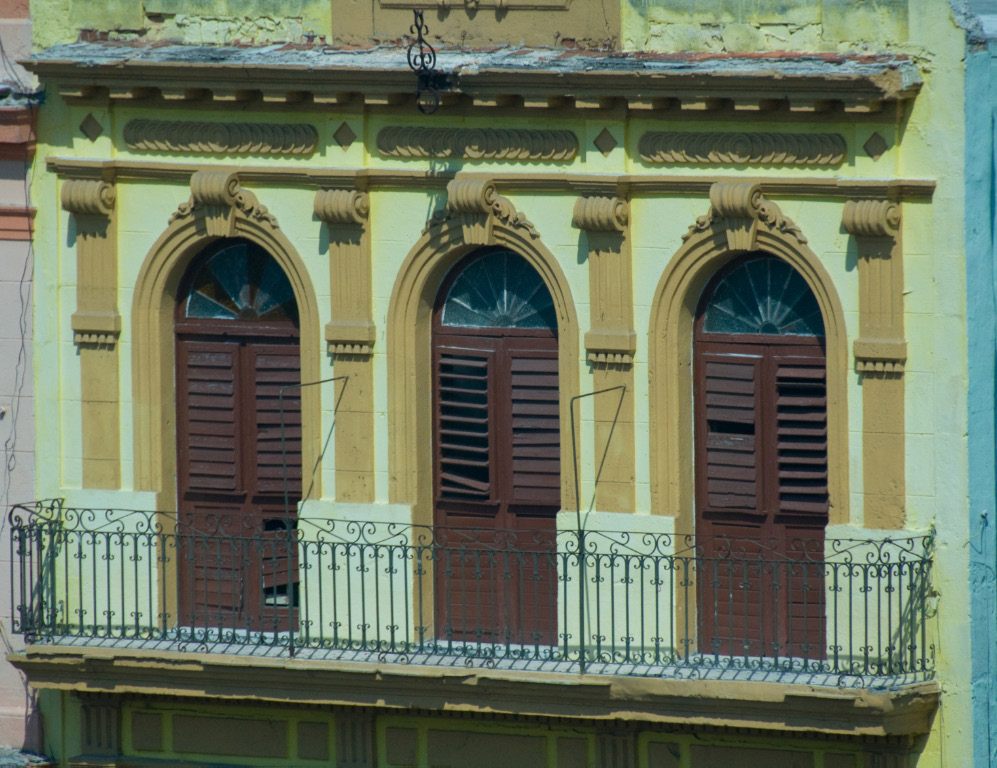
Despite this, the original Spanish-influenced architecture is still very evident – many buildings have internal courtyards to help cool the interiors. Look through once splendid front doors and you see grand staircases leading to the upper floors with elaborate wrought iron balustrades, some almost corroded to nothing.
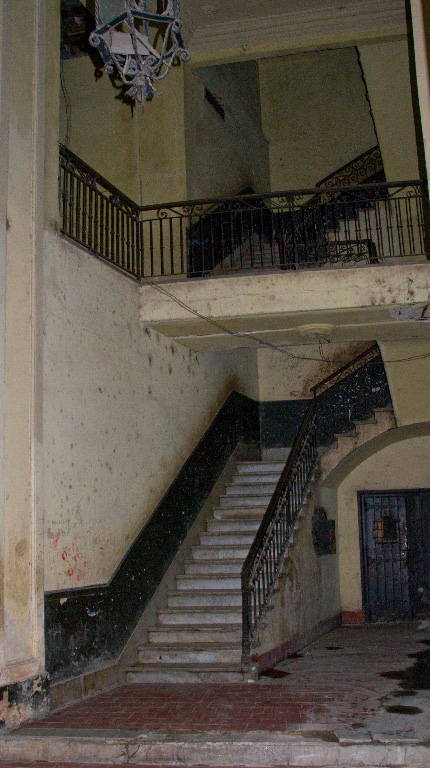
100_4987_edited-1

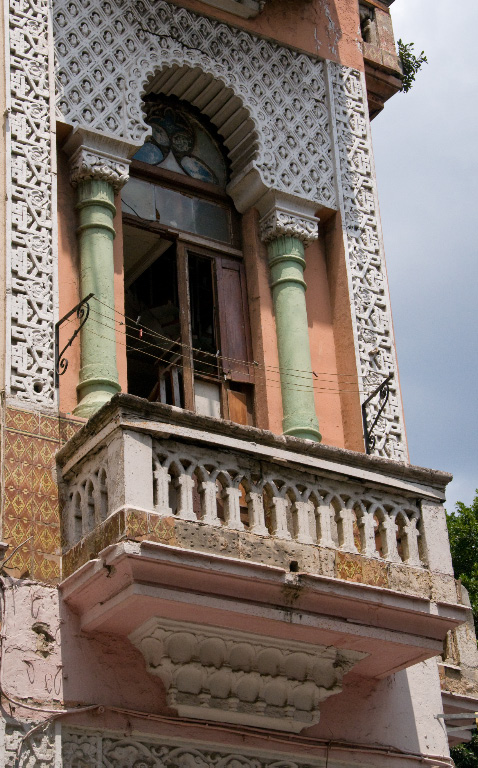
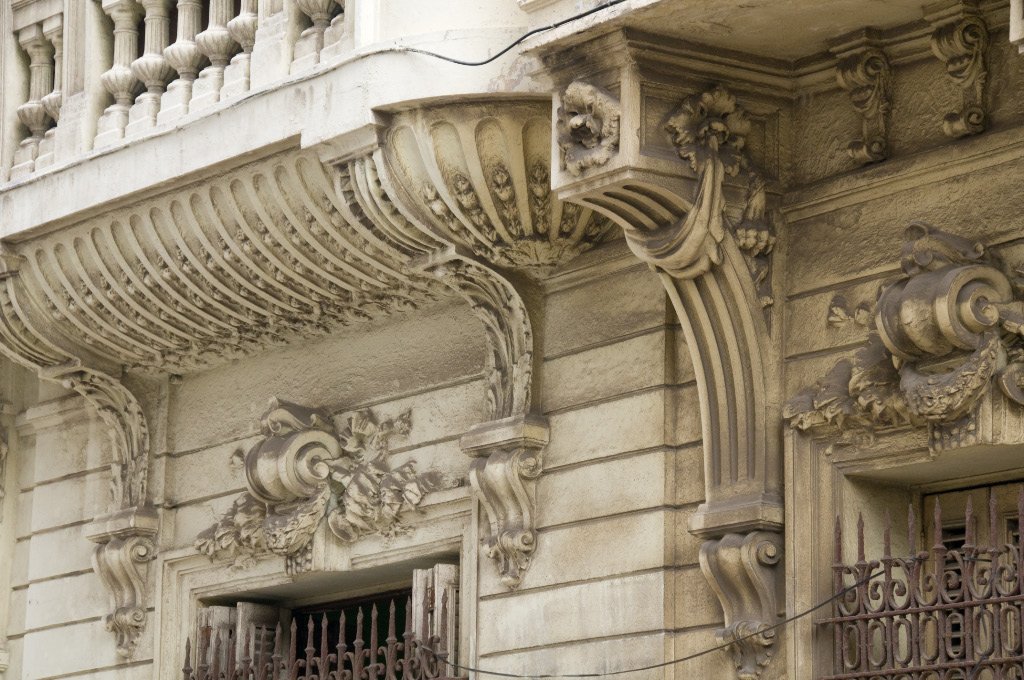
Ornately carved stone cladding is common but unchecked weathering has worn away the beauty that it once projected.

100_5050_edited-1


Capitol building, Havana

The People

We found Cubans generally friendly, apart from some waiters who were a bit surly, but then that’s the case wherever you go. Out on the streets it was obvious the people of Havana like to see what’s happening and sitting or standing in doorways seems to be a national sport – many will greet you as you walk past. Wherever we went the locals would ask where we came from and were amazed to hear that we were from South Africa, some even pointing to our skin and querying “but you are white?”

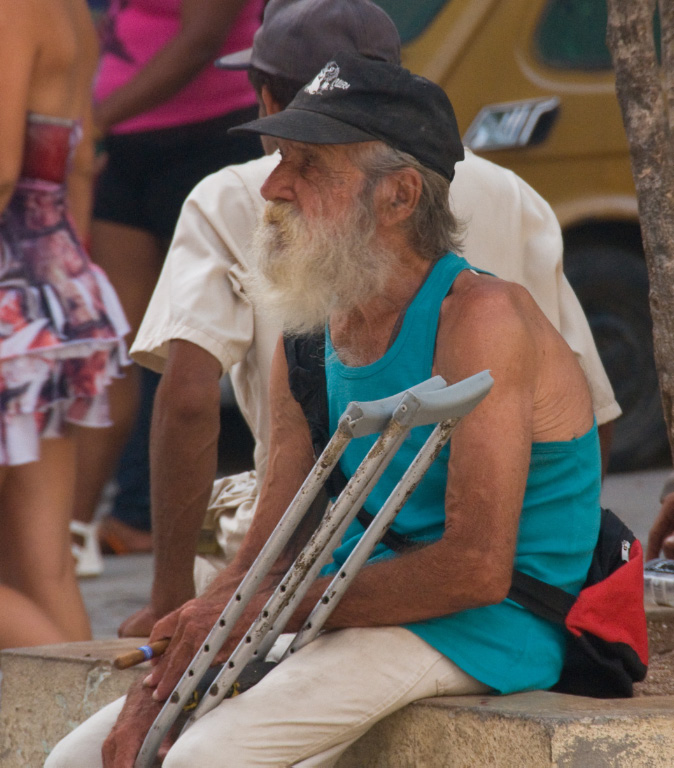
Beggar with a difference
Beggar with a difference – really chatty
Havana  local - Enjoying a cigar
Havana local – Enjoying a cigar
This cool dude was just watching people go by

The overall impression is of not much activity amongst the general population and those that had something to do were fairly relaxed about doing it – this may just be the way things are done in this laid-back part of the world.


The Sights of Havana

On our first day in Havana we went for a walk down the main boulevard to the seafront and the promenade which overlooks the bay stretching into the distance one way and the Old Fort in the other direction.
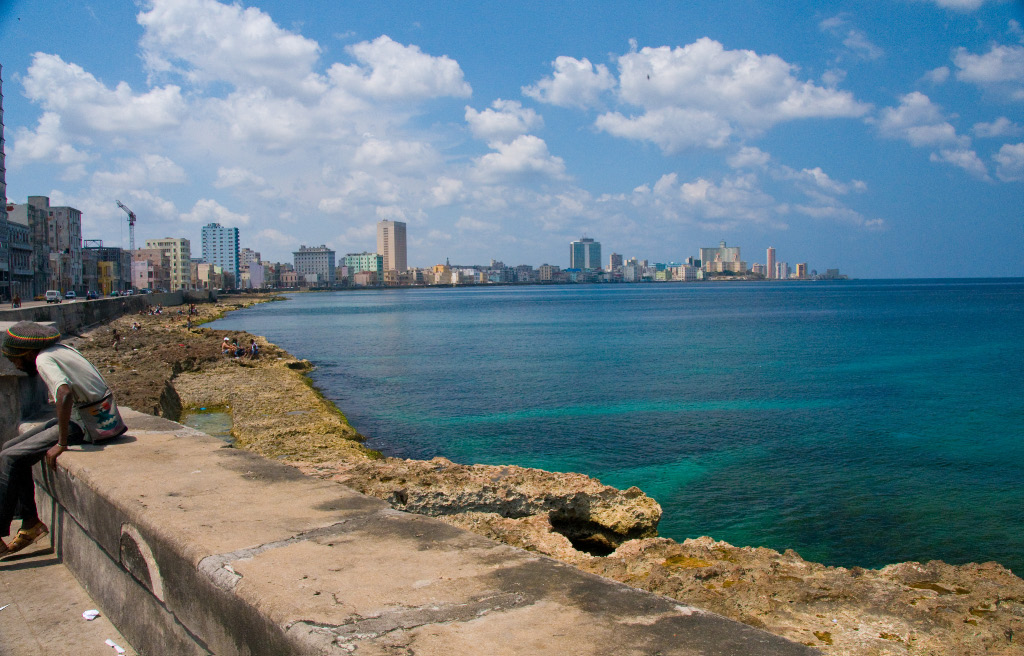
The promenade and seafront
Wide boulevards are a feature
The main boulevard
The main boulevard
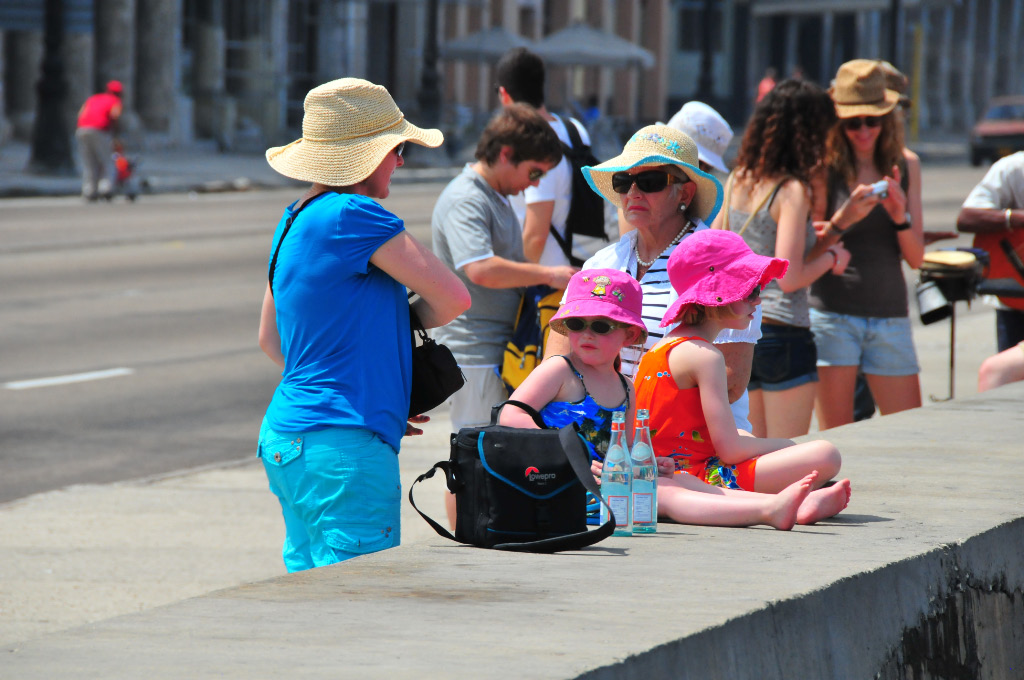
Megan taking a break
Brief rest on the promenade
The Old Fort
The Old Fort

Along the way we admired the classic cars and old buildings and just enjoyed being in such an exotic place. The longish walk and the warm conditions soon had us looking for a place to have lunch and we came across a pleasant restaurant which did the trick with beers and cold drinks to go with a plain but tasty pasta meal.
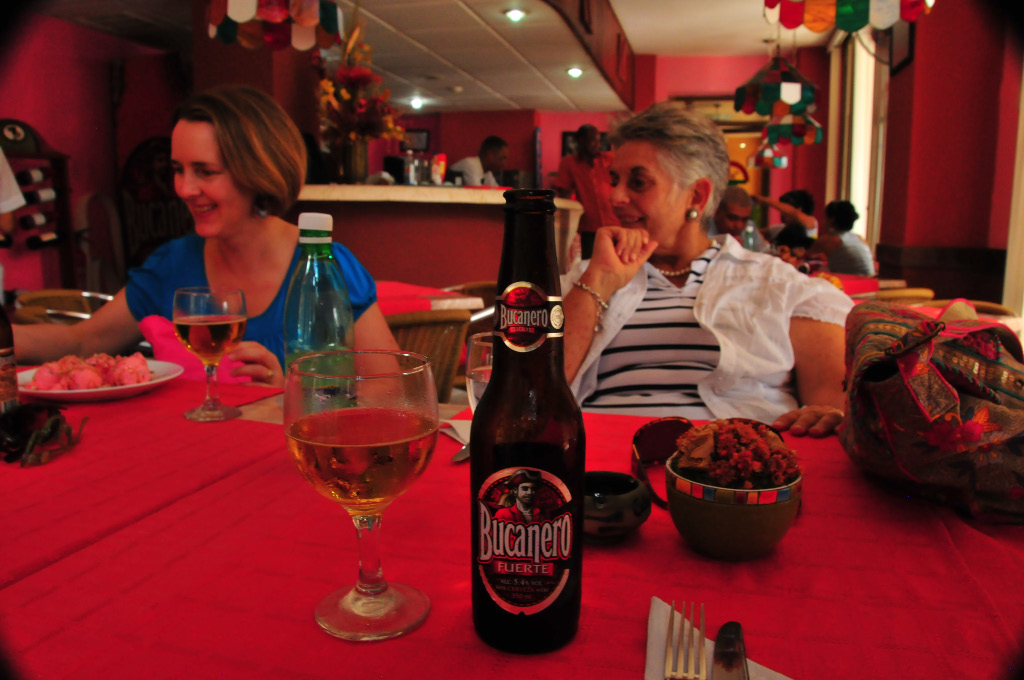
Lunchtime
Lunchtime
View from the Restaurant
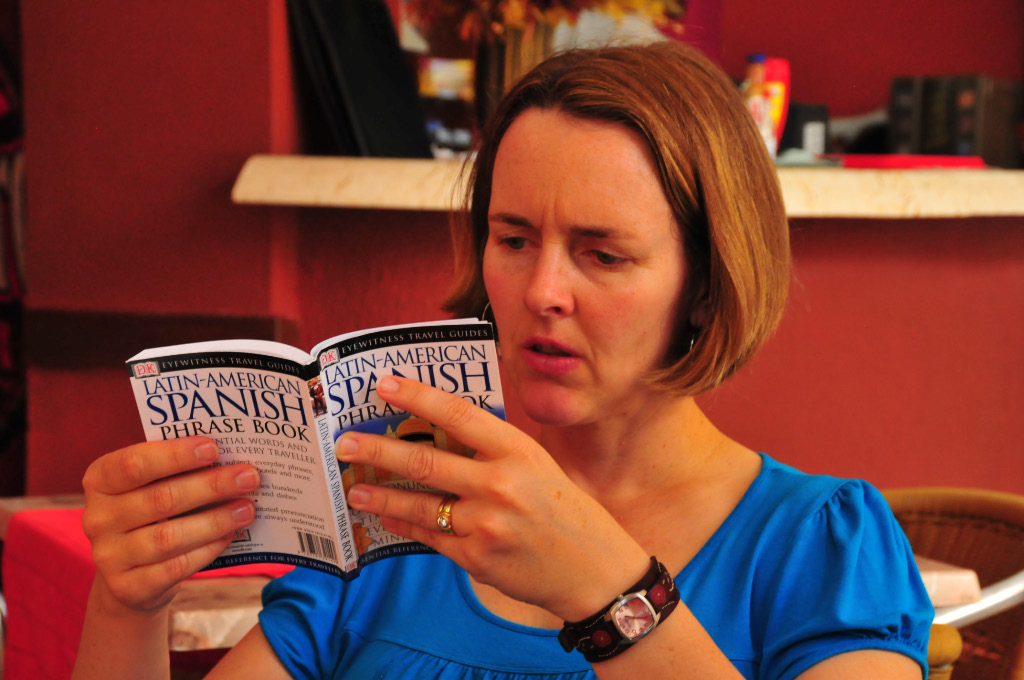
Geraldine brushing up on Spanish

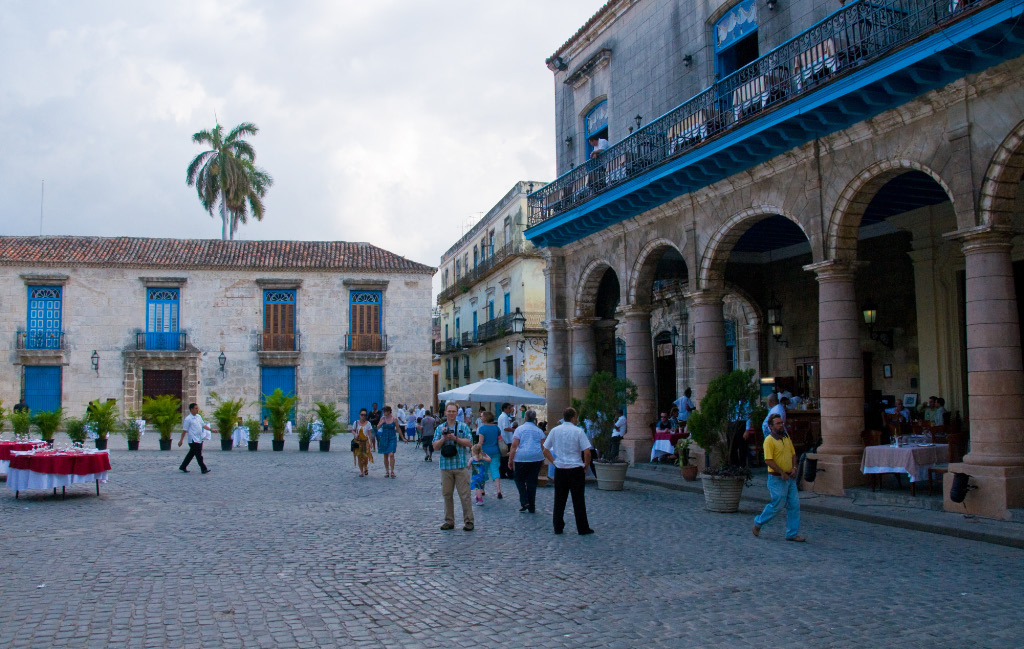
Later we ventured out again, this time taking some of the ‘back streets’ which took us to a square where we had coffee and viewed the restored church

Havana - old church
Havana – old church

100_4968_edited-1

one of the restored squares
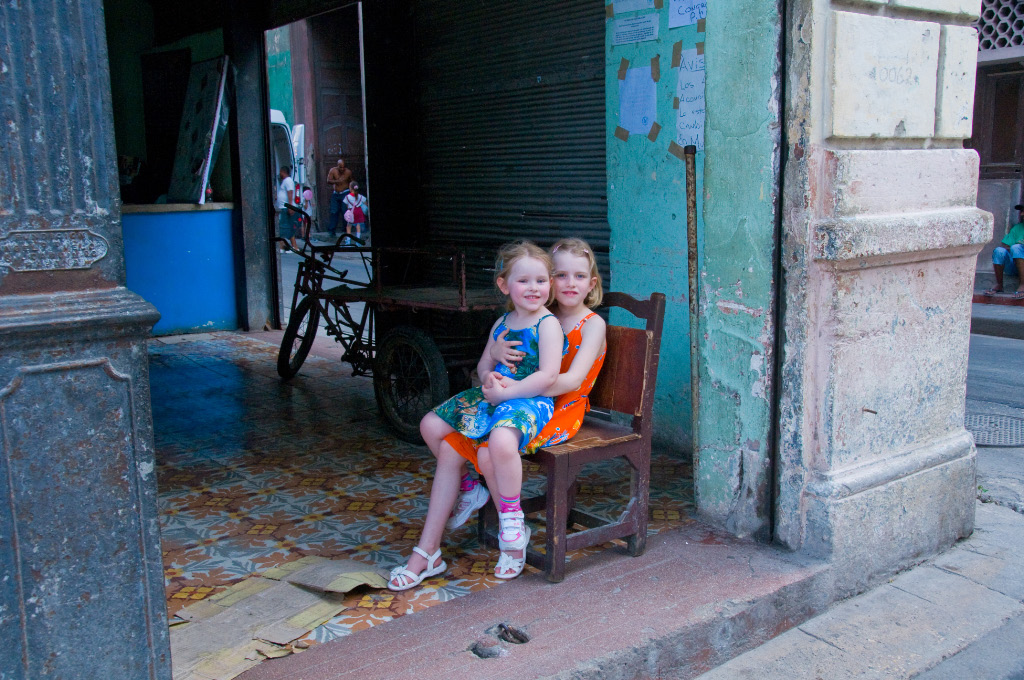
Maia and Megan taking in the Havana vibe

Next morning it was time for our tour of Havana, which we had arranged just for the six of us. Our personal tour guide for the morning was one friendly and informative Cuban by name of Mora (who happened to be of African origin), previously a professor in English, who chose to become a tour guide because it was more financially rewarding with the tips she earned. She turned out to be an excellent guide taking us variously by kombi taxi, horse-drawn carriage and walking through the streets and squares of Havana – in 30 years of guiding we were the first South Africans she had taken and at the end of the tour she insisted on giving us a hug.
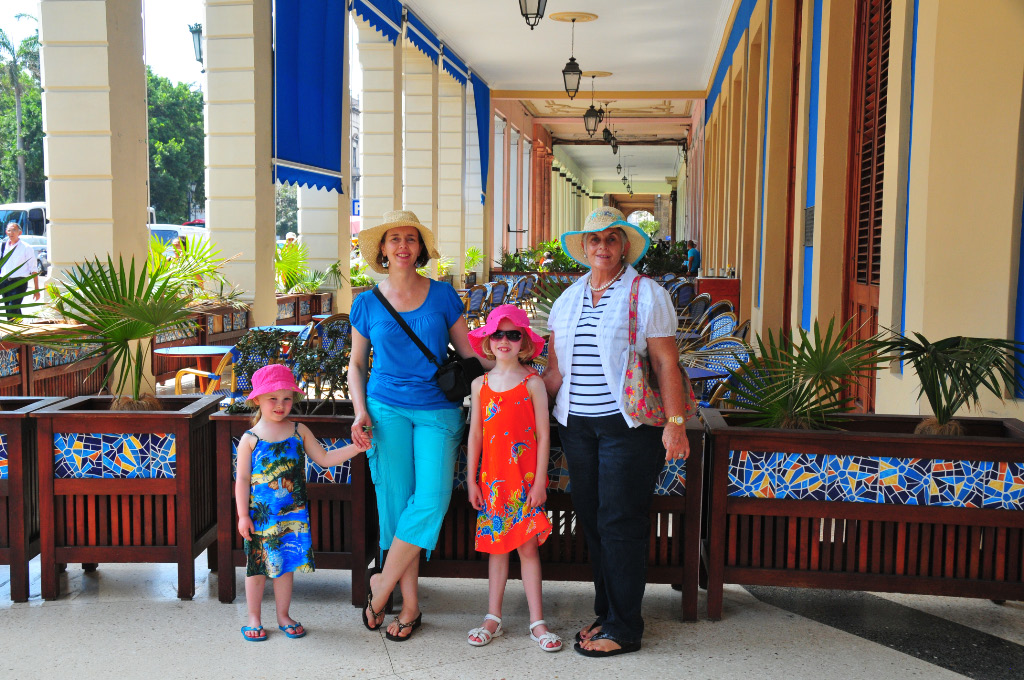
Outside the Hotel Telegrafo, Havana

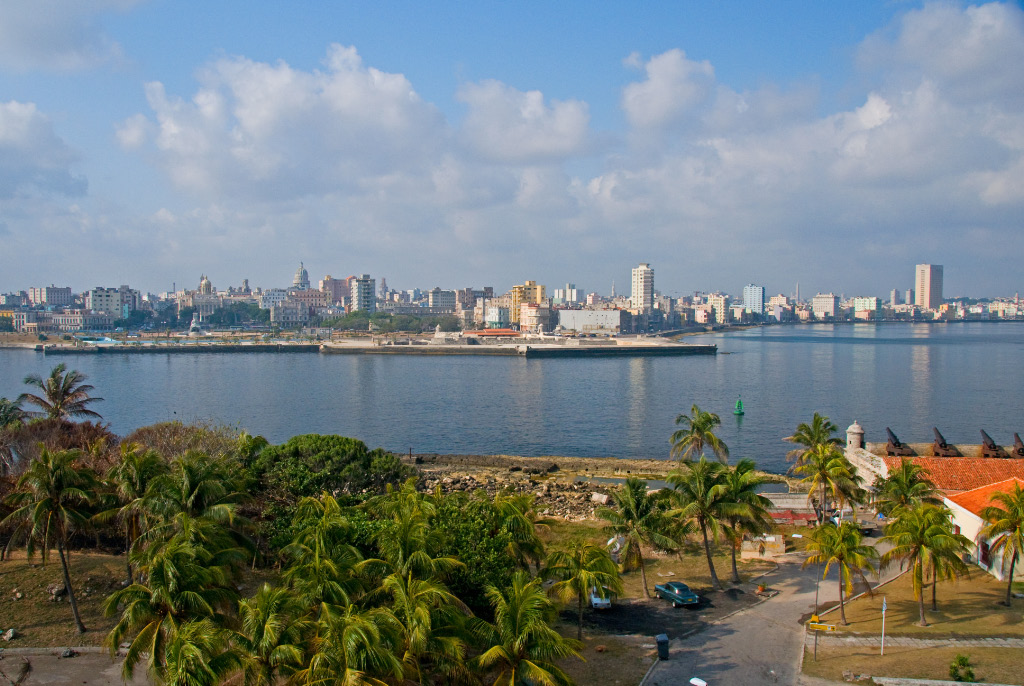
Our tour started with a trip by kombi to the old fort with stunning views across the bay to the city.

View from the Old Fort, Havana

View from the Old Fort, Havana

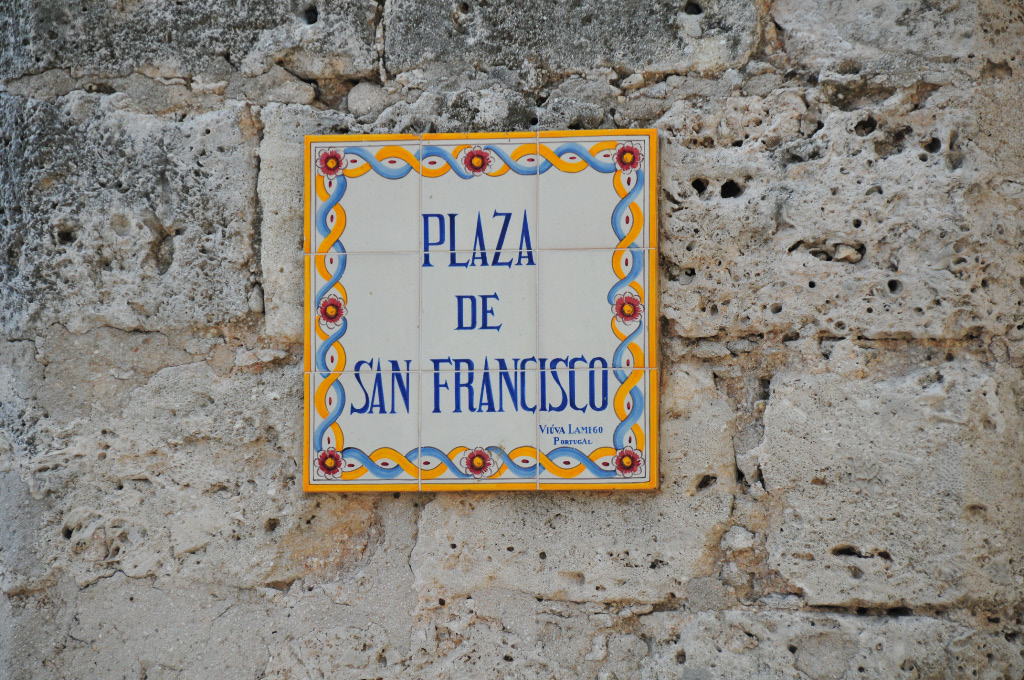
Then on to older style transport – horse and carriage for a clip-clop journey to the square called Plaza de San Fransisco.
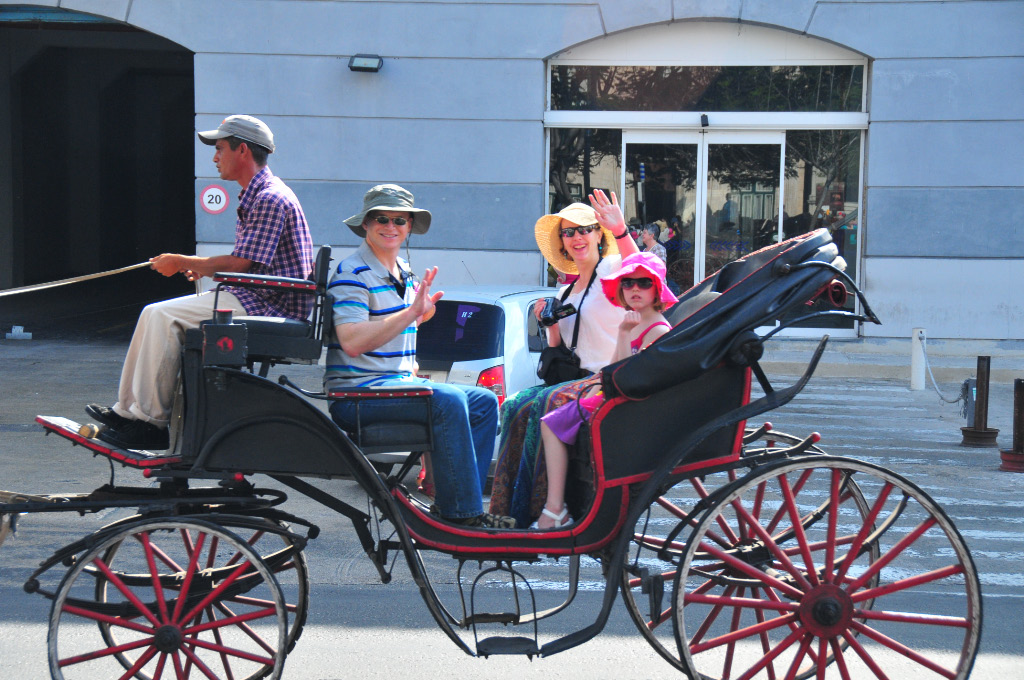
The Leonards go in style
The Leonards touring Havana in style

Plaza de San Fransisco Plaza de San Fransisco

Plaza de San Fransisco
Restored buildings on the Plaza de San Fransisco

From there we continued on foot along the streets to some of the other restored squares, stopping at a few interesting spots and for lunch at the restaurant that Hemingway favoured in his Cuban days.

The restaurant frequented by Hemingway in his Havana days
A night out in Havana (the band seemed to have come from the old age home)
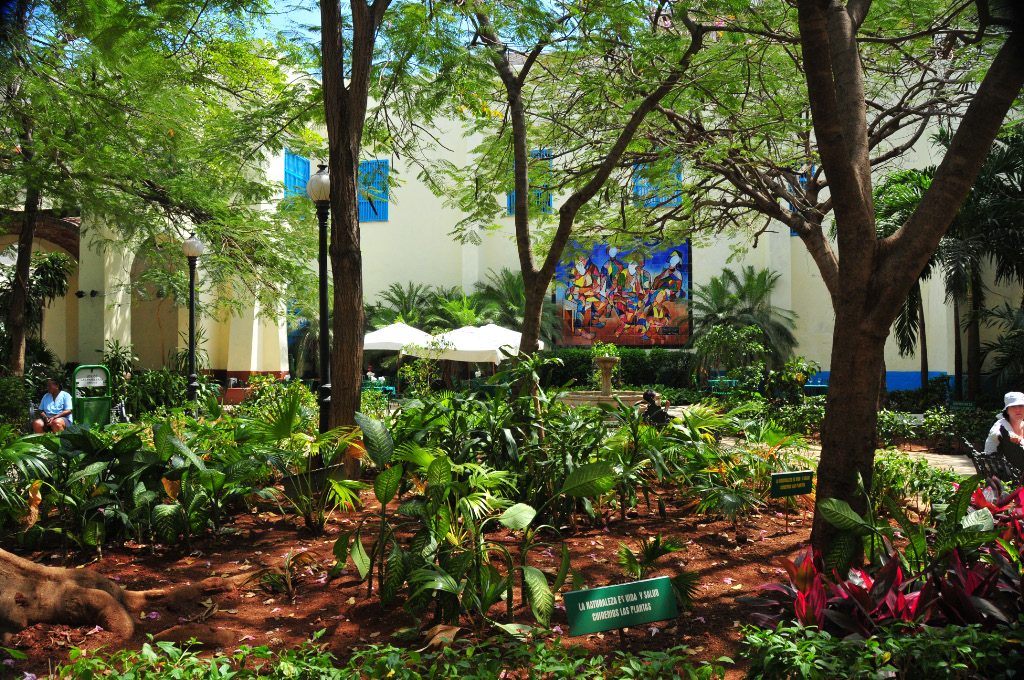
City garden
City garden
Nice looking restaurant

100_5060_edited-1

The last part of the tour took in the upmarket area where most of the embassies are located, including the SA embassy, and the Revolutionary square where we could imagine Castro addressing the crowds.
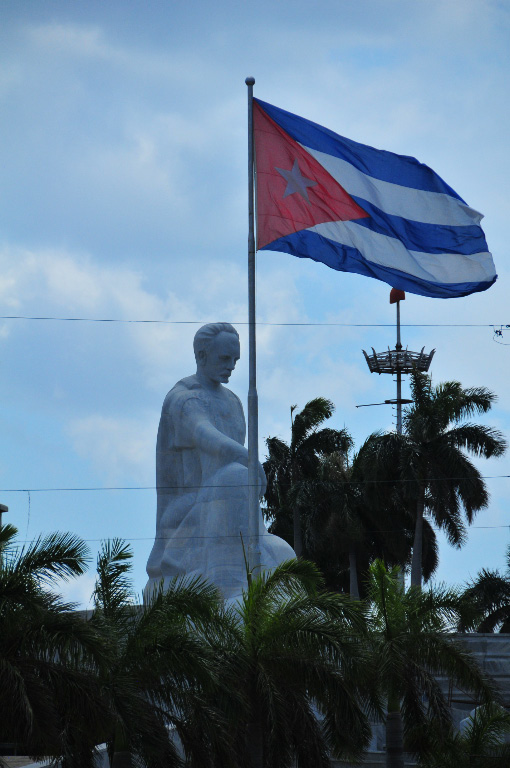
Revolutionary Square
Che Guevera images are everywhere

That brought our tour to an end – all that was left to do was to visit the cigar factory where Andre was hoping to strike a bargain on some Cuban cigars – that’s a story on its own that I’ll fit in somewhere along the way…

The Birds of Havana

I really can’t say that I did Havana any justice from a birding point of view – it was just a case of a few incidental sightings as we toured the city. For the record I noted the following birds during our short stay in Havana – the underlined ones were ‘lifers’ for me. I had no telephoto lenses with me so decent photos were not possible.

  • Cattle Egret (just like the ones back home) – on the way from the airport
  • Rock Dove – in the city squares
  • House Sparrow – in the city
  • Magnificent Frigate bird – my first ‘lifer’ of the trip, seen flying over the city (a real surprise as I thought they were deep ocean birds)
  • Turkey Vulture – second ‘lifer’ and one of the birds we saw most frequently on our trip
  • Mourning Dove – perched on city roofs and in the parks
  • Eastern Meadowlark – in grassy fields near the Old Fort
  • Cuban Blackbird – ditto
  • Cuban Martin – nesting in a hole in a building façade
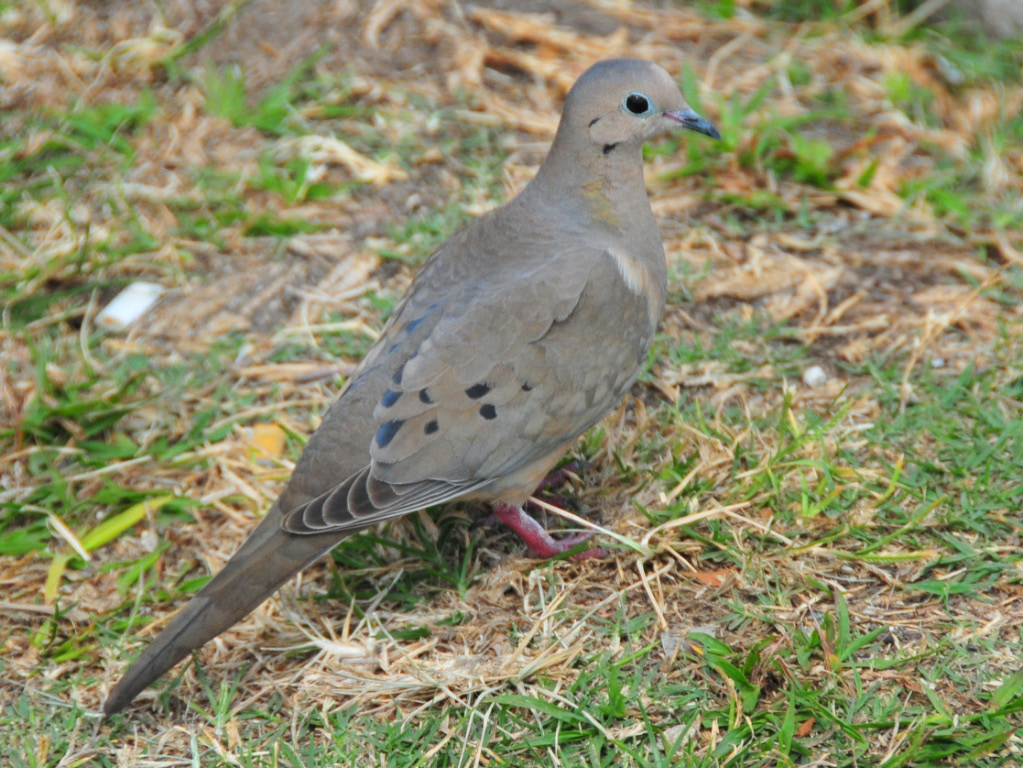
Mourning Dove
Mourning Dove
Cuban Martin
Cuban Martin
Magnificent Frigatebird, Havana - poor photo but just for the record...
Magnificent Frigatebird, Havana – poor photo but just for the record…

Those who have seen and read enough can stop here…


More Classics and old buildings

For those, like me, who can’t get enough of the American ‘classics’ and the beautiful old buildings, here are more photos of what we found in Havana – the cars :
"Classic" American cars "Classic" American cars 100_4950 "Classic" American cars "Classic" American cars "Classic" American cars

– the buildings :

100_5050_edited-1 100_4974 100_4973_edited-1 100_4955_edited-1 100_4920_edited-1 100_4903_edited-1 100_4902_edited-1 100_4896_edited-1

Unique Havana Moments

Street entertainers
Street entertainers
The revolution is still big news
The Chocolate Museum where we had a decadent hot chocolate
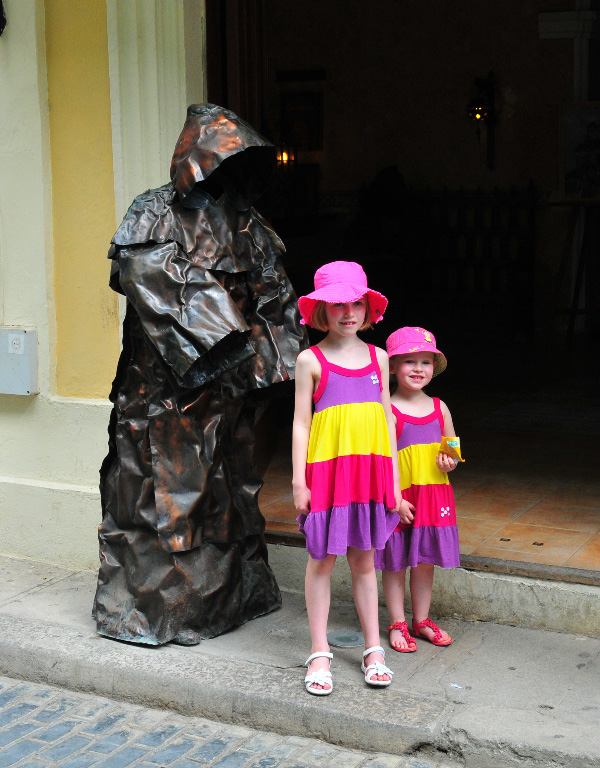
The girls being watched by someone
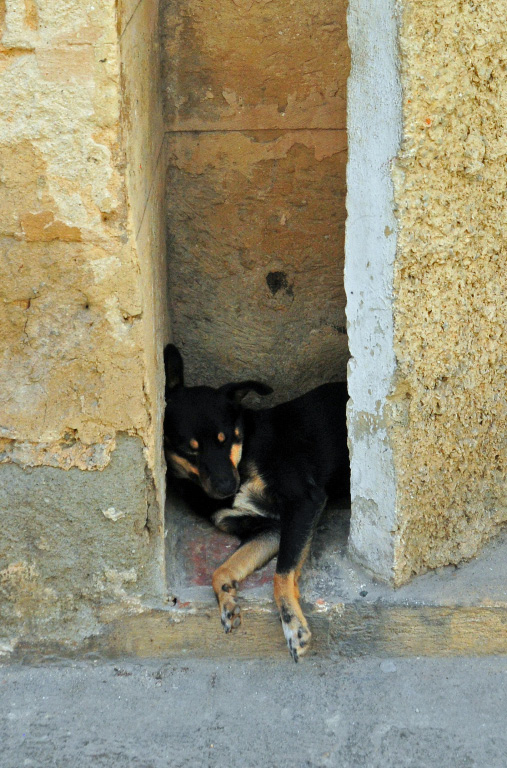
This dog found a cosy space to snooze
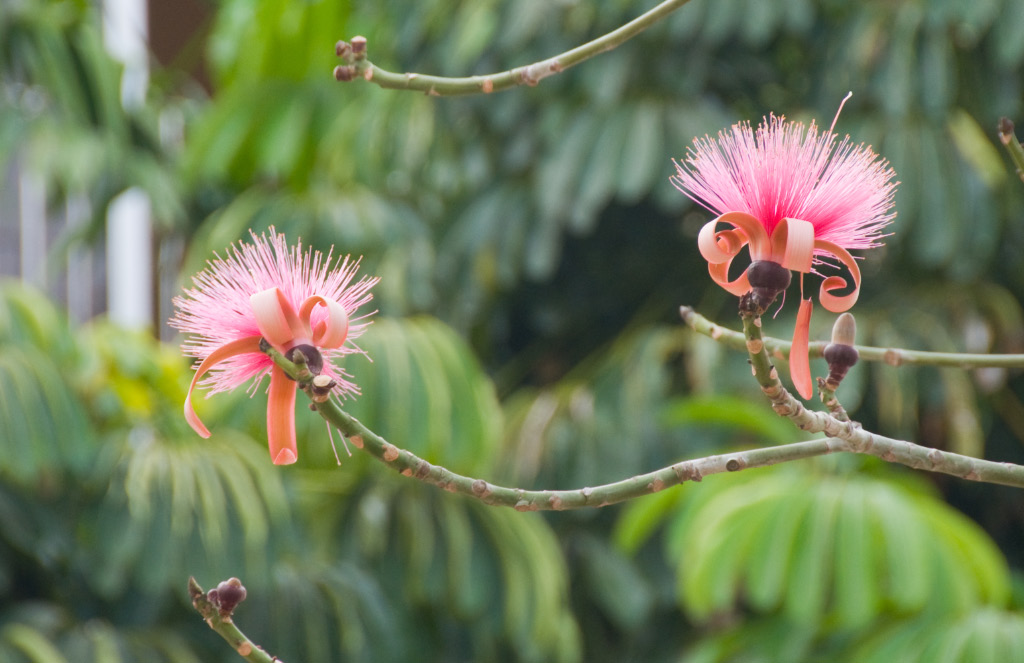
Fallen flower on a palm frond
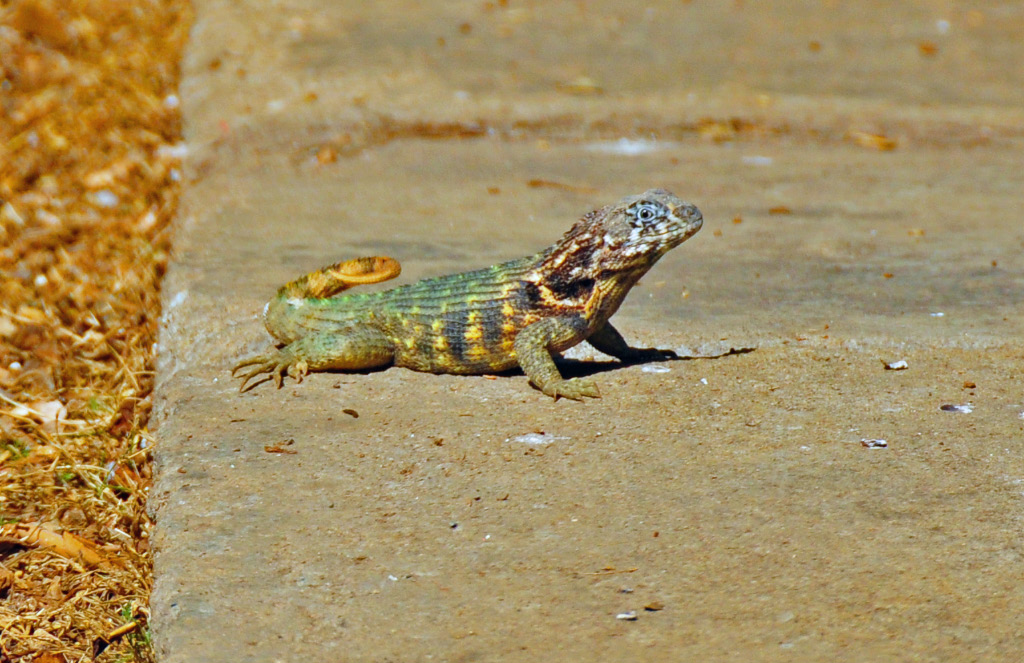
They call this the 'Puppy Dog Lizard' due to its curly tail
They call this the ‘Puppy Dog Lizard’ due to its curly tail
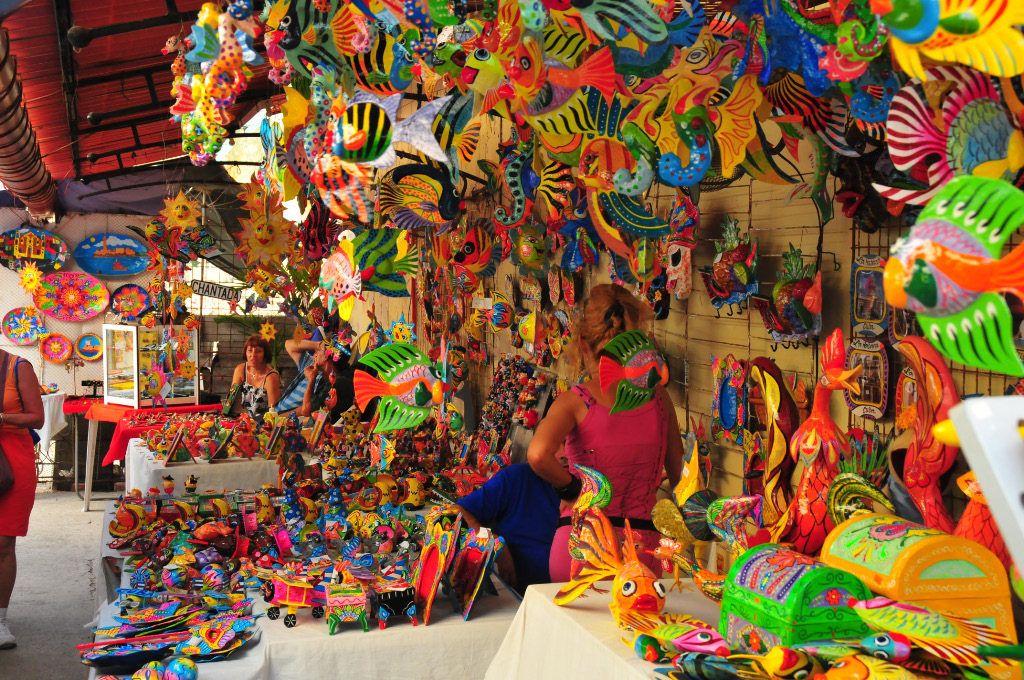
Flea market - all home-made goods
Flea market – all home-made goods
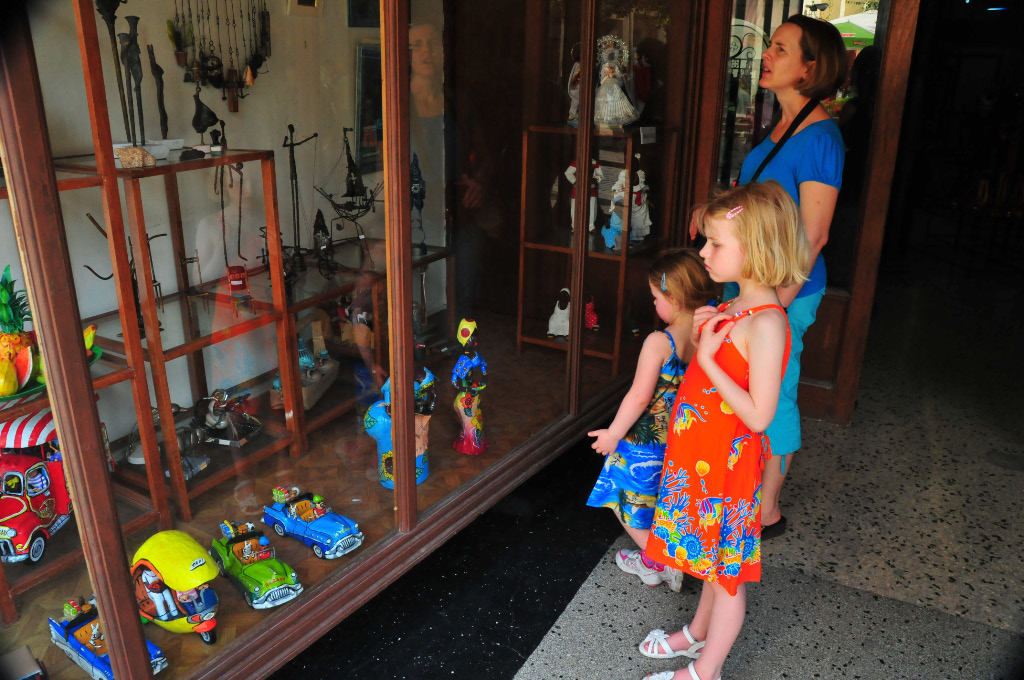
A Toy shop - no Toys'Rus in Havana
A Toy shop – no Toys’rUs in Havana
Pavement art shop
Pavement art shop


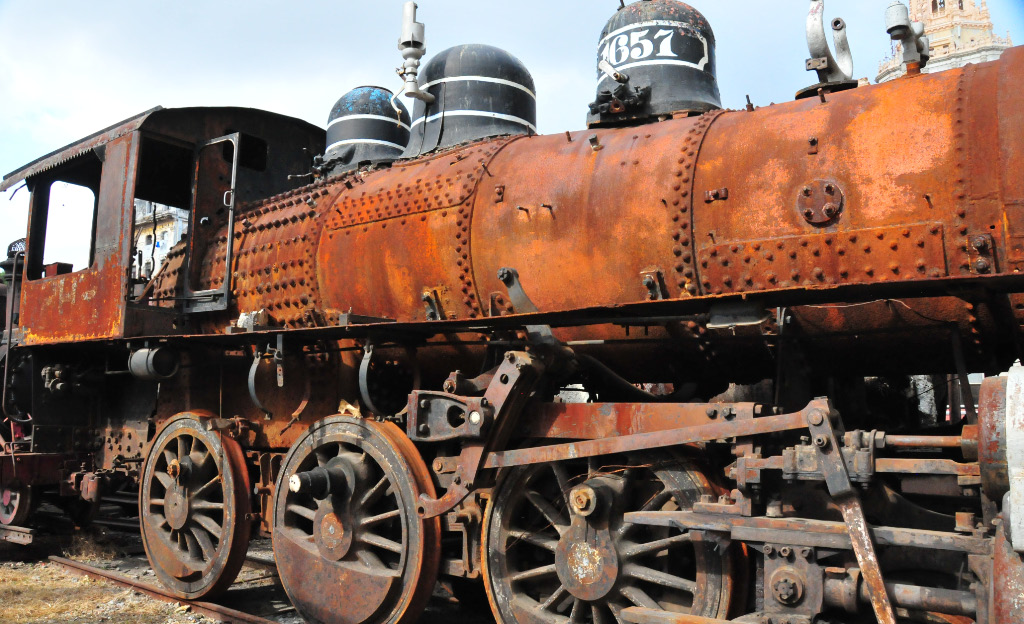
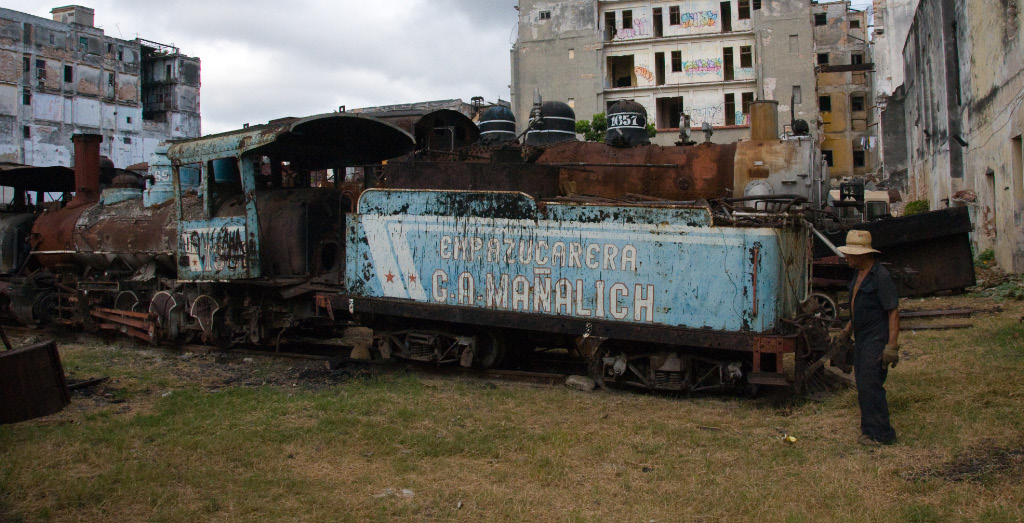
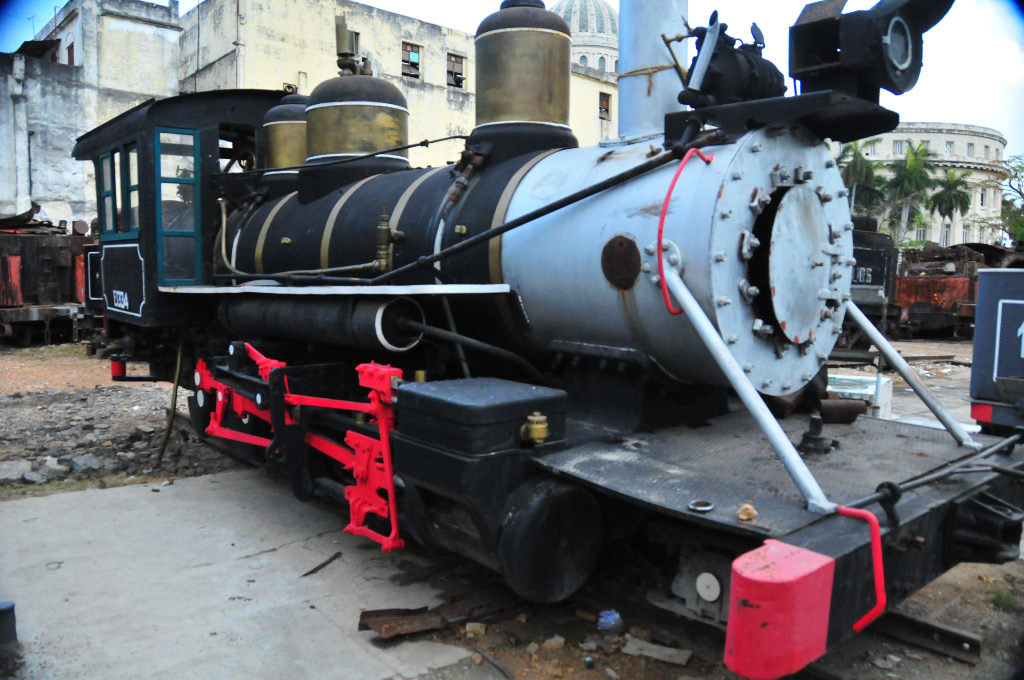
The Train Museum

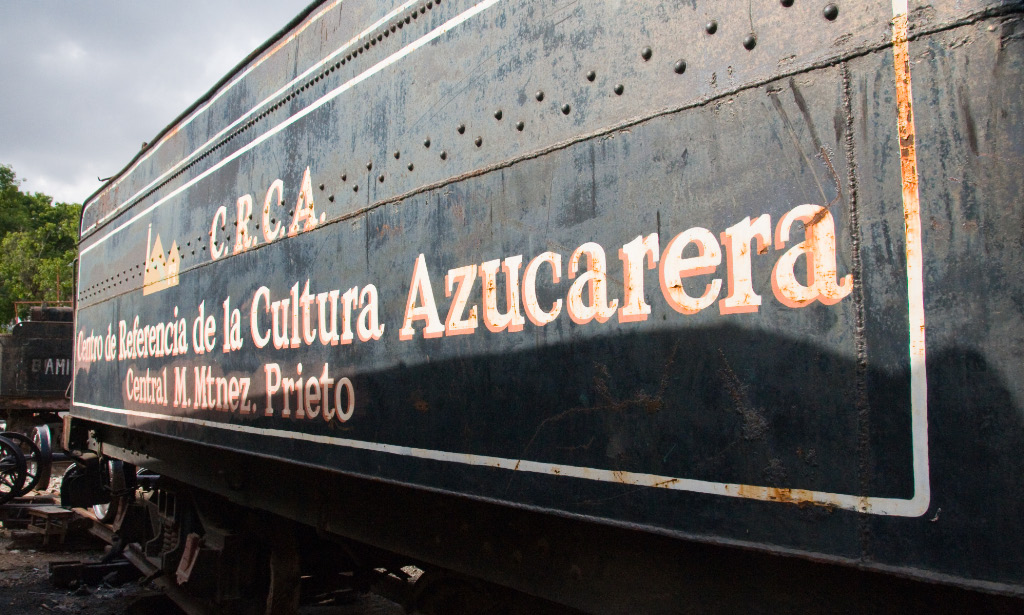
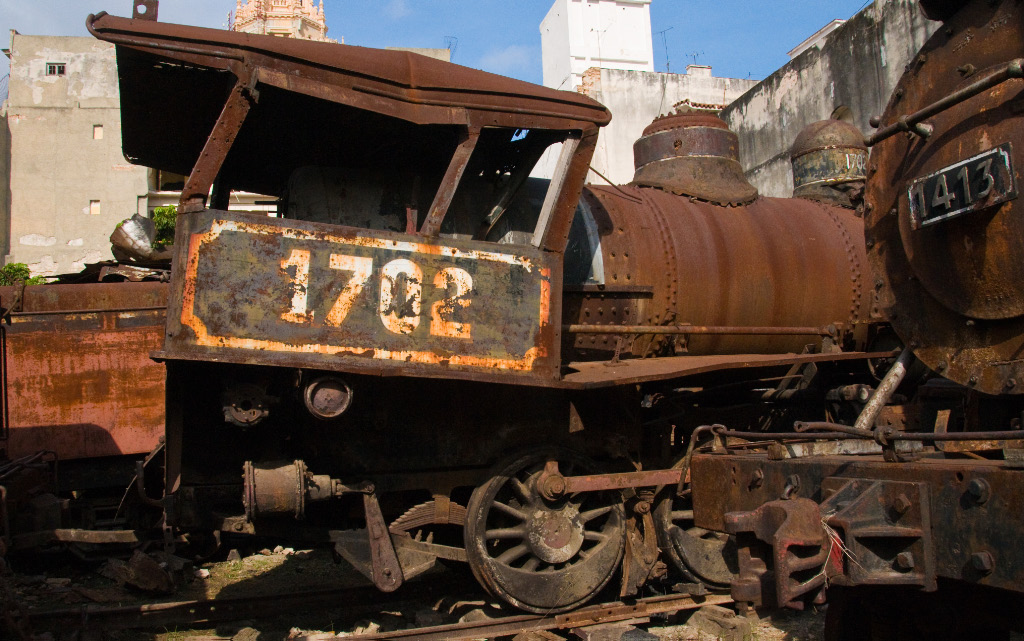
Havana’s Train Museum, which is akin to a scrapyard, won’t be competing anytime soon with others I’ve seen (the National Train Museum in York, UK has to be the best) but certainly earns points for being unusual, and they don’t charge an entrance fee :
Train "museum" central Havana Train "museum" central Havana Train "museum" central Havana Train "museum" central Havana Train "museum" central Havana Train "museum" central Havana


Oh, I might as well add the story of our trip to the Cigar Factory :

Andre was determined to take some real quality Cuban cigars back to the UK, but wasn’t keen (to say the least) to pay the very high prices charged in the more formal shops. And so he and I set off on a mission to find a bargain, starting with the Cigar factory not too far from the hotel – we ventured inside but could see straight away this wasn’t going to be the place for a bargain, as all the goods were priced with Euro and Dollar bearing tourists from Europe and Canada in mind.

Leaving the museum, we were approached by a local guy, harmless-looking, who sidled up and said ‘psst, wanna buy cheap cigar’ or something to that effect. Andre engaged him briefly and when he suggested we follow him to ‘his place’ Andre, to my slight horror, agreed to do so.

Well, he took us down the road, around a corner, down another road into a gritty part of town and then up a staircase to his small apartment where we were told to wait in a rather dingy sitting room. Minutes later our new-found friend brought in his ‘brother’ who looked more the part of a gangster, muscled, gold chains and all, and carrying a large bag which he proceeded to unpack, pulling out various boxes and types of cigars.

Not to be outdone, Andre brought all his negotiating skills to bear and I sat fascinated but very apprehensive as the scene unfolded in front of me, with the dealer getting more and more agitated as he saw his expected ‘killing’ fading away, while Andre calmly opened each box and inspected every cigar individually to make sure they were genuine. Eventually we walked out with the very best cigars for about a tenth of the price he started with and the dealer close to tears.

I must admit I descended the stairs from the apartment expecting a dagger in the back at any moment, but didn’t turn around and just walked away as fast as possible. Definitely one of the more memorable moments of my travels!
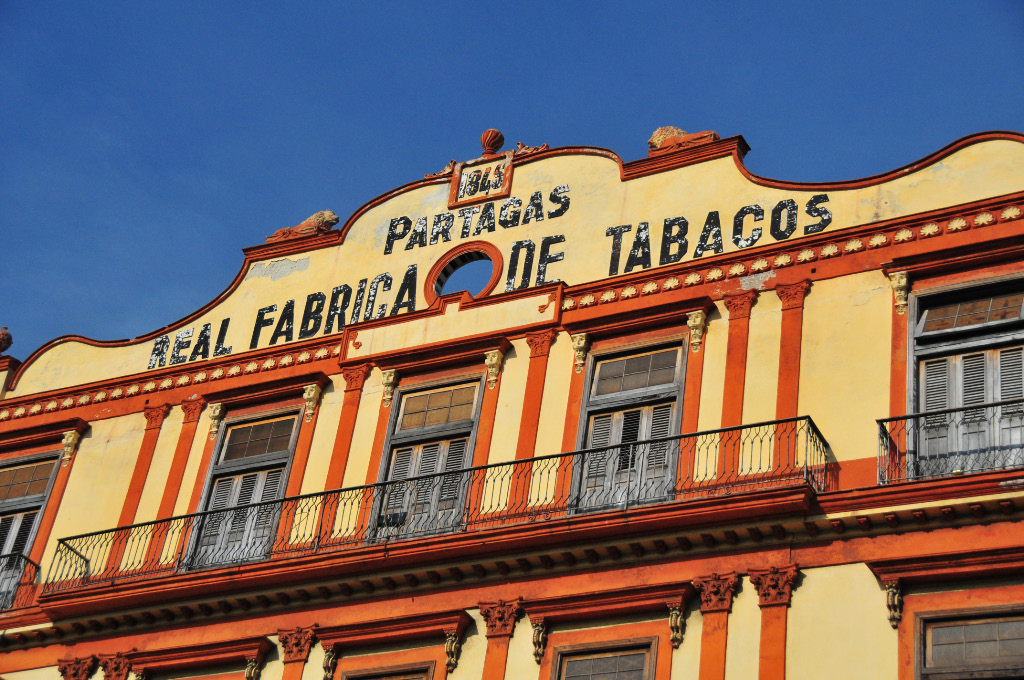
Cigar factory, Havana


Four Parks and a wedding (Part 4) – Addo Elephant Park

The Story so far….

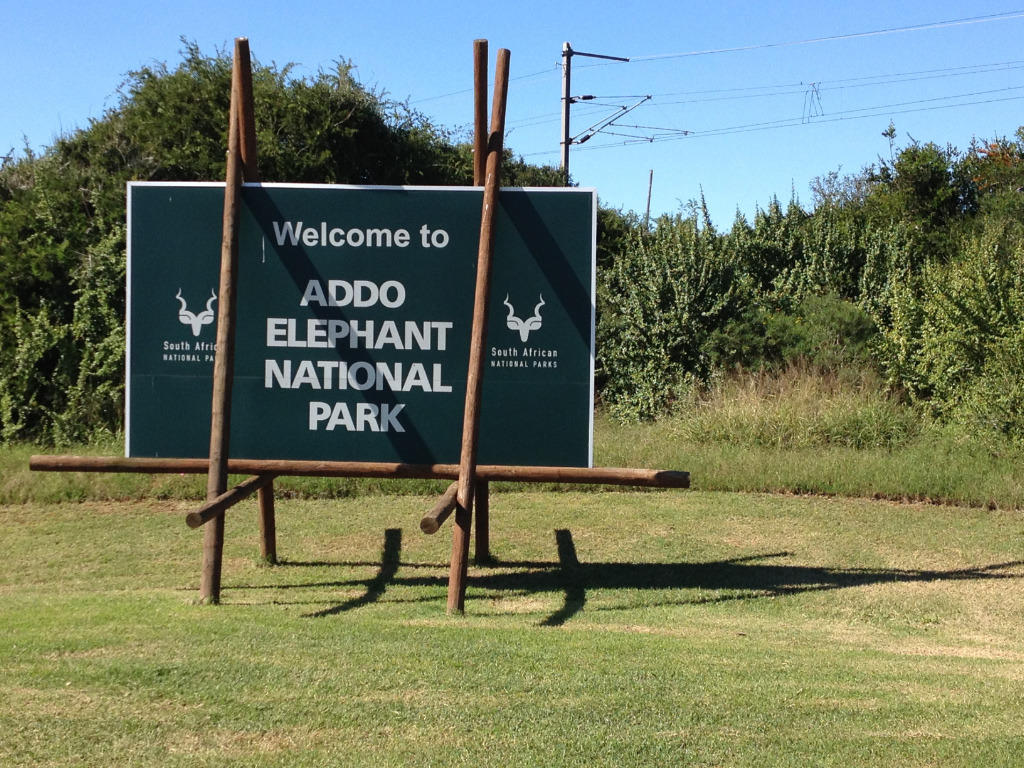
Having spent a few nights at Camdeboo and Mountain Zebra National Parks on this current trip, following our earlier visit to De Hoop Nature Reserve, we were  looking forward to a further 3 nights at Addo National Park to complete the quartet of parks. So far we had found each one most enjoyable in its own way, with Mountain Zebra National Park top of our list for having provided the most “African” experience of the three.

The road to Addo – Thursday 1 May 2014

Leaving Mountain Zebra National Park behind us after checking out around 11 am, we headed for nearby Cradock to stock up at the local Spar, followed by a coffee at True Living cafe accompanied by the best carrot cake we’ve had in a long time (they bake on the premises so it’s as fresh as it can get)

From there we headed down the N 10 with a diversion to Somerset East to check out the local museum, which we discovered was closed on the public holiday, but it was interesting just to drive through this small historical Eastern Cape town that we would not otherwise have seen. By now it was lunchtime, so we found a roadside spot with large blue gums to provide some shade and ate our “padkos” rolls.

Roadside lunch stop
Roadside lunch stop

The next stop was a short one to view the Slagtersnek monument, just off the road beyond the small town called Cookhouse. The monument commemorates the spot where a number of Dutch rebels surrendered after being confronted by British forces on 18 November 1815, however we were disappointed to find the surrounds unkempt and apparently not cared for in a long time.

Slagtersnek monument

The road continued in winding fashion with lengthy road works making our progress slow, resulting in us only reaching Addo around 5 pm, but the scenery along the way was rewarding, reminding us of the lowveld in places with lush growth and fruit farms

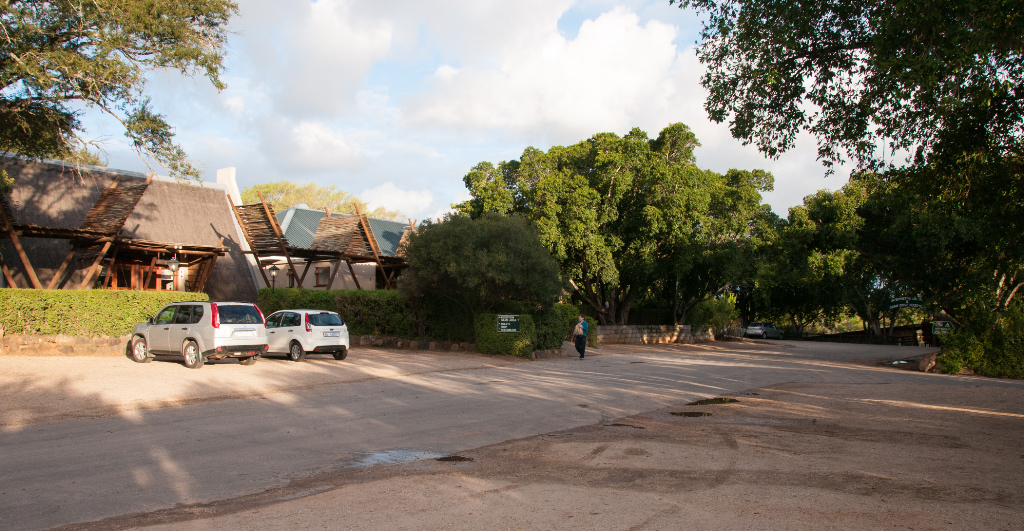
Addo Reception
Addo Reception

Back in Addo

Our first visit to Addo was just over a year previously when Gerda and I had enjoyed a few days in the park after visiting PE, so we were familiar with the layout. Some of the photos and descriptions I have used in this post are from that visit.

IMG_1242

We had booked a few months before but by then it was already close to full so we had to accept one night in a chalet followed by 2 nights in the Forest Cabins – not ideal but it meant we could try out the different accommodation units.

Settling into our chalet, some familiar calls resounded in the fading light – Sombre Greenbul with its piercing whistle, the loud “chip – ing” of Bar- throated Apalis and a pair of Bokmakieries performing a duet. A little later as it darkened a Fiery – necked Nightjar started its “Lord please deliver us” call – so evocative wherever you hear it but especially so in the bush.

Sombre Greenbul, Addo NP
Bokmakierie, Addo NP
Bar-throated Apalis, Addo NP

Exploring Addo and beyond

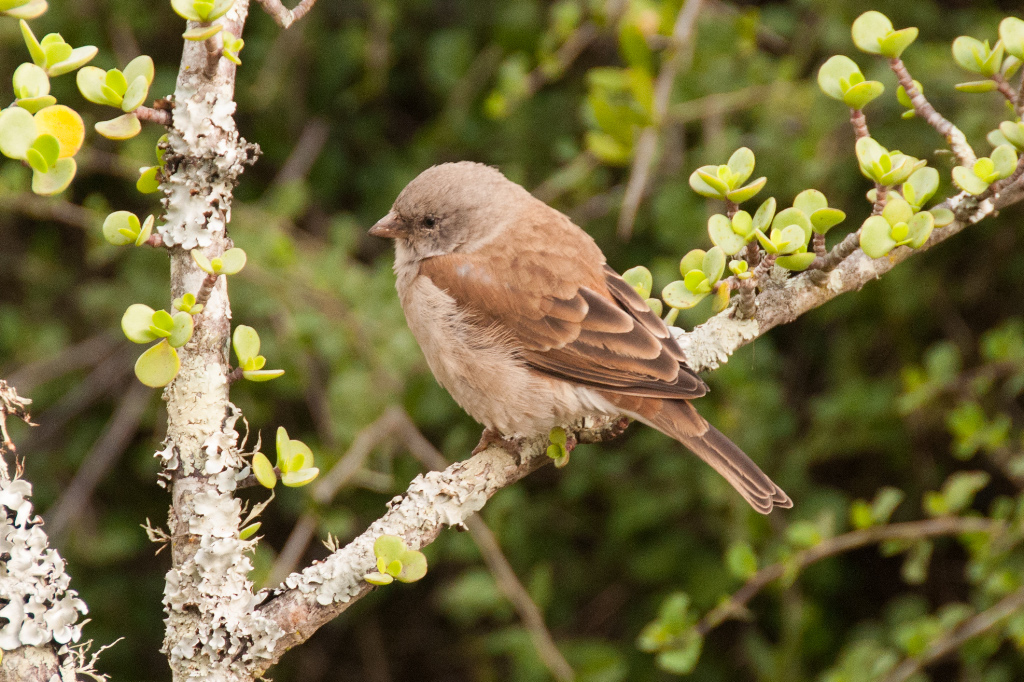
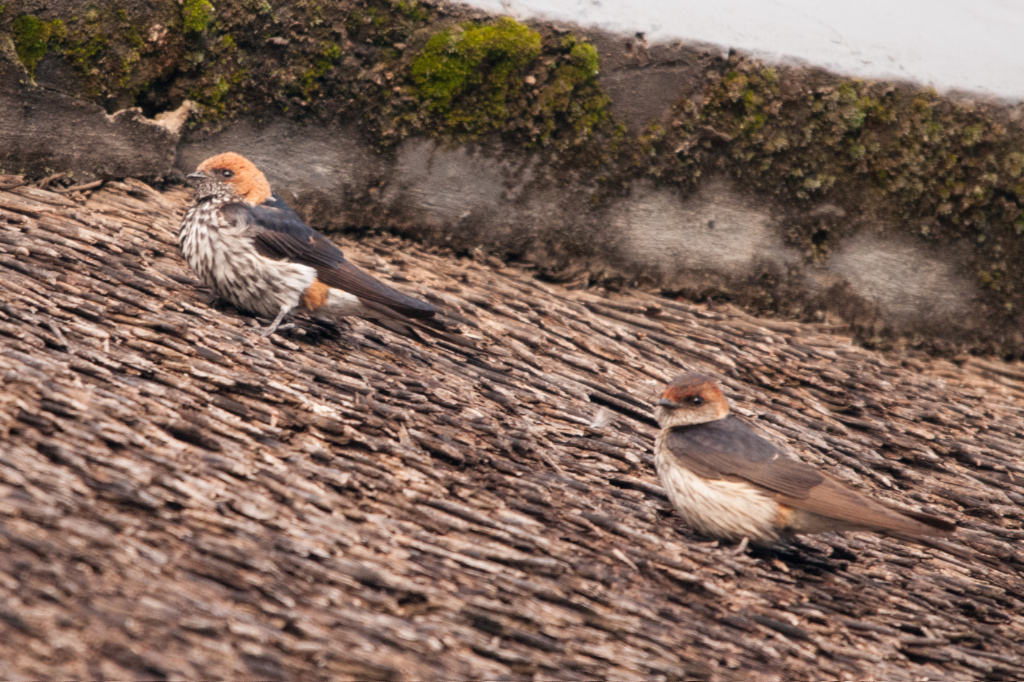
While having our customary early morning coffee on the patio, a pair of Cardinal Woodpeckers made a noisy appearance in a nearby tree, followed by Grey-headed Sparrow and a Fiscal Flycatcher, the latter looking debonair in its crisp black and white plumage – about to ask for a ‘Martini – shaken not stirred’. Soon after, a Lesser-striped Swallow settled on the roof, making it easy to ID as opposed to when they are in the air, when it is more of a challenge to separate them from the Greater-striped Swallows.

Grey-headed Sparrow, Addo NP
Striped Swallows, Addo NP

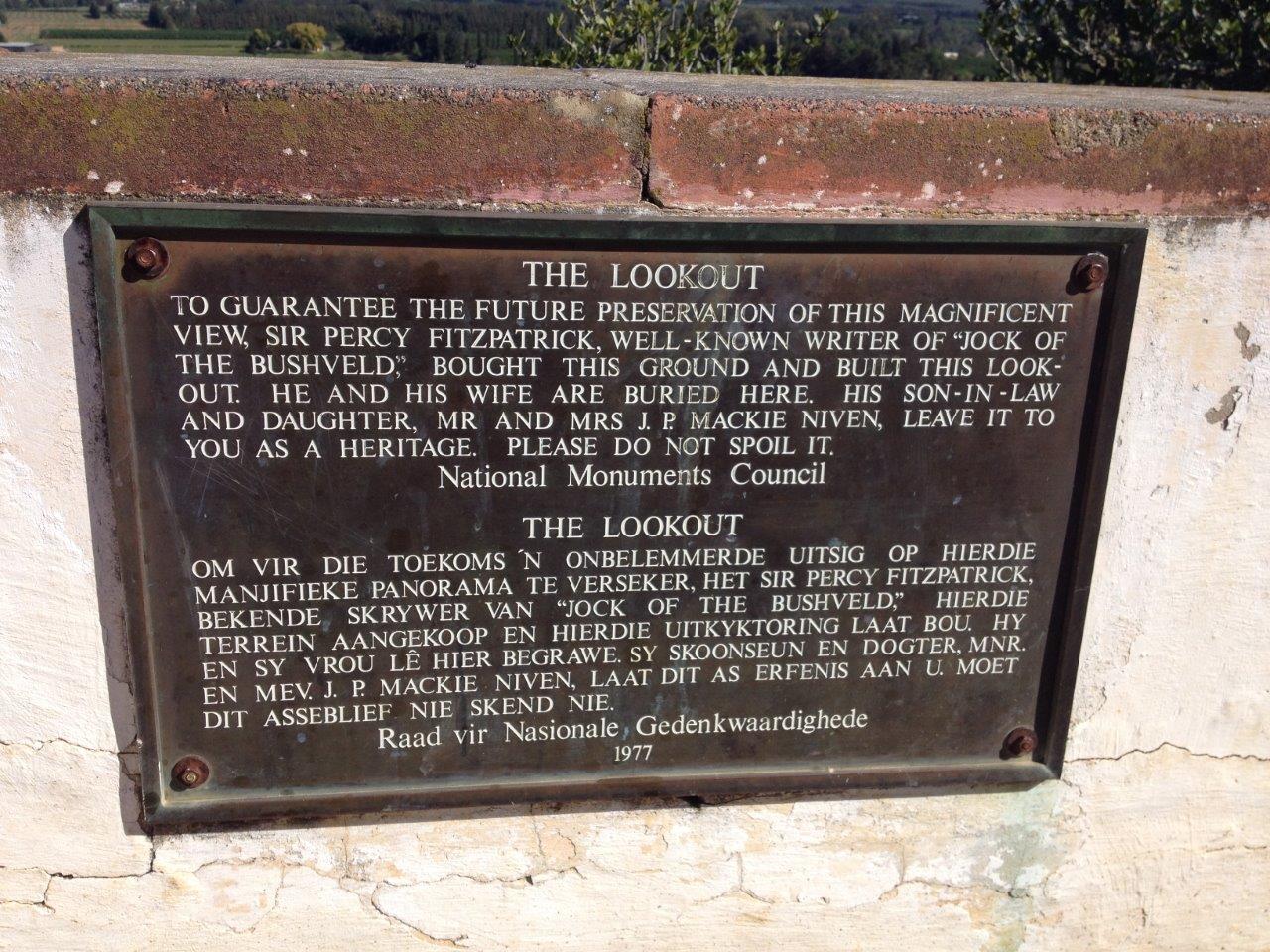
Having a 3 hour gap before we could move into our Forest cabin, we decided to go in search of the grave of Percy Fitzpatrick, author of the classic story of Jock of the Bushveld, which we had heard was not far from Addo Elephant Park, off the road to Kirkwood. Passing through the village of Addo we spotted a building with the name ‘Percy Fitzpatrick Library’ and immediately stopped to find out more – good thing because the very helpful librarian was more than willing to chat about the library, the area and showed us a portfolio of historical photos in a large album kept by the library. She also pointed us in the right direction to the grave site and ‘Lookout’.

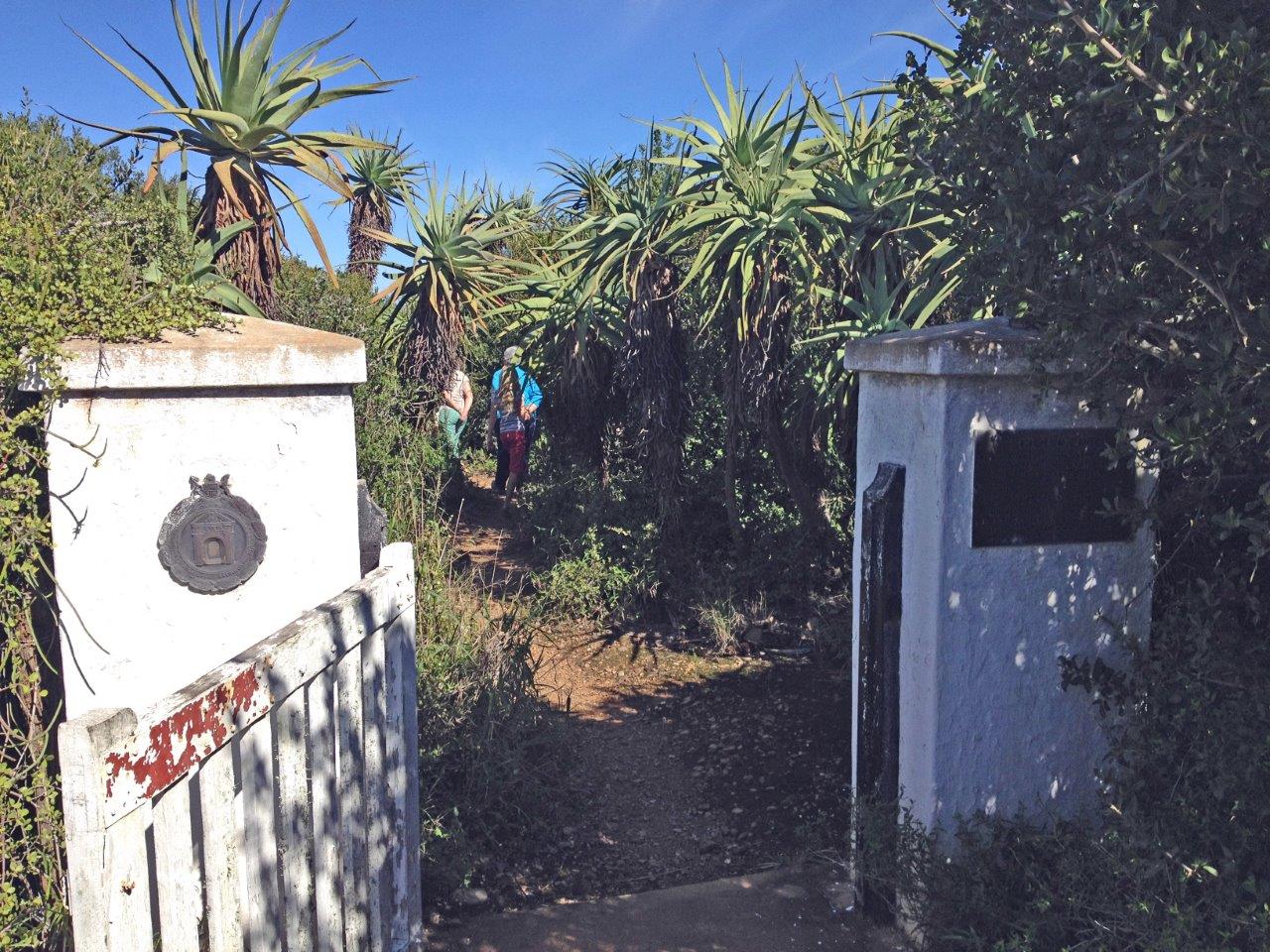
It didn’t take long to find both at the end of a dirt road with heavy encroaching bush both sides (bit nerve-wracking for those who don’t like getting the car scratched) and it was clear that not much is done to look after the site, which was completely overgrown and in a sorry state – another neglected opportunity to create something which I’m sure many tourists would enjoy visiting.


Entrance to site where Percy Fitzpatrick and his wife are buried - the garden has run wild
Entrance to site where Percy Fitzpatrick and his wife are buried – the garden has run wild
The grave of Percy Fitzpatrick

The ‘Lookout’, built to honour their son, turned out to be a stone structure with a short stair to take you to a lookout deck, with wonderful views across the countryside and the Sundays River below, but this too was in need of some TLC.

IMG_1229


View over the countryside from 'The Lookout'
View over the countryside from ‘The Lookout’
View from The Lookout


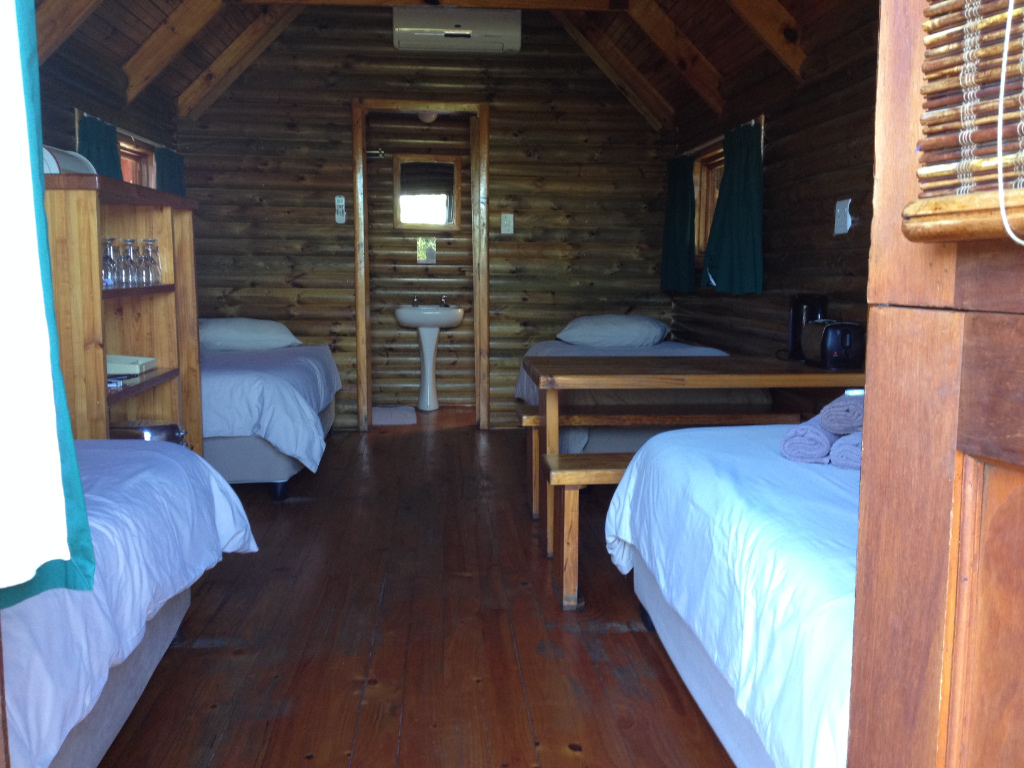
By the time we got back to the rest camp, it was past 1pm so we could move into our Forest Cabins, which turned out to be comfortable and cosy with a small bathroom, a private deck and use of a communal kitchen.

Forest Cabin, Addo NP
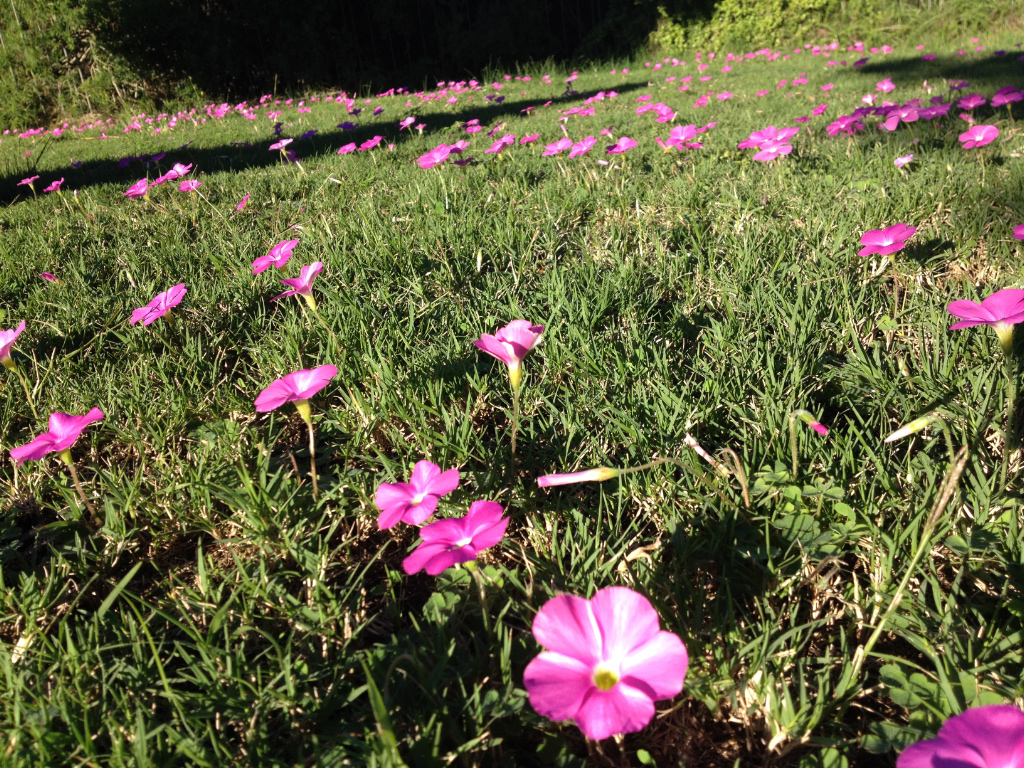
Poolside flowers, Addo NP

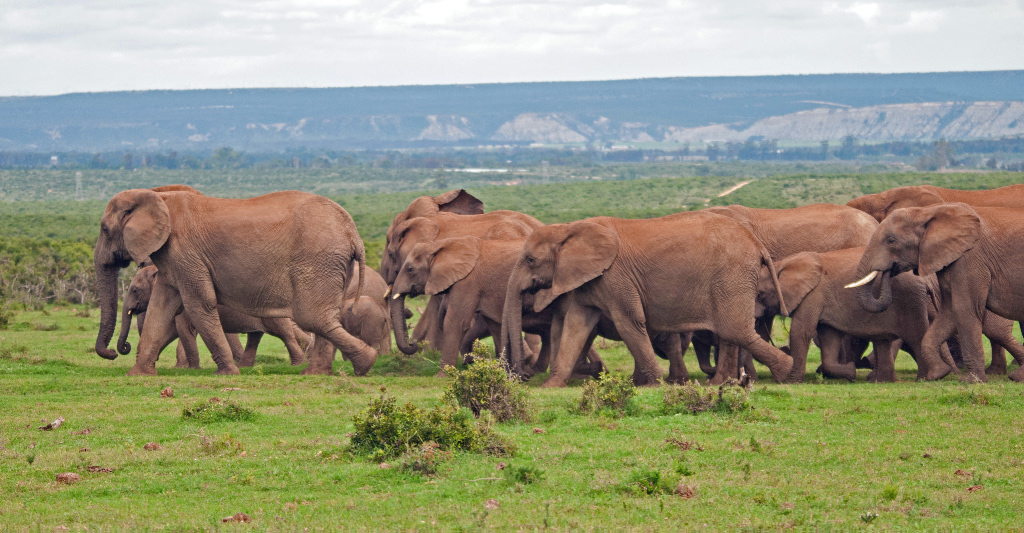
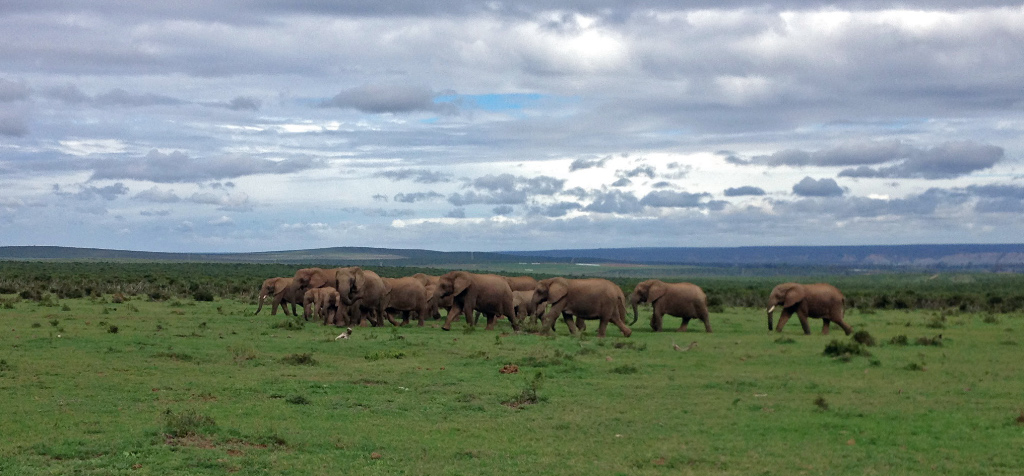
There was time for a swim at the pool, cold but invigorating, before setting off on a late afternoon drive. The thick bush on the route we followed wasn’t conducive to spotting any of the pachyderms that Addo is named and famed for, but at a viewpoint high up on a hill we looked down on a classic scene of more than a hundred Elephant in the distance.

Elephant, Addo NP
Elephant, Addo NP

Elephant, Addo NP

African Elephant, Addo NP

Along the way the bush was good for several common species such as Cape Weaver, Common Fiscal in numbers, Bokmakierie and Karoo Scrub-Robin. A Denham’s Bustard in the more open area was a nice surprise.

Karoo Scrub-Robin, Addo NP
Denham's Bustard, Addo NP
Denham’s Bustard, Addo NP

I spent the next day mostly at Cape Recife in Port Elizabeth, looking for a Bridled Tern that had been seen there during the week, unfortunately without success.

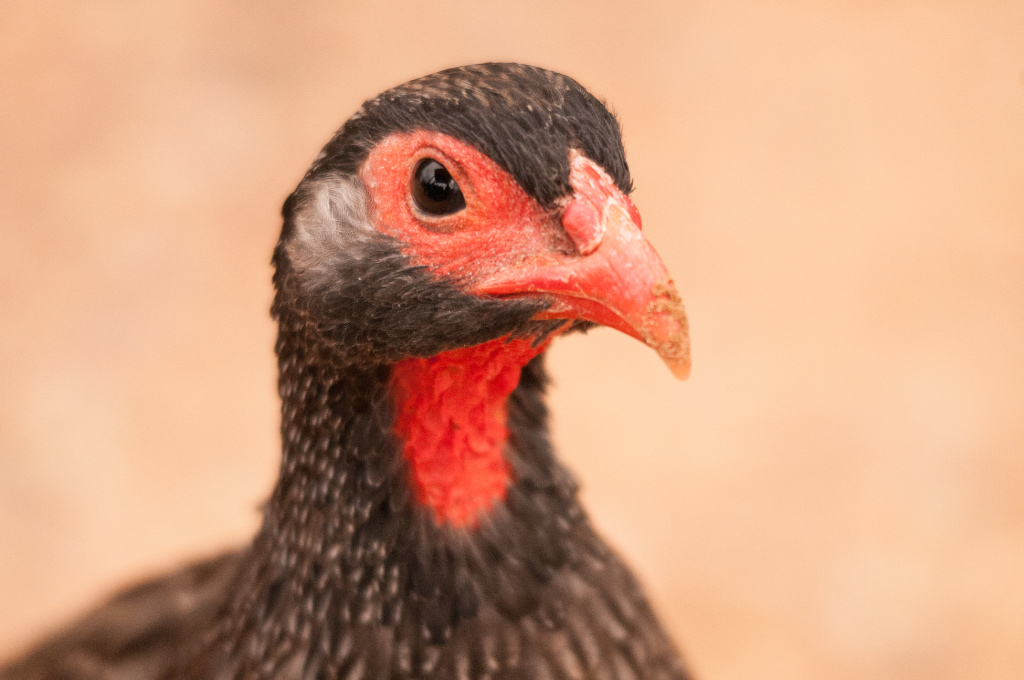
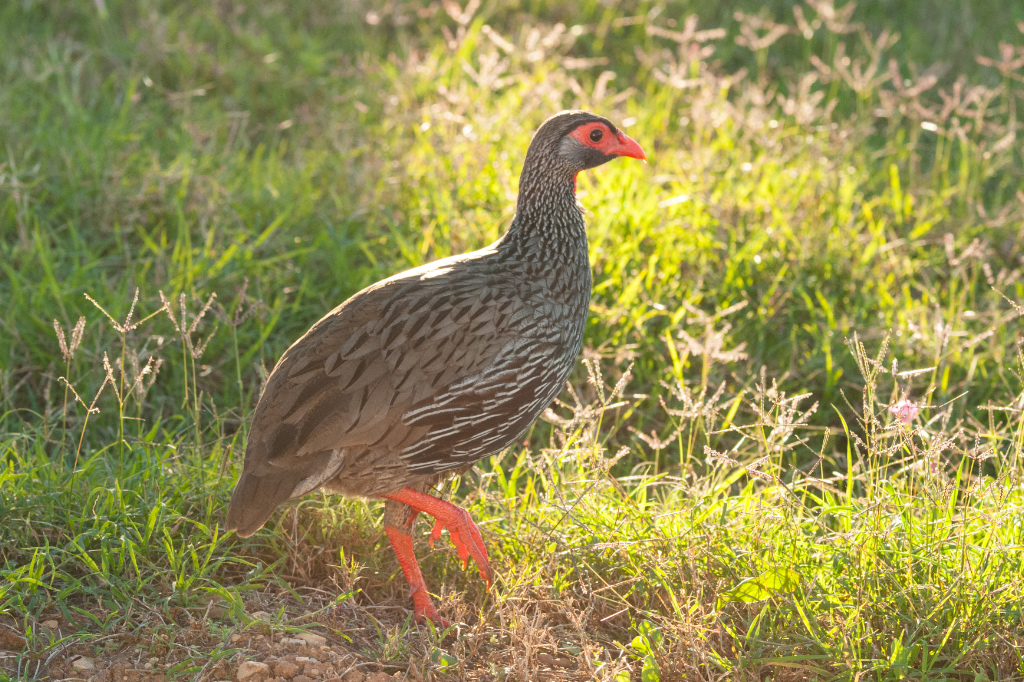
Back at Addo there was time to relax before doing a last drive along the route where most of the dams and waterholes are and we came across numbers of game as well as a few new ‘trip birds’ such as Southern Tchagra, as always skulking in the bushes, and a far more brazen pair of Red-necked Spurfowl, common to Addo.

Southern Tchagra, Addo NP
Red-necked Spurfowl, Addo NP

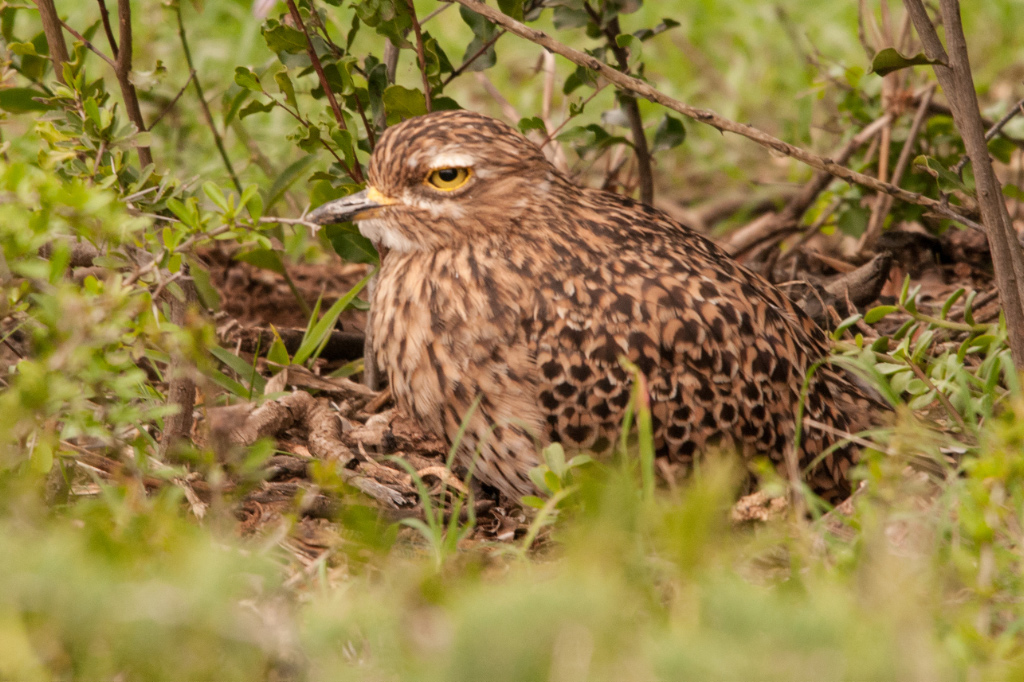
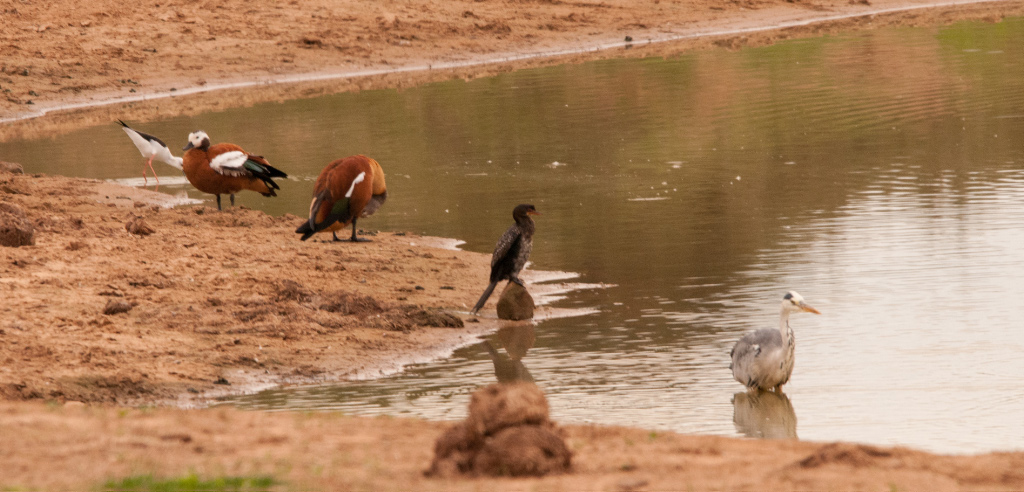
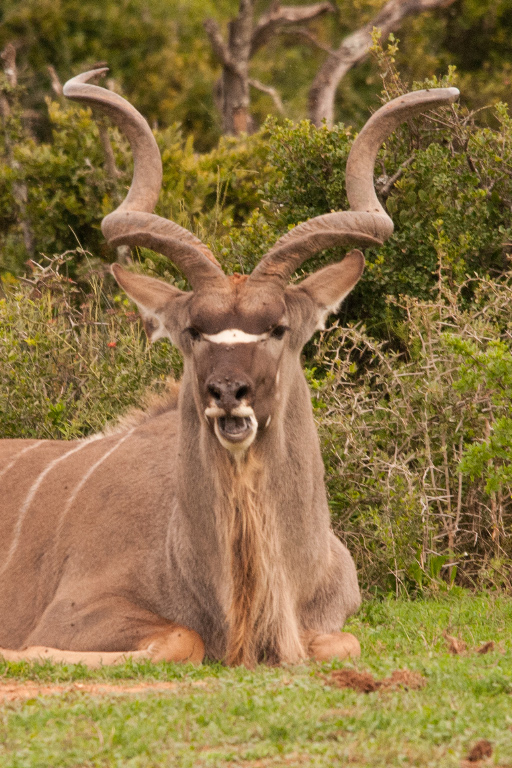
At the dams, SA Shelducks showed once again as did Little Grebe and some Thick-Knees (Dikkop is still a much better name). Hapoor dam, named after a famous elephant with a chunk of its ear missing, was a welcome sight with its wide open spaces surrounding the dam, ideal for game including Kudu and favoured by some Crowned Lapwings.

Spotted Thick-Knee (Dikkop), Addo NP
4 in a row, Addo NP
4 in a row, Addo NP
Kudu, Addo NP
Kudu, Addo NP
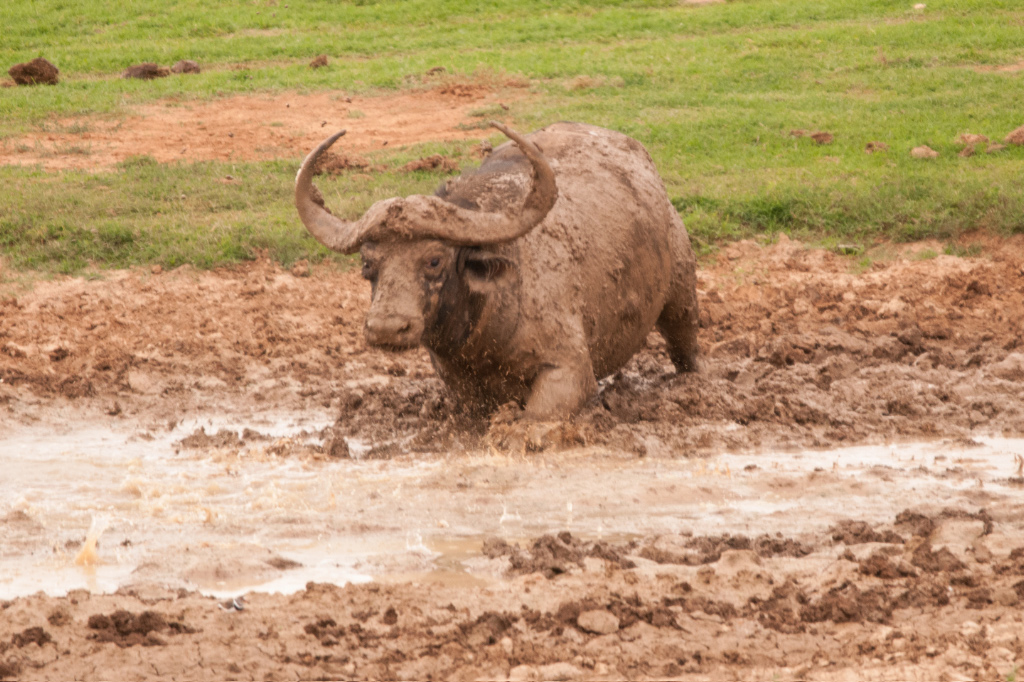
Buffalo getting the spa treatment (on our previous trip)

We hadn’t allowed ourselves much time so had to make haste (barely sticking to the 40km/h speed limit) back to the game area gate before it closed at 6 pm. The lone guard at the gate gave us a stern look but we had seen the same look each time we entered the game area so weren’t too fazed.

Jack’s Picnic Spot

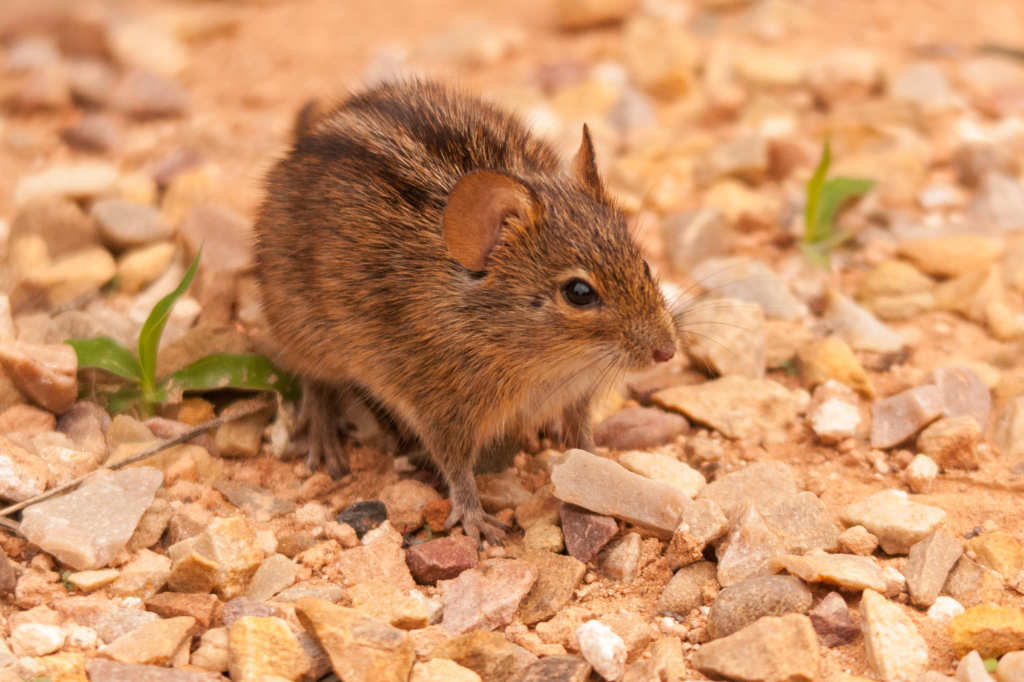
We had visited this spot on our previous visit and found it to have a special charm with tables set into alcoves created in the bush, visited by cute little Four-striped mice and Red-necked Spurfowl, both of which latched onto any errant crumbs from our cheese and crackers picnic – not our usual style but we were in a rental car after flying to PE, so had to make do with a plastic shopping bag to carry our humble provisions. This picnic spot gets its name from an ailing Rhino which spent its last years at this spot in a protected environment – little did he know how vulnerable the next generations of Rhino would become with rampant poaching in our country to feed the Far East obsession with Rhino horn.

Striped Mouse (Rhabdomys pumilio), Addo NP
Striped Mouse (Rhabdomys pumilio), Addo NP
Striped Mouse
Striped Mouse
Striped Mouse
Striped Mouse


Red-necked Spurfowl
Red-necked Spurfowl
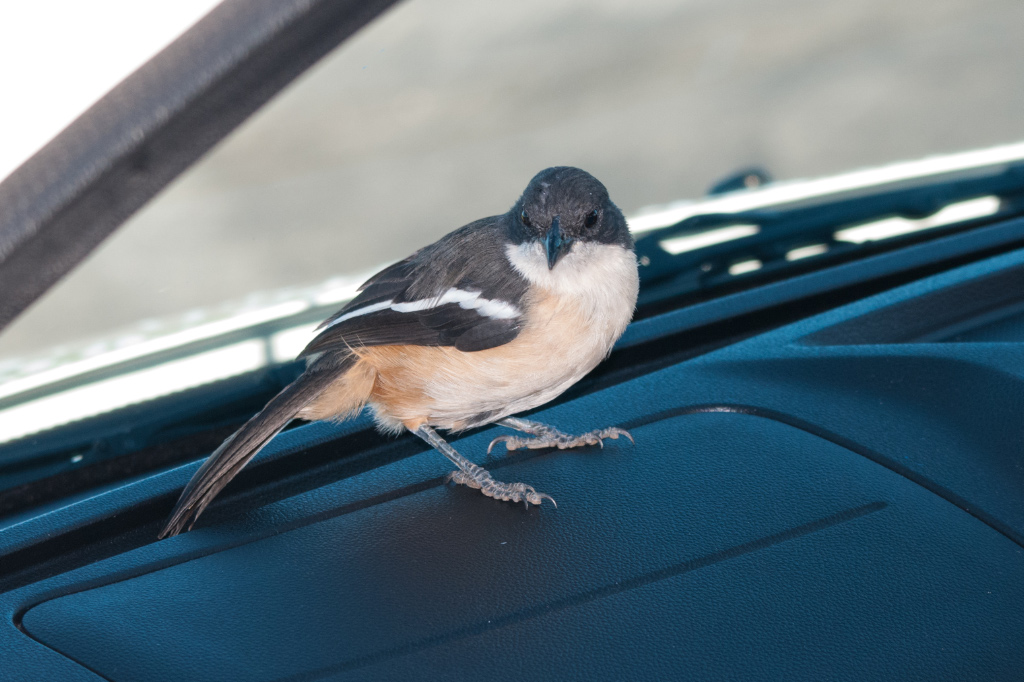
Southern Boubou - took a liking to our rental car (on our previous trip)
Southern Boubou – took a liking to our rental car (on our previous trip)

Stoep Sitting

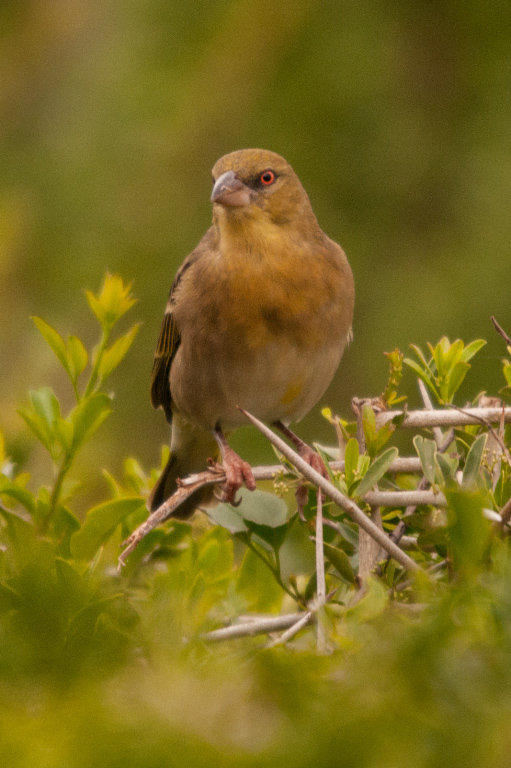
Southern Masked-Weaver, Addo NP
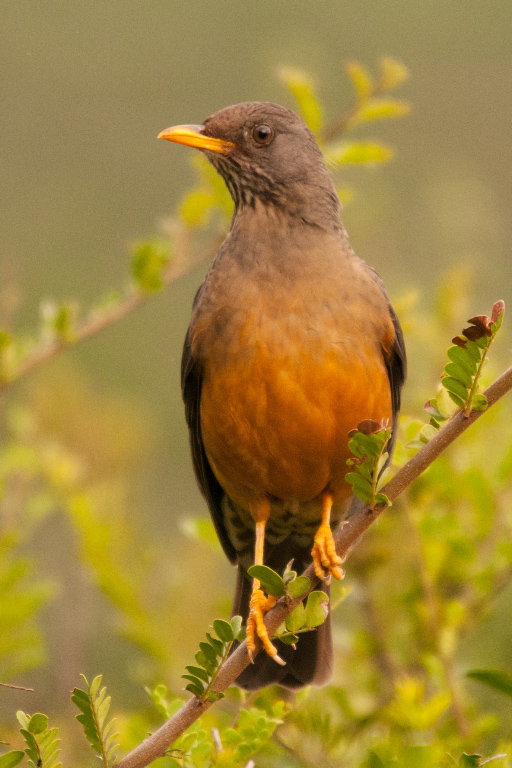
Olive Thrush, Addo NP

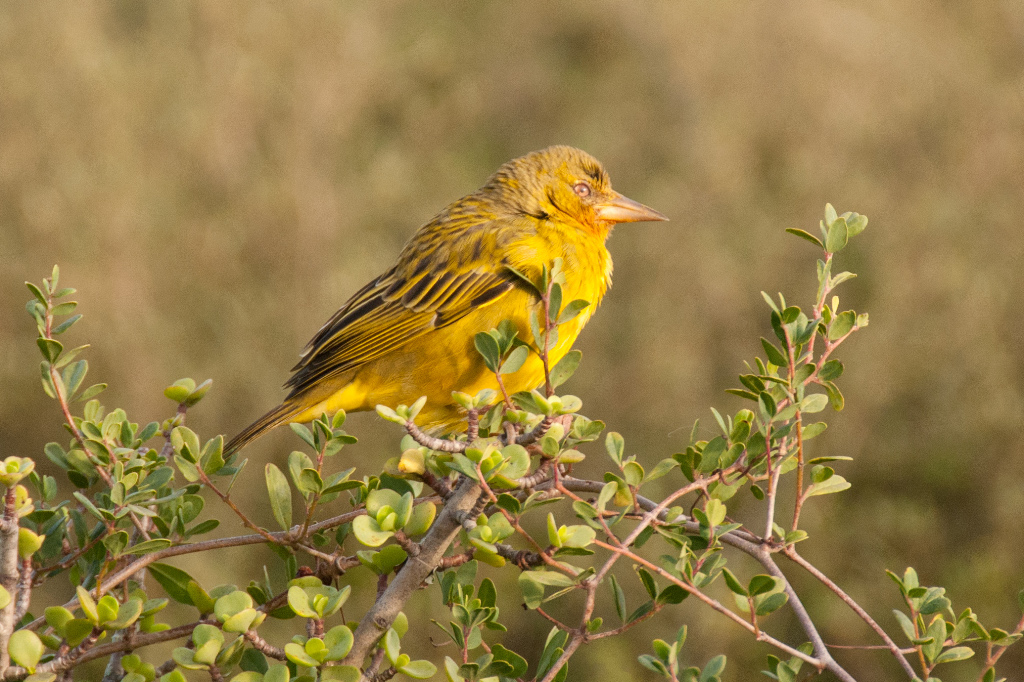
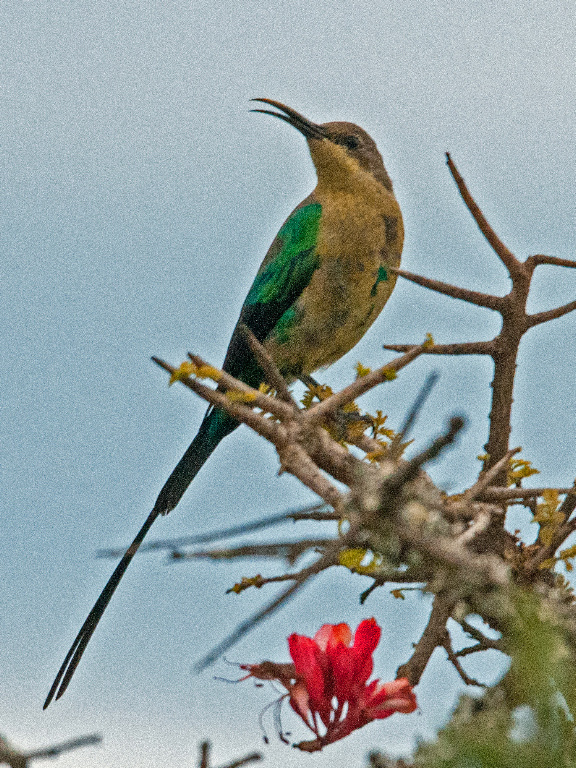
Most of the chalets and cabins have stoeps (patios) with views over the bush and are a great place to relax in the early morning and evenings – there is a constant stream of passing bird life to enjoy, most of which are tame and easy to photograph – Weavers (Cape and Southern Masked), Bulbuls (Cape and Dark-capped), Olive Thrushes and Bar-throated Apalises are most common with Malachite Sunbirds not far behind

Cape Weaver, Addo NP


Cape Bulbul, Addo NP
Malachite Sunbird, Addo NP

The Small Stuff

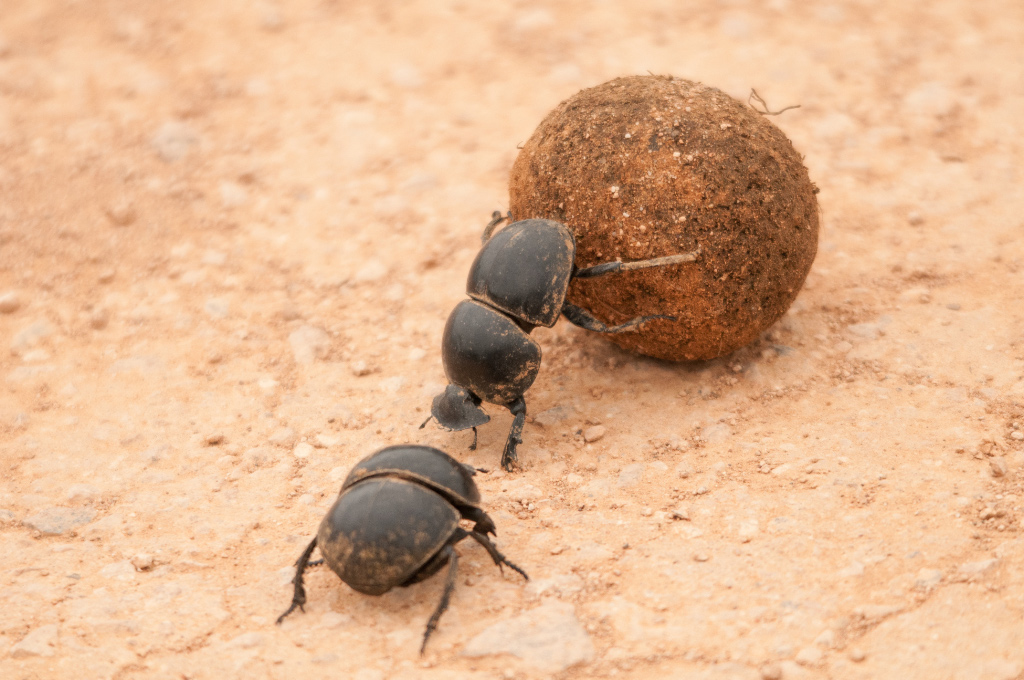
Addo is famous for its elephants but we were fascinated by some of the smaller creatures and insects which make this park special and provide great entertainment. Several times we came across the Flightless Dung-beetle – one particular beetle was crossing the dirt road with his meticulously formed dung ball with a ‘Supervisor’ in close attendance all the way across, seeming to guide him and even assisting to get him back on his legs when he toppled onto his back at one point.

Flightless Dung-Beetle with 'Supervisor'
Flightless Dung-Beetle with ‘Supervisor’ – the ball is almost golf ball size and they roll it with their hind legs while facing backwards, thus a supervisor helps a lot

Such a pity that other visitors ignore the many signs asking them to watch out for Dung beetles which are so vulnerable when crossing the road, resulting in a lot of crushed beetles.

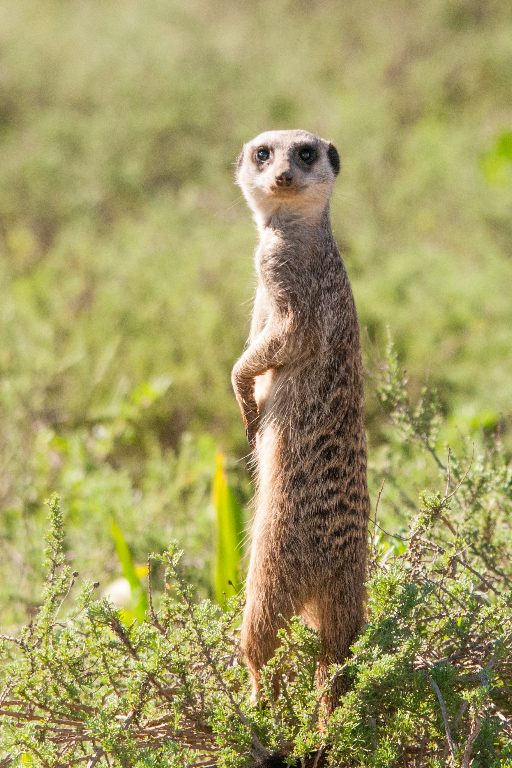
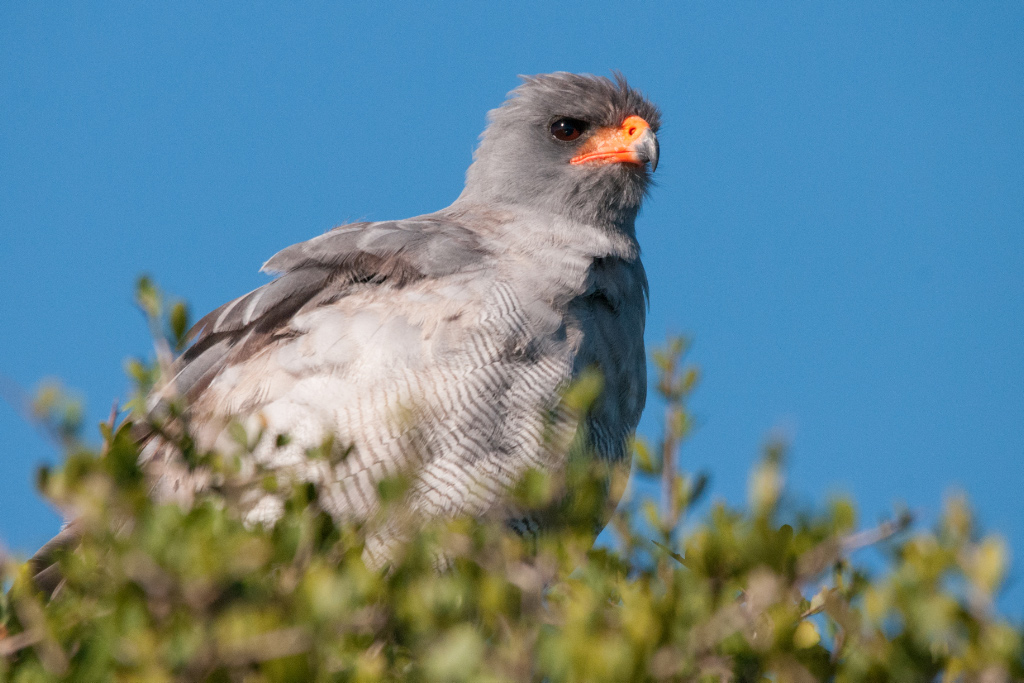
At another spot we watched a group of Meerkats as they scurried after food while their lone sentry stood watch like a Royal guardsman – right under the nose of a Pale Chanting Goshawk not 3 m above them, which they chose to ignore completely

Suricate / Meerkat (Suricata suricatta), Addo NP
Suricate / Meerkat (Suricata suricatta), Addo NP
Pale Chanting Goshawk (Juvenile), Addo NP
Pale Chanting Goshawk (Juvenile), Addo NP
Pale Chanting Goshawk, Addo NP

The Bulbul puzzle

I mentioned seeing both Cape and Dark-capped Bulbuls, once side by side in the same tree – apart from the white ring around the eye of the Cape Bulbul, they are virtually identical but don’t seem to interbreed – how do they know?

Heading back home

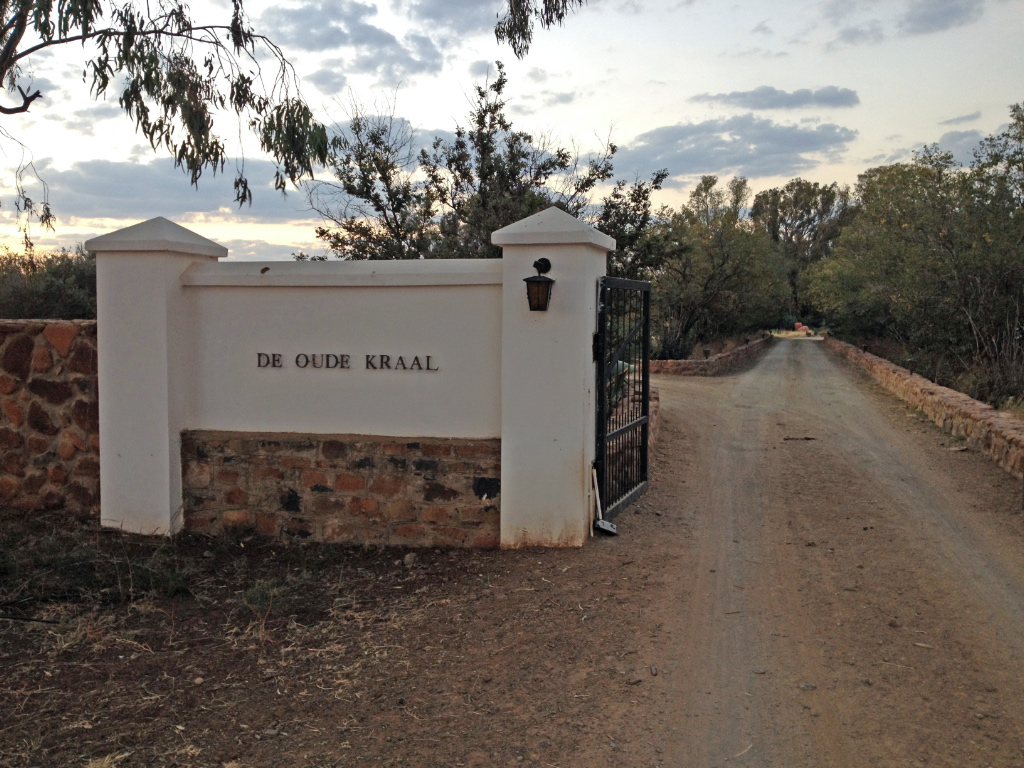
We had enjoyed our month of much travelling and many highlights, but as always we were now looking forward to getting back home and settling into our normal routine. The trip back was once again spread over two days of about 600 km each, with an overnight stop at Oudekraal guest farm just south of Bloemfontein. It turned out to be a pleasant place with excellent food but somewhat overpriced compared to other guest houses we have tried over the years.

Oudekraal guest farm

Oudekraal guest farm
De Oude kraal guest farm

One thing I can never understand about guest farms is why the front house, gardens and rooms are well looked after, yet take a walk (as I always do) around the farmyard and surroundings and it’s often a mess – old scrap everywhere and generally untidy. This is the case with a number of places we have visited and again with Oudekraal. The overgrown tennis court was sad to see – even if no one uses it, just keep it looking decent.

Final surprise

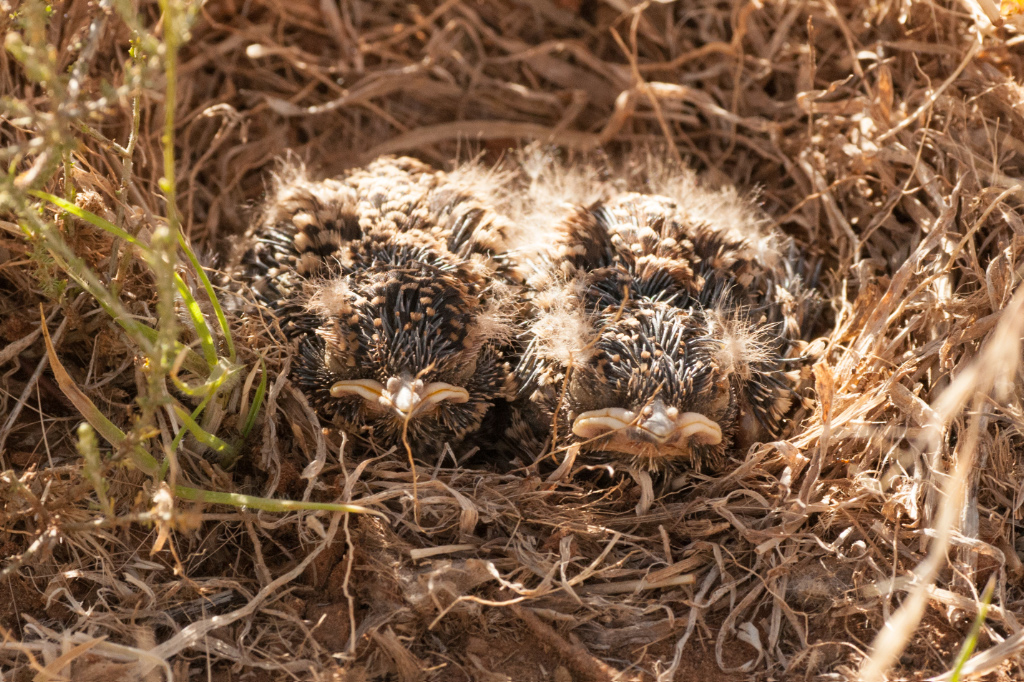
As we left Oudekraal we spotted a Spike-heeled Lark alongside the road and stopped to view it, noticing with interest that it had a juicy insect in its beak. As we stopped it walked off quickly and we followed it for about 100m until it suddenly stopped and ducked towards a hidden nest where two very young chicks were waiting to be fed – what a lucky find! The nest was so well camouflaged that when I got out to take a photo (from a distance using the telephoto lens) I had to search for it again, despite being a few metres away.
Spike-heeled Lark, De Oude kraal guest farm
Very young Spike-heeled Larks on the nest

And so we came to the end of a memorable month of traveling – can’t wait for the next trip!